
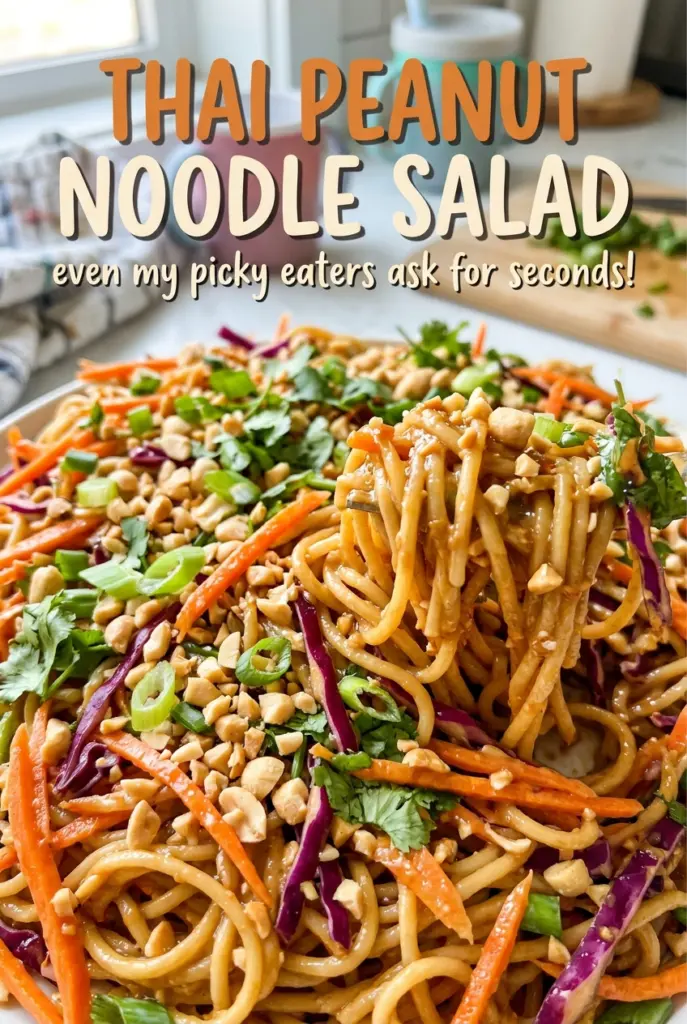
Thai Peanut Noodle Salad
The whisk starts to drag as soon as the peanut butter meets the lime juice and soy sauce. That thick, stubborn paste can look like a dressing gone wrong, but…

By Ava
•
•
Reading time: 9 min
Tip: save now, make later.
The whisk starts to drag as soon as the peanut butter meets the lime juice and soy sauce. That thick, stubborn paste can look like a dressing gone wrong, but it changes once the warm water goes in. That little transformation is what makes Thai Peanut Noodle Salad easy to coat evenly instead of leaving thick streaks on the linguine.
I like that the noodles and vegetables are tossed together cold, so every forkful has a mix of tender pasta and crisp edges. The cucumber and bell pepper keep the bowl fresh, while edamame makes it filling enough to serve as a meal. The chopped peanuts on top add a crunch you notice right away.
Take a minute to whisk the dressing smooth before thinning it, and don’t rush the noodle rinse. The finished salad should be cool, lightly coated, and bright with lime and ginger.
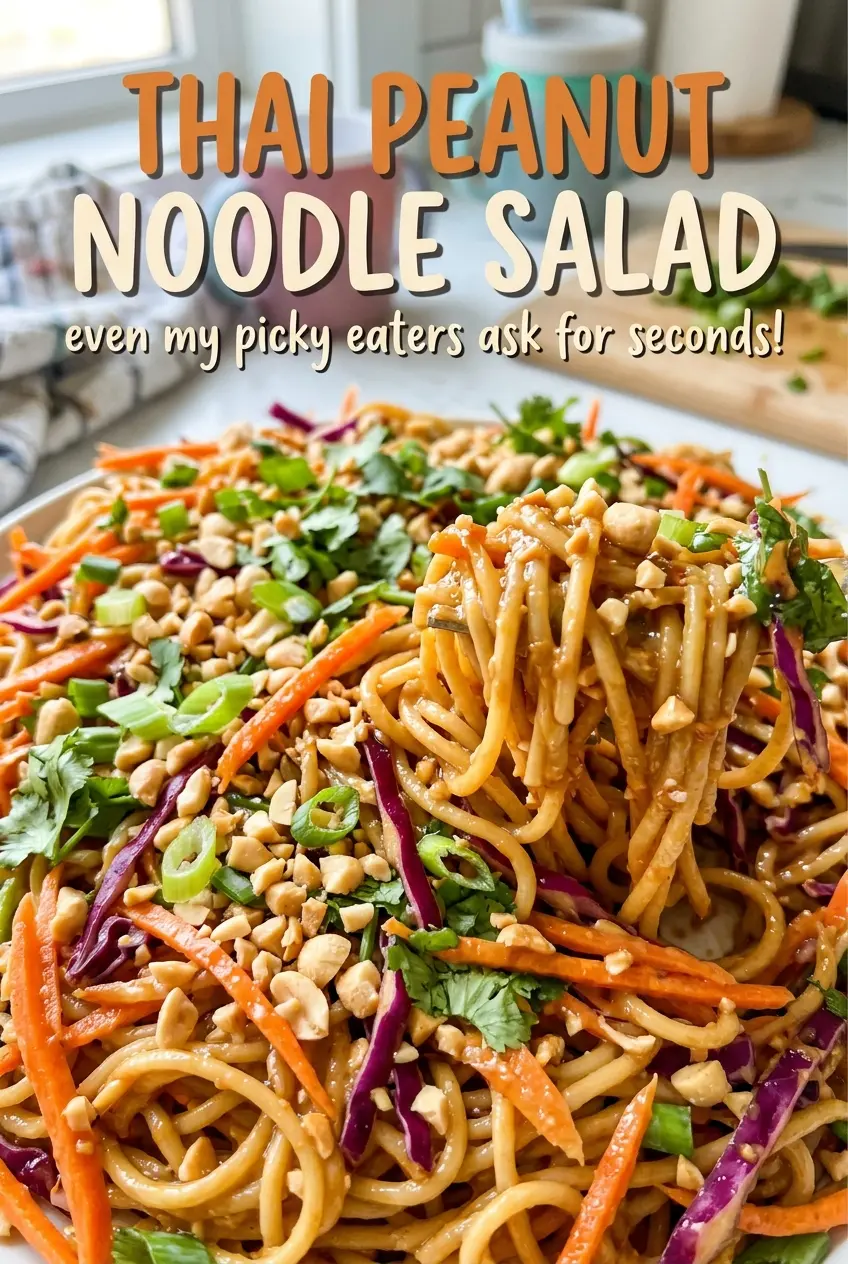
Kitchen Note
After rinsing the linguine, let it drain until water stops dripping from the colander. Extra water clinging to the noodles dilutes the dressing and leaves it pooled at the bottom of the bowl.
Save this Thai Peanut Noodle Salad for a cool, crunchy lunch with a creamy ginger-lime dressing and plenty of peanut crunch.
Why Peanut Dressing Looks Too Thick Before It Turns Pourable
Peanut butter doesn’t behave like a thin vinaigrette when it first meets the soy sauce and citrus. The mixture tightens into a dense paste, and adding all the water before that paste is smooth can leave stubborn lumps that are hard to whisk out. Start by blending the peanut butter with the soy sauce, lime juice, rice vinegar, honey, sesame oil, ginger, garlic, and sriracha until the mixture looks even.
Then whisk in the warm water. It loosens the peanut butter gradually, turning the thick base into a dressing that can move around the bowl and cling to the noodles. Stop when it’s pourable rather than watery; it needs enough body to stay on the linguine and vegetables. If it still looks like a dip, keep whisking in the warm water already measured for the dressing instead of reaching for more soy sauce or citrus, which would change the balance.
This order also makes the dressing easier to judge. Before the water, it should be smooth and thick; afterward, it should fall from the whisk in a steady ribbon. That contrast is a useful cue when you’re making a peanut-based dressing for the first time.
What Gives the Peanut Dressing Its Bright, Savory Balance
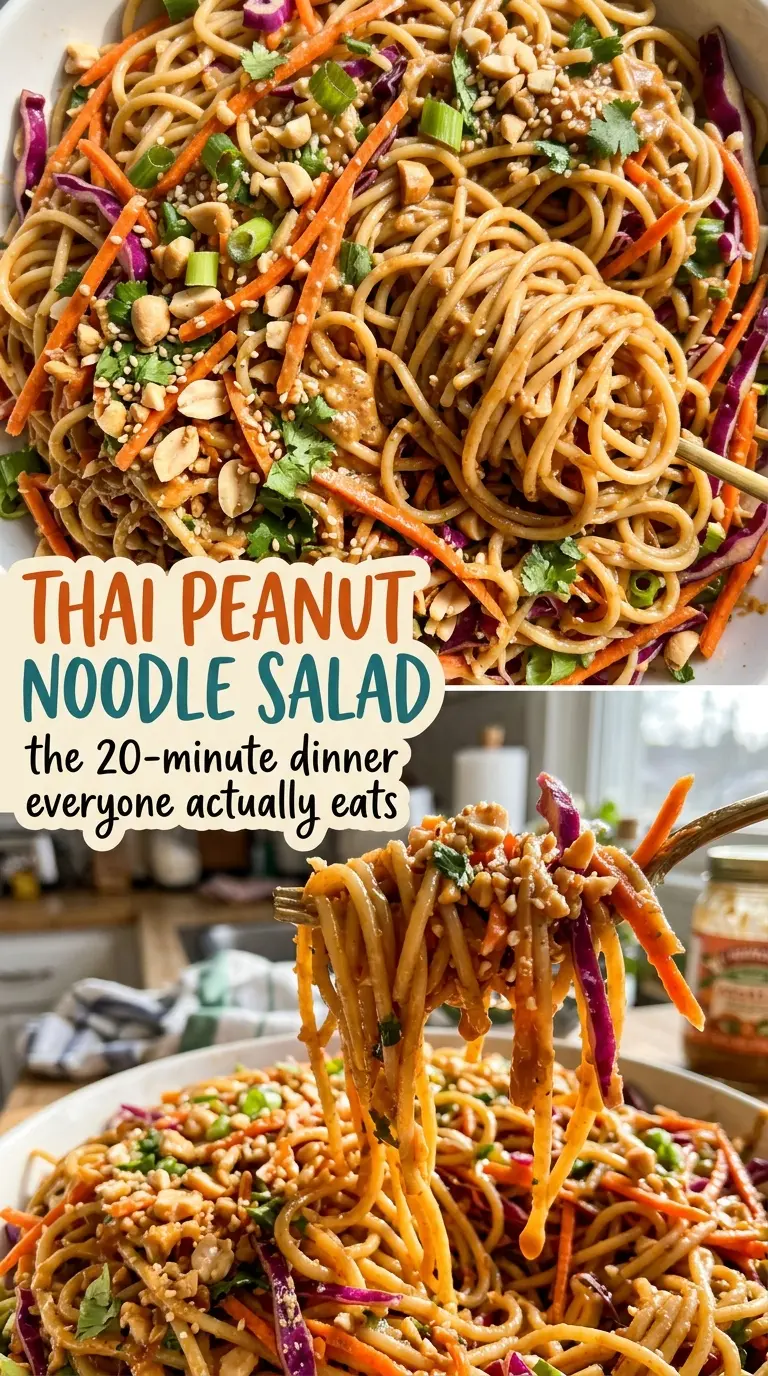
- Creamy peanut butter gives the dressing its body and unmistakable roasted-peanut taste. A smooth, well-stirred jar makes whisking easier; a separated jar needs to be mixed before measuring so the dressing doesn’t turn oily. There isn’t another ingredient in this salad that can replace its creamy base.
- Soy sauce, lime juice, rice vinegar, and honey keep the peanut butter from tasting heavy. Fresh lime brings a clear citrus note, while the rice vinegar adds a softer, clean acidity. The honey rounds off the salty and tart edges; leaving it out makes the dressing sharper, not sweeter.
- Toasted sesame oil, ginger, garlic, and sriracha build the aromatic finish. Freshly grated ginger and garlic disperse into the uncooked dressing and taste sharper than dried versions. Use toasted sesame oil rather than plain sesame oil; its toasted aroma is part of what makes the sauce taste complete.
- Linguine gives the dressing broad strands to cling to, and cooking it just to al dente keeps the chilled salad from turning soft. Any brand works; watch the package timing and taste a strand near the end rather than letting it cook until tender all the way through.
- Edamame, bell pepper, cucumber, carrots, scallions, cilantro, and roasted peanuts supply the contrasting textures. Thinly sliced vegetables mingle more evenly with the noodles, while shredded carrots tuck into the strands. Roasted peanuts are worth using for their crunch and toasted flavor; chop them shortly before serving so they stay crisp on top.
How to Coat the Noodles Without Losing Their Texture
Whisk the dressing into a smooth base
In a medium bowl, whisk together the peanut butter, soy sauce, lime juice, rice vinegar, honey, sesame oil, ginger, garlic, and sriracha. The mixture will be thick, but it should look uniform before you thin it. Whisk in the warm water until the dressing is pourable. If you see streaks of peanut butter, keep whisking before moving on.
Cook the linguine just to al dente
Bring a large pot of water to a boil and cook the linguine according to the package directions, about 9 to 11 minutes. Start checking near the early end of that range; the strand should be cooked through but still have a slight bite. Overcooked noodles soften further once they’re tossed and chilled. Drain, rinse under cold water until cool, and drain thoroughly.
Slice the vegetables for an even toss
Thinly slice the red bell pepper, cucumber, and scallions, and shred the carrots. Thaw the edamame if it’s frozen, and chop the cilantro. Keeping the pepper and cucumber thin helps them mix through the strands instead of sitting in heavy pieces at the bottom. Have everything ready before dressing the noodles so you can toss the salad evenly.
Toss first, then add the peanut crunch
Combine the linguine, edamame, bell pepper, cucumber, carrots, scallions, and cilantro in a large serving bowl. Add the dressing and toss until the strands and vegetables are coated rather than buried in sauce. Sprinkle the chopped roasted peanuts over the top and serve the salad cold. Adding the peanuts last keeps them from being lost in the dressing.
Simple Ways to Adjust the Salad Without Losing Its Balance
A plant-based bowl with a sharper dressing
For a plant-based version, leave out the honey and use egg-free linguine. The dressing will taste more tart and less rounded, but the peanut butter still gives it body and the lime, vinegar, and aromatics keep it lively.
A milder peanut dressing
Leave out the sriracha for a gentler bowl. The peanut, ginger, and lime still come through, but you lose the chili heat; the dressing’s overall texture stays the same.
Skip the cilantro, keep the scallions
If cilantro isn’t your thing, leave it out and keep the scallions in the bowl. You’ll lose the herb’s fresh, leafy note, while the scallions still give the salad a mild onion bite.
Keeping the Salad Cold and Crisp
- Refrigerator: Store leftovers in an airtight container for up to 3 days. The cucumber softens and releases moisture over time, so the salad is crispest soon after tossing.
- Freezer: Freezing isn’t a good fit. The cucumber and bell pepper lose their crisp texture after thawing, and the noodles won’t have the same bite.
- Reheating: Serve it cold rather than reheating. Toss the chilled salad before serving to redistribute any dressing that has settled.
Questions That Come Up When Making Thai Peanut Noodle Salad
Thai Peanut Noodle Salad
Ingredients
Method
- Whisk the peanut butter, soy sauce, lime juice, rice vinegar, honey, sesame oil, ginger, garlic, and sriracha in a medium bowl until smooth.
- Whisk in the warm water until the dressing is pourable.
- Cook the linguine in a large pot of boiling water according to package directions, about 9 to 11 minutes, until al dente.
- Drain the linguine.
- Rinse the linguine under cold water until cool, then drain thoroughly.
- Combine the linguine, edamame, bell pepper, cucumber, carrots, scallions, and cilantro in a large serving bowl.
- Add the dressing and toss to coat.
- Sprinkle with the peanuts.
- Serve cold.