
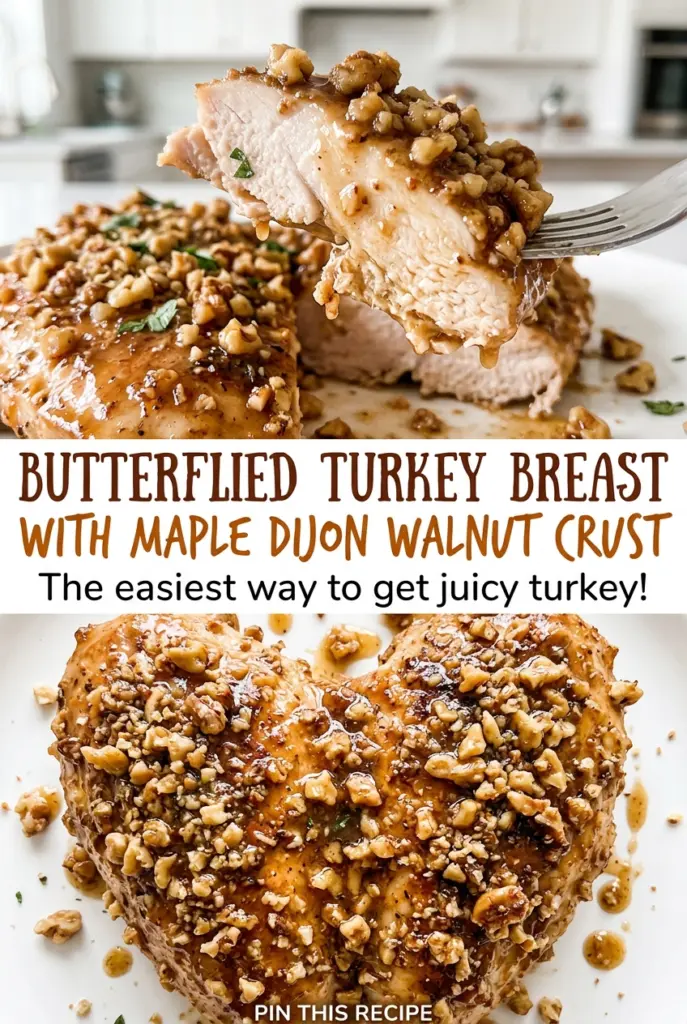
Butterflied Turkey Breast with Maple Dijon Walnut Crust
The walnut crumbs start turning golden while the turkey is still roasting, and that’s the moment a whole breast can fool you: the top looks finished before the center is.…

By Ava
•
•
Reading time: 8 min
Tip: save now, make later.
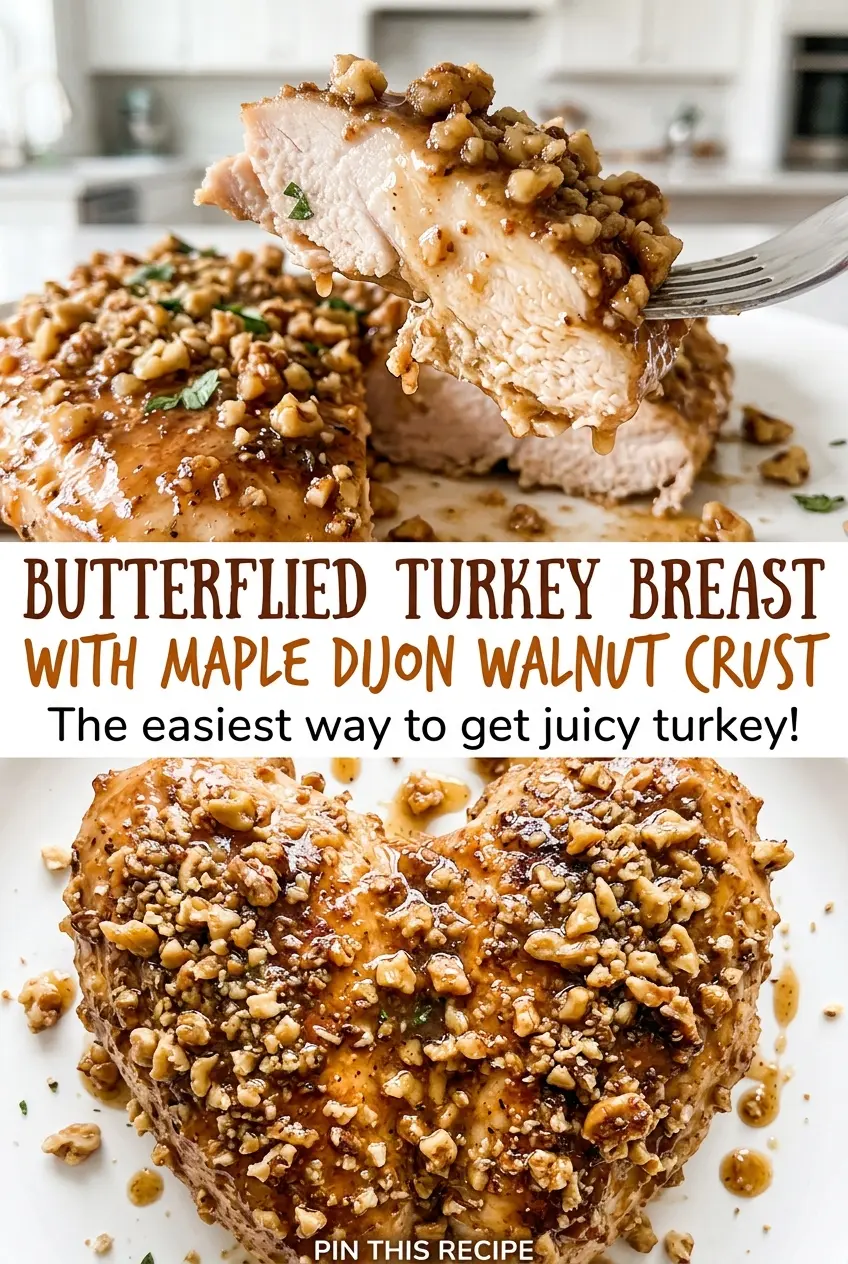
The walnut crumbs start turning golden while the turkey is still roasting, and that’s the moment a whole breast can fool you: the top looks finished before the center is. Butterflying solves the uneven-thickness problem and gives the maple Dijon walnut crust plenty of surface to cling to. I like this approach for a boneless turkey breast because the slices stay tender, and every piece comes away with a bit of crisp topping.
The mustard and maple syrup spread into a thin layer over the meat, then hold the buttery walnut-panko mixture in place. Pounding the breast to an even thickness helps it roast more evenly instead of leaving a thick middle and thin edges. Once sliced, this butterflied turkey breast has a savory, nutty crust with just enough maple sweetness to round it out.
Kitchen Note
If the walnut topping is browning faster than the turkey is cooking, tent the pan loosely with foil. Keep the foil loose rather than sealing the turkey in, so steam doesn’t soften the crust.
Save this butterflied turkey breast with its maple Dijon walnut crust for a roast that pairs juicy slices with a golden, crunchy top.
A Golden Walnut Crust Isn’t a Doneness Test
The top of this roast and the center of the turkey don’t change at the same pace. Maple syrup helps the crumbs turn golden, while the thickest part of the breast needs time to cook through. If you judge the turkey by color alone, you can pull it too early—or keep roasting after the meat is ready because you’re waiting for a darker crust.
That’s why I treat the topping and the turkey as two separate cues. The crust should look browned and crisp, but an instant-read thermometer tells you when the meat is ready. The butterflied shape helps the breast cook more evenly, yet small differences in thickness and ovens still affect the timing. Look at the crust to decide whether it needs shielding, and use the thickest part of the meat to decide when to take the pan out.
What Makes the Maple Dijon Walnut Crust Hold Together
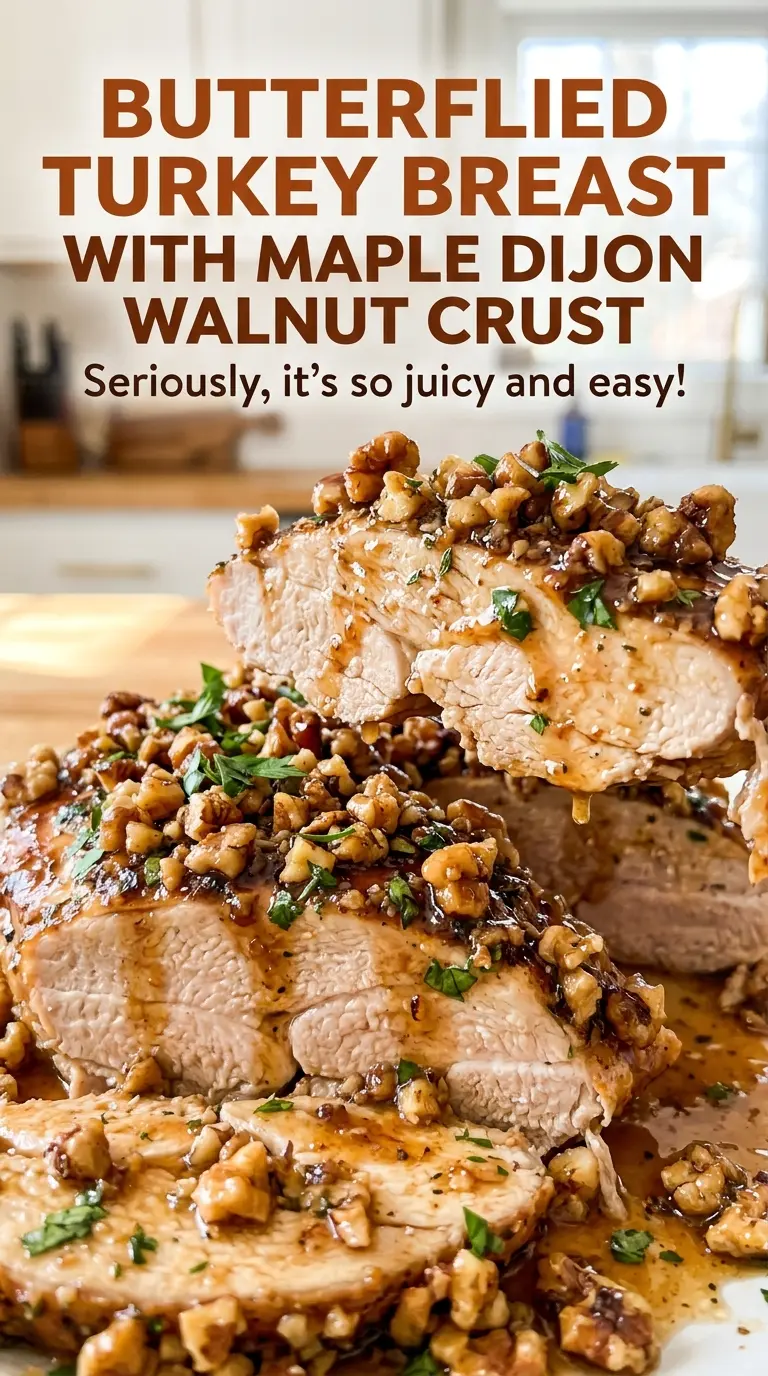
- Walnuts — Finely chopped pieces distribute more evenly than large chunks and give the topping its earthy crunch. Fresh walnuts taste clean and pleasantly nutty; if yours smell stale or bitter, they’ll show through in the crust. Finely chopped pecans are the closest swap, with a slightly sweeter, milder result.
- Panko breadcrumbs — Their light, coarse flakes make a crisp topping rather than a dense paste. Standard panko works well here; choose a gluten-free panko if you need a gluten-free crust, knowing the crumb may brown a little differently depending on the brand.
- Dijon mustard and pure maple syrup — Dijon brings tang and helps the topping adhere, while maple syrup adds gentle sweetness and encourages browning. Use real maple syrup rather than pancake syrup, which has a different sweetness and consistency. A honey swap works if you prefer a floral sweetness; the topping will taste less distinctly maple.
- Unsalted butter and dried thyme — Melted butter coats the crumbs so they toast in the oven, and dried thyme adds a savory note without making the crust taste herbal-heavy. Unsalted butter lets the salt on the turkey stay balanced, while dried thyme is convenient and distributes well through the crumb mixture.
- Boneless, skinless turkey breast — Start with a fully thawed breast so it opens and pounds evenly. The recipe is designed for boneless meat; a bone-in breast won’t butterfly into the same even sheet.
From an Uneven Breast to a Crisp, Roasted Top
Open the Breast and Even the Thickness
Heat the oven to 375°F and line a rimmed 18×13-inch baking sheet with parchment paper. Cut horizontally through the thickest side of the turkey breast, stopping about 1/2 inch from the opposite edge, then open it like a book. Put it between sheets of plastic wrap and pound it to an even 3/4-inch thickness; an uneven center is the most likely reason the edges finish before the middle. Pat the turkey dry, then season both sides with the kosher salt and black pepper.
Spread on the Maple Dijon Layer
Whisk the Dijon mustard and maple syrup together until smooth. Spread the mixture evenly over the top of the turkey, reaching across the broad surface without piling it into a thick patch. A thin, even coating gives the crumb mixture something to cling to while keeping the mustard-maple flavor balanced from slice to slice.
Press on the Walnut-Panko Crust
Stir together the finely chopped walnuts, panko breadcrumbs, melted unsalted butter, and dried thyme. Scatter the mixture over the mustard-coated side and press it gently into place so the crumbs adhere instead of rolling off the edges. Keep the layer reasonably even; bare spots leave some slices without crunch, while a mound of topping can brown unevenly.
Roast, Check, and Rest
Roast for 40 to 55 minutes, until the crust is golden and an instant-read thermometer inserted into the thickest part of the turkey reads 165°F. The exact time depends on the breast and your oven, so use the thermometer rather than the clock alone. Rest the turkey for 10 minutes before slicing; cutting immediately makes it harder to keep the slices neat and lets more juices run onto the board.
Easy Swaps for the Crust, Plus How to Store Leftovers
Make the Crust Gluten-Free
Replace the panko with the same quantity of gluten-free panko. The walnuts, butter, maple, and thyme keep the same savory-sweet character, though the finished crumb may be a little more compact depending on the gluten-free brand.
Trade Maple for Honey
Use honey in place of the maple syrup in the mustard mixture. It gives the crust a rounder, more floral sweetness and loses the distinct maple note; keep an eye on the topping as it roasts because sweeteners can brown at different rates.
Storage and Reheating
- Refrigerator: Store slices in an airtight container for 3 to 4 days. The crust softens as it sits, but the turkey stays tender when covered.
- Freezer: Freeze tightly wrapped portions for up to 2 to 3 months. The turkey freezes well, though the walnut-panko crust won’t be as crisp after thawing.
- Reheating: Warm covered in a low oven or in the microwave until hot throughout. In the oven, uncover near the end to dry the topping a little; reheating uncovered the whole time can dry out the breast.
Questions That Come Up When Roasting This Turkey Breast
Butterflied Turkey Breast with Maple Dijon Walnut Crust
Ingredients
Equipment
Method
- Heat the oven to 375°F.
- Line a rimmed 18x13-inch baking sheet with parchment paper.
- Cut horizontally through the thickest side of the turkey breast, stopping about 1/2 inch from the opposite edge, then open it like a book.
- Pound the turkey between sheets of plastic wrap to an even 3/4-inch thickness.
- Pat the turkey dry.
- Season both sides with the kosher salt and black pepper.
- Whisk the Dijon mustard and maple syrup together.
- Spread the mixture evenly over the top of the turkey.
- Stir together the walnuts, panko breadcrumbs, melted butter, and dried thyme.
- Press the mixture onto the mustard-coated turkey.
- Roast for 40 to 55 minutes, until the crust is golden and an instant-read thermometer inserted into the thickest part of the turkey reads 165°F; tent loosely with foil if the crust browns too quickly.
- Rest the turkey for 10 minutes before slicing.