

Sweet Potato Casserole with Marshmallows
The sweet potatoes come out of the oven soft enough for a knife to slip through the thickest one, but they still need a little time before they’re easy to…

By Ava
•
•
Reading time: 9 min
Tip: save now, make later.
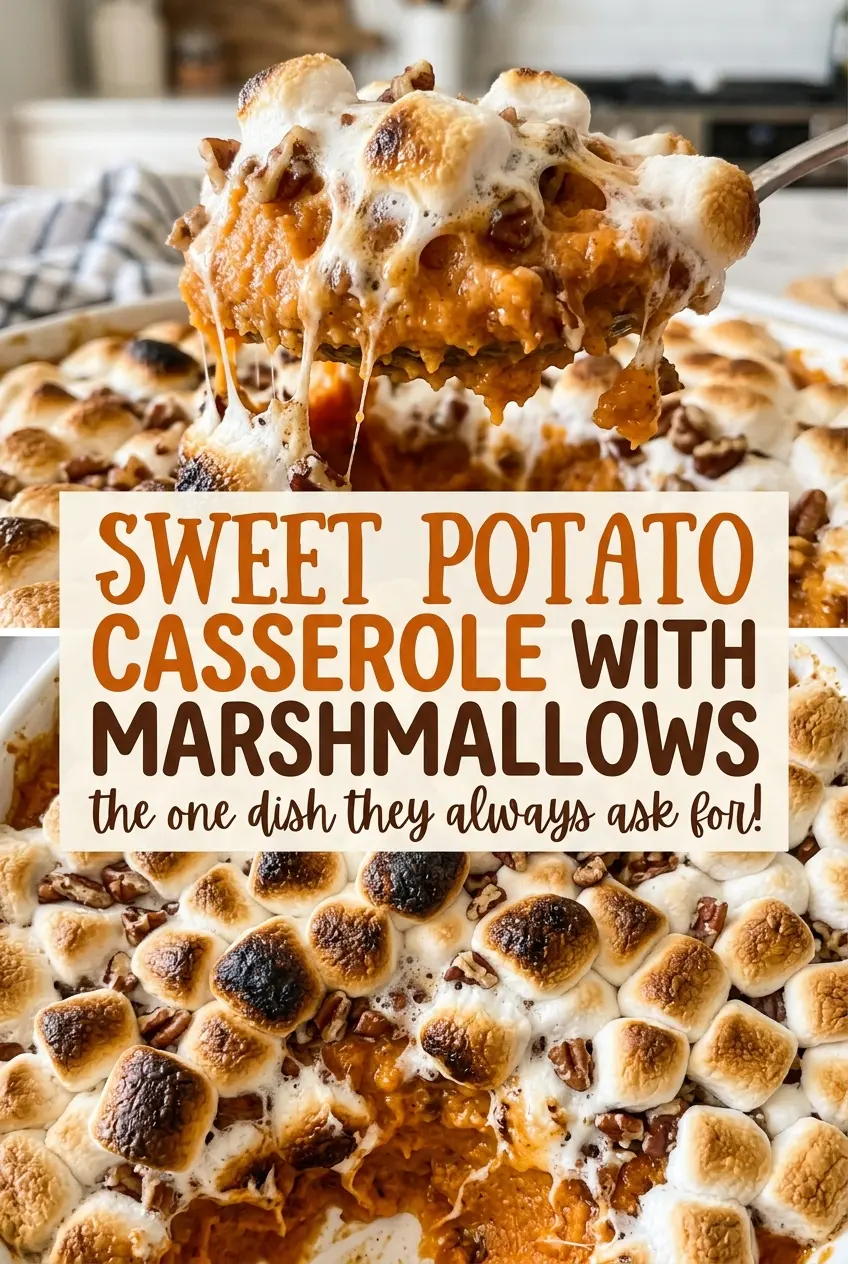
The sweet potatoes come out of the oven soft enough for a knife to slip through the thickest one, but they still need a little time before they’re easy to peel. I learned not to rush that pause. Once the flesh is mashed with butter, brown sugar, milk, eggs, vanilla, and cinnamon, the casserole bakes into a smooth, gently sweet base with a toasted marshmallow top. This Sweet Potato Casserole with Marshmallows serves ten and fits neatly into a 9×13-inch dish.
I roast the sweet potatoes whole instead of peeling and cutting them first. That keeps the prep simple and gives the potatoes time to soften before they meet the other ingredients. The marshmallows go on only after the filling has baked, so they puff and turn golden without sitting in the oven for the entire cook. Each spoonful is soft and buttery beneath that pillowy, toasted layer.
Kitchen Note
I give the roasted potatoes their full 20-minute cool before peeling. They’re much easier to handle, and the oven has time to drop from 400°F to 350°F before the casserole goes in.
Save this Sweet Potato Casserole with Marshmallows for its smooth, buttery base and golden mini marshmallow topping.
Why the Marshmallows Go On After the Sweet Potato Base Bakes
The filling and the topping need different amounts of oven time. The mashed sweet potatoes contain butter, milk, and eggs, so they need a steady bake to warm through and set. Mini marshmallows, by contrast, puff and brown quickly. Put them on at the beginning and they’d spend the whole baking time exposed to heat, long after the casserole base needs them.
Baking the sweet potato mixture first gives the center time to set before the topping goes on. Then the short finishing bake does one job: warming the marshmallows until they’re puffed and golden. Scatter them across the surface in an even layer so there aren’t bare patches beside big piles. Keep an eye on the oven during those final minutes; the color changes quickly near the end, and golden brown is the cue to take the dish out. After a 10-minute rest, the filling is easier to serve and the topping has settled into place.
The Sweet Potatoes, Eggs, and Marshmallows Each Have a Job

- Sweet potatoes — Buy by weight rather than relying on the count, since medium potatoes vary in size. Choose firm potatoes without soft spots, then scrub and dry them before roasting. Roasting keeps the preparation straightforward, and mashing the flesh while it’s warm helps it blend smoothly with the other ingredients.
- Eggs — Lightly beaten eggs help the filling hold together as it bakes. Use large eggs, as listed, and stir them in once the potatoes and other ingredients are ready to combine. Leaving them out changes the texture; the filling won’t set in quite the same way.
- Whole milk and melted butter — Milk loosens the mashed potatoes into a spoonable casserole, while butter brings richness throughout the base. Melt the butter before mixing so it distributes evenly. Whole milk is the specified choice here; a thinner milk would make the mixture less rich.
- Packed light brown sugar — Its soft, moist sweetness suits the earthy potatoes and works into the mash without leaving granules. Pack it into the measuring cup when you measure, rather than spooning it in loosely.
- Vanilla and cinnamon — These round out the sweetness without taking over the potato flavor. Use the vanilla extract you keep for baking; an expensive bottle isn’t necessary for this casserole. Ground cinnamon blends directly into the filling, so stir until no streaks remain.
- Mini marshmallows — Their small size makes it easier to cover the casserole evenly and gives you a consistent toasted finish. Use mini marshmallows rather than large ones, which would leave bigger gaps and uneven patches across the top.
From Whole Roasted Potatoes to a Toasted Marshmallow Top
Roast Until the Centers Turn Tender
Heat the oven to 400°F while you scrub and dry the sweet potatoes. Prick each potato several times with a fork, then set them on a rimmed baking sheet. Roast for 50 to 65 minutes; the size of the potatoes affects where they land in that range. Check the thickest potato with a knife, which should slide in easily before you take them out.
Mash and Mix the Filling
Spray a 9×13-inch baking dish with nonstick cooking spray. Peel the cooled potatoes, transfer the flesh to a large bowl, and mash until mostly smooth; a few small soft pieces are fine. Add the melted butter, packed light brown sugar, whole milk, lightly beaten eggs, vanilla, cinnamon, and fine salt. Stir until the ingredients are evenly combined, with no visible streaks of egg or butter.
Bake the Base Until Set
Spread the sweet potato mixture into the prepared dish in an even layer. Bake at 350°F for 25 to 30 minutes, checking the center with an instant-read thermometer. The middle should register 160°F. If the surface looks done before the center reaches that reading, rely on the thermometer rather than the color of the top.
Toast the Marshmallow Layer
Scatter the mini marshmallows evenly over the casserole once the filling has baked. Return the dish to the oven for 5 to 8 minutes, watching for marshmallows that are puffed and golden brown. Pull the casserole when the topping reaches that color rather than waiting for a deep, dark toast. Rest the dish for 10 minutes before serving.
Two Simple Ways to Change the Sweet Potato Casserole
A less-sweet, marshmallow-free version
Leave off the brown sugar and marshmallow topping for a savory-leaning side that lets the roasted sweet potato flavor come forward. The casserole will be less sweet and won’t have the soft, toasted top of the original. Keep the remaining ingredients and baking method the same.
A more rustic, textured filling
For a less uniform texture, stop mashing while a few soft pieces of sweet potato remain instead of working the flesh to a mostly smooth consistency. The casserole will feel more homespun on the spoon, though it won’t have the same even, custardy texture throughout.
Storage and Reheating
- Refrigerator: Refrigerate leftovers within 2 hours and keep them for 3 to 4 days. The marshmallow topping softens once chilled.
- Freezer: The sweet potato base freezes best without the marshmallow topping. Wrap it tightly and freeze for up to 2 months; thaw it overnight in the refrigerator, then add the marshmallows after reheating.
- Reheating: Cover the casserole loosely and warm it at 350°F until the center reaches 165°F, then uncover and add marshmallows for the 5-to-8-minute topping bake. Leaving the topping exposed while reheating can darken it before the center is hot.
Questions That Come Up While Making Sweet Potato Casserole
Sweet Potato Casserole with Marshmallows
Ingredients
Equipment
Method
- Heat the oven to 400°F.
- Scrub and dry the sweet potatoes, prick each several times with a fork, and set them on a rimmed baking sheet.
- Bake for 50-65 minutes, until a knife slides easily into the thickest potato.
- Cool for 20 minutes, then reduce the oven temperature to 350°F.
- Grease a 9x13-inch baking dish with nonstick cooking spray.
- Peel the sweet potatoes, transfer the flesh to a large bowl, and mash until mostly smooth.
- Add the melted butter, brown sugar, milk, eggs, vanilla, cinnamon, and salt; stir until evenly combined.
- Spread the mixture in the prepared dish and bake at 350°F for 25-30 minutes, until the center registers 160°F on an instant-read thermometer.
- Scatter the marshmallows evenly over the casserole and bake for 5-8 minutes, until puffed and golden brown.
- Rest the casserole for 10 minutes before serving.