
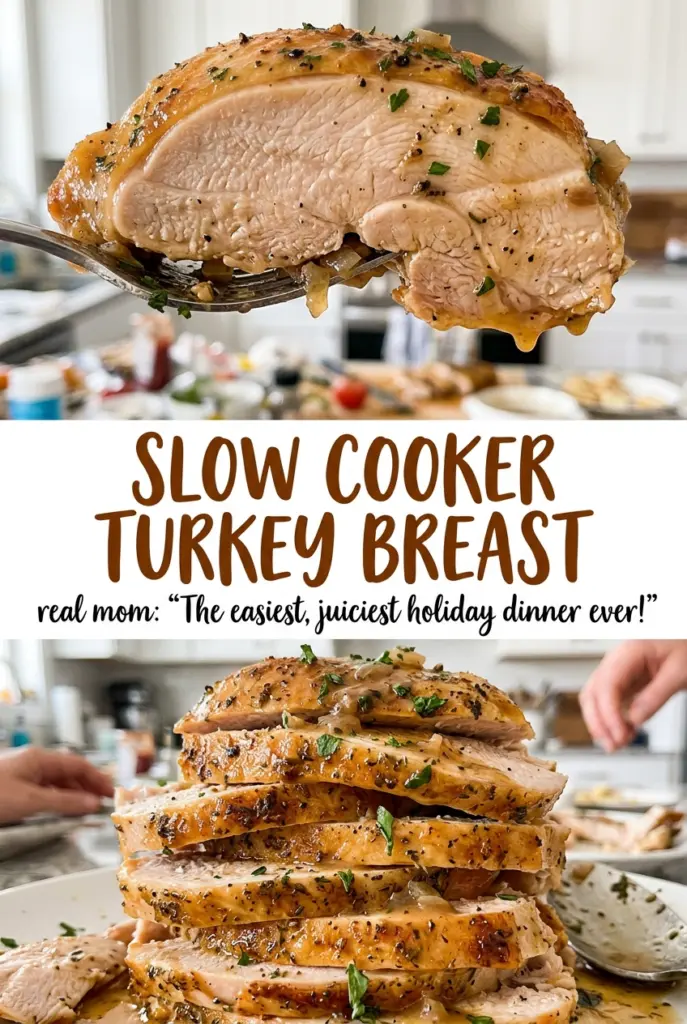
Slow Cooker Turkey Breast
When the slow cooker lid comes off, the turkey smells of thyme and paprika, and the vegetables underneath are soft with savory drippings. This slow cooker turkey breast is a…

By Ava
•
•
Reading time: 8 min
Tip: save now, make later.
When the slow cooker lid comes off, the turkey smells of thyme and paprika, and the vegetables underneath are soft with savory drippings. This slow cooker turkey breast is a practical way to cook a bone-in centerpiece without giving up oven space, and the covered cooker keeps the meat surrounded by gentle moisture as it cooks.
I rub the seasoned butter under the skin as well as over the outside, so the breast gets seasoning close to the meat instead of only on its surface. After a short rest, it’s ready to carve into slices for dinner, with plenty left to tuck into sandwiches or save for another meal.
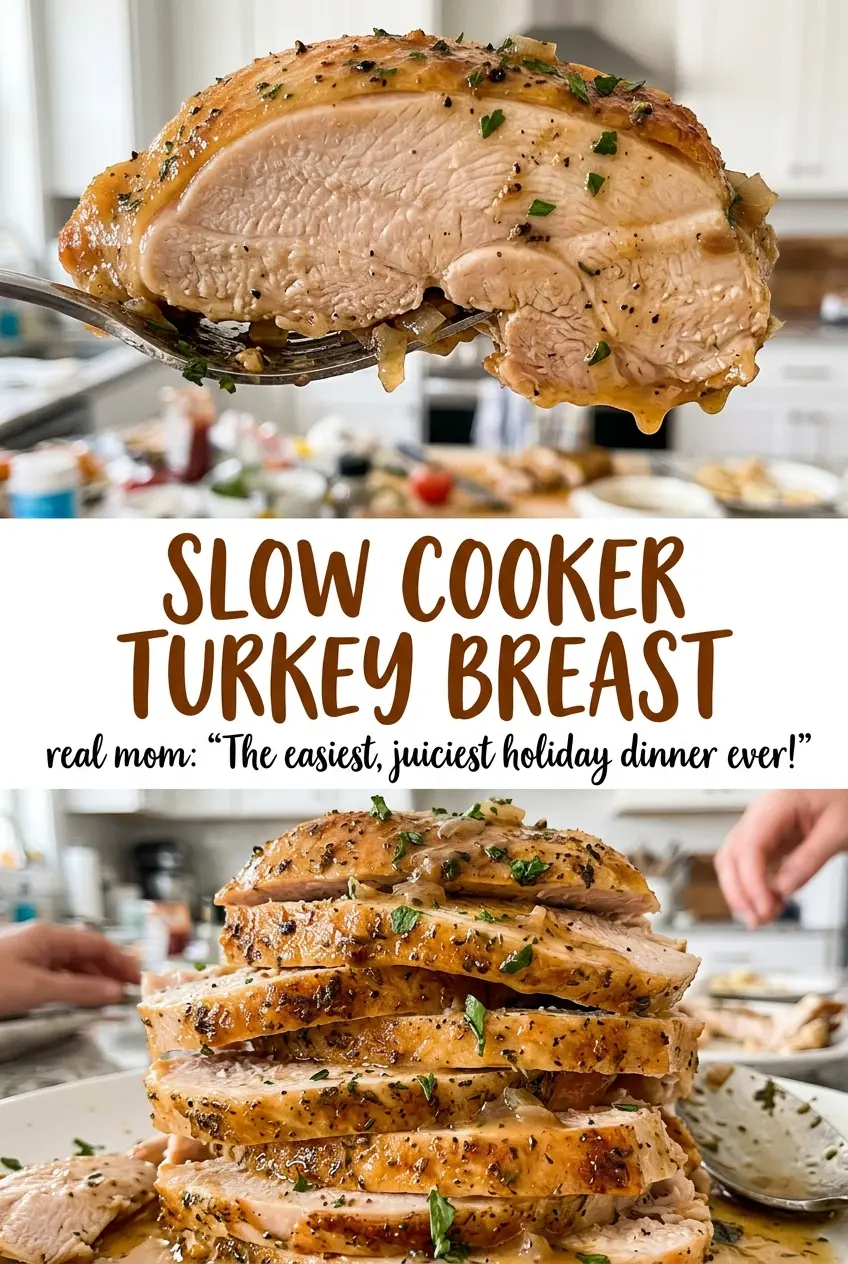
Kitchen Note
I loosen the skin gently at the wide end of the breast and tuck the butter underneath in small dabs. Don’t pull the skin loose all the way; leaving it attached helps keep it in place while the turkey cooks.
Save this slow cooker turkey breast for a hands-off main dish with thyme, paprika, and tender slices ready to carve.
Why the Turkey Sits Above the Broth Instead of Swimming in It
The onion and celery make a simple bed under the breast, while the broth stays at the bottom of the slow cooker. That arrangement matters: the turkey isn’t submerged in liquid, and the vegetables keep it lifted as the covered cooker fills with moisture. The result is closer to gentle, covered cooking than a pot of poached turkey.
There’s no need to add extra broth to cover the meat. The breast releases juices as it cooks, and those mingle with the chicken broth and softened vegetables below. Adding more liquid won’t make the top cook better; it just leaves you with more liquid at the bottom.
The skin also won’t turn crisp in the slow cooker. The closed, moist environment keeps it soft, even with seasoning rubbed over the outside. Think of this method as a way to get a tender breast and flavorful drippings, not a substitute for the browned, crisp skin of an oven-roasted bird.
What the Turkey, Butter, and Aromatics Each Bring
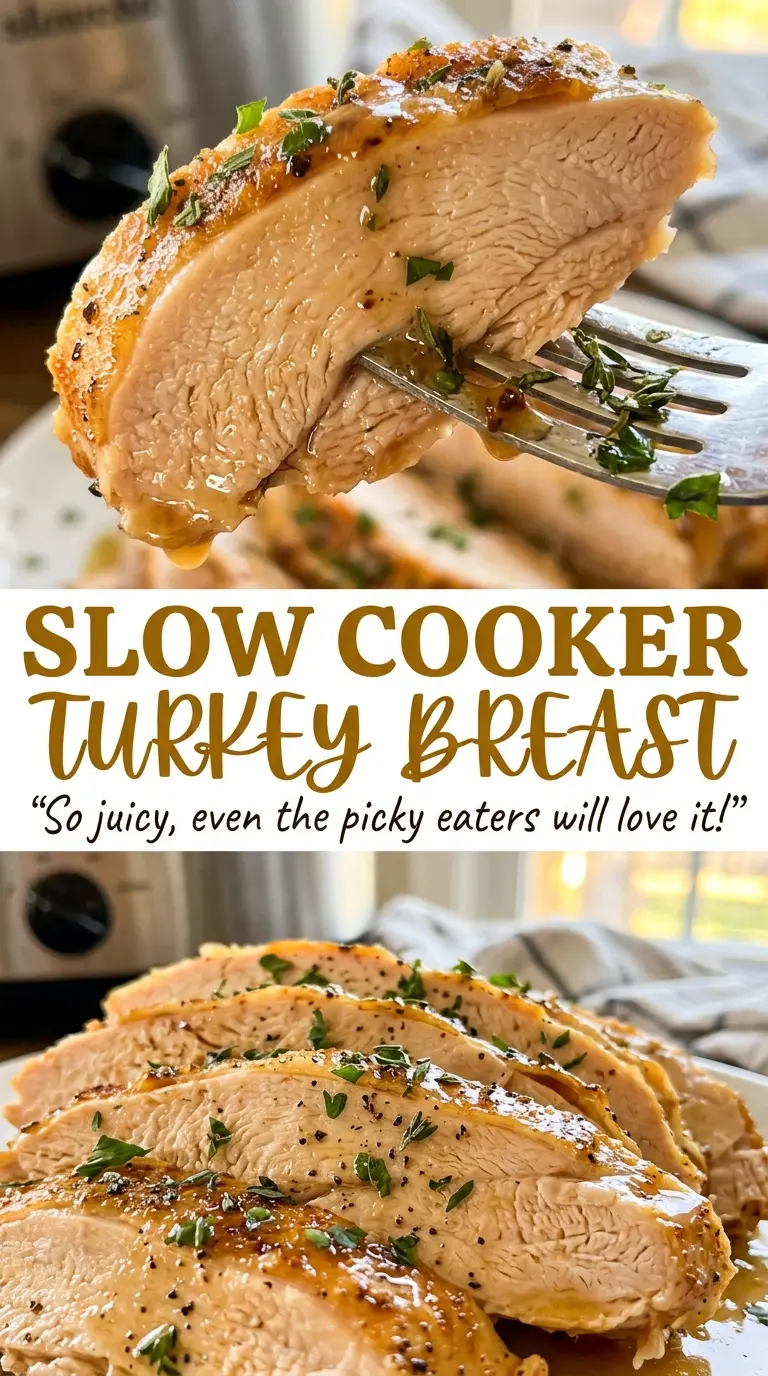
- Bone-in, skin-on turkey breast — The bone helps the breast hold its shape as it cooks, and the skin gives the seasoning a surface to cling to. Choose a fully thawed breast in the listed size range, with the giblets removed. A boneless breast isn’t a like-for-like swap because its shape and cooking time differ.
- Unsalted butter — Softened butter carries the thyme, pepper, paprika, and salt into a spreadable rub. A fresh stick from the fridge is fine once it softens; it doesn’t need to be a premium brand. For a dairy-free version, olive oil works in its place, though the rub will be looser and the finish less buttery.
- Yellow onion and celery — These aromatics flavor the broth and make a bed for the turkey. A firm onion and crisp celery are all you need; their shape matters more than a specialty variety because they’re there to support the breast and season the drippings.
- Low-sodium chicken broth — Lower-salt broth gives you more control because the butter rub already includes kosher salt. Homemade unsalted chicken broth works in the same amount. Standard salted broth will make the cooking liquid and drippings taste saltier.
- Dried thyme and paprika — Dried thyme brings an earthy, savory note, while paprika gives the rub color and a mild pepper warmth. Keep the dried thyme for the most familiar flavor; dried sage in its place makes the seasoning earthier. Regular paprika is the mild choice, while smoked paprika adds a noticeable smoky edge.
Getting the Breast Seasoned and Cooked Without Guesswork
Build a Vegetable Bed in the Slow Cooker
Put the quartered onion and celery pieces in the bottom of a 6-quart slow cooker, then pour in the chicken broth. Spread the vegetables out so they make an even bed rather than a tall pile in one spot. Pat the thawed turkey breast dry before seasoning; a wet surface makes the butter rub harder to spread evenly. Check that the giblets have been removed before the breast goes in.
Work the Seasoned Butter Under the Skin
Mix the softened butter with the kosher salt, dried thyme, black pepper, and paprika until the seasoning is distributed through it. Rub the mixture under the skin and over the outside of the turkey, covering as much surface as you can without tearing the skin. If the butter gathers in one thick patch, spread it out so the seasoning doesn’t concentrate in just one bite. Set the breast skin side up on the vegetables.
Let the Thermometer Set the Finish Line
Cover the slow cooker and cook on LOW for 5 to 6 hours or HIGH for 3 to 4 hours. Insert a thermometer into the thickest part of the breast, taking care not to touch bone; a bone-contact reading won’t tell you the meat’s temperature accurately. The turkey is ready when the thermometer reads 165°F. Slow cookers vary, so use that reading rather than relying on the clock alone.
Rest Before You Carve
Transfer the turkey to a cutting board and tent it loosely with foil. Give it 15 minutes before carving so the meat can settle after cooking. Keep the foil loose rather than wrapping the breast tightly, which traps more steam against the skin. Use a sharp carving knife and cut into slices across the breast.
Three Ways to Adjust the Seasoning Without Changing the Method
Make the Rub Dairy-Free
Replace the softened butter with olive oil and mix it with the same salt and seasonings. The mixture will be thinner, so spread it carefully under the skin and over the breast; you’ll still get a savory coating, without the buttery richness.
Give It a Sage-Forward Flavor
Use dried sage instead of dried thyme in the butter rub. The turkey will taste more woodsy and savory, a good fit if you prefer sage with poultry, while the rest of the seasoning stays familiar.
Lean Into a Smoky Paprika Note
Swap the regular paprika for smoked paprika in the rub. It brings a deeper, smoky edge to the turkey without making it hot, so the thyme and black pepper still come through.
Storage and Reheating
- Refrigerator: Store carved turkey in a covered container for 3 to 4 days. The meat may firm up as it chills.
- Freezer: Freeze carved slices in an airtight container or freezer bag for up to 2 to 3 months for best quality. Thaw in the refrigerator before reheating.
- Reheating: Arrange slices in a covered baking dish with a little chicken broth and warm in a 300°F oven until steaming hot throughout. Keep the dish covered; reheating uncovered is the quickest way to dry out the lean breast.
The Slow Cooker Turkey Breast Questions That Come Up Most
Slow Cooker Turkey Breast
Ingredients
Equipment
Method
- Arrange the onion and celery in the bottom of a 6-quart slow cooker and pour in the broth.
- Pat the turkey breast dry.
- Mix the butter, salt, thyme, pepper, and paprika.
- Rub the mixture under the skin and over the turkey.
- Set the turkey breast skin side up on the vegetables, cover, and cook on LOW for 5 to 6 hours or HIGH for 3 to 4 hours, until a thermometer in the thickest part of the breast reads 165°F without touching bone.
- Transfer the turkey to a cutting board, tent loosely with foil, and rest for 15 minutes before carving.