
Slow Cooker Chicken Cacciatore
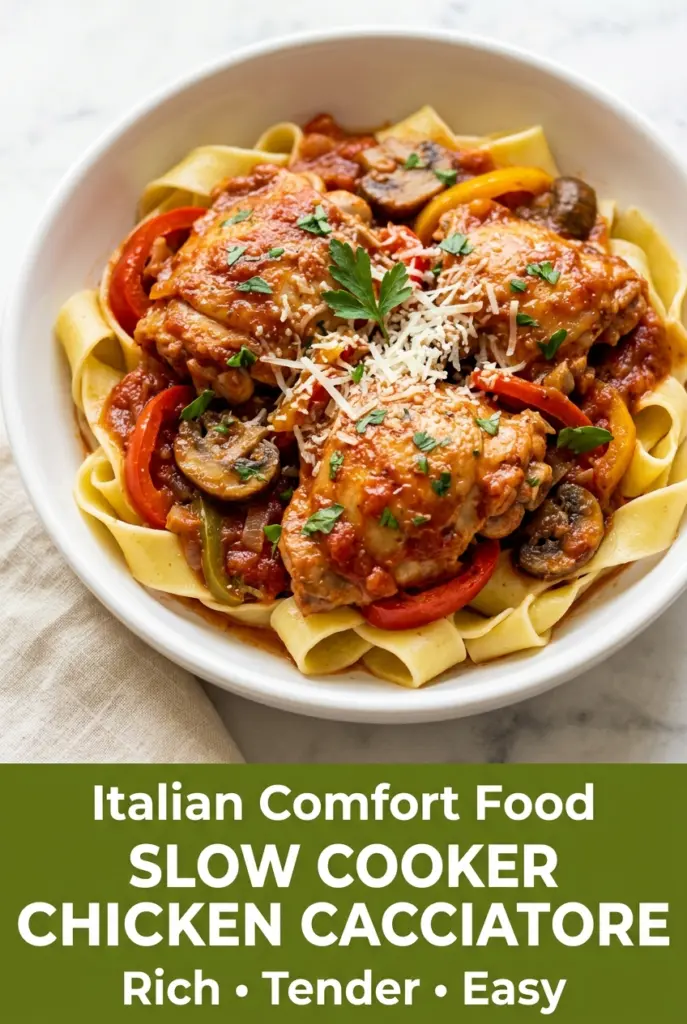
Slow Cooker Chicken Cacciatore turns into the kind of dinner that tastes like it took all afternoon, even though the slow cooker does the heavy lifting. The chicken comes out…

By Ava
•
•
Reading time: 9 min
Tip: save now, make later.
Slow Cooker Chicken Cacciatore turns into the kind of dinner that tastes like it took all afternoon, even though the slow cooker does the heavy lifting. The chicken comes out tender enough to pull apart with a fork, and the sauce settles into that deep, savory tomato flavor that clings to pasta, rice, or mashed potatoes without turning watery.
The trick here is building enough flavor before the lid goes on. Browning the chicken first gives you a richer base, and the tomato paste matters more than it looks like it should. It adds body and keeps the sauce from tasting flat after hours of gentle cooking. The peppers and mushrooms soften into the sauce, but they still hold onto enough texture that the finished dish doesn’t feel muddy.
Below, I’ll walk you through the part that matters most: how to keep the sauce bold, not bland, and how to handle the chicken so it stays juicy instead of stringy. There’s also a storage note that helps this one work well for leftovers, because it reheats beautifully.
The sauce thickened up beautifully and the chicken stayed tender all the way through. I served it over polenta and my husband went back for seconds before I even sat down.
Save this slow cooker chicken cacciatore for a night when you want rich tomato sauce, tender chicken, and almost no hands-on work.
The Step That Keeps Chicken Cacciatore from Tasting Flat
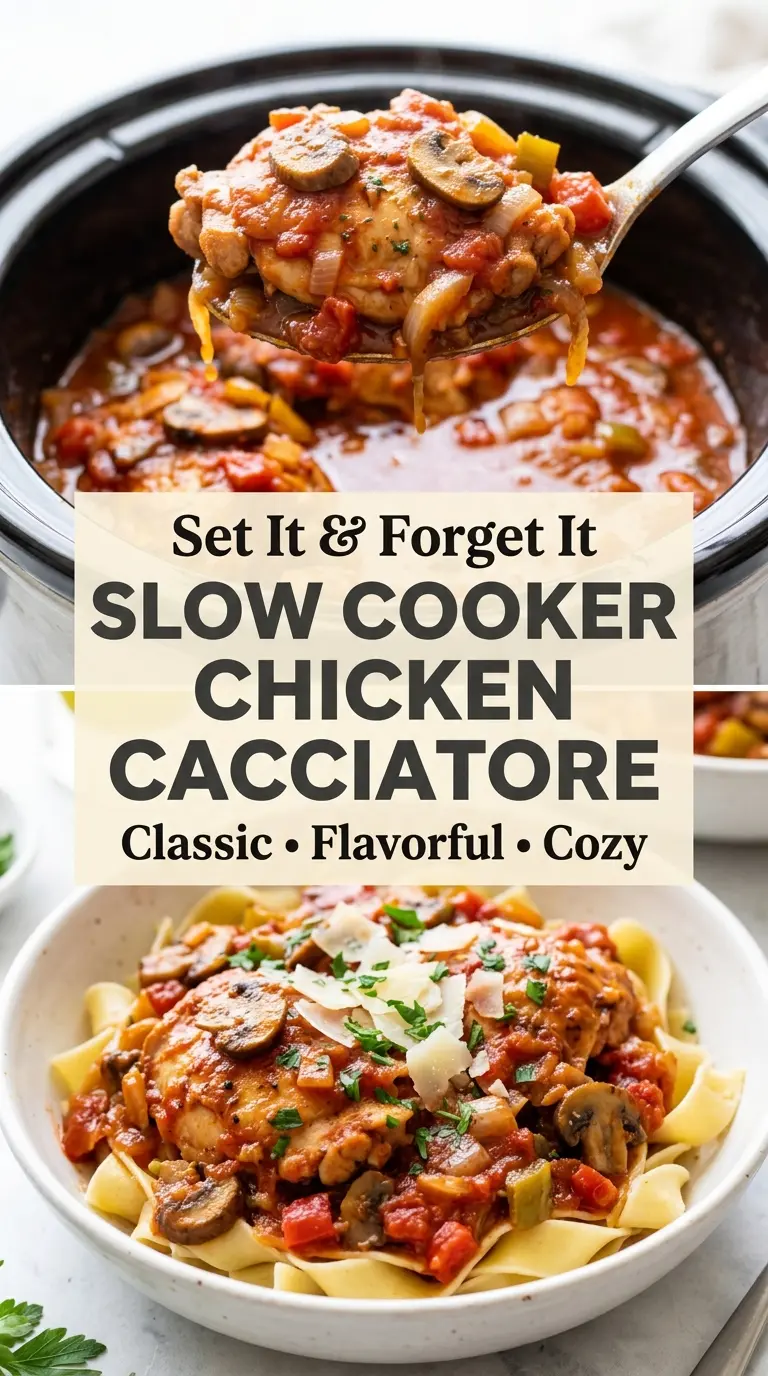
Slow cooker chicken cacciatore can go bland fast if everything is dumped in raw and left to stew without any browning or concentration up front. The skillet sear isn’t there for color alone. It gives the chicken a deeper savory edge, and those browned bits carry straight into the sauce. Skip that step and the finished dish can taste like tomato sauce with vegetables instead of a proper braise.
The other thing that matters is balance. Tomato paste adds body, while the broth loosens the sauce just enough for the slow cooker to circulate heat without drying everything out. If you use too much liquid, you’ll end up with a thin sauce that never quite coats the chicken. If you use too little, the vegetables can taste harsh instead of mellow and silky.
- Chicken thighs — Thighs stay tender through a long cook and hold onto flavor better than breasts. Boneless, skinless thighs are the easiest choice here, and they shred or slice cleanly without getting chalky.
- Crushed tomatoes — This gives you a sauce with texture and body. Tomato sauce can work in a pinch, but crushed tomatoes keep the dish from turning overly smooth or thin.
- Tomato paste — This is the quiet powerhouse in the recipe. It deepens the tomato flavor and thickens the sauce, so don’t skip it unless you plan to reduce the sauce at the end.
- Cremini mushrooms — They bring an earthy note that plays well with the peppers and herbs. White button mushrooms will work, but creminis give a fuller, meatier flavor.
- Italian seasoning, oregano, and basil — This combination builds the herb base without making the sauce taste like one note. If your Italian seasoning is old and faded, add a little extra oregano and basil separately.
Building the Sauce So It Stays Rich in the Slow Cooker
Searing the Chicken First
Heat the oil until it shimmers, then lay the seasoned chicken thighs in the pan without crowding them. You want light browning on both sides, not a hard crust. If the pan is too crowded, the chicken steams and the whole point of the sear disappears. Pull it as soon as the surface turns golden and the meat releases easily.
Laying the Vegetables Underneath
The onions, peppers, mushrooms, and garlic go into the slow cooker first because they create a bed that keeps the chicken from sitting in direct contact with the bottom. That helps the vegetables soften evenly and keeps the sauce from scorching at the edges. Slice the peppers and onions into similar sizes so they cook at the same pace. If the garlic is minced too far ahead, it can taste harsh, so add it right before the sauce goes in.
Cooking Low and Slow
Pour the tomato mixture over the chicken and cook on Low for 6 to 7 hours if you can. High works in a pinch, but Low gives the chicken a softer texture and lets the sauce take on a deeper taste. The chicken is done when it reaches 165°F and pulls apart with little resistance. If the sauce looks thinner than you want at the end, leave the lid off for 15 to 20 minutes and let some steam escape.
Finishing Without Breaking the Sauce
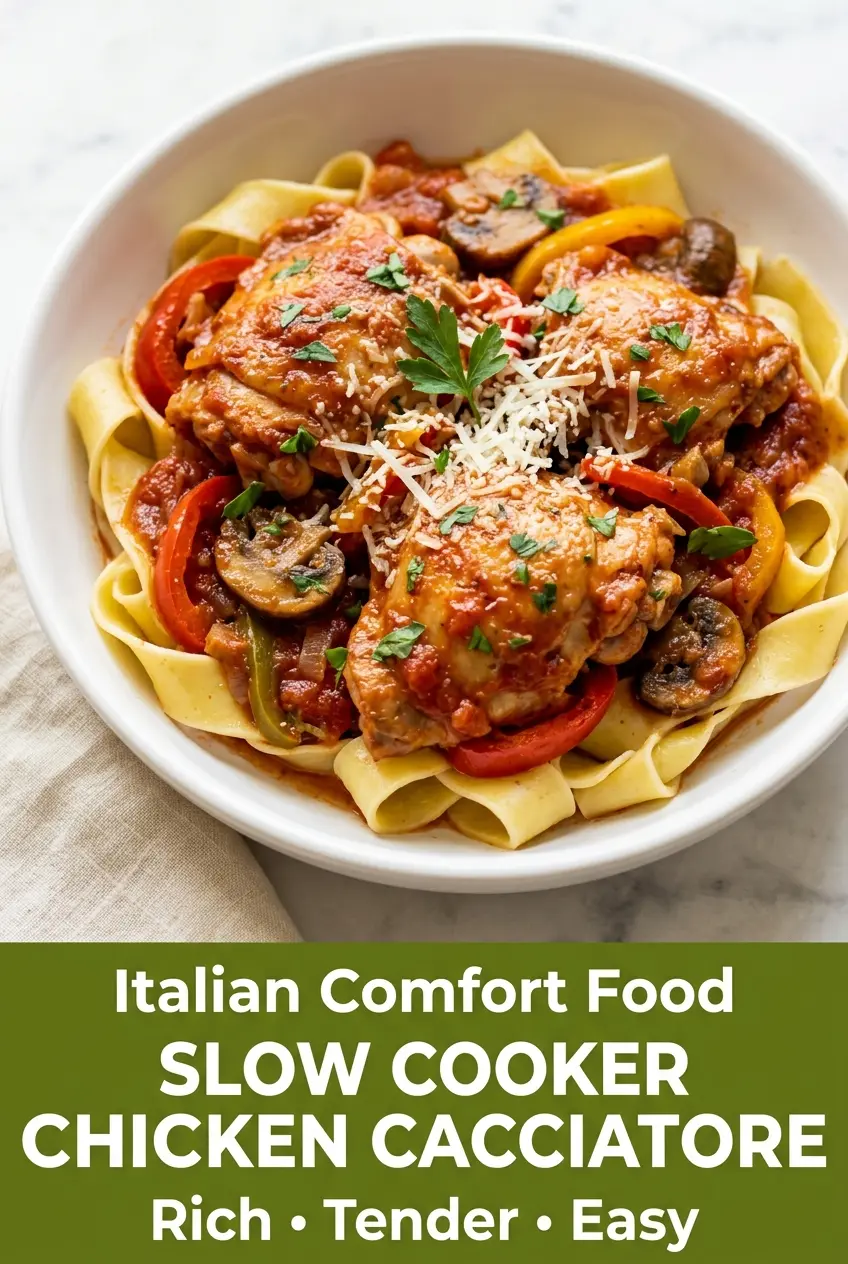
Shred the chicken into large pieces or leave it whole if you like a more rustic look. Stir gently so the vegetables stay intact and the sauce keeps its texture. Add the parsley and Parmesan after cooking, not before, or the cheese can get stringy and the herbs lose their fresh edge. The finished dish should look glossy and spoonable, not soupy.
How to Adapt This for Different Nights and Different Eaters
Dairy-Free Serving
Skip the Parmesan at the end and finish with extra parsley instead. You’ll lose a little salty richness, but the sauce still tastes complete because the tomatoes, mushrooms, and herbs do the heavy lifting.
Using Chicken Breasts Instead
Chicken breasts can work, but they dry out faster, so check them early and pull the cooker as soon as they hit temperature. The texture will be leaner and a little less forgiving than thighs, especially on High.
Gluten-Free Serving
The cacciatore itself is naturally gluten-free as written. Just serve it over rice, mashed potatoes, polenta, or certified gluten-free pasta.
Storage and Reheating
- Refrigerator: Store for up to 4 days. The sauce thickens as it chills, and the flavor gets even better by the next day.
- Freezer: It freezes well for up to 3 months. Cool it completely, portion it into airtight containers, and leave a little room for expansion.
- Reheating: Reheat gently on the stove over low heat or in the microwave at medium power. Add a splash of broth or water if the sauce has tightened up, and don’t blast it on high heat or the chicken can turn dry.
Answers to the Questions Worth Asking
Slow Cooker Chicken Cacciatore
Ingredients
Equipment
Method
- Heat olive oil in a large skillet over medium-high heat. Season chicken thighs with salt and black pepper, then sear for 2–3 minutes per side until lightly browned.
- Add sliced yellow onion, red bell pepper, green bell pepper, cremini mushrooms, and minced garlic to the slow cooker. Lay the browned chicken over the vegetables.
- Whisk crushed tomatoes, tomato paste, chicken broth, Italian seasoning, oregano, basil, and crushed red pepper flakes, then pour the sauce over the chicken. Cover and cook on Low for 6–7 hours or High for 3–4 hours, until the chicken is fork tender and reaches 165°F internally.
- Gently shred the chicken into large pieces or leave whole, then stir everything together until coated in the rich tomato sauce. Sprinkle with chopped fresh parsley and freshly grated Parmesan cheese and serve over cooked pasta, rice, or mashed potatoes.