
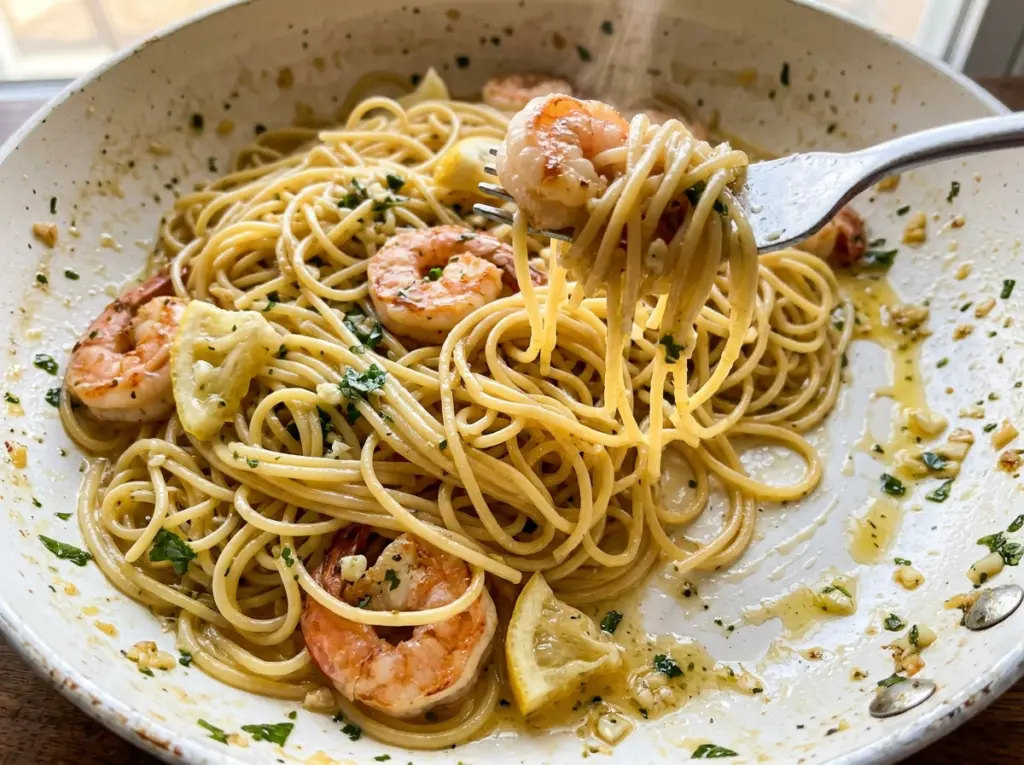
Shrimp Scampi Pasta
When the shrimp hit a crowded skillet, they steam instead of picking up a quick, clean cook, and a few extra minutes can turn them rubbery. I cook them in…

By Ava
•
•
Reading time: 9 min
Tip: save now, make later.
When the shrimp hit a crowded skillet, they steam instead of picking up a quick, clean cook, and a few extra minutes can turn them rubbery. I cook them in two batches, then move them out of the pan while the garlic, butter, and wine become the sauce. That little pause is what makes this shrimp scampi pasta feel polished without making dinner complicated.
The sauce isn’t cream-based; it gets its body from butter, wine, and a splash of the starchy water the linguine cooked in. I toss the hot pasta right in the skillet so it picks up that garlicky coating instead of leaving a puddle at the bottom. Fresh lemon keeps the butter from feeling heavy, and parsley brings a bright finish to every forkful.
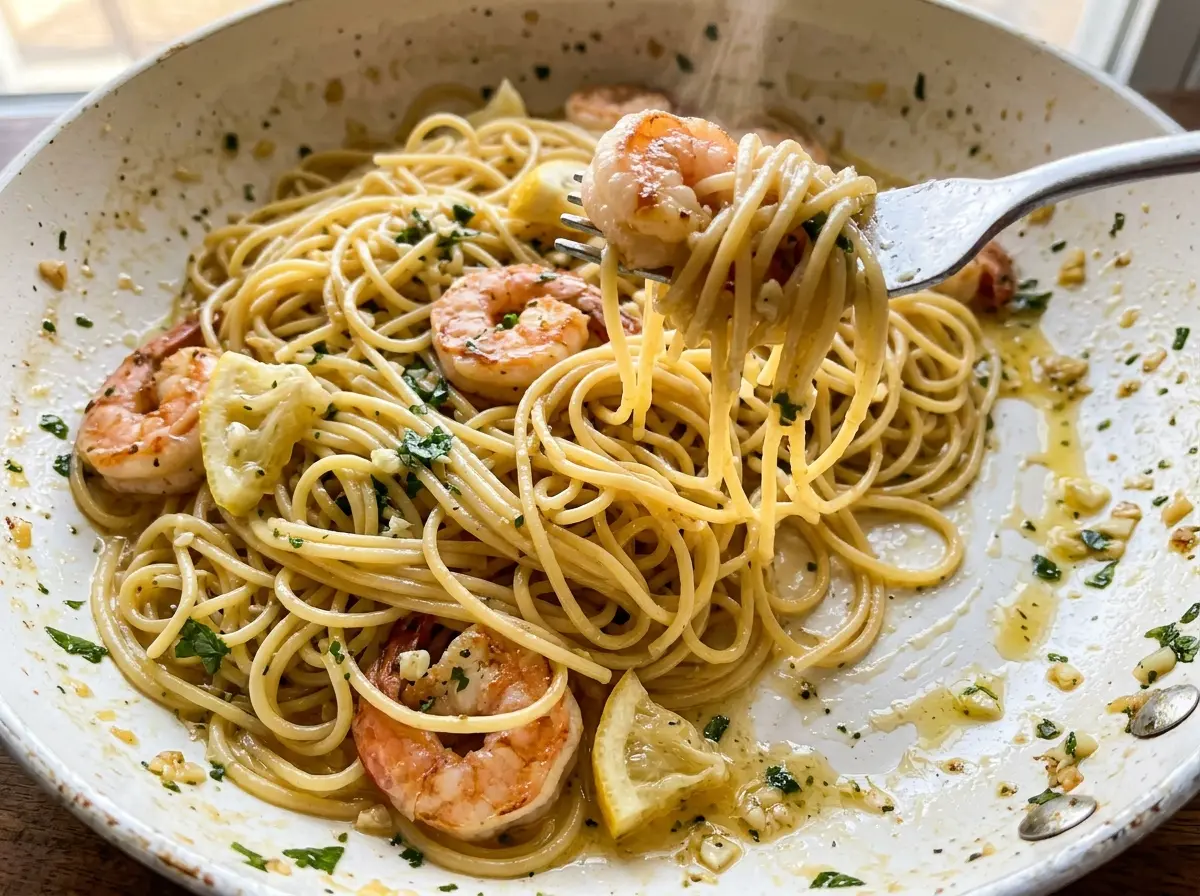
Kitchen Note
Pat the shrimp dry before seasoning. A wet surface releases moisture in the skillet, and that makes it harder to get the quick, even cook you want.
Save this shrimp scampi pasta for a quick skillet dinner with buttery garlic sauce, lemon, and tender linguine.
Why the Pasta Water Belongs in the Skillet, Not Down the Drain
Scampi sauce can look thin and oily before the pasta goes in. That’s normal. The reserved cooking water carries starch from the linguine, and tossing it with the butter and wine helps the sauce cling to the noodles. It gives you a glossy coating without cream or a separate thickener.
Save the water before draining, while it’s still hot and cloudy. Then add it to the skillet with the lemon juice and seasonings, followed by the drained linguine. The noodles need a minute of tossing in the sauce to warm through and take on the garlic and lemon. If you drain the pasta without setting aside the cooking water, plain water won’t contribute the same starchy texture.
This is also why I don’t try to make the sauce in a separate bowl. The wide skillet gives the linguine room to turn through the liquid, and each strand gets coated as the sauce comes together. The finished pasta should look lightly slick and glossy, not drowned in butter.
The Ingredients That Keep Scampi Bright and Well-Coated
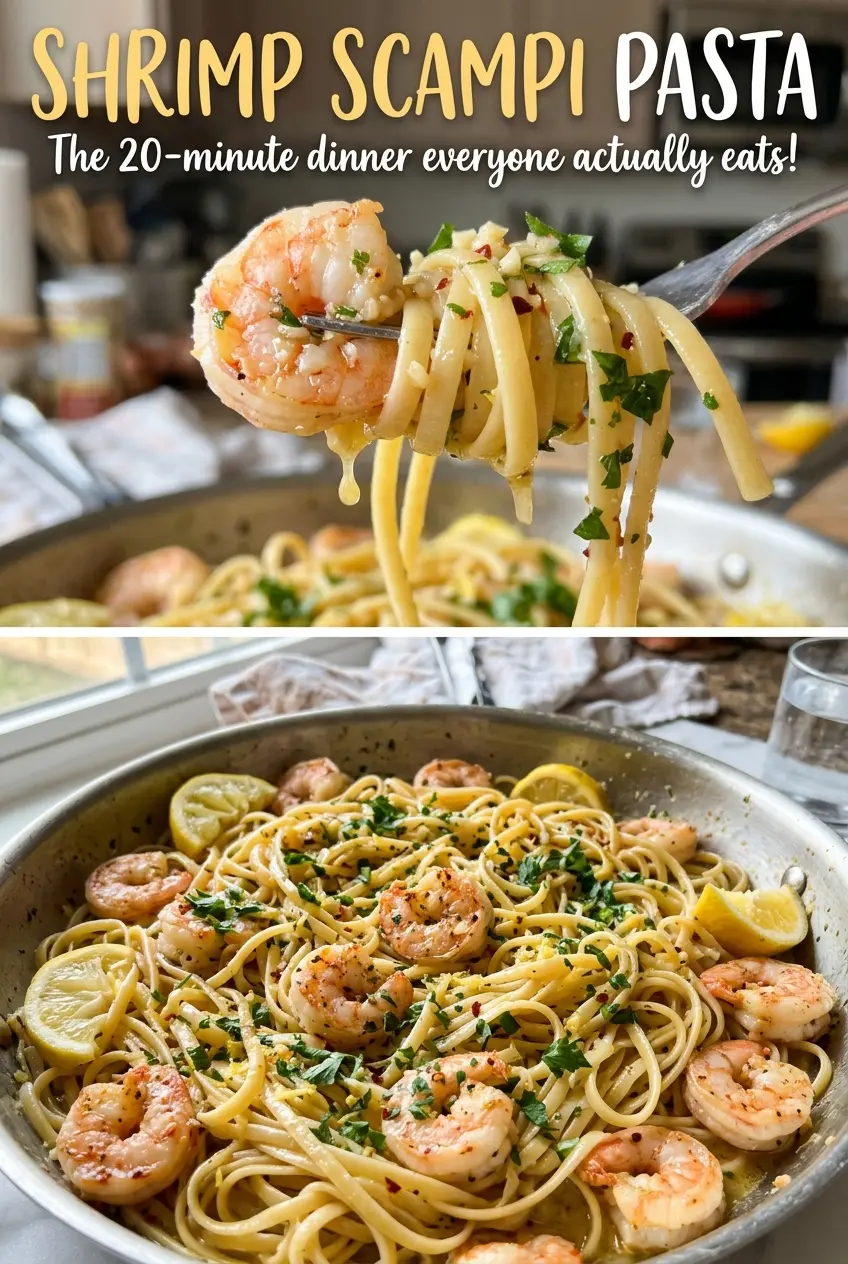
- Linguine — Its flat, long shape catches the butter-and-wine sauce well. Cook it to al dente according to the package directions so it holds together during the final toss. Spaghetti works if that’s what you have, though the strands are rounder and the coating feels a little different.
- Large shrimp — Shrimp in the 21-to-25-per-pound range give you substantial bites and are easier to judge in the skillet than tiny shrimp. Fresh or frozen shrimp work; if buying frozen, choose peeled and deveined shrimp to keep prep simple. Removing the tails makes the finished pasta easier to eat.
- Dry white wine — Dry wine adds acidity and a savory note that balances the butter. Choose a wine you’d be happy to drink, but there’s no need for an expensive bottle. A sweet white wine changes the sauce’s balance, so skip it here.
- Garlic, lemon, and parsley — Fresh minced garlic turns fragrant quickly in the butter, while fresh lemon juice sharpens the sauce at the finish. Chopped fresh parsley gives the pasta a clean, herbal note. Jarred garlic and dried parsley won’t bring quite the same fresh taste or texture.
- Butter and olive oil — The butter gives the sauce richness, while olive oil helps cook the shrimp and rounds out the skillet base. Unsalted butter lets the salt stay under control as the pasta and sauce come together.
- Red pepper flakes — They add a gentle warmth rather than making the pasta hot. Keep them if you like a little heat, or leave them out for a milder skillet.
How to Cook the Shrimp Without Losing the Pasta’s Timing
Boil the Linguine and Save Its Cooking Water
Bring the water to a boil in a 6-quart pot and stir in 2 teaspoons of the kosher salt. Cook the linguine until al dente, following the package directions. Before draining, scoop out 1/2 cup of the pasta water and set it aside. Drain the noodles, but don’t rinse them; rinsing washes away the starch that helps the sauce cling.
Season and Sear the Shrimp in Two Batches
While the linguine cooks, season the shrimp with 1/2 teaspoon of the remaining salt and 1/4 teaspoon of the pepper. Heat 1 tablespoon of olive oil in a 12-inch skillet over medium-high heat. Cook the shrimp in two batches for 1 to 2 minutes per side, transferring each batch to a plate when opaque. Avoid packing them into the skillet all at once, since crowded shrimp release moisture and cook less evenly.
Let the Garlic Turn Fragrant, Not Brown
Reduce the heat to medium, then add the remaining olive oil, butter, garlic, and red pepper flakes. Stir for about 30 seconds, just until the garlic smells fragrant. Keep it moving; browned garlic can taste bitter and will carry that bitterness into the sauce. Pour in the wine and simmer for 2 to 3 minutes, until it has reduced slightly.
Toss the Pasta in the Lemon-Wine Sauce
Stir in the lemon juice, reserved pasta water, remaining salt, and remaining pepper. Add the drained linguine and toss until the strands are coated and hot, about 1 minute. Return the shrimp to the skillet with the parsley, then toss for about 1 minute, just until the shrimp are warmed through. Serve while the sauce is glossy and the shrimp are tender.
Easy Ways to Adapt This Shrimp Scampi Pasta
Make It Gluten-Free With Gluten-Free Linguine
Use gluten-free linguine in place of regular linguine and cook it according to its package directions. Reserve the pasta water before draining, as some gluten-free pastas release less starch, so the sauce may coat a little differently. The garlic-butter sauce and shrimp stay the same.
Use Olive Oil Instead of Butter
For a dairy-free version, replace the butter with olive oil. The sauce will be lighter and less rich, but the wine, garlic, lemon, and pasta water still make a savory coating for the linguine.
Keep the Sauce Mild
Leave out the red pepper flakes for a gentler garlic-and-lemon sauce. You’ll lose the little prickle of heat, but the butter, wine, and parsley still give the dish plenty of character.
Storage and Reheating
- Refrigerator: Refrigerate leftovers in an airtight container within 2 hours and eat within 3 days. The linguine will absorb some sauce as it sits.
- Freezer: You can freeze the pasta in an airtight container for up to 2 months, though the shrimp may be softer after thawing.
- Reheating: Warm leftovers gently in a skillet over low heat with a small splash of water, stirring until hot throughout. High heat can toughen the shrimp and make the sauce separate.
Questions That Come Up When Making Shrimp Scampi Pasta
Shrimp Scampi Pasta
Ingredients
Equipment
Method
- Bring the water to a boil in a 6-quart pot.
- Stir in 2 teaspoons of the salt.
- Cook the linguine until al dente according to the package directions.
- Reserve 1/2 cup pasta cooking water, then drain the linguine.
- While the pasta cooks, pat the shrimp dry.
- Season the shrimp with 1/2 teaspoon of the remaining salt and 1/4 teaspoon of the pepper.
- Heat 1 tablespoon of the olive oil in a 12-inch skillet over medium-high heat.
- Cook the shrimp in two batches for 1 to 2 minutes per side, until opaque, transferring each batch to a plate.
- Reduce the heat to medium and add the remaining olive oil, butter, garlic, and red pepper flakes.
- Cook for about 30 seconds, stirring, until fragrant.
- Pour in the wine and simmer for 2 to 3 minutes, until slightly reduced.
- Stir in the lemon juice, reserved pasta water, remaining 1/2 teaspoon salt, and remaining 1/4 teaspoon pepper.
- Add the drained linguine and toss until coated and hot, about 1 minute.
- Return the shrimp to the skillet and add the parsley.
- Toss until warmed through, about 1 minute.