
Christmas Tree Pesto Puff Pastry
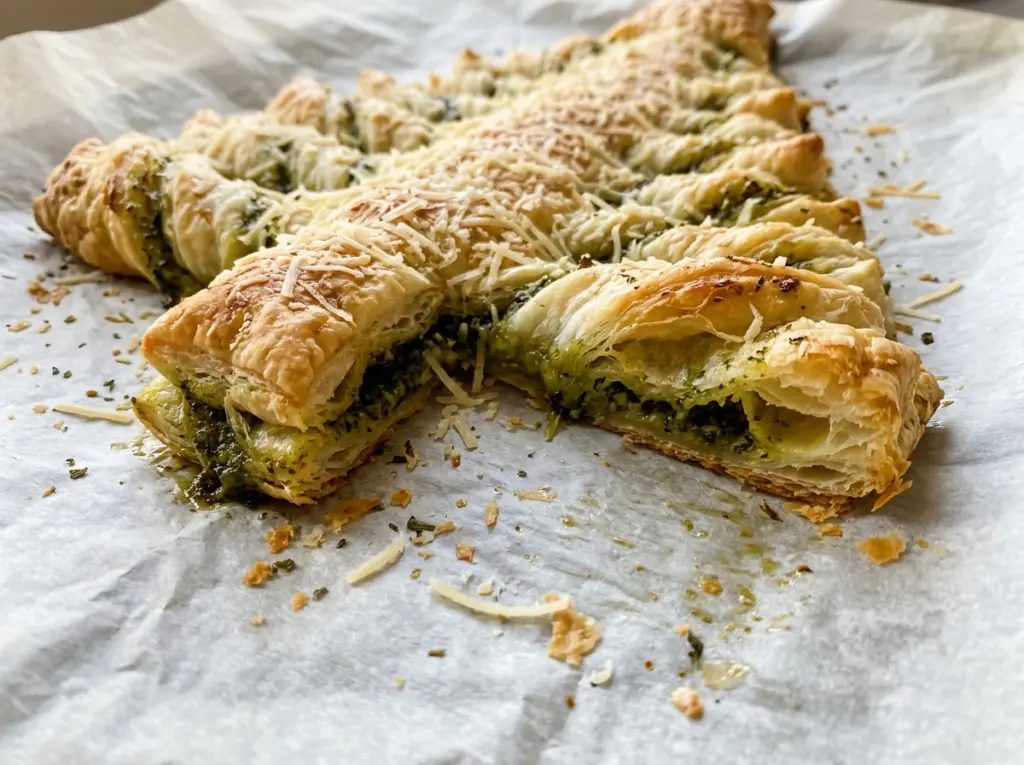
The pastry puffs up around the edges first, and the pesto starts to peek through the twists as the whole tree turns deep golden. The first time I shaped one,…

By Ava
•
•
Reading time: 9 min
Tip: save now, make later.
The pastry puffs up around the edges first, and the pesto starts to peek through the twists as the whole tree turns deep golden. The first time I shaped one, I cut too close to the center and the branches nearly separated. Leaving a sturdy strip down the middle gives this Christmas Tree Pesto Puff Pastry its shape and keeps every branch attached.
Two sheets of thawed puff pastry make the construction simple: spread pesto and Parmesan on the bottom sheet, cover it with the second, then cut and twist the branches. The uncut center does more than suggest a tree trunk; it gives you a stable spine to work from while you shape the pastry. Once brushed with egg wash and baked, the layers puff into crisp, flaky branches with savory pesto tucked inside.
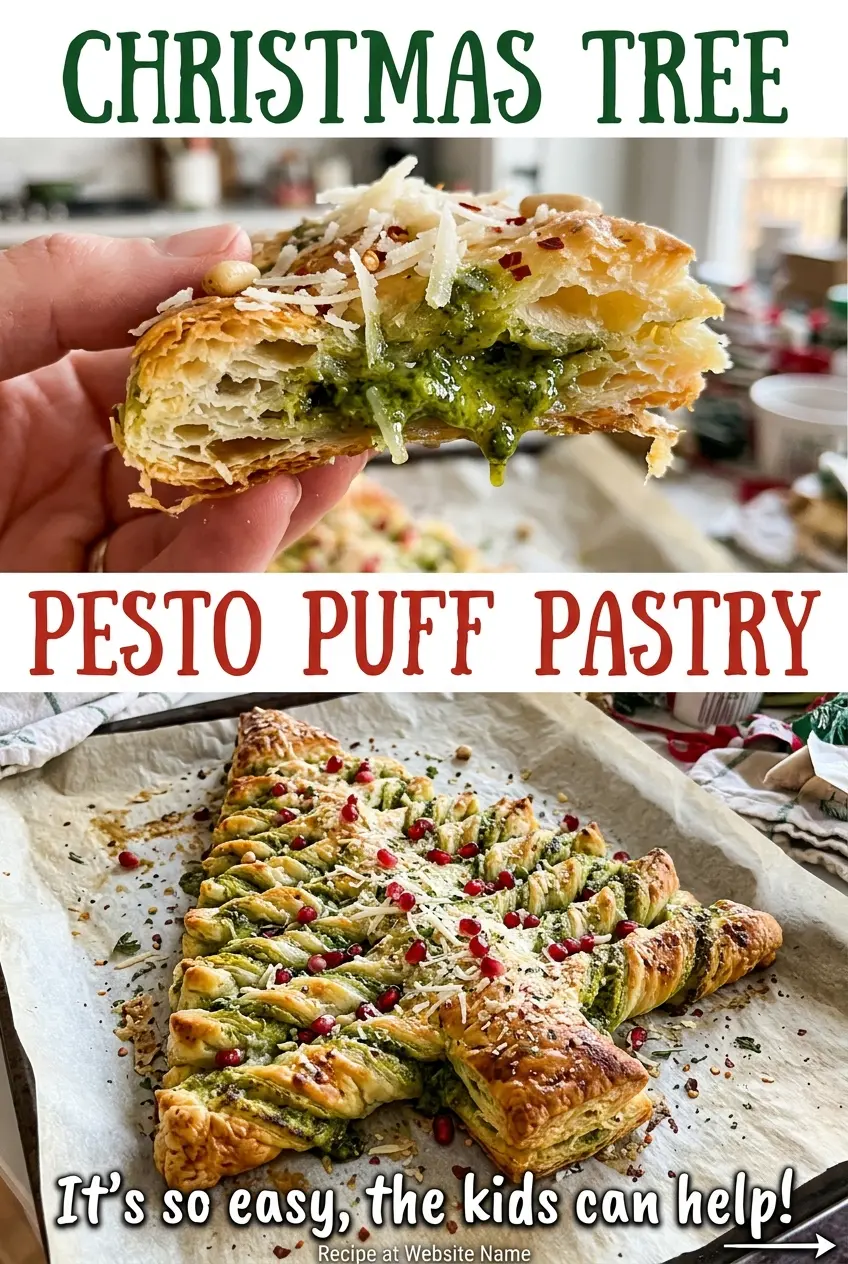
It’s a festive appetizer that looks carefully made without requiring complicated dough work. Serve it warm after the five-minute rest, when the pastry is still crisp and the Parmesan-pesto filling smells fragrant.
Kitchen Note
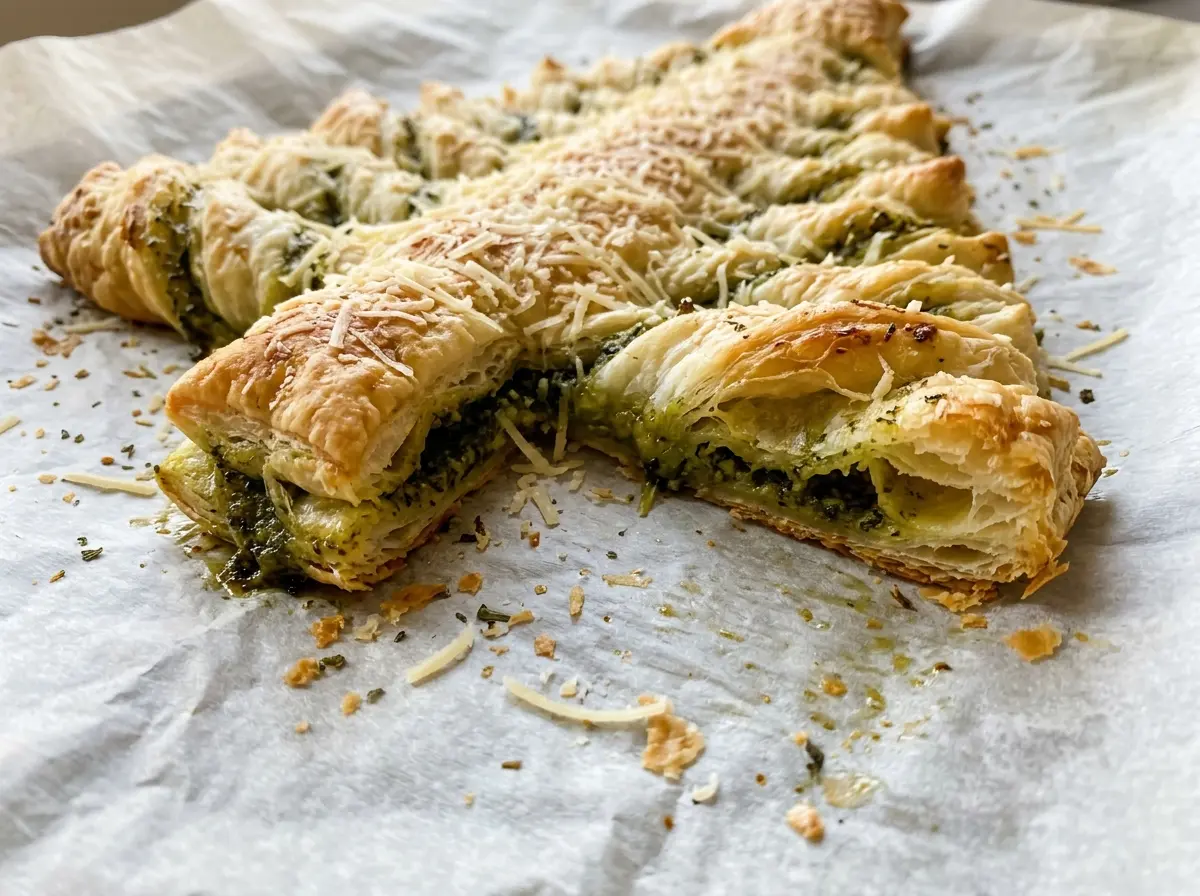
Let the baked tree rest on the baking sheet for the full five minutes before moving or serving it. The pastry is delicate straight from the oven, and that brief pause helps the layers settle without giving up their crisp edges.
Save this Christmas Tree Pesto Puff Pastry for a holiday appetizer with crisp, twisted branches and a savory pesto-Parmesan center.
Why the Uncut Center Makes This Pastry Tree Hold Together
The tree shape depends on one small piece of pastry that’s easy to underestimate: the strip left untouched down the middle. Each branch is cut from the outer edge toward the center, but that center strip stays connected from the pointed top down to the short trunk. It acts like a backbone, keeping the filled pastry in one piece while the branches turn outward.
Cutting too far into that strip weakens the tree, and a branch can pull away when you twist it. Keep the middle about an inch wide, then turn each branch only once or twice. That gives the layers room to show without stretching the pastry into thin spots. The branches don’t need to match perfectly; a clear center and gently sloping sides are what make the finished shape read as a tree.
The filling matters to the structure, too. A border around the edge leaves pastry available to press together after the top sheet goes on, helping contain the pesto as you cut. With that border and the center spine intact, you can focus on shaping the branches instead of trying to repair a pastry that’s come apart.
Why Pesto, Parmesan, and Puff Pastry Work So Well Together
- Frozen puff pastry — Two thawed sheets create the top and bottom of the tree, with distinct layers that puff in the oven. Thaw them according to the package directions; pastry that’s ready to unfold is easier to lay flat and shape. The package is a useful guide here because brands may differ in how they handle thawing.
- Basil pesto — Pesto brings the concentrated basil flavor and a little richness between the pastry layers. Use a basil pesto whose flavor you enjoy on its own, since it’s the main seasoning in the filling. Spread it evenly and leave the border clear so the edges can be pressed together.
- Finely grated Parmesan — The fine texture distributes the cheese across the pesto instead of leaving large pieces in a few spots. Its salty, savory flavor balances the basil. Finely grated Parmesan is the useful choice for this thin filling layer.
- Egg and water — Whisking these together makes a simple egg wash that gives the exposed pastry an even golden finish. Brush it across the surface rather than leaving broad bare patches; the egg wash is for the outside, not the filling.
How to Shape and Bake the Twisted Pastry Branches
Layer the Pesto and Parmesan
Heat the oven to 400°F and line a rimmed baking sheet with parchment paper. Place one thawed pastry sheet on the prepared sheet, then spread the basil pesto over it while keeping a half-inch border clear. Sprinkle the finely grated Parmesan over the pesto in an even layer. Set the second pastry sheet on top and press the edges together without smearing the filling into the border.
Cut the Tree and Twist Each Branch
Cut the stacked pastry into a tree with a pointed top, sloping sides, and a short trunk centered at the bottom. Make cuts from each side toward the center, spacing the branches about an inch apart and leaving a one-inch-wide strip uncut down the middle. Twist each branch once or twice. If a branch feels like it’s pulling apart, stop rather than forcing an extra turn.
Brush and Bake Until Deeply Golden
Whisk the egg and water together in a small bowl, then brush the egg wash evenly over the pastry. Bake for 18 to 22 minutes, until the tree is puffed and deeply golden brown. A pale surface needs more color, while the deepest gold gives the branches a crisp-looking finish. Let the pastry rest on the baking sheet for five minutes before serving.
Easy Changes for a Different Pesto Tree
Use a different pesto flavor
Swap the basil pesto for another prepared pesto, such as sun-dried tomato pesto, keeping the same amount. The tree will keep its flaky shape, but the filling will taste sweeter and more tomato-forward than the basil version.
Make the filling dairy-free
Use dairy-free basil pesto and leave out the Parmesan. The pesto still gives the pastry its herbal, savory center, though you’ll lose the salty, nutty note the cheese brings. The egg wash remains part of this version.
Choose gluten-free puff pastry
Use gluten-free puff pastry in place of the regular pastry, choosing a package with two sheets that can cover the same tree shape. The layers may handle differently, so follow that package’s thawing directions and work gently when twisting the branches. The pesto and Parmesan filling stays the same.
Storage and Reheating
- Refrigerator: Refrigerate leftovers within 2 hours and keep them covered for 3 to 4 days. The pastry softens as it sits.
- Freezer: Freeze fully cooled pieces in an airtight container for up to 1 month. Thaw them in the refrigerator; the pastry may be less crisp than it was fresh.
- Reheating: Reheat in the oven until warmed through and crisp at the edges. Skip the microwave if you want to avoid soft, chewy pastry.
Questions That Come Up While Making This Pesto Tree
Christmas Tree Pesto Puff Pastry
Ingredients
Equipment
Method
- Heat the oven to 400°F.
- Line a rimmed baking sheet with parchment paper.
- Place one thawed pastry sheet on the baking sheet.
- Spread the pesto evenly over the pastry, leaving a 1/2-inch border.
- Sprinkle with the Parmesan.
- Place the second pastry sheet on top.
- Press the edges together.
- Cut the stacked pastry into a tree shape with a pointed top, sloping sides, and a short centered trunk.
- Cut branches about 1 inch apart from each side toward the center, leaving a 1-inch-wide strip uncut down the middle.
- Twist each branch once or twice.
- Whisk the egg and water together in a small bowl.
- Brush the egg wash evenly over the pastry.
- Bake for 18 to 22 minutes, until puffed and deeply golden brown.
- Let the pastry rest on the baking sheet for 5 minutes before serving.