
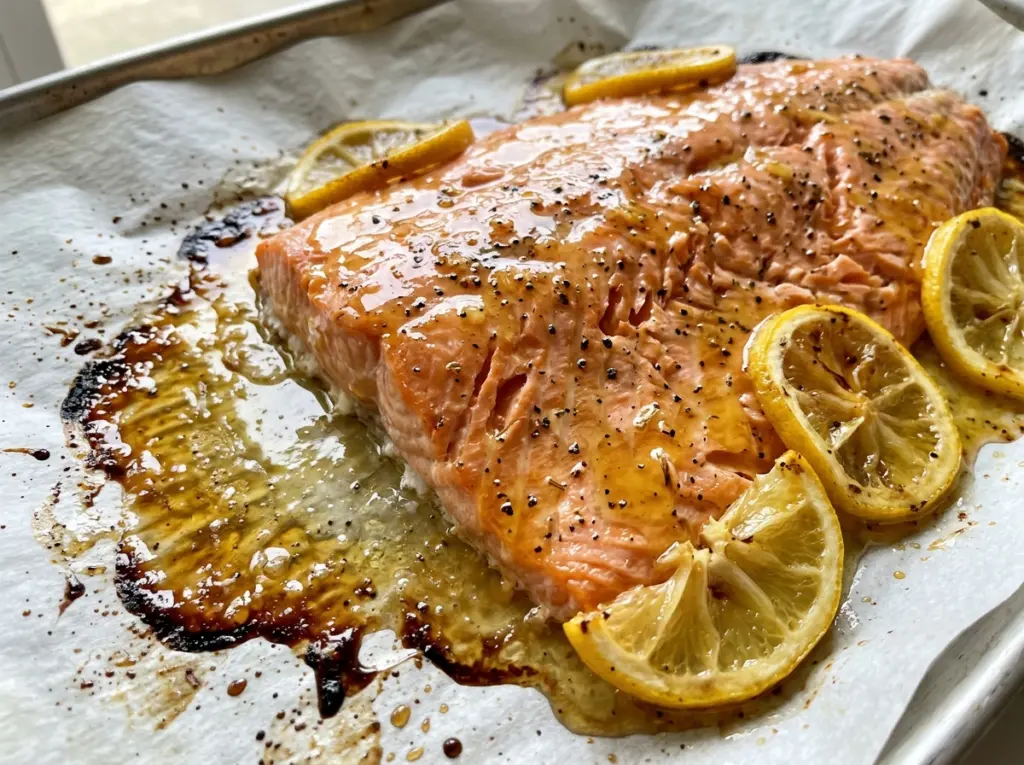
Sheet Pan Honey Lemon Salmon
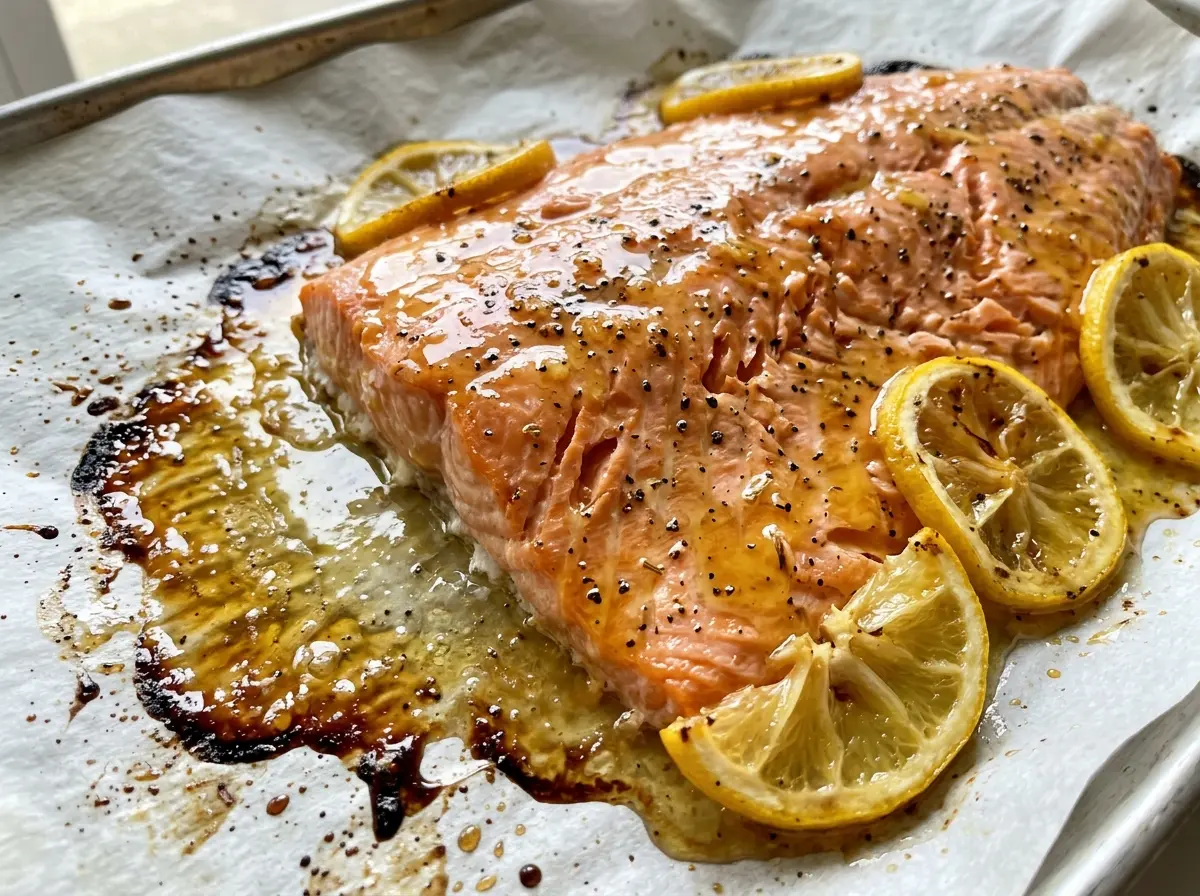
The parchment comes out with a little honey-lemon glaze around the salmon, while the asparagus still has a bit of snap. That contrast is what I want from Sheet Pan…

By Ava
•
•
Reading time: 8 min
Tip: save now, make later.
The parchment comes out with a little honey-lemon glaze around the salmon, while the asparagus still has a bit of snap. That contrast is what I want from Sheet Pan Honey Lemon Salmon: tender fish, bright citrus, and vegetables that haven’t gone limp while the salmon cooks. Keeping everything on one pan also means dinner doesn’t leave a sink full of dishes behind.
I use center-cut fillets of even thickness so the fish and asparagus can share the oven without one racing ahead of the other. The glaze brings honey’s gentle sweetness together with lemon, Dijon, and finely grated garlic; it’s tangy enough to balance the salmon without covering up its flavor. The finished fillets look glossy, and the asparagus keeps its fresh, green bite.
Kitchen Note
Use a rimmed sheet pan, not a flat cookie sheet. The raised edge keeps the olive oil and any glaze drips contained, while the parchment makes cleanup much easier.
Save Sheet Pan Honey Lemon Salmon for a night when you want glossy, citrusy fish and tender-crisp asparagus without juggling several pans.
Why the Asparagus Belongs at the Edges, Not Under the Salmon
The salmon and asparagus need different things from the pan. The asparagus benefits from being spread out so its stalks roast instead of sitting in a damp pile. The fillets need their own space in the middle, where they’re easy to glaze and check without lifting or shifting the vegetables.
Keep the spears in a loose layer rather than stacking them, and push them toward the sides before setting the fish in the center. That arrangement gives you a better chance of getting tender-crisp asparagus at the same time the salmon is cooked through. If the pan is crowded, the vegetables can soften from trapped moisture instead of keeping a little bite. An 18×13-inch pan gives four fillets and the asparagus room to sit without being crammed together.
What Honey, Dijon, and Fresh Lemon Each Bring to the Glaze
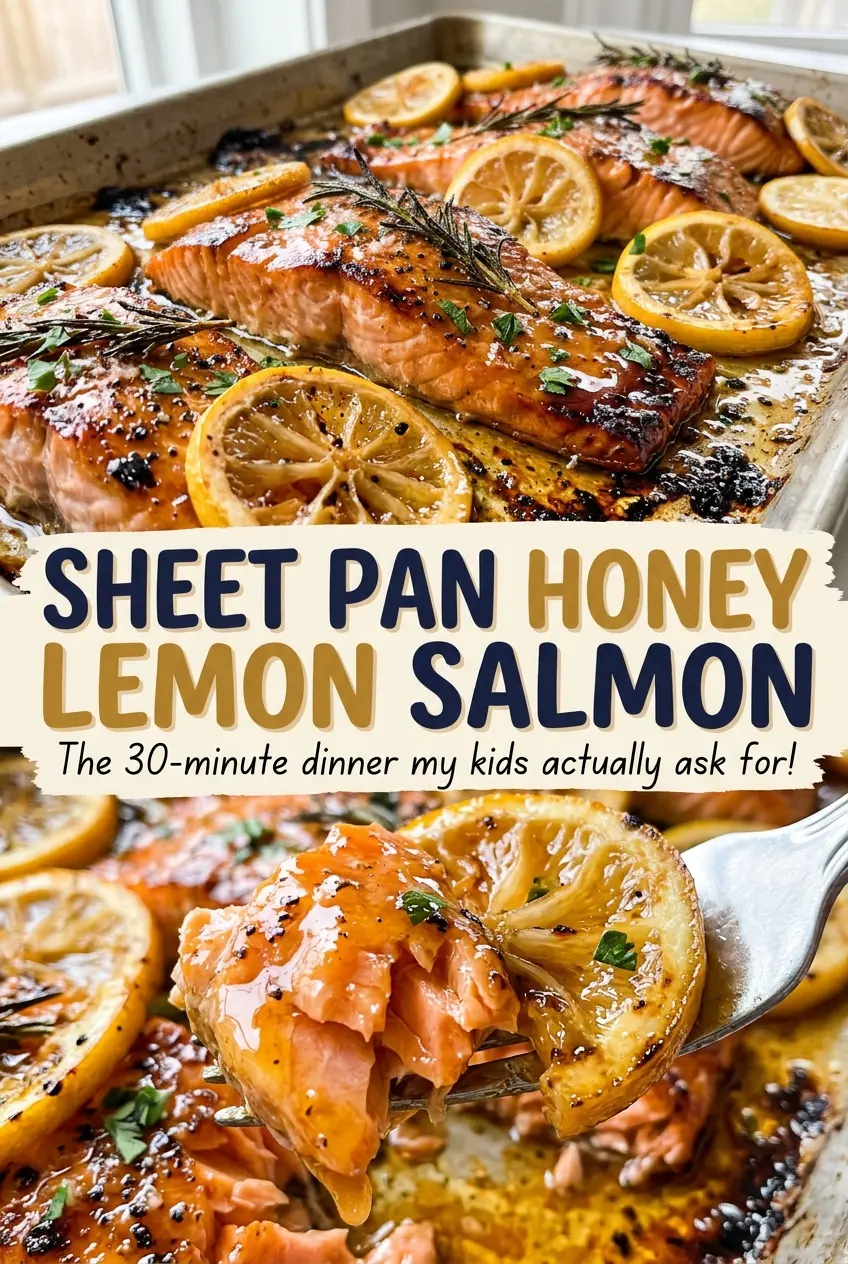
- Center-cut salmon — Fillets of similar thickness cook more evenly than thin tail pieces. Choose fish that looks moist and smells clean; the center-cut shape matters more here than paying extra for a particular label. Thinner portions cook faster, so they’re not my first choice when the asparagus needs to finish alongside them.
- Asparagus — Fresh spears give the pan a crisp-tender vegetable that can cook in the same window as the fish. Trim off the woody ends before arranging them. I wouldn’t swap in another vegetable without changing the cooking plan, because different vegetables need different amounts of time.
- Honey — Honey gives the glaze body and a mild sweetness that clings to the salmon. Maple syrup works in its place in the same amount, though it makes the glaze a little thinner and brings a woodsy sweetness of its own.
- Fresh lemon — The juice gives the glaze its sharp, clean acidity, while finely grated zest adds fragrant citrus oils. Bottled lemon juice can stand in for the juice, but it won’t replace the aroma of fresh zest; keep the zest fresh if you have a lemon.
- Dijon and garlic — Dijon cuts through the honey with a mild tang, and finely grated garlic spreads its savory flavor through the glaze. Yellow mustard can replace Dijon in the same amount, but it tastes sharper and less rounded. Grate the garlic finely so it mixes into the glaze instead of leaving larger pieces on the fish.
From a Parchment-Lined Pan to Glazed, Just-Cooked Salmon
Set Up the Pan for Even Cooking
Heat the oven to 425°F and line an 18×13-inch rimmed sheet pan with parchment paper. Toss the asparagus with the olive oil, then push it toward the sides of the pan. Set the salmon fillets in the center and season the asparagus and fish evenly with the kosher salt and black pepper.
Whisk and Brush on the Honey-Lemon Glaze
In a small bowl, whisk together the honey, lemon juice, lemon zest, Dijon mustard, and finely grated garlic. Keep whisking until the mustard is blended through and the mixture looks cohesive rather than streaky. Brush the glaze over the salmon fillets, spreading it across the tops so each piece gets an even coating.
Bake Until the Fish and Asparagus Are Ready
Bake the pan for 10–14 minutes. Check the thickest part of a fillet with an instant-read thermometer; it should reach 145°F. The asparagus should be tender-crisp, not floppy, and the salmon should look opaque through the thickest part. If the asparagus still feels firm when the fish is ready, take care not to leave the salmon in the oven just to soften the vegetables.
Small Changes That Keep This Sheet Pan Dinner in Balance
Swap Honey for Maple Syrup
Use the same amount of maple syrup in place of the honey. The glaze will be a little looser and the sweetness more woodsy, but it still brushes onto the salmon and pairs well with lemon and Dijon.
Make the Glaze More Lemon-Forward
For a sharper, less-sweet finish, use 1 tablespoon honey and 1½ tablespoons fresh lemon juice. Keep the lemon zest, Dijon, and garlic the same; the glaze will taste brighter and won’t be quite as sweet on the salmon.
Make It a Salmon-Only Pan
Leave out the asparagus and olive oil when you want the salmon on its own. Keep the seasoning and glaze for the fish; with no vegetables on the pan, there’s less to arrange and the finished meal is focused on the sweet-tangy fillets.
Storage and Reheating
- Refrigerator: Store the salmon and asparagus in an airtight container and refrigerate within 2 hours. Use the leftovers within 3–4 days; the asparagus softens as it sits.
- Freezer: Cooked salmon freezes well for up to 2–3 months when wrapped tightly or packed airtight. The asparagus gets softer after thawing, so freeze the salmon separately if you want the best texture.
- Reheating: Warm portions in the microwave at reduced power in short bursts, checking the center until it reaches 165°F. Long, high-power heating dries out salmon quickly.
The Questions That Come Up When Salmon and Asparagus Share a Pan
Sheet Pan Honey Lemon Salmon
Ingredients
Equipment
Method
- Heat the oven to 425°F.
- Line an 18x13-inch rimmed sheet pan with parchment paper.
- Arrange the asparagus on the pan.
- Toss the asparagus with the olive oil, then push it to the sides.
- Place the salmon fillets in the center.
- Season the asparagus and salmon evenly with the salt and pepper.
- Whisk the honey, lemon juice, lemon zest, Dijon mustard, and garlic in a small bowl.
- Brush the glaze over the salmon.
- Bake for 10–14 minutes, until the thickest part of the salmon reaches 145°F and the asparagus is tender-crisp.