
Cinnamon Roll Monkey Bread
The icing packet goes from thick to pourable in just a few seconds, which is exactly the kind of small detail that makes this Cinnamon Roll Monkey Bread easy to…

By Ava
•
•
Reading time: 9 min
Tip: save now, make later.
The icing packet goes from thick to pourable in just a few seconds, which is exactly the kind of small detail that makes this Cinnamon Roll Monkey Bread easy to finish while it’s still warm. I’ve found that the bigger challenge comes earlier: the pieces around the edge can look golden while the ones in the center still need time. A Bundt pan helps, but even arrangement and a little attention to the center make the difference between tender pull-apart pieces and dough that’s still gummy inside.
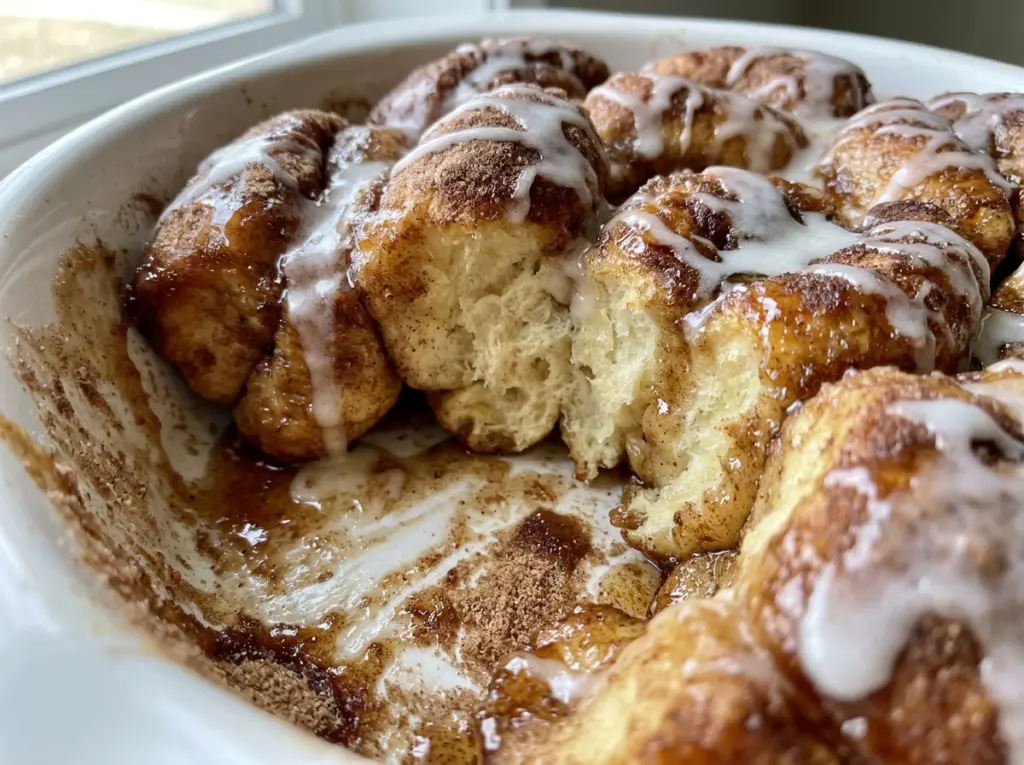
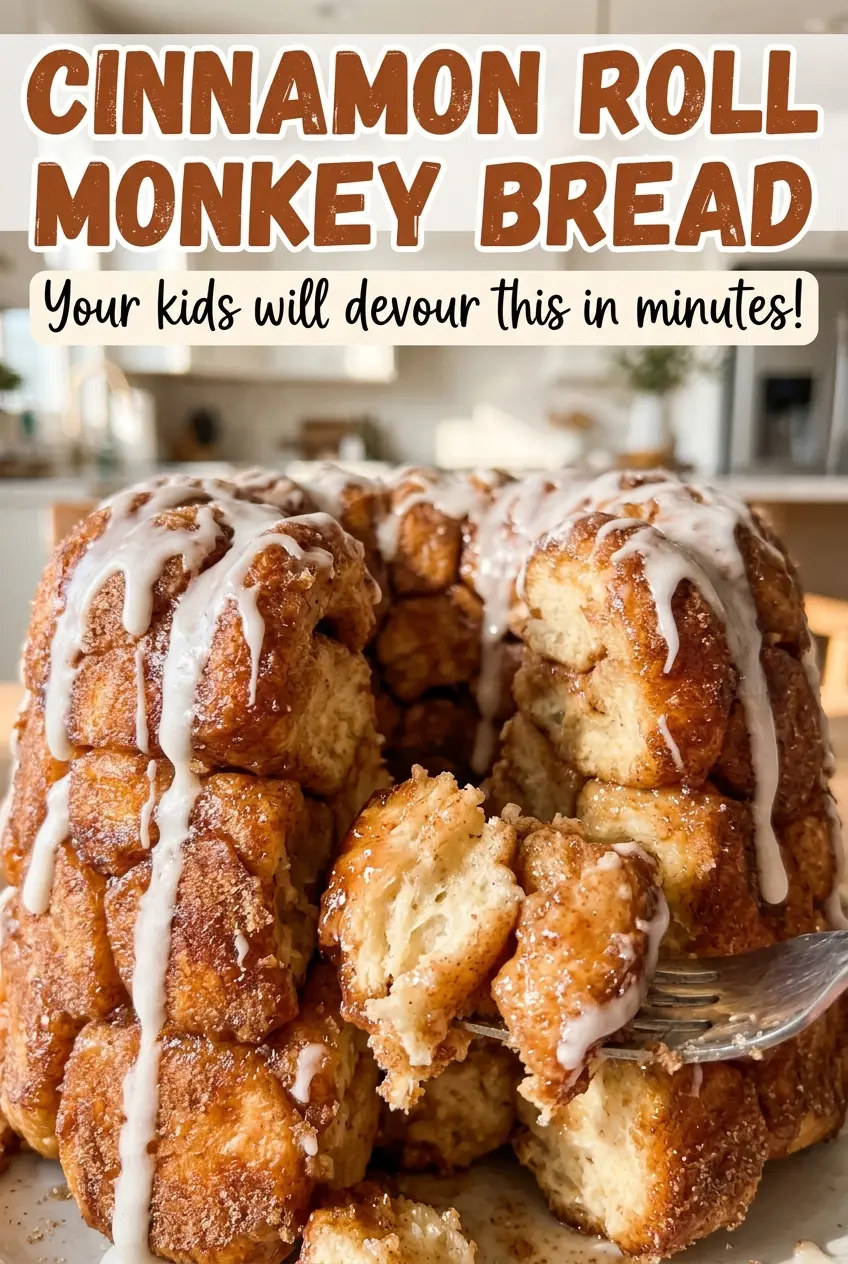
Each cinnamon roll gets cut into quarters, then tossed in cinnamon sugar before it goes into the pan. That extra coating gives every piece a sweet, cinnamon-y outside, while melted butter and brown sugar settle through the layers as the bread bakes. Let it rest before turning it out, then drizzle on the warmed icing. The result is a warm ring of soft, pull-apart cinnamon rolls with a glossy finish.
Kitchen Note
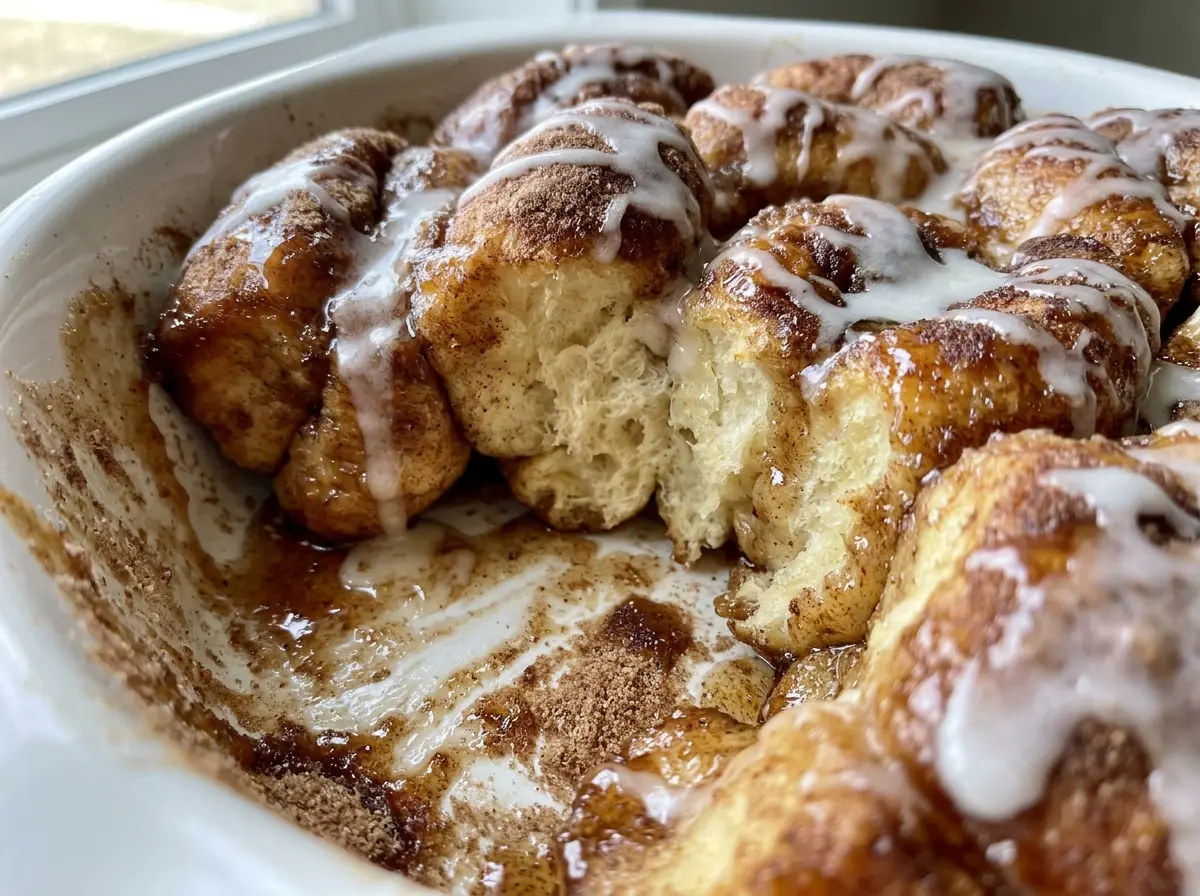
Give the monkey bread the full 10-minute rest before you invert the pan. Turning it out too soon makes the warm pieces more likely to shift or separate; after the short rest, the ring holds together better.
Save this Cinnamon Roll Monkey Bread for a warm, pull-apart treat with cinnamon-sugar edges and a drizzle of icing.
Why the Bundt Pan’s Center Tube Matters for Monkey Bread
Monkey bread bakes as a thick cluster of dough pieces, so the middle can take longer to cook than the exposed outside. The center tube of a Bundt pan leaves an open channel through the middle of that ring. That gives the center pieces a better chance to bake through before the outside becomes too dark.
Pan capacity matters here, too. A 10-cup Bundt pan gives the pieces room to form an even ring instead of piling too high. Grease the center tube as carefully as the rest of the pan; dough and syrupy brown sugar can cling there, making the finished ring harder to release cleanly.
When you arrange the coated pieces, spread them around the pan rather than leaving one tall mound on a side. The goal isn’t to press them into a tight, solid mass. An even layer helps the butter mixture reach across the dough and makes it easier to judge whether the center has baked through. Golden color is useful, but the center pieces need to be cooked through as well.
What Each Cinnamon Roll Ingredient Does in This Pull-Apart Bake
- Refrigerated cinnamon rolls — The dough already has its cinnamon filling, and each can comes with icing for the finish. Choose two cans of the same size so the pieces bake at a similar rate. Store-brand rolls are fine when they match the specified size; biscuit dough isn’t a close substitute because it lacks the cinnamon swirl and included icing.
- Granulated sugar and ground cinnamon — Tossing the cut dough in this dry mixture coats the outside of each piece before it goes into the pan. Fresh, fragrant cinnamon gives the coating a clearer cinnamon aroma; if yours smells faint when you open the jar, replacing it is more useful than adding extra. Superfine sugar can stand in for granulated sugar in the same quantity, but powdered sugar won’t coat the pieces the same way.
- Unsalted butter and light brown sugar — Together, they make the buttery mixture that gets poured over the dough before baking. Brown sugar that’s soft and moist stirs into the melted butter more readily than a dry, hardened lump. Dark brown sugar works in the same quantity if that’s what you have, though its deeper molasses taste will come through more strongly.
- The icing packets — These provide the finishing drizzle without needing a separate glaze. Keep them aside while cutting the rolls, then warm the icing only until it pours easily. If using dairy-free rolls for an adaptation, use the icing supplied with those rolls rather than assuming a standard packet is dairy-free.
Coating, Layering, and Baking the Cinnamon Roll Pieces
Cut and Coat Every Piece
Heat the oven to 350°F and generously grease a 10-cup Bundt pan, including the center tube. Set the icing packets aside, then cut each cinnamon roll into four pieces. Toss the pieces in a large bowl with the granulated sugar and ground cinnamon until the coating looks even. If pieces are bare in spots, give the bowl another gentle toss before moving on.
Arrange an Even Ring
Transfer the coated pieces to the prepared pan and distribute them evenly around it. Try not to leave a large heap on one side or pack all the dough tightly into one section. An even arrangement helps the butter mixture spread across the pieces and supports more consistent baking. Leave the pan’s center tube clear.
Stir the Butter and Brown Sugar Smooth
Melt the butter with the packed light brown sugar in a small saucepan over medium heat. Stir for 2 to 3 minutes, watching for the sugar to blend into the butter and the mixture to look smooth. If you still see separated pools of butter or stubborn clumps of sugar, keep stirring over the same medium heat until the mixture comes together. Pour it evenly over the cinnamon roll pieces.
Bake, Rest, and Finish with Icing
Bake for 35 to 40 minutes, until the top is golden brown and the pieces in the center are cooked through. Don’t judge doneness by the outside color alone; check the center pieces before taking the pan out. Let the monkey bread rest in the pan for 10 minutes, then carefully invert it onto a serving plate. Microwave the reserved icing in a microwave-safe bowl for 5 to 10 seconds, just until pourable, and drizzle it over the warm bread.
Two Swaps That Give This Cinnamon Roll Monkey Bread a Different Finish
Use Dark Brown Sugar for a Deeper Glaze
Replace the light brown sugar with the same amount of packed dark brown sugar in the butter mixture. The glaze will have a more pronounced molasses note, which makes the cinnamon taste warmer and less delicate. Stir until smooth as you would with light brown sugar.
Make It Dairy-Free with Packaged Swaps
Choose refrigerated dairy-free cinnamon rolls that come with icing packets, then use dairy-free baking sticks in place of the butter. Keep the quantities and pan method the same, and check that the icing included with the rolls is also dairy-free. The finished bread may taste a little less rich, but the dough still bakes into pull-apart pieces with a sweet cinnamon coating.
Storage and Reheating
- Refrigerator: Refrigerate leftovers in an airtight container for 3 to 4 days. The icing may soften and the dough won’t be as tender as it is warm from the oven.
- Freezer: Freeze individual pieces in a well-sealed freezer-safe container for up to 2 months. Thaw them in the refrigerator before reheating; the icing may look less glossy after freezing.
- Reheating: Warm individual pieces in the microwave in short bursts until hot throughout. Long heating can make the dough tough and cause the icing to melt away.
Questions That Come Up with Cinnamon Roll Monkey Bread
Cinnamon Roll Monkey Bread
Ingredients
Equipment
Method
- Preheat the oven to 350°F.
- Generously grease a 10-cup Bundt pan, including the center tube.
- Set aside the icing packets.
- Cut each cinnamon roll into 4 pieces.
- Toss the cinnamon roll pieces with the granulated sugar and ground cinnamon in a large bowl until evenly coated.
- Arrange the coated pieces evenly in the prepared Bundt pan.
- Melt the butter with the brown sugar in a small saucepan over medium heat, stirring for 2 to 3 minutes until smooth.
- Pour the butter mixture evenly over the cinnamon roll pieces.
- Bake for 35 to 40 minutes, until golden brown and the pieces in the center are cooked through.
- Let the monkey bread rest in the pan for 10 minutes.
- Carefully invert it onto a serving plate.
- Microwave the reserved icing in a microwave-safe bowl for 5 to 10 seconds, until pourable.
- Drizzle the icing over the warm monkey bread.