
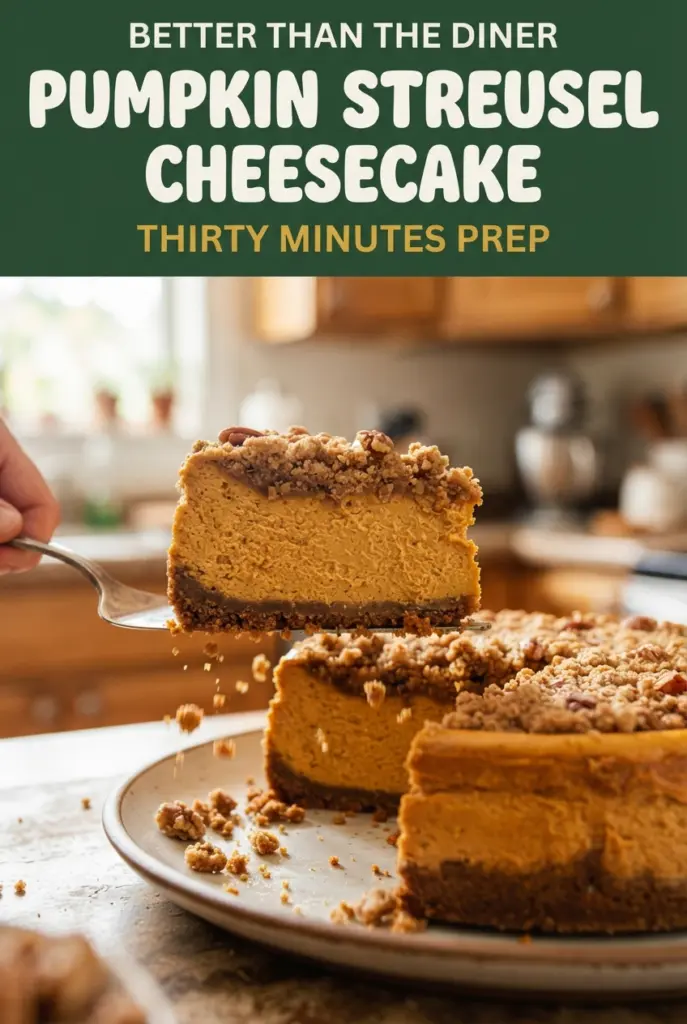
Pumpkin Streusel Cheesecake with Gingersnap Crust
Silky pumpkin cheesecake gets a sharper, more interesting base here: a crisp gingersnap crust that stays firm under the filling, then a buttery pecan streusel that bakes into a craggy…

By Ava
•
•
Reading time: 10 min
Tip: save now, make later.
Silky pumpkin cheesecake gets a sharper, more interesting base here: a crisp gingersnap crust that stays firm under the filling, then a buttery pecan streusel that bakes into a craggy top instead of sinking into the batter. The whole dessert lands in that sweet spot between creamy and structured, with enough spice to taste like the season without turning muddy or heavy. The caramel drizzle at the end gives each slice a glossy finish and just enough extra sweetness to round out the tang from the cream cheese and sour cream.
The parts that matter most are the temperature of the ingredients and the bake schedule. Softened cream cheese blends smooth without lumps, room-temperature eggs mix in without overworking the batter, and the water pan helps the cheesecake bake gently so the center sets without cracking. Baking the streusel partway through keeps it from burning and gives you a topping that tastes toasted, not raw.
Below you’ll find the small details that make this dessert dependable, from pressing the crust high enough to hold the filling to knowing exactly what a slight wobble looks like when the cheesecake is done.
The filling came out completely smooth and the streusel stayed crisp on top, even after chilling overnight. I also loved that the gingersnap crust held its shape when sliced instead of crumbling apart.
This pumpkin streusel cheesecake with gingersnap crust slices cleanly and chills into perfect make-ahead holiday dessert layers.
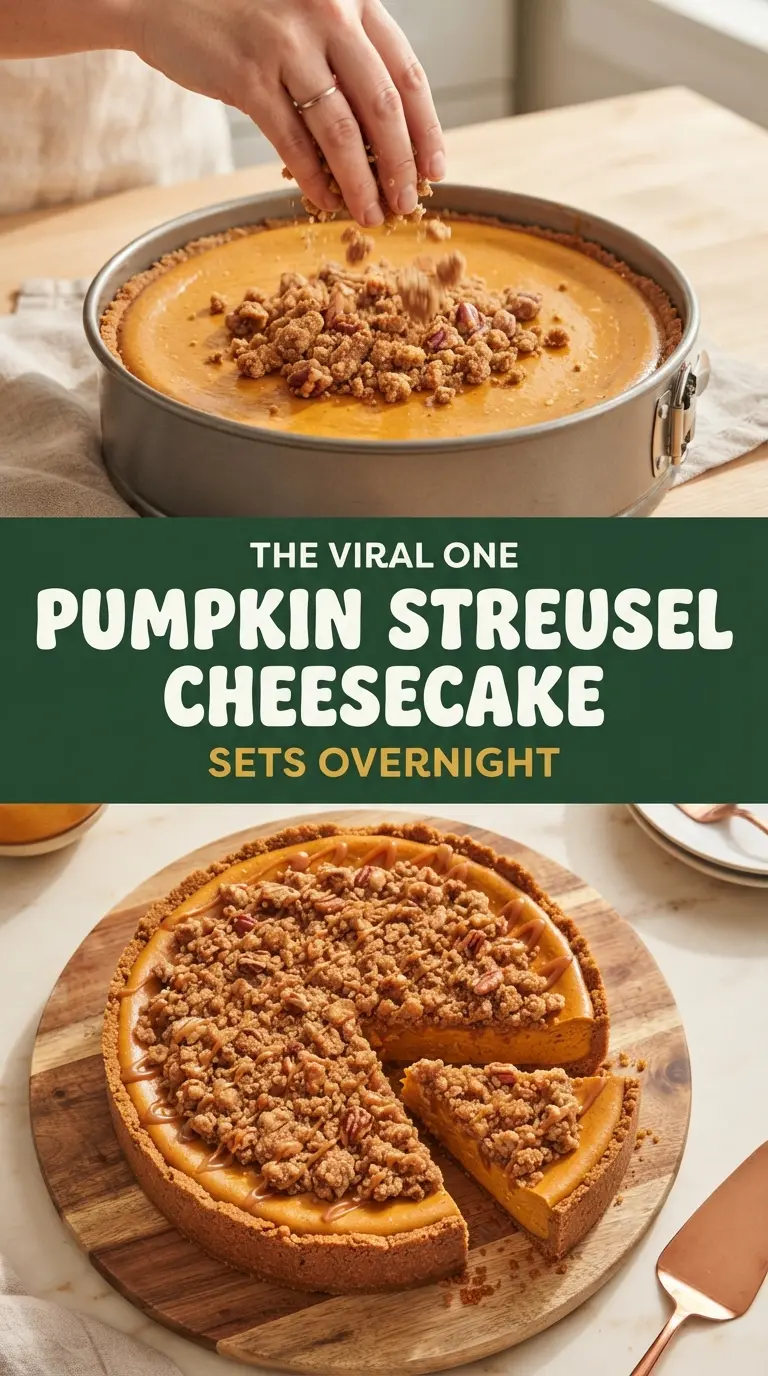
The Reason This Cheesecake Stays Creamy Without Cracking
The biggest mistake with pumpkin cheesecake is treating it like a pie filling and blasting it with heat. Pumpkin brings moisture, and that moisture needs a gentle bake to set with the eggs and cream cheese instead of separating into a grainy, puffy layer. The hot water pan matters here because it cushions the oven heat and keeps the edges from racing ahead of the center.
The other thing people fight is cracking after the cheesecake cools. That almost always comes from overbaking or cooling it too fast. This version bakes until the center still wobbles slightly, then rests in the turned-off oven with the door cracked before it ever sees room temperature. That slow finish is what keeps the top smooth enough to hold the streusel and caramel without collapsing.
- Gingersnap crumbs — These bring spice and structure at the same time. They bake into a sturdier crust than graham crackers and stand up better to a creamy filling. If you swap in graham crumbs, the crust will be milder and a little less crisp.
- Cream cheese — Full-fat brick cream cheese is the backbone of the filling. It has the body to set cleanly after chilling, and lower-fat tubs don’t give the same sliceable texture. Let it soften fully so the batter turns smooth without needing extra mixing.
- Pumpkin puree — Use plain pumpkin puree, not pumpkin pie filling. Pie filling already has sugar and spices mixed in, and that throws off the balance here. If your puree looks watery, drain it briefly in a fine mesh strainer so the cheesecake doesn’t bake up loose.
- Sour cream — This keeps the filling from tasting flat and adds the subtle tang that makes cheesecake taste like cheesecake. Greek yogurt works in a pinch, but it brings a sharper edge and a slightly thicker texture.
- Brown sugar in the streusel — The molasses note works with the pumpkin spice and pecans. Packed brown sugar helps the topping clump into crumbs instead of sand. Cold butter is nonnegotiable here; softened butter turns the streusel into paste.
Building the Layers So Each One Bakes at the Right Pace
Pressing and Prebaking the Crust
Mix the crumbs, brown sugar, and melted butter until every crumb looks evenly coated, then press the mixture firmly into the bottom and up the sides of the pan. A flat-bottomed measuring cup makes this easy and keeps the crust compact. Bake it until it smells toasty and darkens slightly at the edges; that short bake is what keeps it from turning soggy under the filling.
Making the Streusel While the Pan Cools
Work the cold butter into the flour, sugar, and cinnamon with your fingers until you have pea-sized crumbs, then stir in the pecans. If the butter softens too much, the topping will melt into a sheet instead of staying crumbly. Chill it until you need it so it holds its shape and bakes into a rough, crunchy layer.
Mixing the Filling Without Whipping in Air
Beat the cream cheese and sugars on low speed until the mixture turns completely smooth, then add the pumpkin, sour cream, flour, spices, vanilla, and salt. The goal is creamy, not fluffy. Too much air is what gives cheesecake those tall, puffy cracks that sink as they cool. Add the eggs one at a time and stop mixing as soon as each disappears.
Baking Until the Center Still Moves
Pour the filling into the crust and bake it before adding the streusel. That gives the top a little body so the crumbs sit on the surface instead of disappearing into the batter. Once the streusel goes on, keep baking until the edges are set but the center still has a soft wobble when you nudge the pan. If the whole surface looks firm, it’s gone too far.
The Slow Cool That Protects the Top
Turn off the oven, crack the door, and leave the cheesecake inside for an hour. That gradual drop in temperature keeps the top from tightening too fast and splitting. Run a knife around the edge after that first cool-down so the cake can shrink without tearing the center from the pan. Then chill it until fully set before slicing.
How to Adapt This for Different Tables and Diets
Gluten-Free Version with a Crisp Crust
Swap the gingersnap crumbs for certified gluten-free gingersnaps and use a 1:1 gluten-free flour blend in the streusel. The texture stays close to the original because the crust and topping both rely on crumb structure, not a yeast or wheat-based rise. Check the cookie label carefully, since some brands still use wheat flour.
Nuts-Free Topping
Leave out the pecans and keep the rest of the streusel exactly the same. You’ll lose a little crunch, but the topping still bakes into buttery crumbs with a caramelized edge. If you want to replace the texture, add an extra 2 tablespoons of flour and a pinch more cinnamon.
Less-Sweet Version
Reduce the granulated sugar in the filling by 2 tablespoons and use a thinner drizzle of caramel at serving. The cheesecake still tastes balanced because the brown sugar, gingersnaps, and pumpkin spice carry a lot of the flavor on their own. Don’t cut the sugar much more than that or the texture starts to taste flat instead of rich.
Make-Ahead Storage
Refrigerator: 4 to 5 days, covered. The crust softens a little over time, but the slices still hold well. Freezer: Freeze whole or in slices without the caramel and whipped cream, wrapped tightly, for up to 2 months. Reheating: Don’t reheat this cheesecake; thaw it overnight in the refrigerator and serve cold or let it sit at room temperature for 20 to 30 minutes for a softer texture.
Questions I Get Asked About This Cheesecake
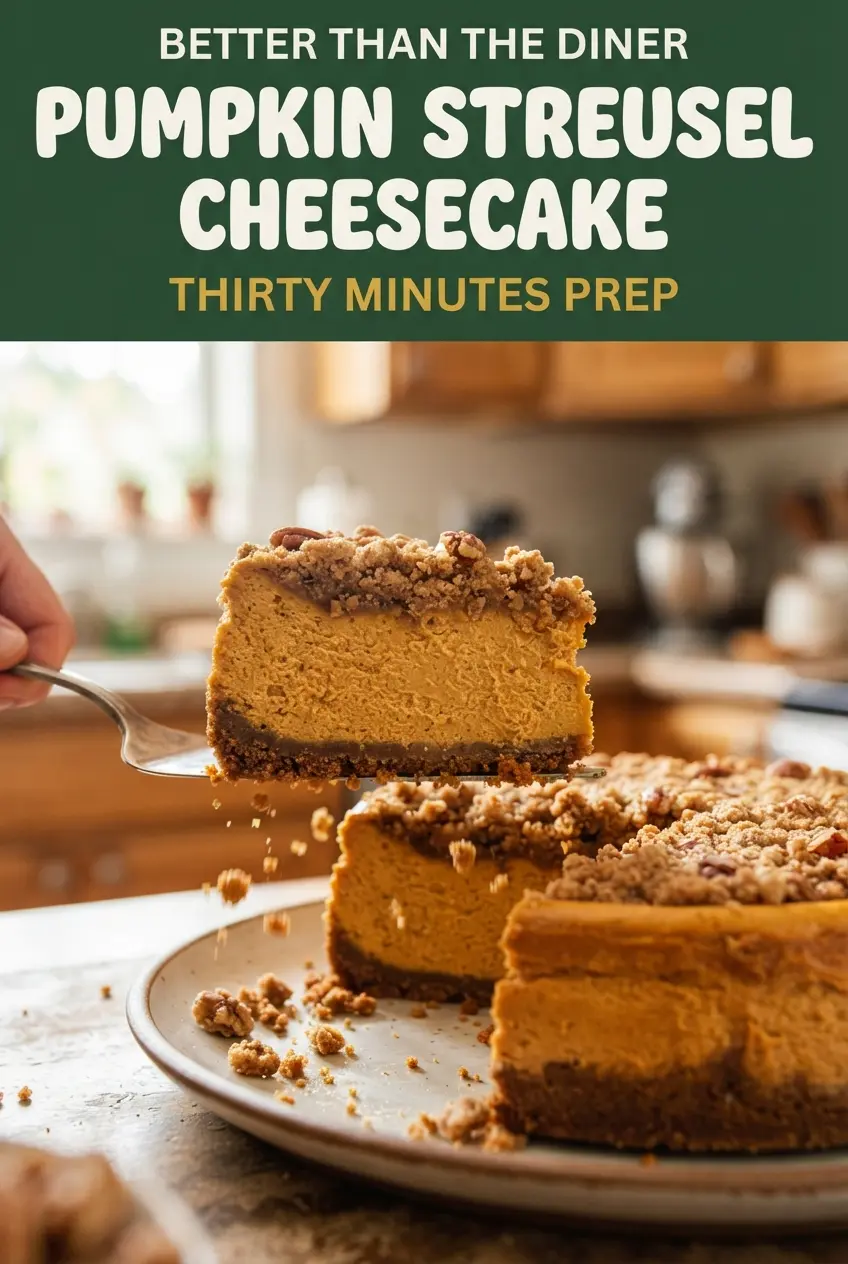
Pumpkin Streusel Cheesecake with Gingersnap Crust
Ingredients
Equipment
Method
- Preheat the oven to 350°F and grease a 9-inch springform pan. Stir together gingersnap crumbs, light brown sugar, and melted unsalted butter.
- Press the crust mixture firmly into the bottom and about 1 inch up the sides of the pan. Bake for 10 minutes, then lower the oven to 325°F.
- Place a pan of hot water on the bottom rack to create steam while the cheesecake bakes.
- Mix all-purpose flour, light brown sugar, and ground cinnamon. Rub in cold unsalted butter until pea-sized crumbs form.
- Stir in chopped pecans. Refrigerate the streusel until needed.
- Beat cream cheese with granulated sugar and light brown sugar on low speed for about 2 minutes until completely smooth. Beat in pumpkin puree and sour cream until combined.
- Beat in all-purpose flour, pumpkin pie spice, ground cinnamon, vanilla extract, and salt. Mix until smooth and evenly spiced.
- Add large eggs one at a time on low speed, mixing just until blended. Pour the filling over the crust and smooth the top.
- Bake the cheesecake at 325°F for 40 minutes, until the edges are starting to set. Sprinkle the chilled streusel evenly over the top.
- Bake for another 25–30 minutes, until the edges are set and the center still wobbles slightly. Turn off the oven, crack the door, and leave the cheesecake inside for 1 hour.
- Run a knife around the edge, then cool at room temperature for 1 more hour. Refrigerate for at least 6 hours or overnight until fully set.
- Release the springform ring and drizzle with caramel sauce. Slice with a hot knife wiped clean between cuts, and serve with whipped cream if desired.