
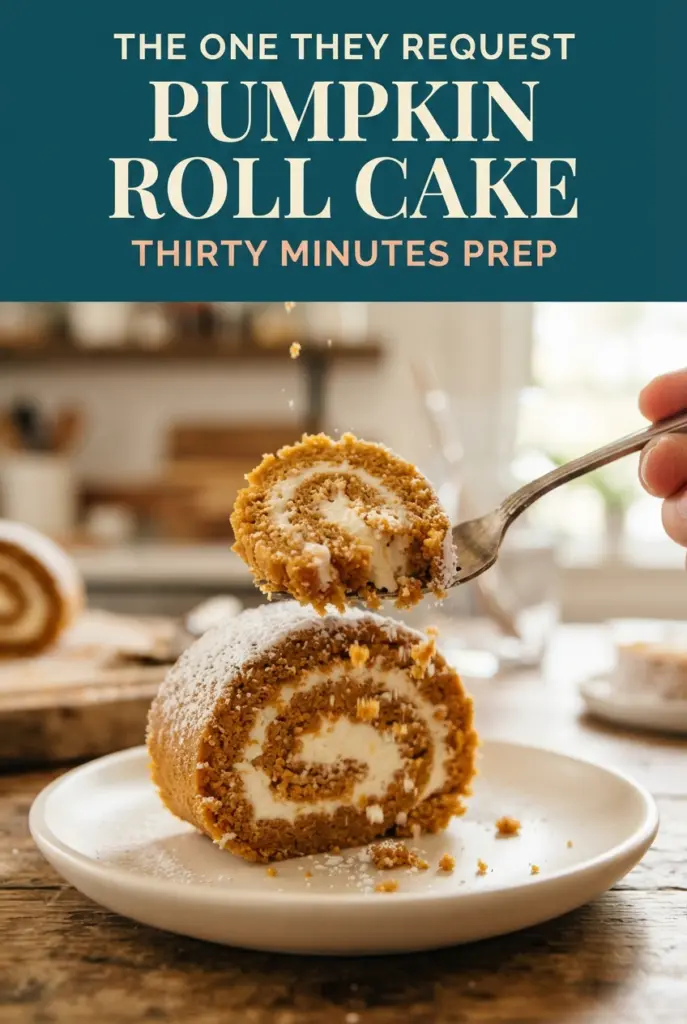
Classic Pumpkin Roll Cake with Cream Cheese Filling
Soft pumpkin sponge, a clean spiral of cream cheese filling, and that final dusting of powdered sugar give this pumpkin roll the kind of slice people notice before they even…

By Ava
•
•
Reading time: 9 min
Tip: save now, make later.
Soft pumpkin sponge, a clean spiral of cream cheese filling, and that final dusting of powdered sugar give this pumpkin roll the kind of slice people notice before they even take a bite. The cake stays tender instead of cracking, the filling sets up creamy and thick, and every piece cuts into neat swirls that hold their shape on the plate.
What makes this version work is the balance. The batter is beaten long enough to build structure from the eggs, which keeps the cake light without drying it out. Then the warm cake is rolled in a powdered sugar-dusted towel right out of the oven, which trains it to curl while it’s still flexible. Skip that part and the first unroll is where most pumpkin rolls split.
Below, I’ve included the details that matter most: how to keep the sponge from sticking, why the filling needs to be fully softened before mixing, and the one chilling step that turns a good pumpkin roll into a clean, sliceable dessert.
The cake rolled without a single crack, and the cream cheese filling stayed thick instead of oozing out. I made it the day before Thanksgiving, and the slices were perfect after chilling overnight.
Save this pumpkin roll cake for a make-ahead holiday dessert with a tidy swirl and silky cream cheese filling.
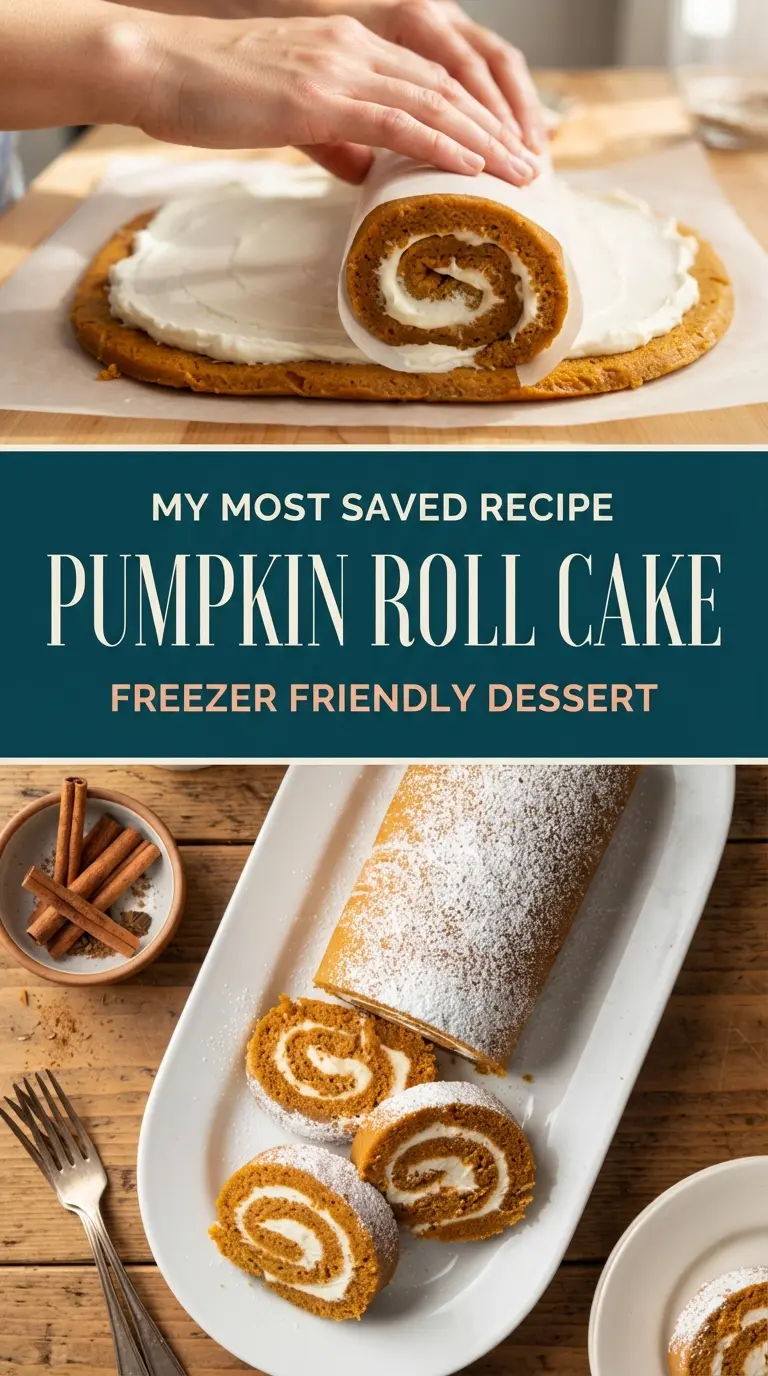
The Trick to a Pumpkin Roll That Won’t Crack When You Unroll It
The cracks happen when the cake cools flat. A pumpkin sponge like this is tender and flexible when it leaves the oven, but it sets fast as it cools. Rolling it in the towel while it’s still hot teaches it the shape it needs before the structure firms up, which is why this step matters more than any fancy filling.
That sugared towel also does two jobs at once. It keeps the cake from sticking and it protects the surface from drying out while it cools. If the cake feels too wet or gummy when you flip it, it needed another minute or two in the oven. If it bakes past springy and just-done, it will still roll, but the edges are more likely to split.
- Eggs — Beating the eggs and sugar until thick and pale builds the lift for the cake. There’s no separate leavener that can replace that structure, so don’t rush this part.
- Pumpkin puree — Use plain pumpkin puree, not pumpkin pie filling. Pie filling is already sweetened and spiced, which throws off both the texture and the seasoning.
- Powdered sugar on the towel — This looks like a small detail, but it’s what keeps the warm cake from welding itself to the cloth. Use enough to coat the towel in a visible layer.
- Cream cheese — Full-fat cream cheese gives the filling its clean tang and thick body. Low-fat versions can turn loose and grainy when mixed with butter and sugar.
How to Build the Swirl So the Filling Stays Creamy and the Cake Stays Intact
Whipping the Batter for Lift
Start by beating the eggs and sugar until the mixture is thick, lighter in color, and falls from the beaters in ribbons. That air is what gives the cake its bend and keeps the crumb fine enough to roll. Once the flour goes in, fold gently and stop as soon as the streaks disappear. Overmixing tightens the batter and makes the finished cake less flexible.
Baking Just Until the Top Springs Back
Spread the batter all the way to the corners so it bakes evenly in the jelly roll pan. The cake is done when the top springs back under a light touch and the center no longer looks wet. If you wait until it looks deeply browned, it will be dry before you ever get to the filling. A pale, springy cake rolls better than a dark one every time.
Rolling While Warm, Filling When Cool
Flip the cake onto the sugared towel as soon as it comes out of the oven. Roll it from a short end with the towel inside, then let it cool completely before filling it. If the cake is still warm when the cream cheese goes on, the filling softens and slides around instead of staying in a neat spiral. After filling, wrap it tightly and chill it so the swirl firms up before slicing.
How to Adapt This Pumpkin Roll for Different Diets and Make-Ahead Plans
Dairy-Free Filling
Use a dairy-free cream cheese and a plant-based butter that’s meant for baking. The filling will be a little softer and tangier, but it still works well if you chill the rolled cake long enough to firm up. Avoid thin tub-style spreads, which can turn loose and leak when sliced.
Gluten-Free Pumpkin Roll
A good 1:1 gluten-free flour blend can replace the all-purpose flour here. The cake may be a touch more fragile, so handle the warm roll gently and don’t skip the full cooling time before unrolling. The texture stays pleasantly soft if the blend contains xanthan gum.
Making It Two Days Ahead
This is one of the best make-ahead desserts on the table. Assemble and chill the roll, then leave it wrapped in the refrigerator until the day you serve it. Dust with powdered sugar right before slicing so the finish stays bright instead of dissolving into the cake.
Extra-Spiced Version
Add a pinch more cinnamon or a little ground ginger if you want the spice to stand out more against the sweet filling. Keep the change modest. Too much spice can crowd out the pumpkin and make the cake taste sharp instead of balanced.
Storage and Reheating
- Refrigerator: Store tightly wrapped for up to 4 days. The cake stays moist, and the filling firms up even more after chilling.
- Freezer: It freezes well. Wrap the whole roll or individual slices tightly in plastic wrap, then foil, and freeze for up to 2 months. Thaw overnight in the refrigerator.
- Reheating: Serve chilled or let slices sit at room temperature for 15 to 20 minutes. Don’t microwave it, or the filling turns soft and the spiral loses its clean shape.
Questions I Get Asked About This Pumpkin Roll
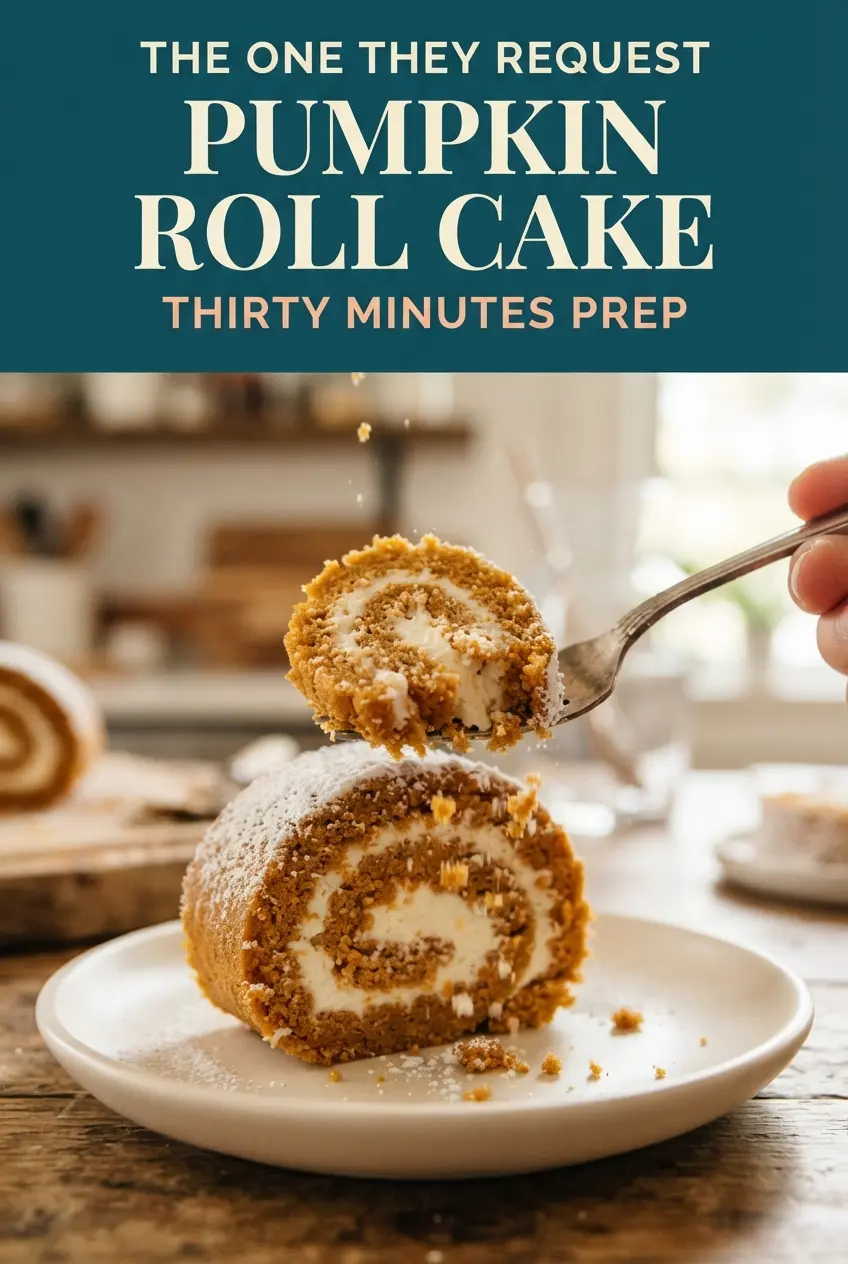
Classic Pumpkin Roll Cake with Cream Cheese Filling
Ingredients
Equipment
Method
- Preheat the oven to 375°F. Grease a 15x10-inch jelly roll pan, line it with parchment, then grease and lightly flour the parchment.
- Lay a thin kitchen towel flat and dust it generously with 1/4 cup powdered sugar, so the finished roll won’t stick when you turn it out.
- Whisk together the all-purpose flour, baking powder, baking soda, ground cinnamon, pumpkin pie spice, and salt until evenly combined.
- Beat the eggs and granulated sugar for 2–3 minutes, until thick and pale, then beat in the pumpkin puree.
- Gently fold the dry ingredients into the egg mixture until no dry streaks remain, then spread the batter evenly into the pan.
- Bake for 13–15 minutes at 375°F, until the top springs back when lightly touched.
- Immediately loosen the edges, flip the cake onto the sugared towel, and peel off the parchment.
- Starting from a short end, roll the warm cake up with the towel inside so it sets into a spiral shape.
- Cool completely on a rack for about 1 hour before unrolling.
- Beat the cream cheese, powdered sugar, unsalted butter, and vanilla extract until smooth and fluffy.
- Gently unroll the cake, spread the cream cheese filling evenly to within 1 inch of the edges, and roll it back up without the towel.
- Wrap tightly in plastic wrap and refrigerate for at least 1 hour, until firm.
- Unwrap, trim the ends, dust with powdered sugar, and cut into 1-inch slices to serve.