
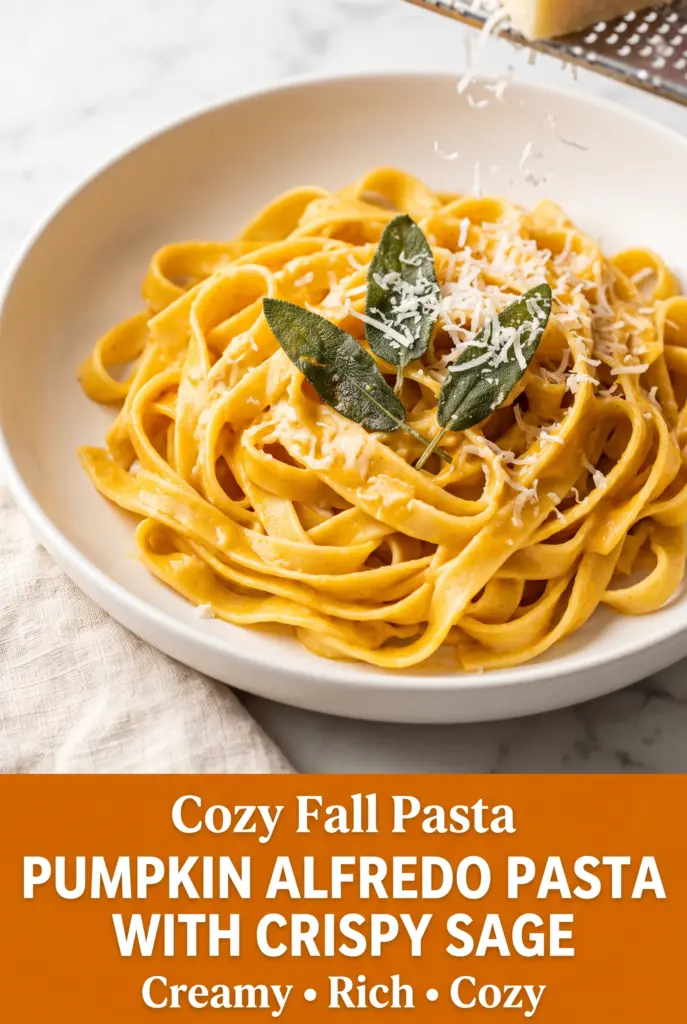
Pumpkin Alfredo Pasta with Crispy Sage
Pumpkin Alfredo Pasta with Crispy Sage lands on the plate with a silky sauce that clings to every ribbon of fettuccine and a crisp herbal finish that keeps each bite…

By Ava
•
•
Reading time: 10 min
Tip: save now, make later.
Pumpkin Alfredo Pasta with Crispy Sage lands on the plate with a silky sauce that clings to every ribbon of fettuccine and a crisp herbal finish that keeps each bite from feeling heavy. The pumpkin doesn’t shout here; it gives the Alfredo a warm color, a gentle sweetness, and a thicker body that makes the sauce feel plush instead of plain creamy. Crispy sage takes the whole dish from standard pumpkin pasta to something with a little edge and a lot of character.
The key is treating the sauce like Alfredo, not like pumpkin soup. Garlic gets fragrant first, pumpkin is whisked into cream and milk until smooth, and the Parmesan goes in gradually so it melts instead of turning grainy. A small splash of pasta water at the end is what helps the sauce settle onto the noodles instead of sitting in a puddle underneath them.
The sauce turned out smooth and velvety, and the crispy sage stayed crisp even after tossing everything together. I loved that the Parmesan melted in without getting clumpy, and the pasta tasted like it came from a restaurant.
Save this Pumpkin Alfredo Pasta with Crispy Sage for the nights when you want a creamy pasta with a little crunch and a lot of comfort.
The Trick to Keeping Pumpkin Alfredo Creamy Instead of Grainy
Pumpkin Alfredo can go wrong fast if the heat is too high when the cheese goes in. Parmesan wants gentle heat and patient stirring. If the pan is bubbling hard, the cheese can seize and turn the sauce gritty before the pasta ever hits it.
The other common problem is watery sauce. Pumpkin brings body, but it still needs the right balance of cream, milk, and pasta water. Start with less pasta water than you think you need, then add just enough to help the sauce coat the noodles. You want glossy and clingy, not loose and soupy.
What Each Ingredient Is Actually Doing in This Dish
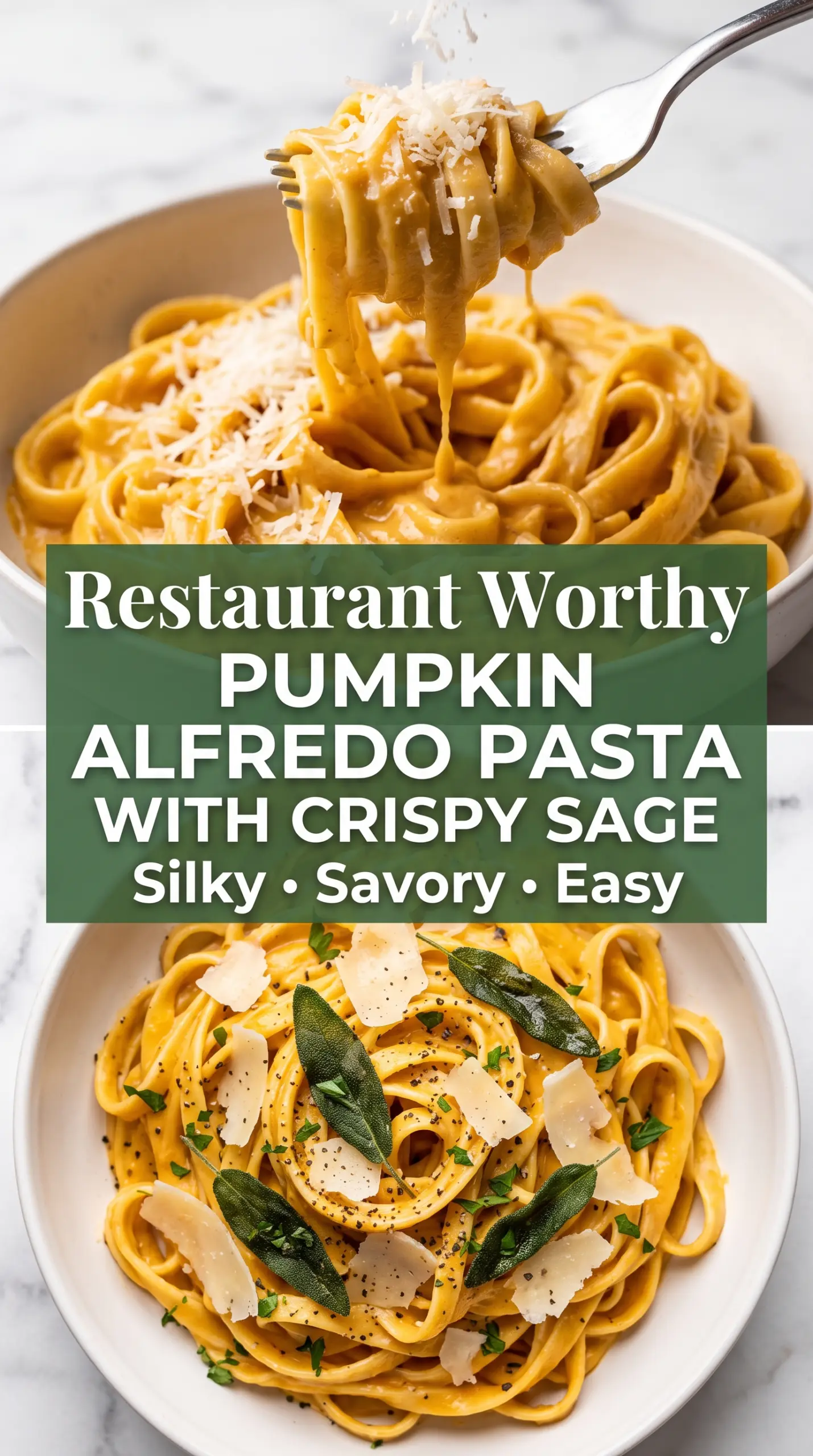
- Pumpkin purée — This is what gives the sauce its body and that soft orange color. Use plain pumpkin purée, not pumpkin pie filling, or the dish will turn sweet and spiced in the wrong way.
- Heavy cream and whole milk — The cream gives richness, while the milk keeps the sauce from feeling too dense. If you need to lighten it, replace up to half the milk with more milk from the fridge, but don’t swap in skim milk; it makes the sauce thin and less stable.
- Freshly grated Parmesan — Freshly grated cheese melts smoothly. Pre-shredded Parmesan often has anti-caking agents that make the sauce slightly sandy, so this is one place where the better ingredient matters.
- Sage leaves — Frying the sage in butter gives you a crisp garnish and perfumes the whole pan. If you only have dried sage, use a pinch in the sauce, but skip the crisping step since dried leaves won’t fry the same way.
- Nutmeg — Just a little brings out the warmth in the pumpkin and cream. Don’t add more than a pinch extra, or it starts tasting flat and dusty instead of round.
Building the Sauce So It Stays Silky From Pan to Plate
Frying the Sage First
Start with the butter and sage in the skillet so the leaves have time to crisp before the sauce goes in. They should darken a shade, curl slightly at the edges, and sound faintly crackly when you lift them out. Remove them as soon as they crisp; leaving them in the pan too long burns the butter and gives the whole dish a bitter note.
Creating the Pumpkin Base
Add the garlic to the same pan and cook it just until fragrant, about 30 seconds. The pumpkin, cream, milk, salt, pepper, nutmeg, and red pepper flakes go in next, and the mixture should look smooth and uniform after a few minutes of gentle simmering. If it starts boiling hard, lower the heat; that’s when cream sauces start to separate at the edges.
Melting in the Parmesan
Take the heat down before adding the cheese, then stir it in a handful at a time. Each addition should disappear before the next one goes in, and the sauce will thicken as the Parmesan melts. If you dump it all in at once, the sauce can clump or turn stringy instead of glossy.
Tossing the Pasta
Add the cooked fettuccine and toss until every strand looks coated. Add a splash of reserved pasta water only if the sauce feels tight; the starch helps the sauce settle onto the noodles and keeps it from looking heavy on the plate. Finish with the crispy sage and parsley right before serving so the contrast between creamy pasta and crisp herbs stays sharp.
Three Ways to Make This Recipe Work for Your Table
Make It Gluten-Free Without Losing the Creamy Finish
Use a sturdy gluten-free pasta, preferably one made from rice or a rice-corn blend. Cook it just to al dente, because gluten-free noodles soften fast once they hit the hot sauce. The sauce itself is naturally gluten-free as written, so the texture of the pasta is the only part that needs attention.
Dairy-Free Version That Still Feels Rich
Swap the butter for olive oil or vegan butter, use unsweetened oat milk or cashew milk, and add a dairy-free Parmesan-style cheese that melts well. The sauce won’t have the exact same depth, but it will still be creamy and balanced if you keep the heat low. Skip any plant milk that tastes sweet; that leans the sauce in the wrong direction.
Turn It Into a Heartier Meal
Add sautéed mushrooms, roasted chicken, or browned Italian sausage after the sauce is finished. Each one plays well with the pumpkin and sage, and sausage adds a salty edge that cuts through the cream. If you add extra protein, hold back a little pasta water so the final dish doesn’t get too loose.
Storage and Reheating
- Refrigerator: Store leftovers in an airtight container for up to 3 days. The sauce will thicken as it sits, so expect a softer, more compact texture after chilling.
- Freezer: This pasta isn’t ideal for freezing because cream sauces can separate and the noodles lose their texture. If you need to freeze part of it, freeze the sauce separately and cook fresh pasta later.
- Reheating: Warm it gently on the stovetop over low heat with a splash of milk or water, stirring often. High heat is the fastest way to break the sauce and dry out the pasta.
Answers to the Questions Worth Asking
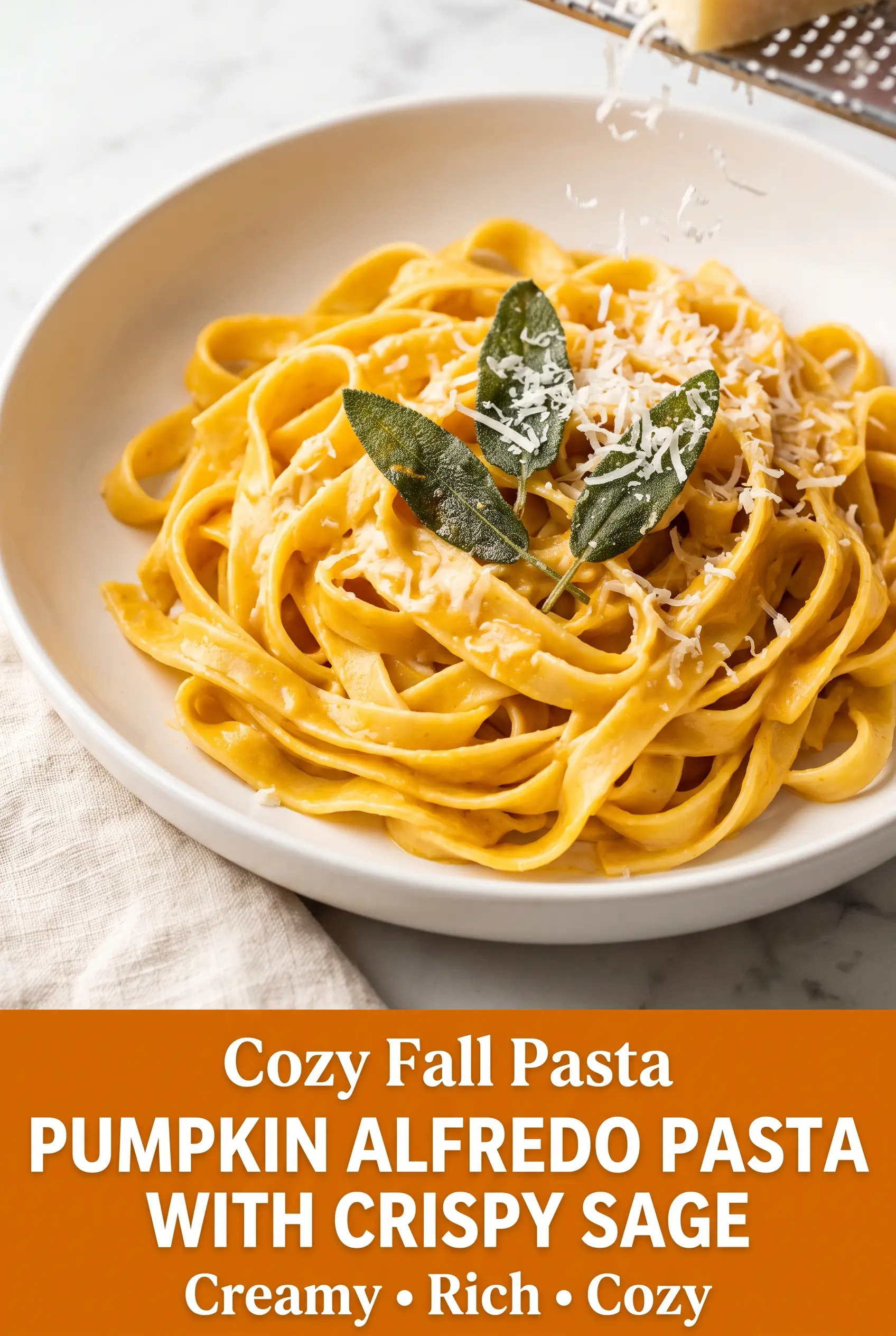
Pumpkin Alfredo Pasta with Crispy Sage
Ingredients
Equipment
Method
- Bring a large pot of salted water to a boil, then cook the fettuccine until al dente according to package directions with a rolling boil. Reserve 1/2 cup of pasta water and drain the pasta.
- Melt the unsalted butter in a large skillet over medium heat until it foams, then add the sage leaves and cook for 1–2 minutes until crisp, turning as needed for even browning. Transfer the crispy sage to a paper towel-lined plate to drain.
- Add the olive oil to the same skillet over medium heat and stir in the minced garlic. Cook for 30 seconds until fragrant, stirring constantly so it doesn’t brown.
- Whisk in the pumpkin purée, heavy cream, whole milk, salt, black pepper, ground nutmeg, and crushed red pepper flakes if using. Simmer over medium-low heat for 4–5 minutes until smooth, whisking occasionally to keep it silky.
- Reduce heat to low and stir in the Parmesan cheese a handful at a time until fully melted and the sauce turns creamy. Keep stirring until the texture is smooth and glossy.
- Add the cooked fettuccine to the skillet and toss until evenly coated. Stir in a splash of reserved pasta water as needed to loosen the sauce and help it cling to the pasta.
- Garnish with the crispy sage leaves, chopped fresh parsley, and extra Parmesan cheese. Serve immediately while warm for the best crunch and creamy texture.