
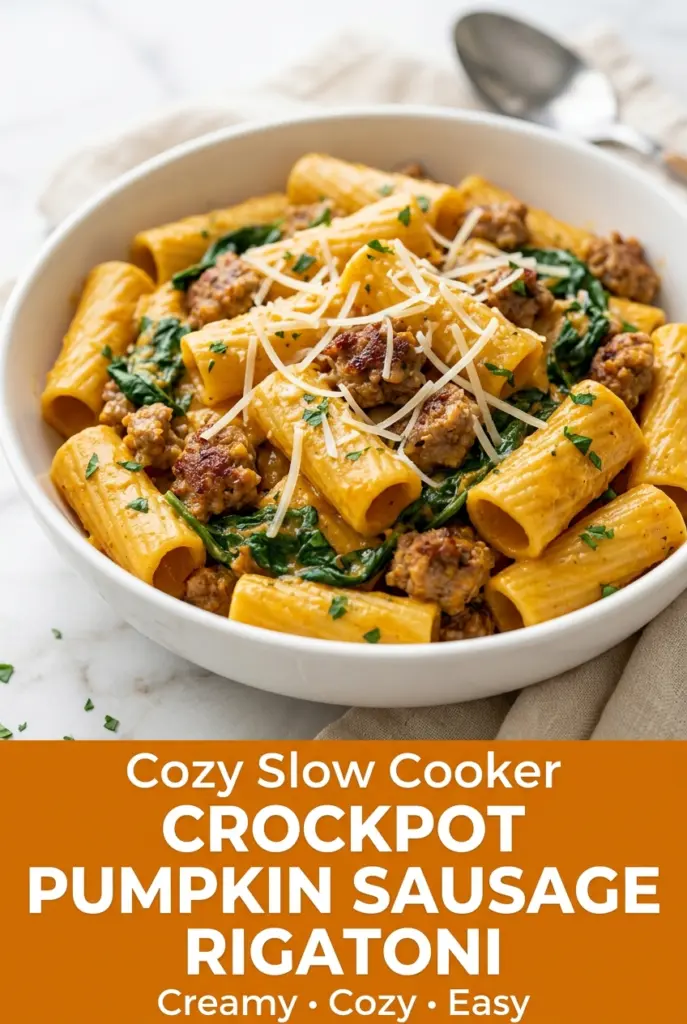
Crockpot Pumpkin Sausage Rigatoni
Pumpkin sausage rigatoni is one of those slow cooker dinners that earns its keep because the sauce turns silky, the sausage seasons everything in the pot, and the pasta comes…

By Ava
•
•
Reading time: 10 min
Tip: save now, make later.
Pumpkin sausage rigatoni is one of those slow cooker dinners that earns its keep because the sauce turns silky, the sausage seasons everything in the pot, and the pasta comes out coated instead of drowned. The pumpkin doesn’t taste like pie here. It gives the sauce body, a gentle sweetness, and that plush texture that makes every bite feel rich without needing a long list of extras.
The trick is building the flavor before the pasta goes in. Browning the sausage first gives you the savory base the crockpot can’t create on its own, and the Parmesan goes in at the end so it melts into the sauce instead of turning grainy. Rigatoni is a smart choice because those ridges catch the creamy pumpkin sauce and hold onto bits of sausage and spinach in every bite.
Below, you’ll find the timing that keeps the pasta from going mushy, the ingredient swaps that still keep the sauce balanced, and a few answers for the places this dish can go sideways if you’ve made similar slow cooker pastas before.
The sauce thickened up perfectly and the rigatoni held its shape instead of getting mushy. I also loved that the pumpkin stayed savory with the sausage and sage.
Pin this creamy Crockpot Pumpkin Sausage Rigatoni for a cozy pasta night with tender rigatoni, savory sausage, and a Parmesan pumpkin sauce.
The One Mistake That Turns Pumpkin Pasta Into Baby Food
The biggest problem with slow cooker pasta is timing. If the rigatoni goes in too early, it keeps absorbing liquid until it loses its bite and the sauce turns pasty. If it goes in too late, it won’t have enough time to soften and it’ll sit there tasting underdone no matter how long you keep the lid on.
This recipe avoids that by cooking the sauce base first, then adding the pasta only after the pumpkin, broth, cream, and sausage have had time to meld. The sauce should look loose when the pasta goes in. That’s intentional. Rigatoni needs that extra liquid to finish cooking without drying the whole pot out.
The other thing that matters is heat control after the pasta is added. High heat is enough here, but not so long that the sauce boils hard. You want a steady, gentle cook until the pasta is just tender at the center and the sauce clings to the ridges.
What the Pumpkin, Cream, and Parmesan Are Each Doing Here
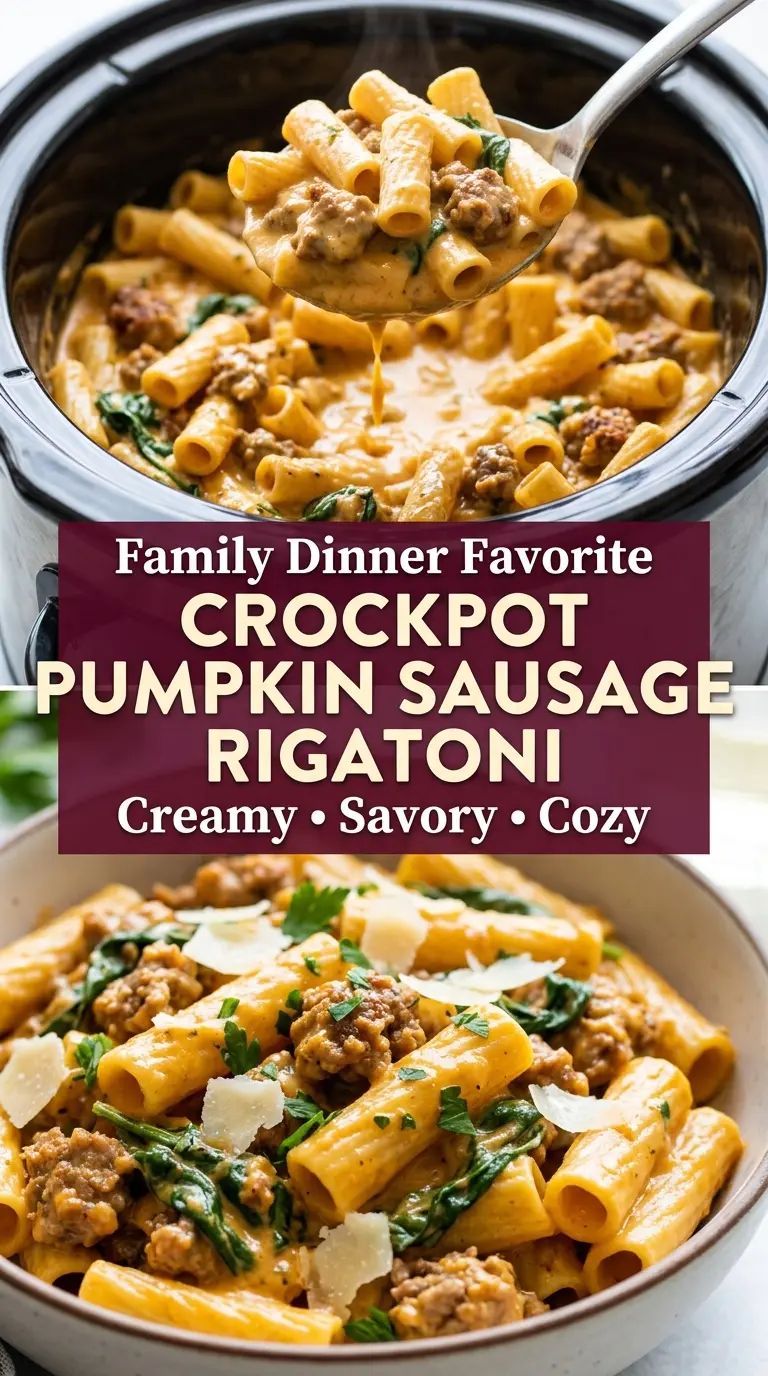
- Pumpkin purée — This is the body of the sauce. It gives you thickness and a velvety texture without needing a flour roux. Use plain pumpkin purée, not pumpkin pie filling, or the seasoning will go off fast.
- Heavy cream — Cream softens the pumpkin and keeps the sauce from tasting flat or overly earthy. Half-and-half can work in a pinch, but it won’t give the same plush finish and it’s more likely to look thin before the Parmesan goes in.
- Parmesan cheese — Freshly grated Parmesan melts smoothly and seasons the whole pot from the inside. Pre-shredded cheese can stay a little sandy because of the anti-caking agents, so grate it yourself if you want the sauce to stay silky.
- Italian sausage — This is the main seasoning engine. Mild or hot both work, but the sausage needs to be browned first so you get deep savory flavor instead of a boiled-meat taste.
- Rigatoni — The ridges and tube shape are doing real work here. They trap sauce better than thinner pasta and hold up better in the slow cooker. Penne is the closest substitute if that’s what you have.
Building the Slow Cooker Sauce in the Right Order
Brown the Sausage First
Cook the sausage in a skillet until it’s deeply browned and no longer pink, breaking it into small crumbles as it cooks. That browning step creates the savory base that makes the finished sauce taste layered instead of one-note. If there’s a lot of grease in the pan, drain it off so the sauce doesn’t feel slick at the end.
Let the Pumpkin Base Cook Before the Pasta Joins In
After the sausage goes into the slow cooker, add the onion, garlic, pumpkin, broth, cream, and seasonings. Stir well so the pumpkin fully dissolves into the liquid and you don’t end up with streaks of puree. Cook until the sauce is hot and the onion tastes softened; if you rush this part, the final dish tastes like ingredients sitting together instead of a real sauce.
Add the Rigatoni When the Sauce Looks Looser Than You Want
Stir in the uncooked pasta and get it mostly submerged. The sauce should look almost too thin at this point because the pasta will drink up a lot of liquid as it cooks. Stir once halfway through so the top pieces don’t dry out or stick together. Stop when the rigatoni is just al dente; if it goes much longer, the edges soften and the whole dish loses shape.
Finish With Cheese and Spinach Off the Heat
Add the Parmesan and spinach at the end and stir until the cheese melts and the greens wilt. If the cheese goes in while the sauce is boiling hard, it can turn grainy instead of smooth. The spinach only needs a few minutes, and it’s there for freshness and color, not for long cooking.
How to Adapt This for a Few Different Kitchens
Make It Dairy-Free
Swap the heavy cream for full-fat coconut milk and use a dairy-free Parmesan-style alternative at the end. The sauce will still be creamy, but it will pick up a faint coconut note, so keep the sage and black pepper in place to balance it.
Use Turkey Sausage for a Lighter Pot
Turkey sausage works well if you want less richness, but it won’t render as much fat or flavor. Brown it well and consider adding an extra pinch of salt or an extra tablespoon of olive oil so the sauce doesn’t taste lean.
Make It Gluten-Free
Use a sturdy gluten-free rigatoni and watch it closely during the pasta stage. Gluten-free pasta can go from tender to fragile fast, so start checking a few minutes early and stop cooking the moment it turns al dente.
Stretch It for a Bigger Crowd
You can add an extra cup of broth and another few ounces of pasta if you’re serving more people, but don’t increase the pumpkin as aggressively. Too much pumpkin makes the sauce heavy; more broth keeps the texture loose enough for the pasta to cook evenly.
Storage and Reheating
- Refrigerator: Store in an airtight container for up to 4 days. The pasta will keep absorbing sauce, so the leftovers will be a little thicker the next day.
- Freezer: It freezes, but the pasta softens after thawing. For the best texture, freeze the sauce before adding the rigatoni, then cook fresh pasta when you reheat it.
- Reheating: Rewarm gently on the stovetop or in the microwave with a splash of broth or cream. High heat tightens the sauce and makes the pasta go mushy faster than you’d expect.
Answers to the Questions Worth Asking
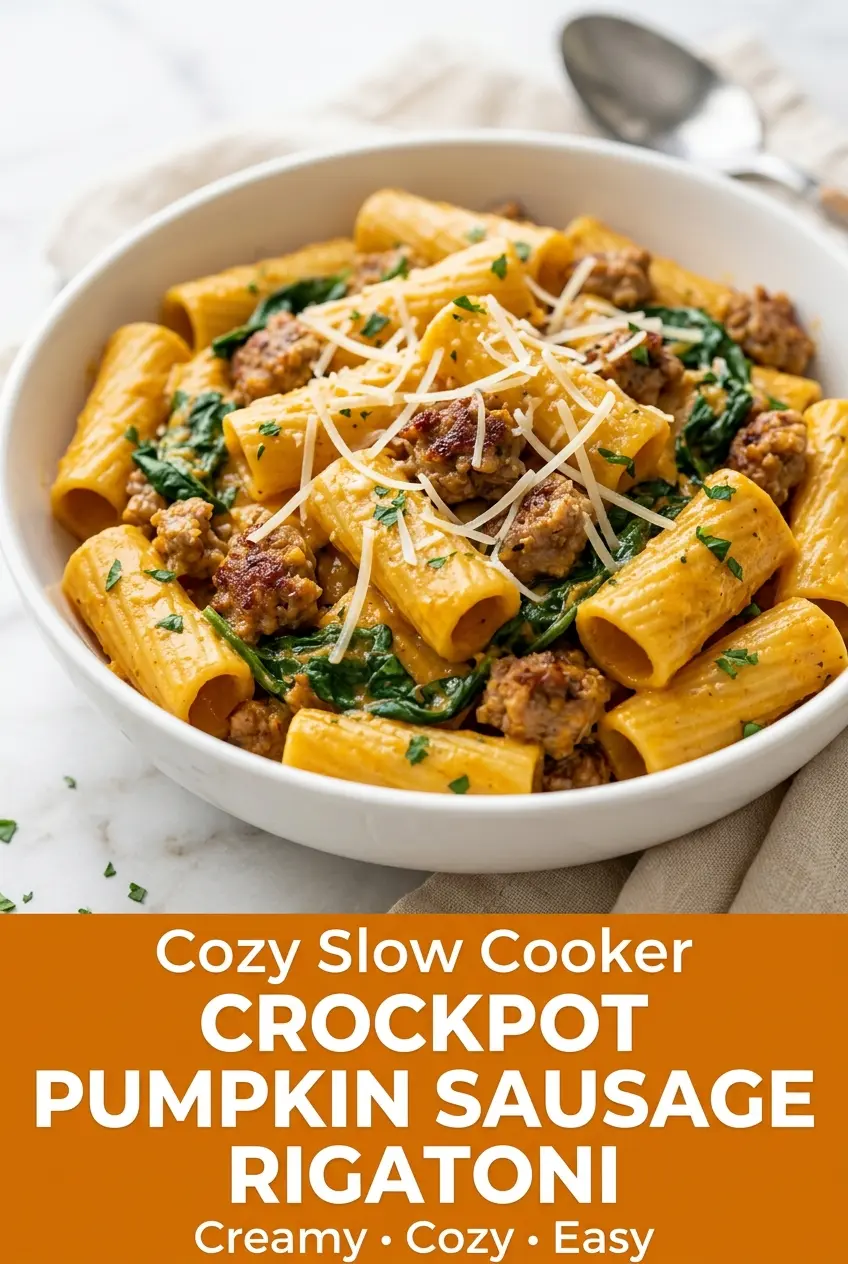
Crockpot Pumpkin Sausage Rigatoni
Ingredients
Equipment
Method
- Heat 1 tbsp olive oil in a large skillet over medium-high heat until shimmering. Cook the Italian sausage for 6–8 minutes, breaking it into crumbles, until browned and no longer pink.
- Drain any excess grease from the skillet so the sauce stays creamy and not greasy.
- Transfer the cooked sausage to a 6-quart slow cooker.
- Add the diced yellow onion and minced garlic to the slow cooker, then stir to distribute. Add pumpkin purée, chicken broth, heavy cream, Italian seasoning, dried sage, smoked paprika, salt, and black pepper.
- Stir until well combined so the seasonings and pumpkin are evenly dispersed. Cover and cook on Low for 4–5 hours (or High for 2–3 hours) until the sauce is hot and the flavors have blended.
- Stir in the uncooked rigatoni and make sure it is mostly submerged in the sauce. Cover and cook on High for 25–35 minutes, stirring once halfway through, until the pasta is al dente.
- Add the Parmesan cheese and baby spinach, then stir until the cheese melts. Cook 3–5 minutes, stirring, until the spinach wilts and the sauce turns glossy.
- Garnish with chopped fresh parsley and extra Parmesan before serving warm, so the pasta looks fresh and tastes bright.