
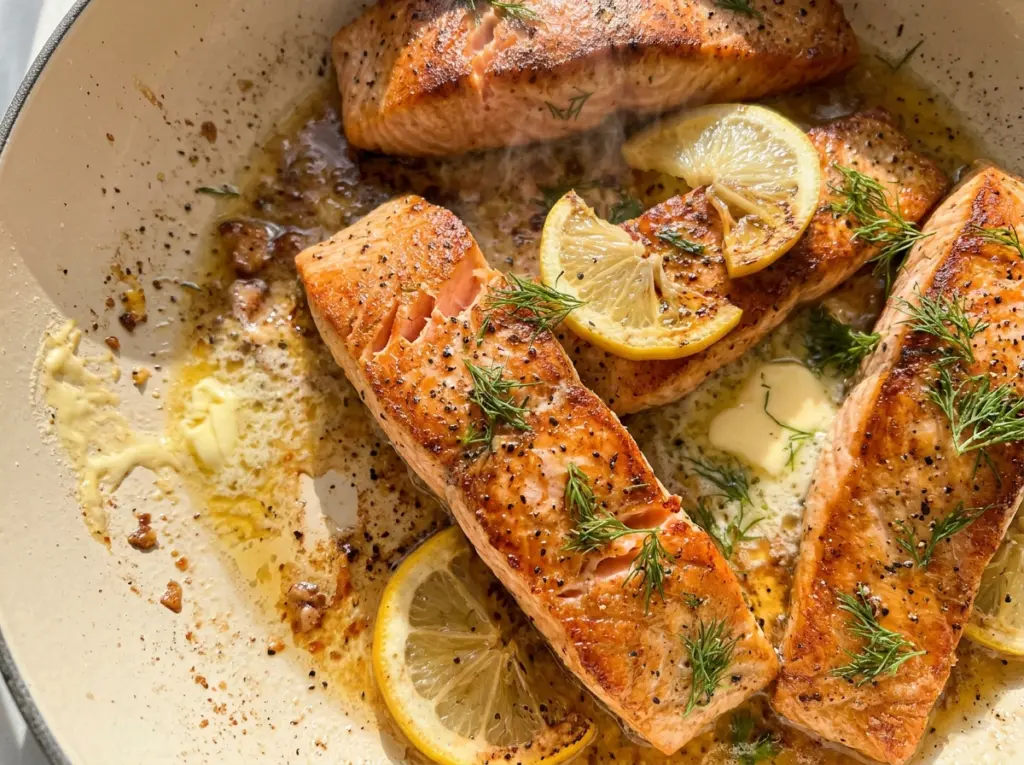
Pan Seared Lemon Dill Salmon
The oil gives off a soft shimmer, and the salmon settles into the skillet skin side down. That first stretch is where crisp skin starts—or where it gets lost if…

By Ava
•
•
Reading time: 9 min
Tip: save now, make later.
The oil gives off a soft shimmer, and the salmon settles into the skillet skin side down. That first stretch is where crisp skin starts—or where it gets lost if the fish is damp or the pan isn’t ready. I keep the fillets still and let the heat do its work before I think about turning them.
For this pan-seared lemon dill salmon, center-cut fillets keep the portions evenly thick, while the quick lemon-dill butter gives the fish a bright finish without covering up its flavor. The method is straightforward, but the change from medium-high heat to medium matters: it gives the skin time to crisp while the fish cooks through more gently.
I like that the sauce comes together in the same skillet after the salmon comes out. The warm pan melts the butter, and lemon juice and fresh dill turn it into a quick, fragrant spoon-over sauce. Each bite gets crisp-edged salmon and a little buttery, lemony finish.
Kitchen Note
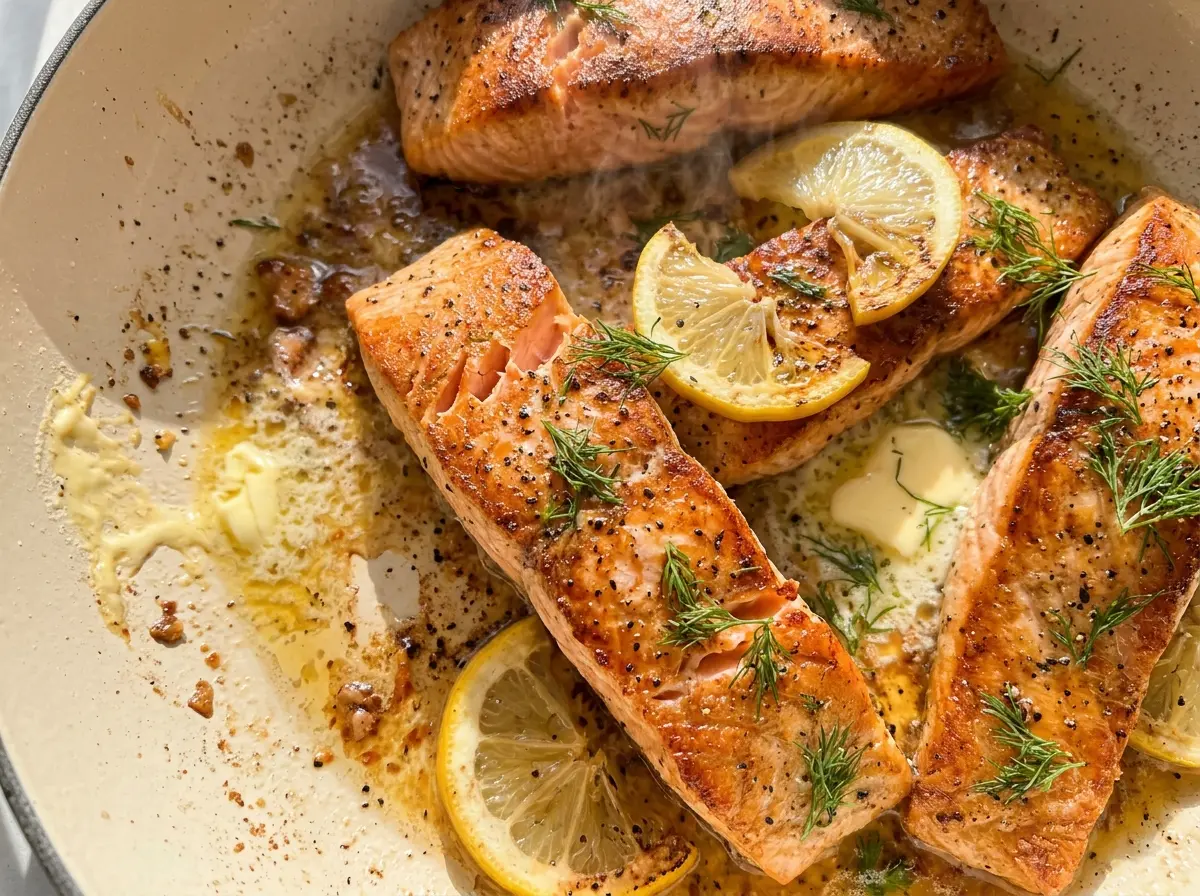
When the butter goes into the warm skillet, swirl it until it melts instead of letting it bubble over heat. I stir in the lemon and dill after that, so the sauce stays buttery and fresh-tasting.
Save this pan-seared lemon dill salmon for a dinner built around crisp skin and a quick, buttery lemon-herb finish.
Why the Heat Drops After the Salmon Hits the Pan
Starting with a hot skillet helps the skin make direct contact with the oil, but leaving the burner on high can push the outside too hard while the center catches up. I heat the oil until it shimmers, add the fish, then lower the burner to medium. That small change is what gives the skin time to crisp without making the cooking feel frantic.
There’s a useful visual cue before you turn the fillets: the flesh turns opaque about two-thirds of the way up the sides. By then, the skin has had its uninterrupted time against the skillet, and the fish has begun cooking through from the bottom. If you flip while most of the sides still look translucent, the skin hasn’t had as long to crisp. If you wait until the whole side looks opaque, the thinner outer portions may be farther along than you want.
Think of that color change as a checkpoint, not a reason to guess the finish. The thickest part still needs to reach the right temperature after the fish is turned, and fillets can differ slightly even when they look similar. Keeping the heat steady and checking each piece gives you a better result than relying on the clock alone.
What the Skin, Fresh Dill, and Butter Bring to the Skillet
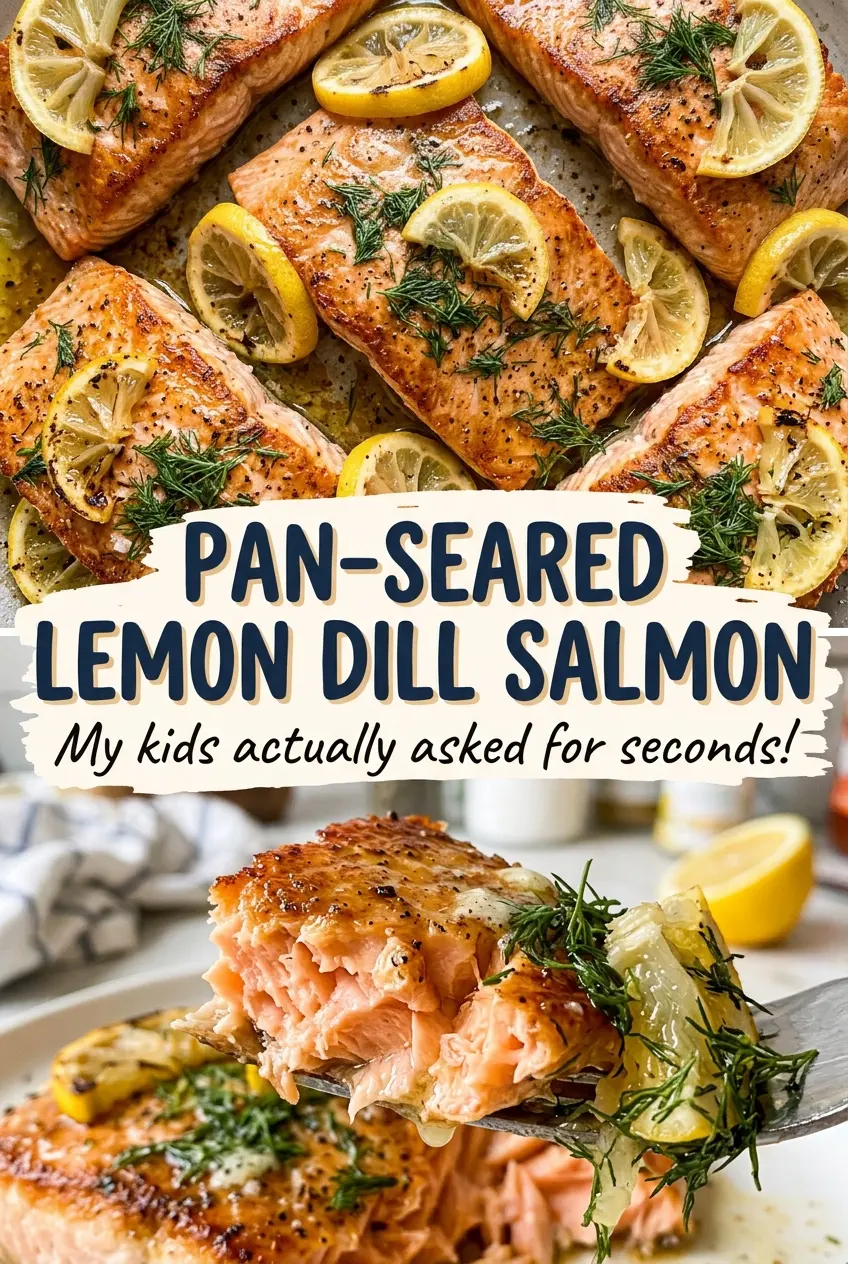
- Center-cut, skin-on salmon — Center-cut pieces are a reliable choice when you want portions with a similar thickness, so they finish at a more even pace. The skin is what gives this skillet method its crisp contrast; ask for skin-on fillets and check that they’re about the same thickness. Pat the surface dry before seasoning. If your fish counter offers different grades, choose the freshest fish you can; the simple seasoning leaves the salmon’s own flavor at the front.
- Olive oil — The oil coats the skillet and helps the skin make contact with the hot surface. Use a familiar everyday olive oil here; a delicate or expensive bottle won’t add much once it’s heated in the pan. Wait for a visible shimmer rather than pouring the fish into oil that’s still cool.
- Unsalted butter — Butter brings richness to the lemon-dill finish and gives the pan sauce a rounder taste than oil alone. Unsalted butter lets the seasoning stay balanced with the salt already on the salmon. If you only have salted butter, the sauce will be saltier, so taste a small spoonful before adding anything further.
- Fresh lemon juice and fresh dill — Lemon brightens the buttery sauce, and fresh dill brings a clean, green herb flavor. Fresh juice tastes livelier than bottled juice, and freshly chopped dill is more fragrant than dried. Chop the dill shortly before it goes into the sauce; delicate herbs lose some of their freshness when they sit cut for a long time.
The Pan-to-Plate Timing That Keeps the Salmon Tender
Dry and Season the Fillets
Blot both sides of the salmon with paper towels until the surface feels dry, then season both sides with kosher salt and black pepper. Moisture on the outside can interfere with browning, so give the skin a careful pat rather than rushing straight to the skillet. Keep the fillets close by while you heat the pan. The prep is simple, but an evenly seasoned surface makes each bite taste complete.
Start Skin Side Down
Heat the olive oil in a 12-inch skillet over medium-high until it shimmers, then arrange the salmon skin side down. Lower the heat to medium and leave the fillets in place for 5 to 6 minutes. Resist the urge to scoot them around to check underneath; moving them interrupts the skin’s contact with the pan. Watch for crisp skin and flesh that has turned opaque about two-thirds of the way up the sides.
Turn and Check the Thickest Part
Turn each fillet and cook the second side for 2 to 4 minutes. The exact time depends on the fish, so check the thickest part of each piece rather than assuming every portion finishes together. Take the salmon off the skillet and transfer it to plates when each fillet reaches 145°F. Checking each one matters most when the pieces aren’t perfectly identical in thickness.
Make the Lemon-Dill Butter in the Warm Skillet
Take the skillet off the heat, add the unsalted butter, and swirl until it melts. Stir in the lemon juice and chopped fresh dill, then spoon the sauce over the plated salmon. The butter should melt in the residual warmth of the pan; if it starts sizzling hard, the skillet is hotter than you need for this quick finish. Spoon some dill and lemon across every portion instead of leaving all the herbs at the bottom of the pan.
Easy Changes for a Different Finish or Format
A dairy-free lemon-and-dill finish
For a dairy-free version, use olive oil in place of the butter in the finishing sauce, then stir in the lemon juice and dill. The sauce will taste lighter and won’t have butter’s rich, rounded texture, but it still brings the same citrus and fresh-herb notes to the salmon.
Skinless fillets for a softer exterior
Skinless salmon works with the same seasoning and lemon-dill finish, but you won’t get the crisp skin that defines the original. Sear the fish without the skin side down step, turn it carefully, and use the temperature in the method to judge when it’s ready. The result is tender salmon with a more delicate outside.
Flake the salmon for a casual serving style
After cooking, break the salmon into large flakes and spoon the lemon-dill butter over them. This changes the presentation without changing the ingredients, and it lets the sauce catch between the pieces. Keep the flakes fairly large so they stay moist instead of turning into fine crumbs.
Storage and Reheating
- Refrigerator: Store leftovers in a covered container for 3 to 4 days. The skin will lose its crispness, and the chilled fish will feel firmer.
- Freezer: Freeze cooked salmon in an airtight container for up to 2 months. It’s safe beyond that when kept frozen, but the texture and buttery sauce may not be as pleasant after thawing.
- Reheating: Warm portions gently in a covered skillet over low heat, or use short bursts in the microwave, until leftovers reach 165°F. High heat can dry the salmon before it warms through.
Questions That Come Up While Cooking This Salmon
Pan Seared Lemon Dill Salmon
Ingredients
Equipment
Method
- Pat the salmon dry.
- Season both sides with the salt and pepper.
- Heat the olive oil in a 12-inch skillet over medium-high heat until shimmering.
- Arrange the salmon skin side down in the skillet.
- Reduce the heat to medium and cook the salmon without moving it for 5 to 6 minutes, until the skin is crisp and the fish looks opaque about two-thirds of the way up the sides.
- Turn the fillets and cook for 2 to 4 minutes, until the thickest part of each reaches 145°F.
- Transfer the salmon to plates.
- Remove the skillet from the heat.
- Add the butter and swirl until melted.
- Stir in the lemon juice and dill.
- Spoon the lemon-dill butter over the salmon.
- Serve.