

Christmas Morning Breakfast Casserole
When the egg mixture hits the bread, the cubes should start soaking it up instead of bobbing around in a puddle. Day-old bread makes a noticeable difference here: its drier…

By Ava
•
•
Reading time: 9 min
Tip: save now, make later.
When the egg mixture hits the bread, the cubes should start soaking it up instead of bobbing around in a puddle. Day-old bread makes a noticeable difference here: its drier crumb absorbs the custard while still holding its shape. That’s how I get a casserole with a soft center and distinct pieces of bread, not a soggy layer at the bottom.
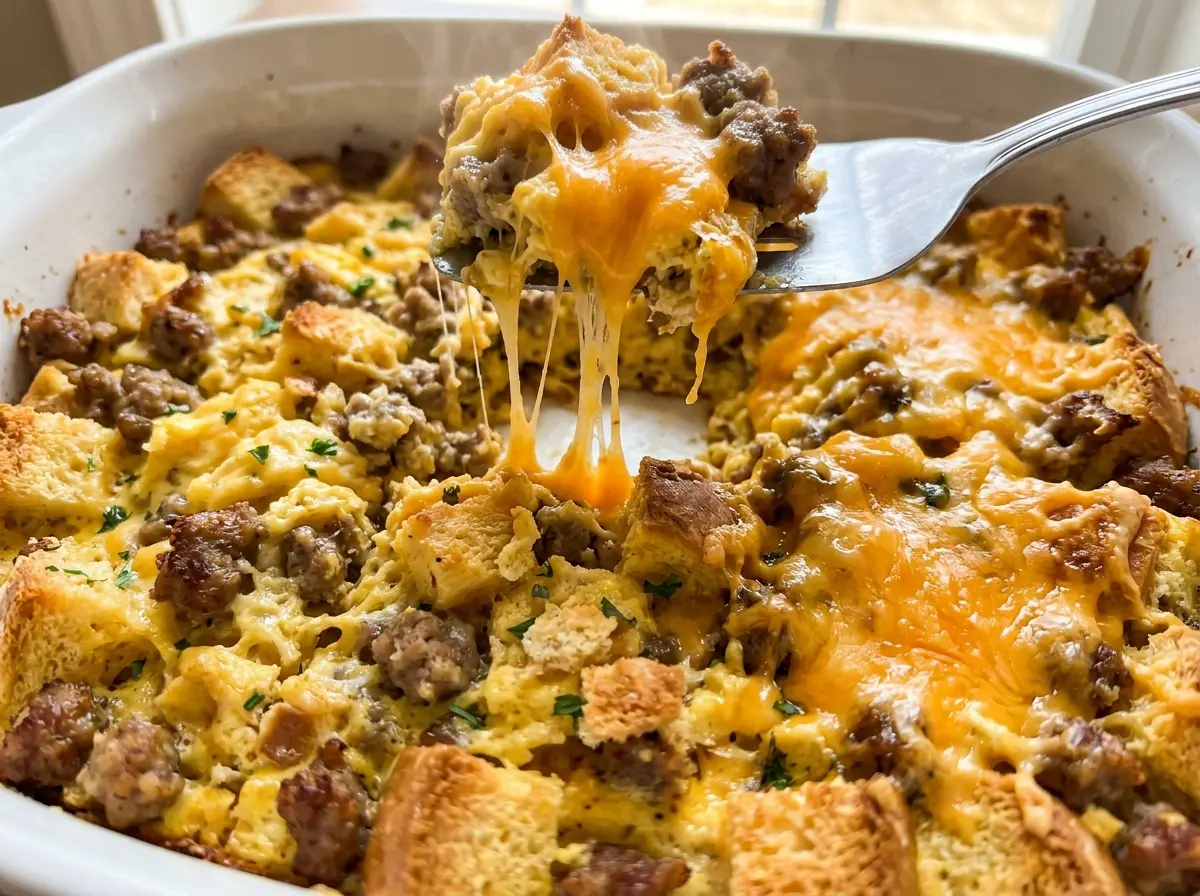
This Christmas Morning Breakfast Casserole is built for a little advance planning. I brown the pork sausage, layer it with bread and cheddar, then pour the seasoned egg and milk over everything and let it chill. The long rest gives the bread time to take in the custard before the dish goes into the oven, so breakfast is mostly ready before the day gets busy. Sharp cheddar brings a savory bite, and the sausage gives each square plenty of substance.
Kitchen Note
Give the casserole its full 10-minute rest before cutting. The custard firms up as it sits, which helps each scoop hold together instead of sliding apart on the plate.
Save this Christmas Morning Breakfast Casserole for a make-ahead breakfast with browned sausage, sharp cheddar, and a tender custardy center.
Why This Casserole Bakes Covered Before the Top Gets Color
A breakfast casserole has two jobs in the oven: the custard needs enough time to set in the middle, and the top shouldn’t dry out while that happens. Covering the dish for the first part of baking slows browning and holds in moisture. Once the foil comes off, the exposed bread and cheddar get a chance to finish baking and take on a little color.
That change from covered to uncovered is especially useful in a deep dish layered with bread and sausage. If you leave it uncovered the whole time, the top can look ready before the center has finished setting. If you keep it covered throughout, the center can cook through but the top stays soft. Watch the middle rather than judging doneness by the edges; the center is the part that takes longest to catch up.
The finish matters, too. A set center and the right internal temperature are more reliable signs than the color of the cheese alone. The surface may look appealing before the custard underneath is ready, so use both visual and temperature cues.
Day-Old Bread and Sharp Cheddar Do More Than Add Bulk

- Day-old bread — Slightly dry bread has room to absorb the egg and milk without collapsing as quickly as fresh bread. Cut the cubes to a consistent 1-inch size so they soak at a similar pace. A sturdy loaf works well; there’s no need to seek out a specialty bread.
- Pork breakfast sausage — The sausage brings seasoning and savory richness to the whole dish, so choose one you enjoy eating on its own. Brown it in small pieces, then drain away excess grease; too much rendered fat can leave the custard greasy. A spicy pork breakfast sausage is a straightforward way to give the casserole more heat.
- Sharp cheddar — Its stronger flavor stands up to the bread and egg custard without requiring extra seasoning. Pre-shredded cheddar is convenient and works here; freshly shredded cheese usually melts more evenly. For a milder cheese flavor, replace it with the same amount of Monterey Jack.
- Eggs, whole milk, and dry mustard — The eggs set the casserole, while whole milk makes the custard tender rather than rubbery. Dry mustard adds a quiet savory note that keeps the egg mixture from tasting flat. Use plain whole milk, not sweetened or flavored milk.
From Skillet to Set Center: Building the Casserole
Brown the Sausage Until No Pink Remains
Heat a large skillet over medium heat and cook the pork breakfast sausage, breaking it into small pieces as it browns. Give the pieces time to color instead of stirring constantly; browned bits add more savory flavor than sausage that’s only gray. Cook for 8 to 10 minutes, until browned and cooked to 160°F. Drain off excess grease before layering so it doesn’t pool in the baking dish.
Layer Bread, Sausage, and Cheddar Evenly
Lightly coat a 9×13-inch baking dish with nonstick cooking spray, then spread the bread cubes across the bottom. Scatter the cooked sausage over the bread, followed by the cheddar, distributing both across the dish rather than piling them in the middle. Even layers give each serving a similar mix of bread, meat, and cheese. Keep the cubes in the dish; don’t press them down into a dense layer.
Pour the Custard Over Every Corner
Whisk the eggs, whole milk, dry mustard, kosher salt, and black pepper in a large bowl until the yolks and whites are fully combined. Pour the mixture evenly over the bread, moving around the dish so the corners don’t get missed. Cover tightly and refrigerate for at least 4 hours and up to 12 hours. This chilled soak gives the custard time to move through the bread instead of sitting only on the surface.
Use the Two-Part Bake to Finish the Center
Heat the oven to 350°F while the covered casserole sits at room temperature; keep that time to no more than 30 minutes. Cover the dish with foil and bake for 30 minutes, then remove the foil and bake for another 20 to 30 minutes. The top should look set, and the center should no longer appear liquid when you gently check it. Confirm that the center reaches 160°F before taking the casserole out of the oven.
Three Swaps for a Casserole That Fits Your Table
Make It Gluten-Free With Day-Old GF Bread
Replace the bread with the same volume of day-old gluten-free bread, cut into 1-inch cubes. Since gluten-free loaves vary in how quickly they absorb liquid, check that the cubes are evenly coated after pouring in the custard. The casserole may have a slightly different texture, but the sausage, cheddar, and egg custard still make a hearty slice.
Turn Up the Heat With Pepper Jack
Swap the sharp cheddar for the same amount of shredded pepper Jack. It adds a gentle chile kick and a softer, less sharp cheese flavor. Keep the rest of the ingredient mix unchanged so the custard still has the same balance.
Storage and Reheating
- Refrigerator: Store covered leftovers for 3 to 4 days. The bread softens as it sits, but the casserole reheats well.
- Freezer: Freeze cooled portions in airtight containers for up to 2 months. Thaw them in the refrigerator before reheating.
- Reheating: Cover portions and warm them in a 325°F oven until hot throughout, or microwave a single portion in short intervals. Reheat leftovers to 165°F, and don’t leave them uncovered in the oven long enough to dry out.
Questions That Come Up Before This Casserole Goes in the Oven
Christmas Morning Breakfast Casserole
Ingredients
Equipment
Method
- Lightly coat a 9x13-inch baking dish with nonstick cooking spray.
- Cook the pork breakfast sausage in a large skillet over medium heat, breaking it into small pieces, for 8 to 10 minutes, until browned and cooked to 160°F.
- Drain off excess grease from the sausage.
- Spread the bread cubes in the prepared dish.
- Scatter the sausage and cheddar evenly over the top.
- Whisk the eggs, milk, dry mustard, kosher salt, and black pepper in a large bowl.
- Pour the egg mixture evenly over the bread.
- Cover the dish tightly and refrigerate for at least 4 hours or up to 12 hours.
- Heat the oven to 350°F.
- Let the casserole sit at room temperature while the oven heats, no more than 30 minutes.
- Cover the dish with foil and bake for 30 minutes.
- Uncover and bake for 20 to 30 minutes, until the center is set and reaches 160°F.
- Rest the casserole for 10 minutes before serving.