
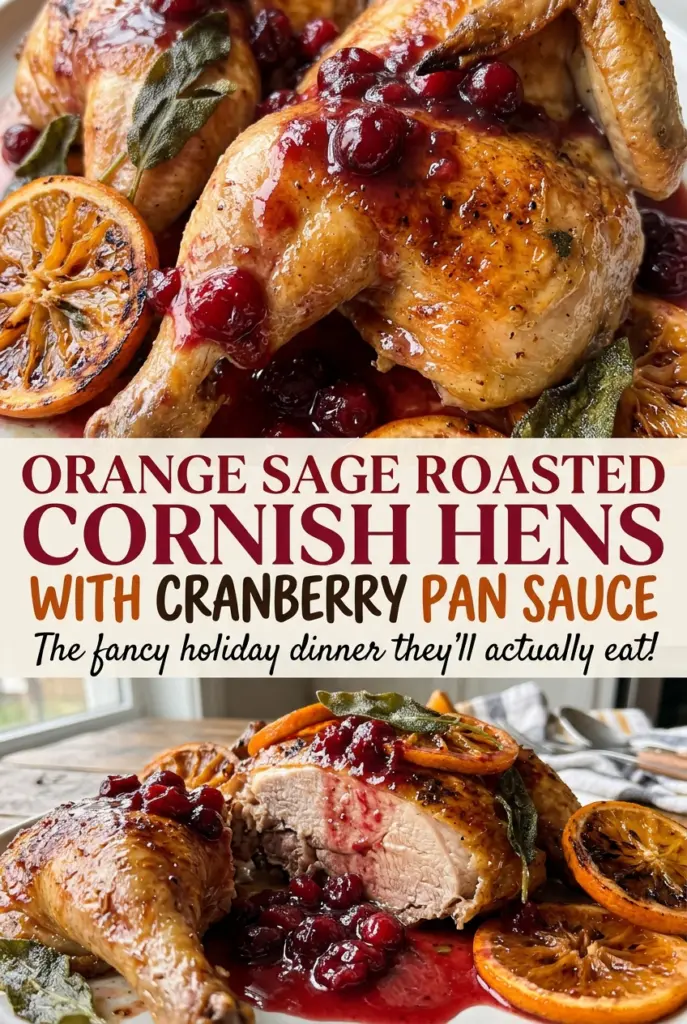
Orange Sage Roasted Cornish Hens with Cranberry Pan Sauce
When the cranberries start popping in the saucepan, the sharp orange scent cuts through the savory smell of the roasted birds, and the pan sauce starts to come together. I…

By Ava
•
•
Reading time: 9 min
Tip: save now, make later.
When the cranberries start popping in the saucepan, the sharp orange scent cuts through the savory smell of the roasted birds, and the pan sauce starts to come together. I make these orange sage roasted Cornish hens when I want a proper roast without a separate stockpot or a long list of side steps. The hens sit breast side up on a rack, with orange quarters tucked inside, while sage and olive oil season the skin.
After roasting, each hen is cut in half for four portions, and the warm cranberry sauce brings the whole plate into focus. Its tart berries and bright citrus balance the rich drippings from the birds. I like that the sauce is made right in the same stretch of cooking time, so the roast and its finishing sauce arrive together: browned skin, tender meat, and a glossy spoonful of cranberry-orange sauce.
The prep is straightforward, but the details matter: start with fully thawed hens, and keep the drippings for the sauce. The fresh sage gives the skin a savory lift, while the orange in the cavity perfumes the meat without turning the dish sweet. Every piece gets a little crisp skin and plenty of warm sauce.
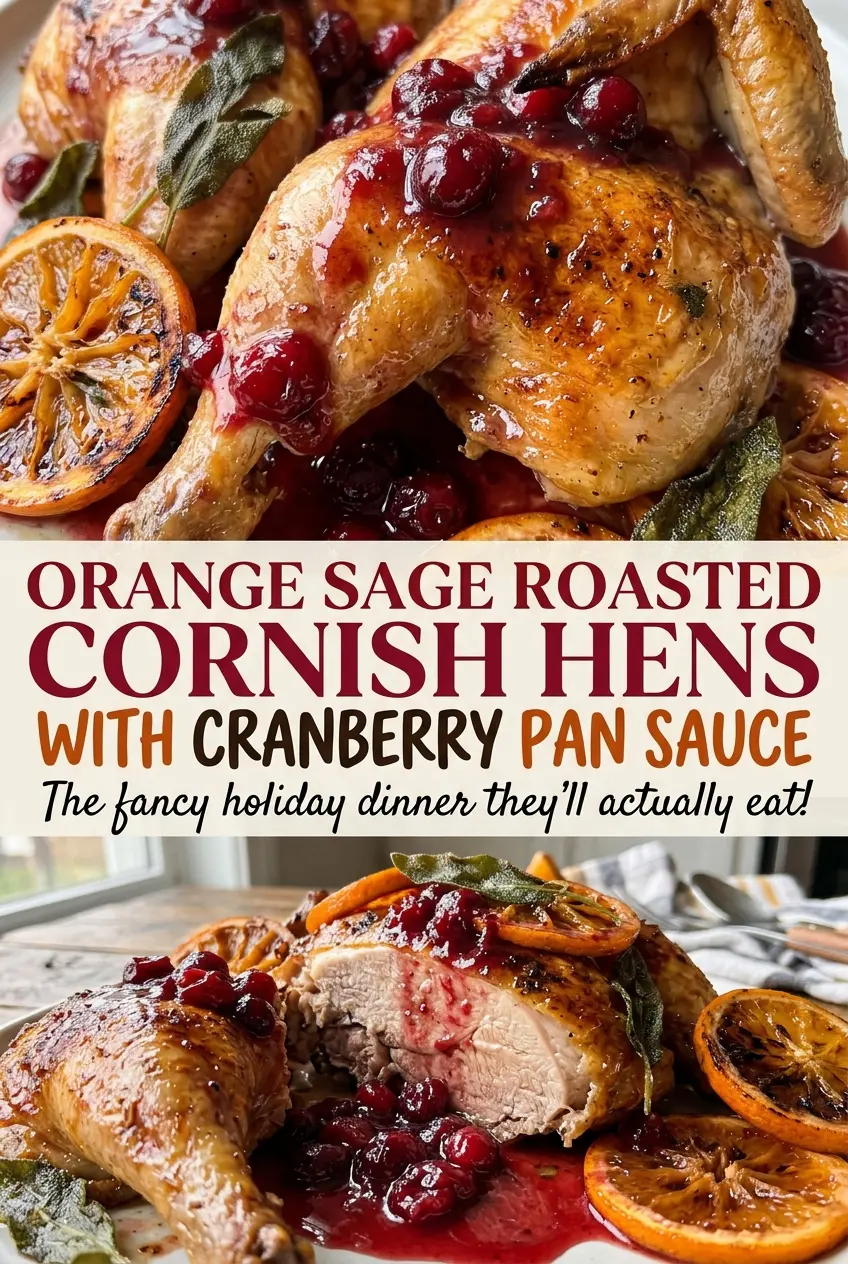
Kitchen Note
Pat the hens dry before rubbing on the sage oil. Damp skin tends to brown less evenly, so take an extra moment with the paper towels, especially around the legs and wings.
Save these orange sage Cornish hens for a roast with browned skin and a tart cranberry-orange pan sauce.
Why the Cranberry Sauce Starts with the Hens’ Drippings
The sauce gets its roasted depth from the drippings, not from broth alone. Those juices have picked up seasoning and the savory character of the birds as they roast. Straining them removes any browned bits that would make the sauce rough, and skimming off excess fat keeps the finished spoonful from feeling greasy.
Chicken broth gives the drippings enough volume to simmer the cranberries, but it doesn’t drown out their savory base. Orange zest and juice brighten the mixture, while brown sugar rounds out the berries’ natural tartness. As the cranberries burst, they add body and color; a small cornstarch slurry gives the sauce its final light thickness. The result should still pour easily rather than sit like jam. That balance is what lets the sauce taste like part of the roast instead of a separate sweet topping.
The Ingredients That Keep This Roast Savory and Bright
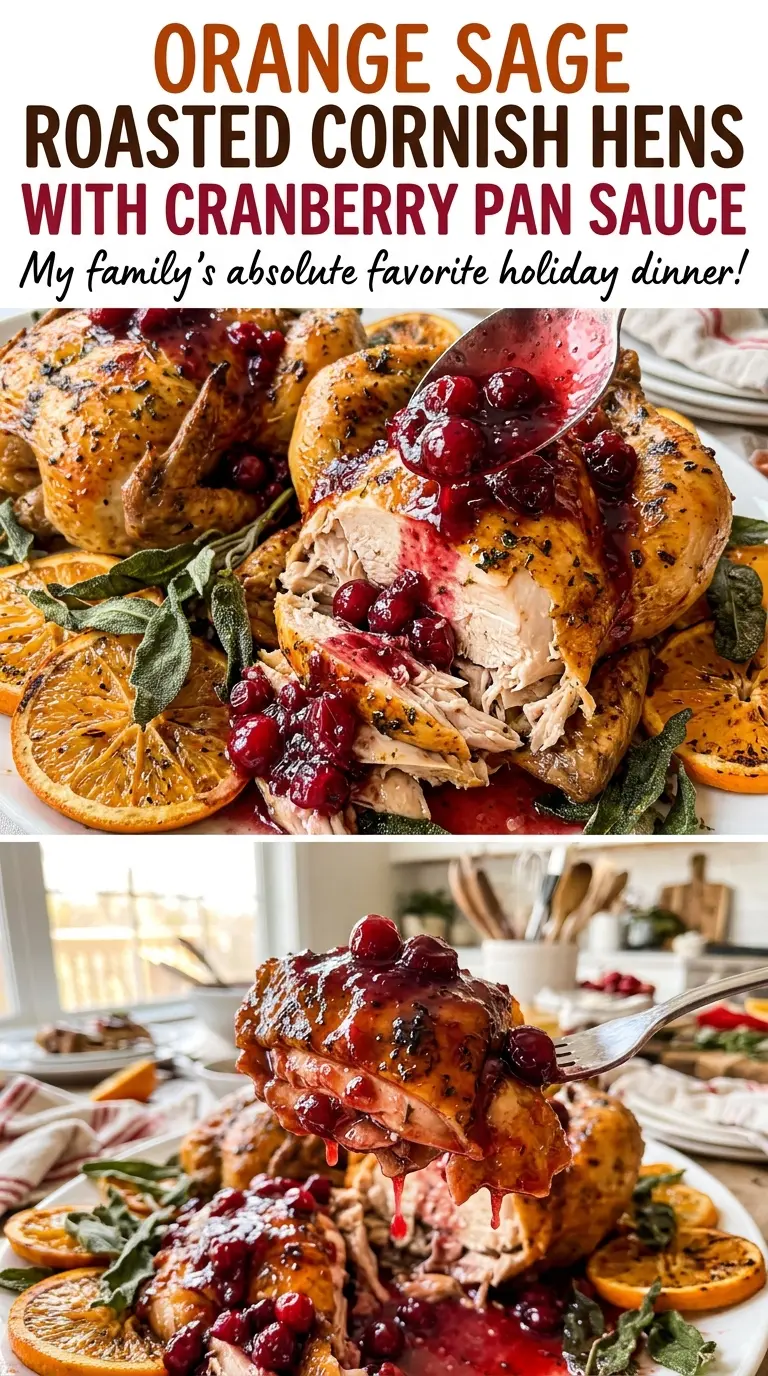
- Cornish hens — Choose hens in the listed size range and thaw them fully before roasting; their size is tied to the stated oven time. The giblets need to be removed before seasoning, and the birds should be patted dry.
- Fresh sage — Finely chopped fresh sage gives the olive oil a clean, woodsy aroma that clings to the skin. Use fresh leaves here; dried sage is more concentrated and won’t give the same texture in the rub.
- Oranges — One orange is quartered for the cavities, and the other supplies both zest and juice for the sauce. Fresh zest matters because it carries fragrant citrus oils that juice alone can’t provide.
- Cranberries — Fresh or frozen berries both work in the sauce. Fresh berries are easy to inspect, while frozen ones are convenient to keep on hand; either way, cook until the berries burst rather than relying on the clock alone.
- Low-sodium broth and brown sugar — The low-sodium broth supports the drippings without making the sauce overly salty, and brown sugar softens the cranberries’ sharp edge. A basic carton of low-sodium chicken broth is fine; the fruit and drippings do most of the flavor work.
- Cornstarch and butter — The cornstarch thickens the sauce without needing a flour-based roux, and butter stirred in off the heat adds a smooth finish. Keep the cornstarch for the sauce’s texture; the butter can be left out for a dairy-free version.
From Sage-Rubbed Hens to a Glossy Cranberry Pan Sauce
Coat the Hens with Sage Oil
Stir the olive oil, kosher salt, black pepper, and finely chopped sage together until the sage is evenly distributed. Rub the mixture over both hens, working it across the skin. The oil helps the seasoning cling rather than fall off in the roasting pan. Set the seasoned birds aside while you finish setting up the pan.
Fill the Cavities and Set Up the Pan
Heat the oven to 400°F with a rack positioned in the center. Put two orange quarters inside each hen, then set the birds breast side up on a rack in a large roasting pan. Pour the water into the pan beneath the rack. Keeping the hens on the rack leaves the drippings below for the sauce.
Roast, Then Let the Meat Rest
Roast for 60 to 75 minutes, until the skin is browned and a thermometer inserted into the thickest part of each thigh, without touching bone, reads 165°F. Check each hen separately; the two birds may not finish at precisely the same moment. Transfer them to a cutting board and let them rest for 10 to 15 minutes before cutting, so the meat has time to settle.
Strain the Drippings and Burst the Cranberries
Pour all the pan drippings through a fine-mesh strainer into a bowl, then skim off excess fat. Combine the strained drippings with the cranberries, chicken broth, brown sugar, orange zest, and orange juice in a 2-quart saucepan. Bring the mixture to a simmer over medium heat and cook for 8 to 12 minutes, stirring occasionally, until the cranberries burst and the sauce turns ruby red.
Thicken the Sauce and Serve
Stir the cornstarch and cold water together until smooth, then stir that slurry into the simmering sauce. Let it simmer for 1 to 2 minutes, until slightly thickened; if the slurry goes in lumpy, keep stirring as the sauce simmers to smooth it out. Take the saucepan off the heat and stir in the butter until melted. Cut each hen in half and serve with the warm sauce.
Two Simple Ways to Adapt the Hens and Sauce
Make the Cranberry Sauce More Tart
Leave out the brown sugar for a sharper, less rounded cranberry sauce. The berries will still burst and the cornstarch will still thicken the sauce, but the orange and cranberry will taste more pronounced and less sweet.
Make the Sauce Dairy-Free
Skip the butter at the end and take the saucepan off the heat once the sauce has thickened. The cranberry sauce will be a little less silky and rich, but the drippings and orange still give it plenty of savory-citrus character.
Storage and Reheating
- Refrigerator: Store cooled hen portions and sauce in separate airtight containers for 3 to 4 days. The skin will soften in storage.
- Freezer: Freeze cooled portions and sauce separately in airtight containers for up to 3 months. Thaw in the refrigerator before reheating.
- Reheating: Warm the hens covered in a 325°F oven until hot throughout, and warm the sauce gently in a saucepan. Avoid boiling the sauce after adding butter, which can make it separate.
Questions That Come Up When Roasting Cornish Hens
Orange Sage Roasted Cornish Hens with Cranberry Pan Sauce
Ingredients
Equipment
Method
- Heat the oven to 400°F.
- Position a rack in the center.
- Stir the olive oil, salt, pepper, and sage together.
- Rub the mixture over the hens.
- Place 2 orange quarters in each hen’s cavity.
- Set the hens breast side up on a rack in a large roasting pan.
- Pour the water into the pan.
- Roast for 60 to 75 minutes, until the skin is browned and a thermometer inserted into the thickest part of each thigh, without touching bone, reads 165°F.
- Transfer the hens to a cutting board.
- Let them rest for 10 to 15 minutes.
- Pour the pan drippings through a fine-mesh strainer into a bowl.
- Skim off excess fat.
- Combine the drippings, cranberries, chicken broth, brown sugar, orange zest, and orange juice in a 2-quart saucepan.
- Bring to a simmer over medium heat.
- Cook for 8 to 12 minutes, stirring occasionally, until the cranberries burst.
- Stir the cornstarch and cold water together until smooth.
- Stir the mixture into the sauce.
- Simmer for 1 to 2 minutes, until slightly thickened.
- Remove the saucepan from the heat.
- Stir in the butter until melted.
- Cut each hen in half and serve with the warm sauce.