
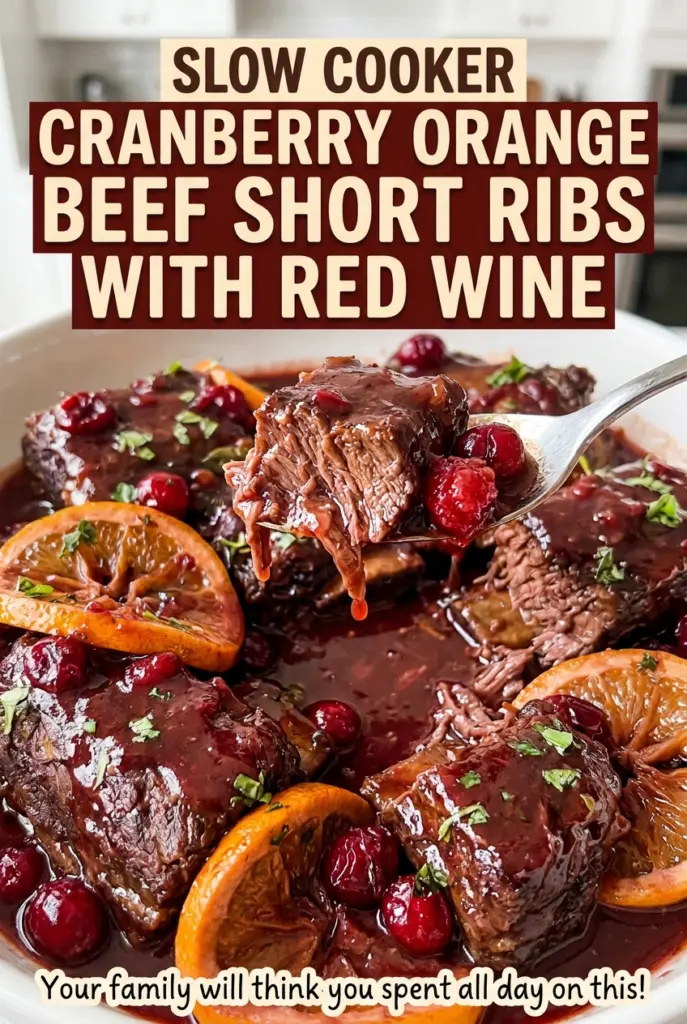
Slow Cooker Cranberry Orange Beef Short Ribs with Red Wine
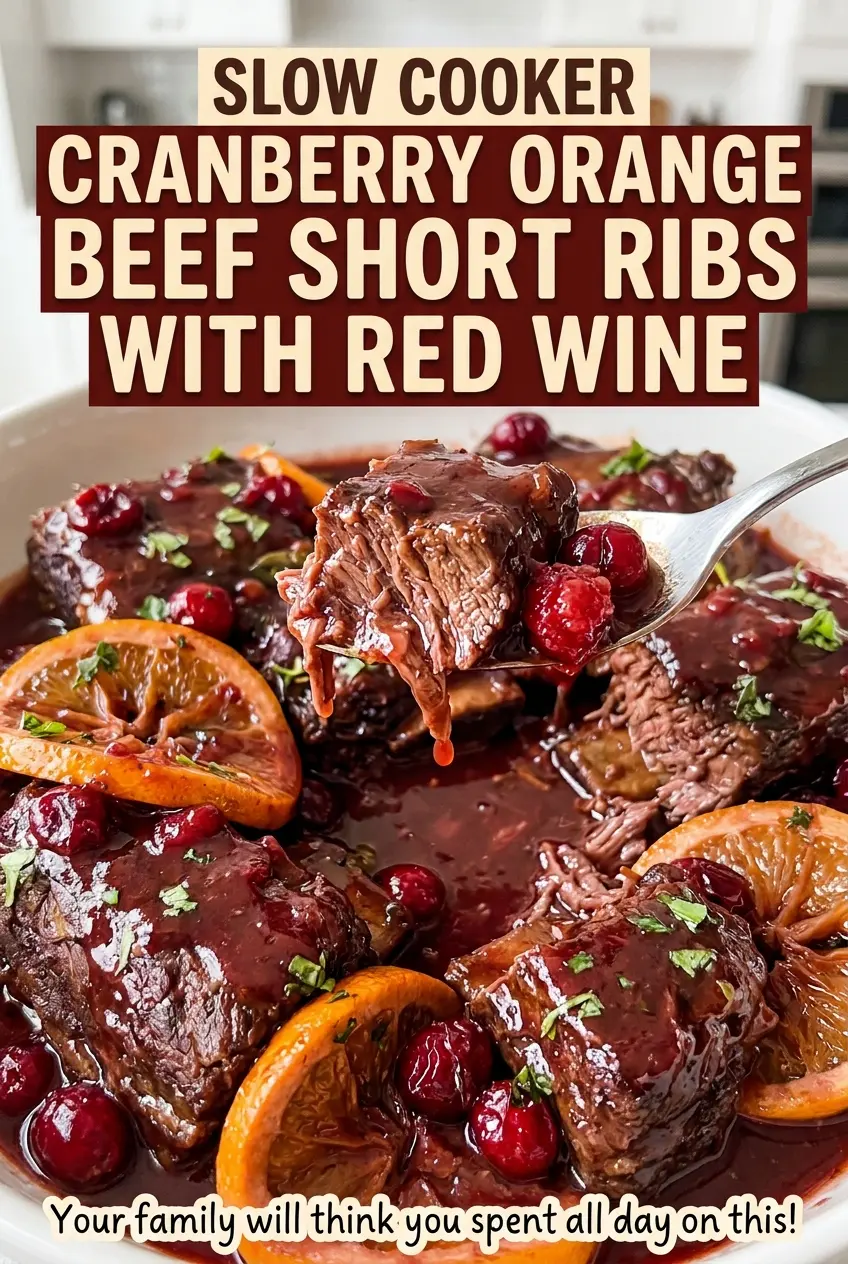
When the lid comes off, the cranberries have softened into a deep red sauce, and the beef is tender enough to pull away from the bone with a fork. That’s…

By Ava
•
•
Reading time: 9 min
Tip: save now, make later.
When the lid comes off, the cranberries have softened into a deep red sauce, and the beef is tender enough to pull away from the bone with a fork. That’s the payoff for giving short ribs a long, gentle cook instead of trying to rush a naturally tough cut. These slow cooker cranberry orange beef short ribs bring the richness of the beef together with tart berries, bright citrus, and dry red wine.
I brown the ribs first, then use the same skillet to cook the onion, garlic, and tomato paste before adding the wine. Those browned bits are worth keeping: scraping them into the sauce carries the savory flavor into the slow cooker. The covered pot does the rest while the ribs become tender and the cranberries soften. The sauce is meant to be spooned over the meat, not reduced into a sticky glaze.
Kitchen Note
Zest the orange while it’s still whole, then cut and juice it. You’ll get the zest more easily from a firm, intact orange, and you won’t have to work around a slippery cut surface.
Save these slow cooker cranberry orange beef short ribs for fork-tender meat and a tart, ruby-red sauce enriched with red wine.
Why This Cranberry Sauce Stays Spoonable, Not Jammy
A slow cooker holds onto moisture. Because the lid stays on for the long cook, the liquid doesn’t reduce the way it would in an uncovered saucepan. The cranberries soften and break down, but the sauce still has broth, wine, and juices from the beef in it. That’s the texture to expect: loose enough to ladle, with softened berries giving it a little body.
If you’re expecting a thick cranberry preserve, the finished sauce may look too thin at first. It isn’t meant to set or cling like jam. Skimming the fat and stirring the berries at the end brings the sauce together without adding flour or starch, and the bright, tart finish keeps the rich short ribs from feeling heavy. Spoon it over the meat and let a little run onto the plate; that’s where the citrus and wine come through with each bite.
Why the Cranberries, Orange, and Wine Belong in the Same Pot
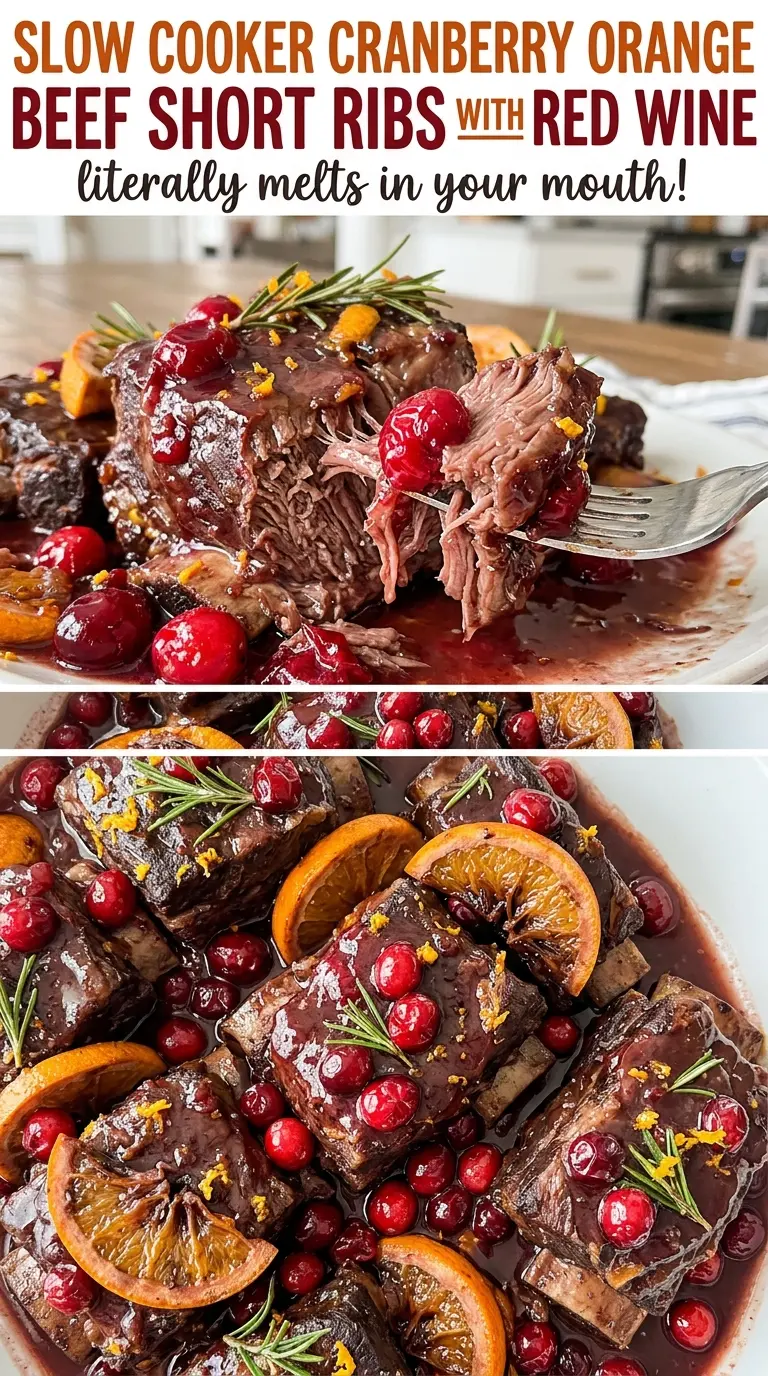
- Bone-in English-cut short ribs — The bone and marbled meat suit a long braise, developing a full, beefy sauce as they cook. Choose ribs with good meat coverage; very lean ribs won’t give the sauce the same richness. There isn’t a direct lean-cut swap that cooks the same way.
- Dry red wine — It adds depth and a little acidity to the cooking liquid. Use a drinkable dry wine rather than a sweet red; an inexpensive bottle is fine. For a wine-free version, use the variation below.
- Fresh cranberries and brown sugar — The berries bring the tart edge, while brown sugar rounds it out as they soften. Fresh cranberries are a good fit here; frozen ones can work if thawed and drained first, though the berries may break down more.
- Orange — Fresh zest gives the sauce fragrant citrus oils, while the juice adds a brighter, gentler citrus note. A fresh orange is worth using rather than bottled juice, which won’t provide the zest.
- Tomato paste, onion, garlic, and thyme — These build a savory base under the fruit. The tomato paste adds depth, not a tomato-forward flavor; fresh thyme brings a clean herbal note, and the bay leaf gives the long-cooked liquid a subtle savory background.
How to Build the Wine Base Before the Slow Cooker Takes Over
Brown the meaty sides in batches
Pat the ribs dry, season them all over with kosher salt and black pepper, then heat the vegetable oil in a 12-inch skillet over medium-high. Brown the ribs in batches on the meaty sides for 3 to 4 minutes per side, then move them into a 6-quart slow cooker. Leave space between the pieces so they brown instead of steaming against one another. The skillet should be hot enough to give the meat a browned surface, not just a gray one.
Turn the skillet into the sauce base
Add the chopped onion to the same skillet and cook for 4 minutes, stirring. Stir in the minced garlic and tomato paste and cook for 1 minute; the paste should look darker and smell savory, not scorched. Pour in the red wine and scrape up the browned bits from the skillet bottom. Let it simmer for 2 minutes, then stir in the beef broth.
Load the cooker and let the ribs get tender
Pour the wine mixture over the ribs, then add the cranberries, brown sugar, orange zest and juice, thyme sprigs, and bay leaf. Cover and cook on LOW for 8 to 9 hours or HIGH for 4 to 5 hours. The ribs should be fork-tender; check the thickest meat without touching bone with a thermometer, which should read at least 145°F, though tender ribs will usually reach 195°F or higher. If the meat still resists a fork, it needs more time on the same setting.
Skim and stir before serving
Transfer the ribs to a platter, then remove and discard the thyme stems and bay leaf. Skim the fat from the surface of the sauce before stirring, so you don’t mix that oily layer back in. Stir to break down the softened cranberries, then spoon the sauce over the ribs. The berries should loosen into the cooking liquid rather than remain firm and whole.
Four Practical Ways to Adapt These Short Ribs
Make the sauce ginger-bright
Stir a tablespoon of freshly grated ginger into the skillet with the garlic and tomato paste. It adds a warm, fresh bite that plays well with orange, though it makes the sauce less purely tart and savory.
Give the cranberry sauce a little heat
Add ¼ teaspoon crushed red pepper with the garlic and tomato paste. The gentle heat comes through after the long cook without taking over the fruit or the beef.
Make it gluten-free
Use a gluten-free low-sodium beef broth in place of the regular broth. This keeps the sauce’s savory balance intact; choose ingredients labeled gluten-free if you’re cooking for someone who needs to avoid gluten.
Skip the wine
Replace the red wine with 1 cup additional low-sodium beef broth and 1 tablespoon red wine vinegar. You’ll keep the liquid amount close, though the sauce will taste less layered and a little sharper.
Storage and Reheating
- Refrigerator: Store the ribs and sauce in an airtight container for 3 to 4 days. The sauce may thicken as it chills, and the fat will be easier to lift off once cold.
- Freezer: Freeze the ribs with the sauce in airtight containers for up to 3 months for best quality. Thaw overnight in the refrigerator before reheating.
- Reheating: Warm the ribs gently, covered, in a saucepan with the sauce, stirring carefully, until leftovers reach 165°F. Avoid a hard boil, which can make the meat fall apart before the sauce is hot throughout.
Questions That Come Up With Slow Cooker Short Ribs
Slow Cooker Cranberry Orange Beef Short Ribs with Red Wine
Ingredients
Equipment
Method
- Pat the beef short ribs dry.
- Season the ribs all over with the kosher salt and black pepper.
- Heat the vegetable oil in a 12-inch skillet over medium-high heat.
- Brown the ribs in batches on the meaty sides, 3 to 4 minutes per side.
- Transfer the browned ribs to a 6-quart slow cooker.
- Add the onion to the skillet and cook for 4 minutes, stirring.
- Add the garlic and tomato paste and cook for 1 minute.
- Pour in the red wine, scrape up the browned bits, and simmer for 2 minutes.
- Stir in the beef broth and pour the mixture into the slow cooker.
- Add the cranberries, brown sugar, orange zest and juice, thyme, and bay leaf to the slow cooker.
- Cover and cook on LOW for 8 to 9 hours or HIGH for 4 to 5 hours, until the ribs are fork-tender and a thermometer inserted into the thickest meat without touching bone reads at least 145°F; tender ribs will usually reach 195°F or higher.
- Transfer the ribs to a platter.
- Discard the thyme stems and bay leaf.
- Skim the fat from the sauce.
- Stir the sauce to break down the cranberries.
- Spoon the sauce over the ribs.