
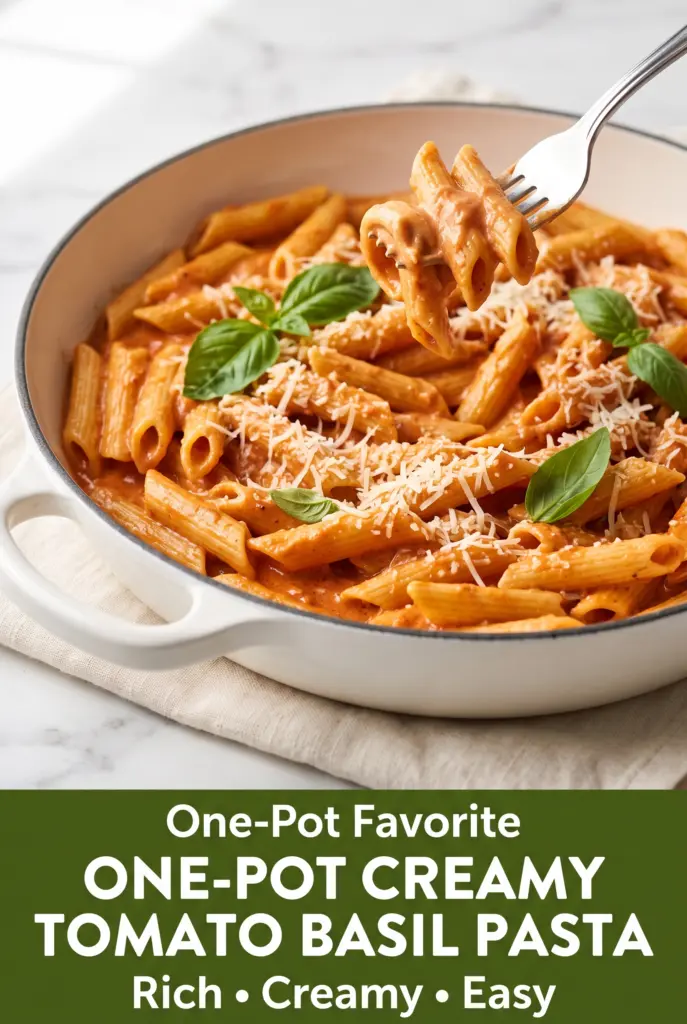
One-Pot Creamy Tomato Basil Pasta
Silky tomato cream sauce clings to every piece of pasta here, and that’s what makes this dish worth repeating. It lands in that sweet spot between comforting and fresh: rich…

By Ava
•
•
Reading time: 10 min
Tip: save now, make later.
Silky tomato cream sauce clings to every piece of pasta here, and that’s what makes this dish worth repeating. It lands in that sweet spot between comforting and fresh: rich enough to feel like dinner, bright enough that the basil and tomato still come through. The best part is that the pasta cooks right in the sauce, which gives it a fuller, more integrated flavor than boiling everything separately and tossing it together at the end.
The trick is getting the tomato paste cooked long enough to lose that raw, tinny edge before any liquid goes in. Once the broth, cream, and pasta hit the pan, the starch from the penne helps thicken everything naturally as it simmers. Parmesan goes in at the end, off the hottest part of the heat, so it melts into the sauce instead of turning grainy. That little bit of patience is what keeps the finish smooth.
The sauce turned out perfectly silky and the pasta had just enough bite after simmering in the pot. I added a little extra basil at the end and my husband went back for seconds before I even sat down.
Creamy Tomato Basil Pasta for the nights when you want one pot, real comfort, and a sauce that coats the penne instead of pooling at the bottom.
The Reason One-Pot Pasta Turns Creamy Instead of Gluey
One-pot pasta can go wrong fast if the liquid ratio is off or the heat is too high. Too much boiling and the sauce gets tight before the pasta is tender. Too little stirring and the noodles stick to the bottom and cook unevenly. The goal here is a gentle simmer that keeps the pasta moving just enough while the starch thickens the sauce naturally.
This recipe avoids the most common problem by starting with enough broth to cook the pasta fully, then finishing with Parmesan and a short rest. That resting time matters. The sauce looks a little loose at first, but it tightens as the pasta absorbs liquid and the starch settles into the cream. If it seems thin the moment you turn off the heat, give it a few minutes before deciding it needs help.
What Each Ingredient Is Actually Doing in This Dish

- Tomato paste — This is where the deep tomato flavor starts. Cooking it for a minute before adding liquid takes away the raw edge and gives the sauce a fuller, more savory base.
- Diced tomatoes — The canned tomatoes bring acidity and body. Use regular diced tomatoes here; fire-roasted works too, but it will add a smokier note that changes the final taste.
- Heavy cream — Cream softens the tomato acidity and gives the sauce its velvety finish. Half-and-half can work in a pinch, but the sauce will be thinner and less stable after simmering.
- Parmesan cheese — Freshly grated Parmesan melts more smoothly than the pre-shredded kind, which often has anti-caking agents that can make the sauce grainy. Add it off the heat or on very low heat so it blends in cleanly.
- Fresh basil — Basil belongs at the end. If it cooks too long, the flavor dulls and the leaves lose their bright, fragrant edge.
- Penne pasta — A sturdy shape matters because it holds up to the simmer and catches the sauce inside the tubes. You can swap in rotini or rigatoni, but avoid delicate pasta that breaks down before the sauce finishes thickening.
The 20 Minutes That Matter Most
Softening the Onion Without Browning It
Start the onion in olive oil over medium heat and cook until it turns soft and translucent, not browned. Browned onion changes the sauce in a good way sometimes, but here it can push the dish too far from fresh tomato into a deeper, sweeter direction. Once the garlic goes in, keep it moving and only give it about 30 seconds. If garlic starts to color, the pan is too hot and the finished sauce will taste sharp.
Cooking the Tomato Paste Until It Smells Rounded
Stir the tomato paste into the onions and let it cook for a minute before adding the tomatoes and broth. You want it to darken slightly and smell less metallic, more concentrated. That’s the point where it stops tasting like a shortcut and starts tasting like the backbone of the sauce. If you skip this, the finished pasta can taste flat even with cream and Parmesan added later.
Simmering the Pasta in the Sauce
Add the pasta once the liquid is in and bring everything to a gentle boil, then drop it back to medium-low. The sauce should move with small bubbles, not a hard rolling boil. Stir every couple of minutes so the pasta doesn’t weld itself to the pan, especially near the bottom edges where heat is strongest. If the liquid disappears before the pasta is tender, add a splash of broth or water and keep going.
Finishing So the Sauce Stays Smooth
Take the pan off the heat before you stir in the Parmesan if the sauce looks hot and aggressive. Cheese melts best in a calmer sauce, and that’s how you avoid graininess or stringy bits. Fold in the basil at the very end so it stays green and fragrant. Let the pasta sit for 2 to 3 minutes before serving; that rest is when the sauce goes from loose to properly clingy.
How to Adapt This for a Bigger Crowd or a Lighter Table
Make It Vegetarian
Swap the chicken broth for a good vegetable broth. The sauce still gets its richness from the cream and Parmesan, so you won’t lose the creamy texture, but the flavor will be a little lighter and less savory. Choose a broth that tastes clean on its own, since a harsh vegetable broth will show up in the final dish.
Make It Gluten-Free
Use a gluten-free penne that’s designed to hold its shape in simmering liquid. Some gluten-free pastas break down faster than regular pasta, so start checking a few minutes early and stir gently to keep the sauce smooth. If the pasta needs extra liquid, add it in small splashes so you don’t wash the sauce out.
Use Half-and-Half Instead of Heavy Cream
This works if you want a lighter sauce, but don’t let the pan boil hard after it goes in. Half-and-half is more likely to separate under high heat, so keep the simmer gentle and add the Parmesan with the heat lowered. The result will still be creamy, just a little less lush than the original.
Storage and Reheating
- Refrigerator: Store leftovers in an airtight container for up to 4 days. The pasta will keep absorbing sauce, so it thickens as it sits.
- Freezer: It freezes, but the cream sauce can loosen and turn a little grainy after thawing. If you freeze it, use a freezer-safe container and thaw overnight in the fridge before reheating.
- Reheating: Warm it slowly on the stove or in short bursts in the microwave with a splash of broth, water, or cream. High heat is the mistake here; it tightens the sauce and can make the Parmesan separate.
Answers to the Questions Worth Asking
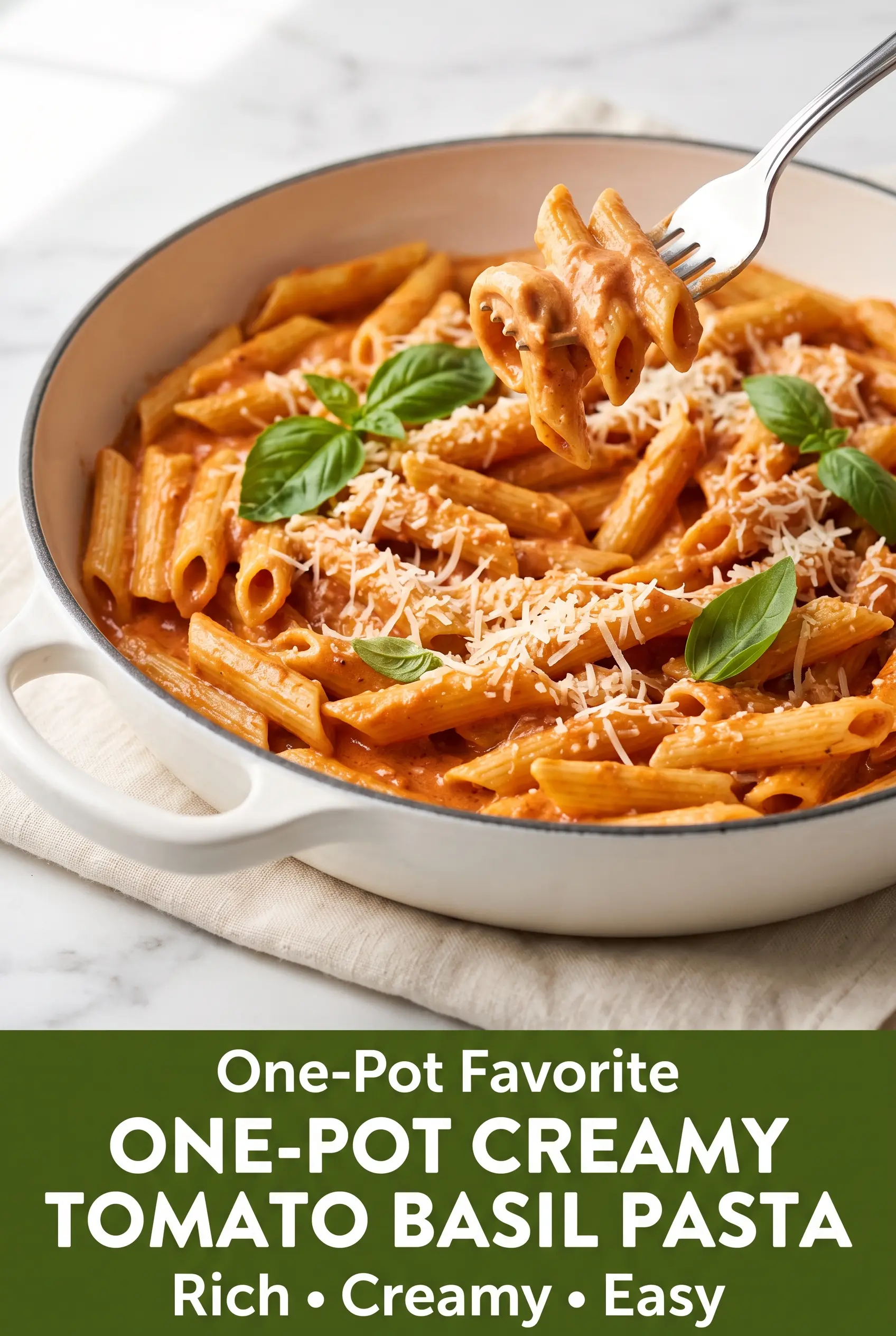
One-Pot Creamy Tomato Basil Pasta
Ingredients
Equipment
Method
- Heat the olive oil in a large deep skillet or Dutch oven over medium heat. Sauté the yellow onion for 4–5 minutes until softened, then stir in the garlic and cook for 30 seconds until fragrant.
- Add the tomato paste and cook for 1 minute while stirring to deepen its flavor. Keep the heat at medium so it doesn’t burn.
- Pour in the diced tomatoes, chicken broth, and heavy cream. Stir in the Italian seasoning, salt, and black pepper until well combined.
- Add the penne pasta and bring the mixture to a gentle boil. Reduce to medium-low, cover, and simmer for 12–15 minutes, stirring occasionally, until the pasta is tender and most of the liquid has thickened.
- Stir in the Parmesan cheese until melted and creamy. Fold in the fresh basil and cook for another minute.
- Remove from the heat and let the pasta rest for 2–3 minutes until the sauce thickens slightly. Garnish with additional Parmesan and fresh basil before serving.