
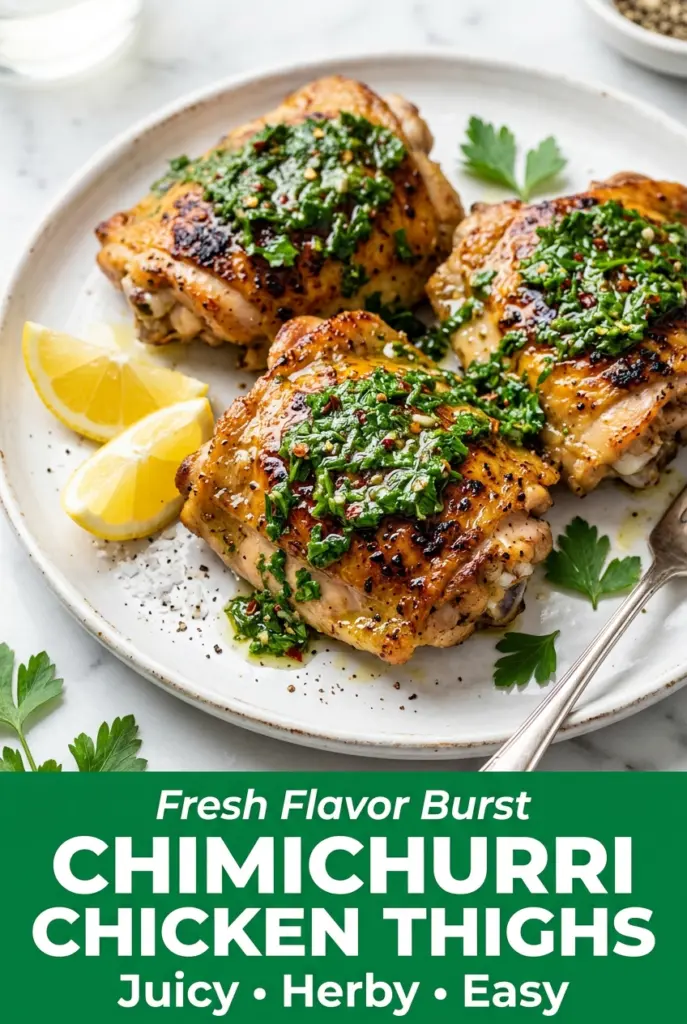
Chimichurri Chicken Thighs
Juicy chicken thighs and punchy chimichurri are one of those combinations that never gets old. The chicken sears up with crisp, deeply browned edges while staying tender inside, and the…

By Ava
•
•
Reading time: 9 min
Tip: save now, make later.
Juicy chicken thighs and punchy chimichurri are one of those combinations that never gets old. The chicken sears up with crisp, deeply browned edges while staying tender inside, and the fresh herb sauce cuts right through the richness with garlic, vinegar, lemon, and just enough heat. It tastes bold without being fussy, which is exactly why it earns a regular spot on a real weeknight table.
What makes this version work is the balance. Boneless thighs are forgiving, so they stay succulent even after a hard sear, and the seasoning on the chicken builds a savory base before the sauce ever hits the plate. The chimichurri also needs a minute to sit after mixing; that short rest softens the raw garlic bite and lets the herbs bloom in the oil and acid.
Below, I’ll walk through the sear that gives you those golden edges, the ingredient choices that matter most, and a few ways to adapt this for meal prep or a different herb mix without losing what makes it good.
The chicken stayed juicy and the chimichurri tasted even better after sitting for a few minutes. I loved that the sauce didn’t overpower the meat — it just gave every bite a bright, garlicky finish.
Save these chimichurri chicken thighs for a fast dinner with crisp-edged chicken and a bright herb sauce that wakes everything up.

The Trick to Keeping the Chicken Juicy While the Chimichurri Stays Bright
Most people run into one of two problems with chimichurri chicken: the meat dries out, or the sauce turns dull and muddy after it sits on top of the hot pan juices. This recipe avoids both by treating the chicken and sauce as separate jobs until the very end. The thighs get a proper sear first, then the chimichurri goes on after resting, which keeps the herbs fresh and the vinegar sharp.
Boneless, skinless thighs are the right cut here because they stay tender even when the pan is hot enough to build real color. If you use chicken breast instead, you’ll need a gentler cook and a closer eye on the temperature, or it’ll go chalky fast. The chimichurri also benefits from a coarse chop rather than a puree; you want it spoonable, not blended into a green paste.
- Chicken thighs — Thighs handle high-heat searing better than breasts and stay juicy even if you pull them a minute late. If you use breasts, pound them to even thickness so the thinner end doesn’t dry out before the center is done.
- Fresh parsley — This is the backbone of the chimichurri. Flat-leaf parsley gives the cleanest herbal flavor and the best texture; curly parsley works in a pinch, but it tastes a little milder.
- Cilantro — It adds a greener, softer note that rounds out the parsley and garlic. If you don’t like cilantro, replace it with more parsley and a little extra oregano.
- Red wine vinegar and lemon juice — The vinegar gives the sauce its classic tang, while lemon brightens the finish. Don’t skip one for the other; the combination is what keeps the sauce lively instead of flat.
- Extra virgin olive oil — Use a good one here because it carries the herbs and gives the sauce body. This is one place where a bland oil shows.
How to Sear the Thighs Without Losing the Sauce’s Freshness
Seasoning the Chicken the Right Way
Pat the thighs dry before they hit the seasoning. Wet chicken steams before it browns, and you’ll miss the deep golden crust that makes this dish worth serving. Coat both sides evenly with salt, pepper, garlic powder, smoked paprika, and oregano, then let the chicken sit while you mix the sauce so the spices start to stick.
Mixing the Chimichurri by Hand
Stir the parsley, cilantro, garlic, oregano, olive oil, vinegar, lemon juice, red pepper flakes, salt, and pepper in a bowl. The sauce should look loose, glossy, and speckled with herbs, not smooth. If it seems harsh right away, give it a few minutes on the counter; the garlic mellows and the herbs soften in the oil.
Getting a Deep Sear Without Burning the Spices
Heat the oil until it shimmers, then lay the chicken in the pan and leave it alone long enough to form a crust. If you move it too soon, it’ll stick and tear. Medium-high heat is the sweet spot: hot enough for browning, but not so aggressive that the paprika burns before the chicken cooks through.
Finishing at the Right Moment
Cook the thighs until they reach 165°F in the thickest part and the juices run clear, then rest them for 5 minutes. Resting matters here because the meat relaxes and keeps its juices instead of dumping them onto the platter. Spoon the chimichurri over the chicken just before serving so the herbs stay bright and the garlic stays lively.
How to Adapt This for Different Diets and Different Fridges
Dairy-Free and Naturally Gluten-Free
This recipe already fits both categories as written, which is one reason it’s so useful for mixed households. Just keep an eye on the sides you serve with it; roasted potatoes, rice, and vegetables all work without changing the dish itself.
Swap the Herbs When Parsley Isn’t Enough
If you only have parsley, use it all and add a pinch more oregano for depth. If you have basil or mint on hand, a small handful can add a different edge, but don’t turn the sauce into a mixed-herb salad; chimichurri needs parsley to stay recognizable.
Turn It Into Meal Prep
Cook the chicken ahead and store the chimichurri separately so the herbs don’t darken and the acid doesn’t soften the chicken skinless thighs any more than they need to be. Add the sauce after reheating, not before, or the fresh flavor gets muted.
Storage and Reheating
- Refrigerator: Store the chicken and chimichurri separately for up to 4 days. The herbs will darken a little, but the sauce stays usable and flavorful.
- Freezer: The chicken freezes well for up to 2 months. Chimichurri doesn’t freeze well because the fresh herbs lose their bright texture, so mix that part fresh.
- Reheating: Warm the chicken gently in a skillet over low heat or in the microwave at short intervals. High heat dries out thighs faster than people expect, especially once they’ve already been cooked through.
Answers to the Questions Worth Asking
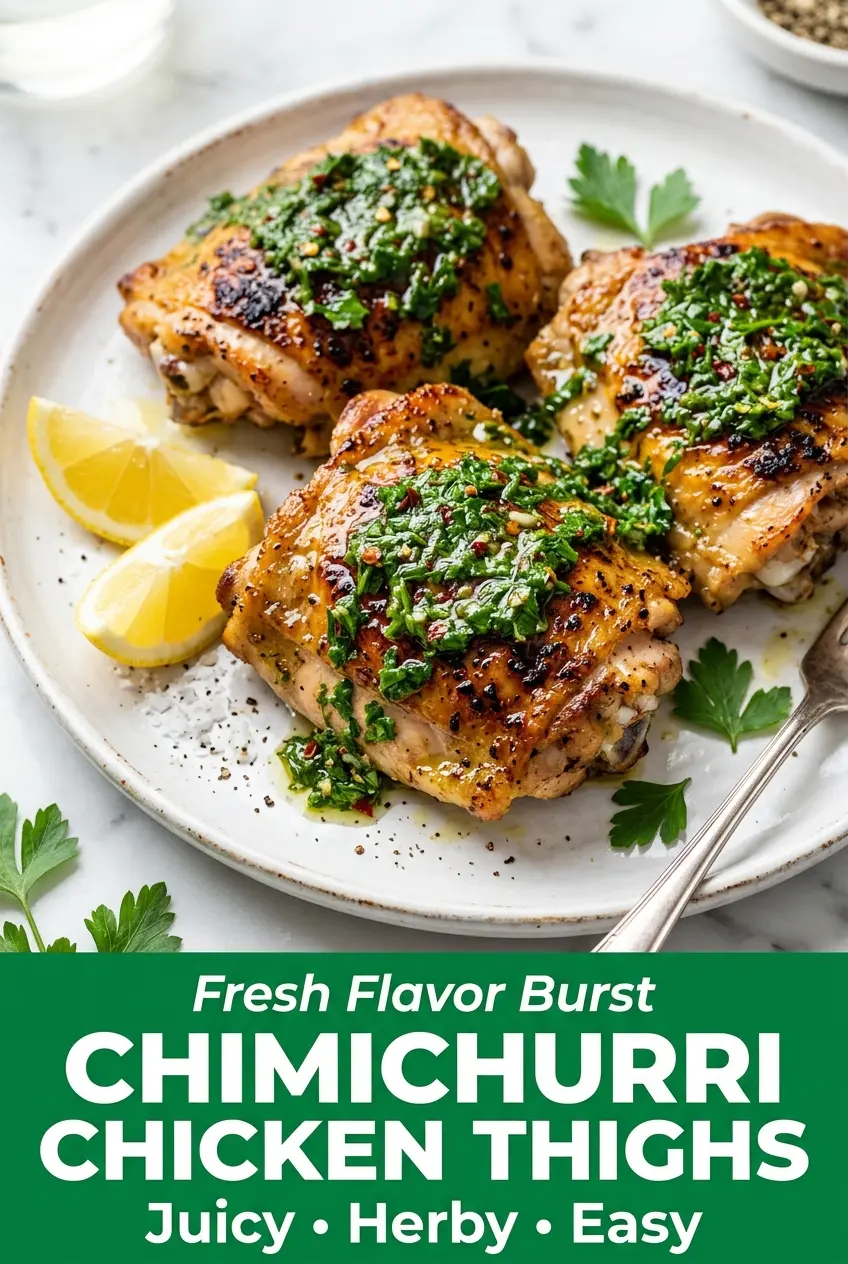
Chimichurri Chicken Thighs
Ingredients
Equipment
Method
- Pat the chicken thighs dry with paper towels, so the surface browns instead of steaming.
- Season both sides with kosher salt, black pepper, garlic powder, smoked paprika, and dried oregano, rubbing to coat evenly and leaving visible specks of spice.
- In a bowl, combine the fresh parsley, fresh cilantro, minced garlic, chopped fresh oregano, extra virgin olive oil, red wine vinegar, lemon juice, crushed red pepper flakes, kosher salt, and black pepper until evenly mixed.
- Let the chimichurri rest for 5 minutes so the herbs soften slightly and the garlic flavor blooms, then give it one more stir before serving.
- Heat olive oil in a large skillet over medium-high heat until it shimmers, indicating it’s hot enough for browning.
- Add the chicken thighs and cook for 6–7 minutes per side until deeply golden, flipping once when the edges release and the first side is browned.
- Check doneness at the thickest point: cook until the internal temperature reaches 165°F, then transfer the chicken to a serving platter.
- Allow the chicken to rest for 5 minutes, so juices redistribute and the surface stays crisp.
- Spoon the chimichurri generously over the chicken just before serving for a fresh, vibrant top layer.