
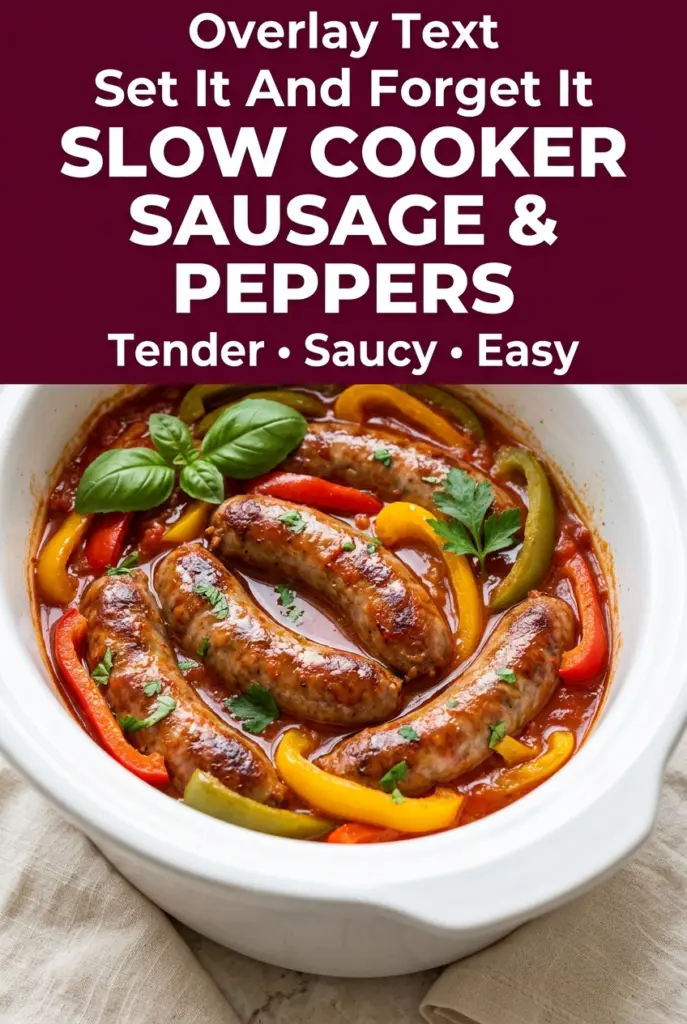
Slow Cooker Sausage and Peppers
Slow cooker sausage and peppers turns into one of those dinners that tastes like you worked a lot harder than you did. The sausage comes out tender and juicy, the…

By Ava
•
•
Reading time: 10 min
Tip: save now, make later.
Slow cooker sausage and peppers turns into one of those dinners that tastes like you worked a lot harder than you did. The sausage comes out tender and juicy, the peppers soften without disappearing, and the tomato sauce picks up all that savory flavor from the browned links as it cooks. It’s the kind of meal that fills the kitchen with the smell of garlic, onions, and Italian seasoning long before it’s ready.
The part that makes this version work is the quick browning step before everything goes into the slow cooker. That little bit of color on the sausage adds depth the sauce can’t build on its own, and it keeps the finished dish from tasting flat. I also like stirring in the basil and parsley at the end instead of letting them cook for hours, because fresh herbs bring the whole pot back to life right before serving.
Below, you’ll find the timing that keeps the peppers tender instead of mushy, the best way to turn this into sandwiches or a pasta dinner, and a few swaps that still give you a full, hearty meal.
The sausage stayed juicy and the peppers were soft but not mushy, which is usually where slow cooker versions go wrong for me. The sauce thickened up nicely too, and it was perfect piled into toasted rolls.
Save this slow cooker sausage and peppers recipe for an easy dinner that works just as well in hoagie rolls as it does over pasta or rice.

The Browning Step That Keeps Slow Cooker Sausage and Peppers from Tasting Flat
The mistake most people make with this dish is skipping the skillet and tossing raw sausage straight into the slow cooker. It will cook through, but it won’t taste as deep or savory. A quick browning in a hot pan gives you that first layer of flavor and leaves a little fond behind if you want to deglaze the pan into the sauce.
The other thing that matters is how you cut the vegetables. Thin, even slices soften at the same pace, so you don’t end up with onion slivers that collapse while the peppers are still crunchy. The slow cooker does best here when the vegetables are in a bed under the sausage, where they can absorb the sauce instead of drying out at the top.
- Italian sausage links — Use sweet, hot, or a mix depending on how much heat you want. Links hold their shape better than bulk sausage in the slow cooker, and they slice neatly for sandwiches after cooking. If you only have bulk sausage, brown it first and drain excess fat before adding it in.
- Bell peppers — A mix of colors gives you better balance, but the real job here is texture. Red and yellow peppers soften into sweetness, while green adds a sharper edge. Slice them evenly so they don’t turn to mush before the sausage is done.
- Crushed tomatoes and tomato paste — Crushed tomatoes build the sauce, and tomato paste gives it body. If you leave out the paste, the sauce stays thinner and a little flatter. If you want a richer finish, cook the paste for a minute in the skillet before mixing it with the tomatoes.
- Fresh basil and parsley — These go in at the end for a reason. Long cooking dulls them, while a last-minute stir keeps the sauce bright. Dried herbs work in the base, but fresh herbs are what make the finished pot taste alive.
How to Build the Sauce So the Peppers Stay Tender, Not Mushy
Browning the Sausage First
Heat the olive oil in a large skillet and brown the sausage for just 2 to 3 minutes per side. You’re not trying to cook it through; you’re looking for a light golden crust and a little rendered fat. If the pan is crowded, the sausage will steam instead of brown, so work in batches if needed. That surface color is what gives the finished dish its depth.
Layering the Vegetables and Sauce
Put the onions and peppers into the slow cooker first, then add the garlic. Stir the tomatoes, tomato paste, seasoning, and spices together before pouring them over the vegetables so the paste doesn’t clump in one spot. Nestle the sausage into the sauce and turn the links so they’re coated. The vegetables should be mostly under the sauce, not sitting dry on top.
Cooking Until the Peppers Give Without Falling Apart
Cook on LOW for 6 to 7 hours or HIGH for 3 to 4 hours, just until the sausage reaches 165°F and the peppers are soft enough to bite through easily. If you cook it much longer than that, the peppers lose their shape and the sausage can start to dry out. The sauce should look slightly thicker around the edges by the end, with the oils from the sausage shimmering on top.
Finishing with Fresh Herbs
Stir in the basil and parsley during the last 10 minutes. That short finish keeps the herbs from turning muddy and makes the whole dish smell fresh again when you lift the lid. If you’re serving it over pasta or rice, spoon some of the sauce over the top first, then add the sausage and peppers so every bite gets coated.
How to Adapt This for Sandwiches, Pasta, or a Lighter Dinner
Make it into classic hoagie sandwiches
Split the sausage links before serving and tuck them into toasted rolls with plenty of peppers and sauce. Toasting the rolls matters because this is a wet sandwich, and a soft roll will fall apart fast. Provolone melts nicely on top if you want a little extra richness.
Serve it over pasta for a saucier meal
This works best with sturdy pasta shapes like rigatoni, ziti, or penne because they hold the chunky sauce better than spaghetti. If the sauce seems too loose, let it sit uncovered for 10 minutes after cooking before spooning it over the pasta. That pause gives the tomato base time to settle and thicken a bit.
Go dairy-free and keep it gluten-free
The base recipe already fits both of those needs as long as your sausage and serving choice do too. Serve it over rice or gluten-free pasta instead of rolls, and check the sausage label for fillers or breadcrumbs if that matters for your diet. The dish still comes out hearty because the tomato sauce and peppers do the heavy lifting.
Make it ahead for easy leftovers
This dish tastes even better the next day once the sauce has had time to settle around the sausage and peppers. If you’re planning ahead, cook it fully, cool it quickly, and store it in shallow containers so it chills evenly. The peppers will soften a little more on reheating, but the flavor stays strong.
Storage and Reheating
- Refrigerator: Store in an airtight container for up to 4 days. The peppers soften a bit more, but the flavor stays strong.
- Freezer: It freezes well for up to 3 months. Cool it completely first, then freeze the sausage and sauce together; the peppers will be softer after thawing, but still usable for sandwiches or pasta.
- Reheating: Warm gently on the stovetop over medium-low or in the microwave in short bursts. Add a splash of water if the sauce looks tight, and don’t blast it on high heat or the sausage can dry out.
Questions I Get Asked About This Recipe
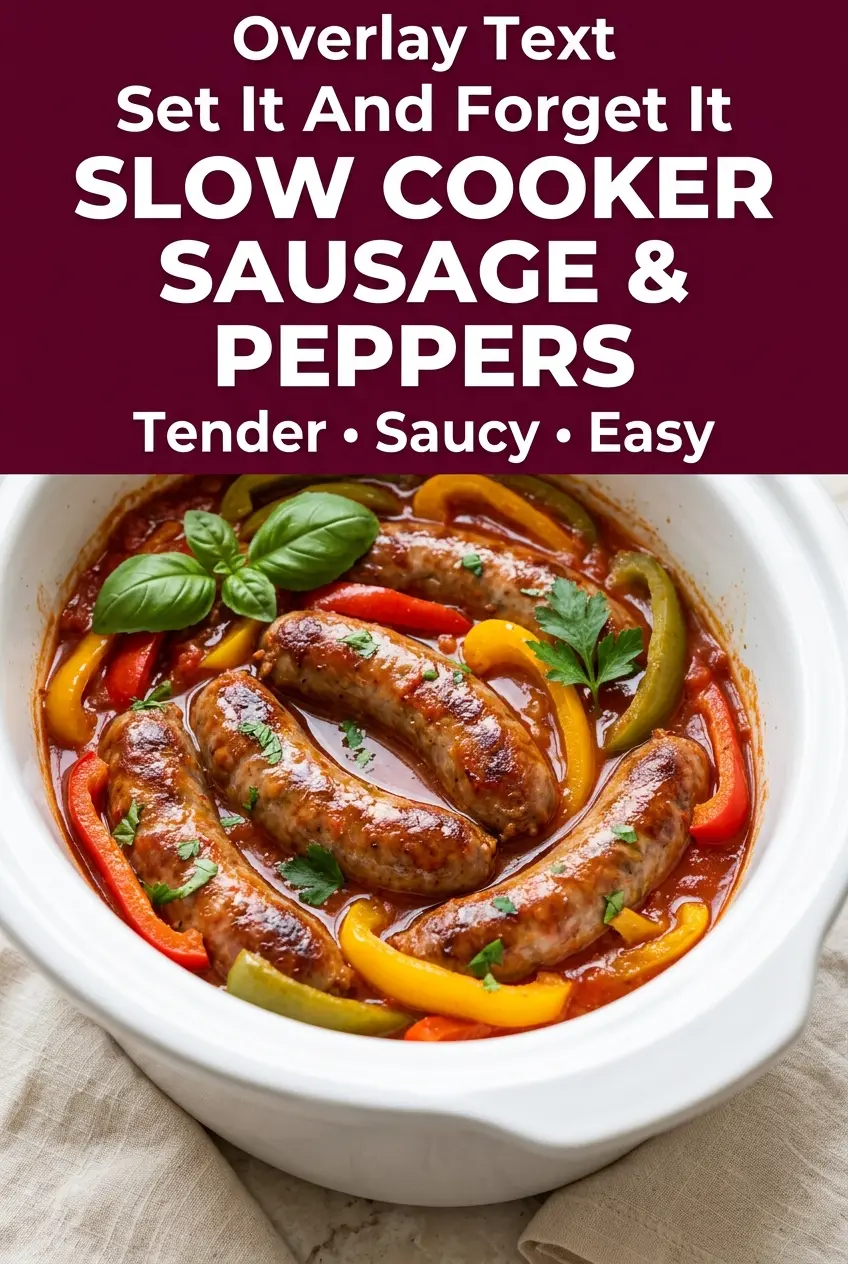
Slow Cooker Sausage and Peppers
Ingredients
Equipment
Method
- Heat 2 tbsp olive oil in a large skillet over medium-high heat. Brown the Italian sausage links for 2–3 minutes per side until lightly golden; they do not need to be fully cooked.
- Transfer the sliced onion and bell peppers to the slow cooker. Add the minced garlic and stir to combine.
- Whisk together crushed tomatoes, tomato paste, Italian seasoning, dried oregano, crushed red pepper flakes, salt, and black pepper. Pour the sauce over the vegetables.
- Nestle the browned Italian sausage into the sauce, turning them to coat evenly. Cover the slow cooker and cook on LOW for 6–7 hours or HIGH for 3–4 hours until the sausages reach an internal temperature of 165°F and the peppers are tender.
- Stir in the chopped fresh basil and chopped fresh parsley during the last 10 minutes of cooking. Keep the cover on until the time is up to maintain temperature.
- Serve the sausages and peppers on hoagie rolls, over cooked pasta, or alongside rice with extra sauce spooned over the top.