
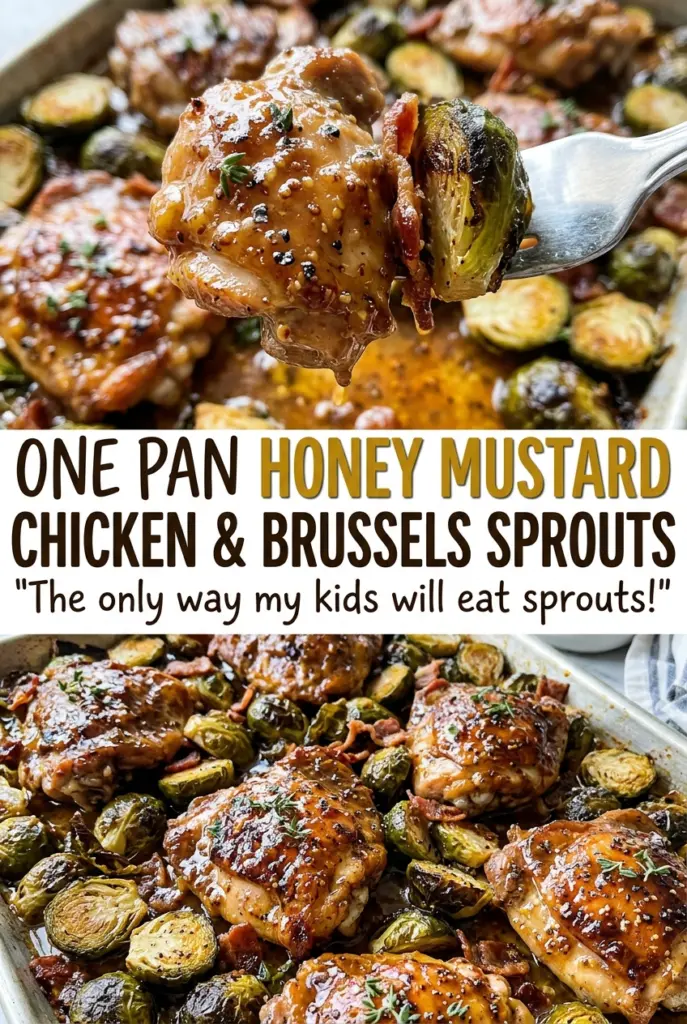
One Pan Honey Mustard Chicken and Brussels Sprouts
At the halfway mark, the Brussels sprouts are starting to brown where their flat sides meet the pan, while the chicken still needs time. That’s when this sheet-pan dinner changes…

By Ava
•
•
Reading time: 9 min
Tip: save now, make later.
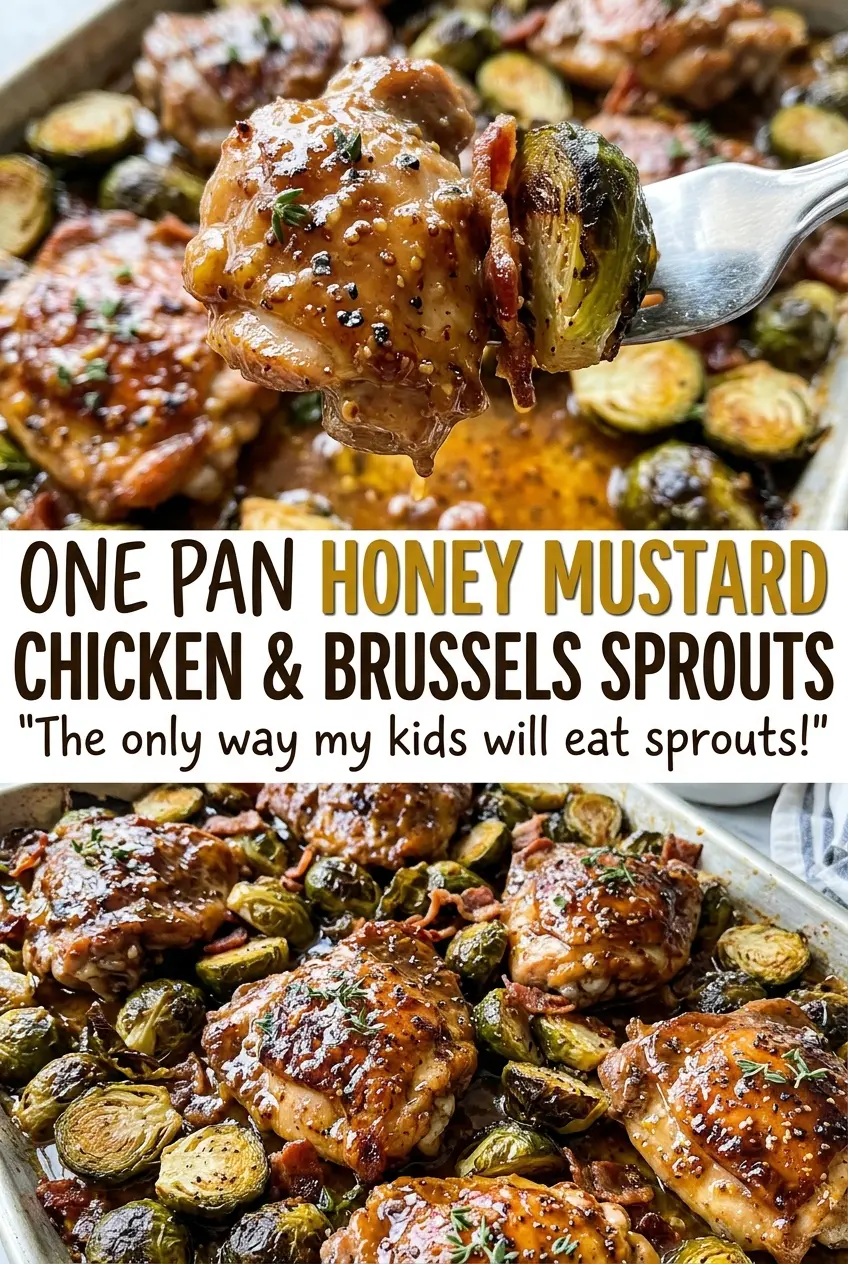
At the halfway mark, the Brussels sprouts are starting to brown where their flat sides meet the pan, while the chicken still needs time. That’s when this sheet-pan dinner changes gears: the thighs get brushed with honey mustard, and the oven finishes the chicken and vegetables together. One Pan Honey Mustard Chicken and Brussels Sprouts is a practical way to get a full dinner onto the table without juggling separate pans or watching a sauce on the stove.
I like the balance here: Dijon brings a sharp, savory edge, honey rounds it out, and a little apple cider vinegar keeps the glaze from tasting too sweet. Boneless, skinless thighs are forgiving beside the sprouts, and halving the vegetables gives them a broad cut surface that can brown on the pan. The garlic is grated right into the sauce, so it spreads through the glaze instead of leaving big pieces on the chicken. The result is tender chicken with a tangy coating and sprouts with browned edges.
Kitchen Note
Set half the sauce aside in a clean bowl before any goes near the raw chicken. That reserved portion is what dresses the Brussels sprouts at the end, so it stays separate from the sauce used on the chicken.
Save this honey mustard chicken and Brussels sprouts for a one-pan dinner with browned edges and a tangy-sweet glaze.
Why the Honey Mustard Goes on After the First 15 Minutes
Honey is lovely in a roast glaze, but its sugars brown faster than the chicken cooks through. Brushing the thighs after their first stretch in the oven gives them time to start cooking before the sweet coating is exposed to the heat. Then the glaze has 10 to 15 minutes to cling and darken without spending the entire roast in the oven.
The timing also gives the Brussels sprouts a head start. Their cut sides sit against the hot pan while the chicken begins roasting, so they can develop color before the sauce is added at the finish. Keep the sprouts cut-side down when you arrange them; turning them over early gives up that direct contact. If the glaze looks dark at the edges near the end, check the chicken and sprouts rather than extending the roast automatically. The chicken’s thickest part and the tenderness of the vegetables tell you when this pan is ready.
What Each Ingredient Is Doing in This Pan
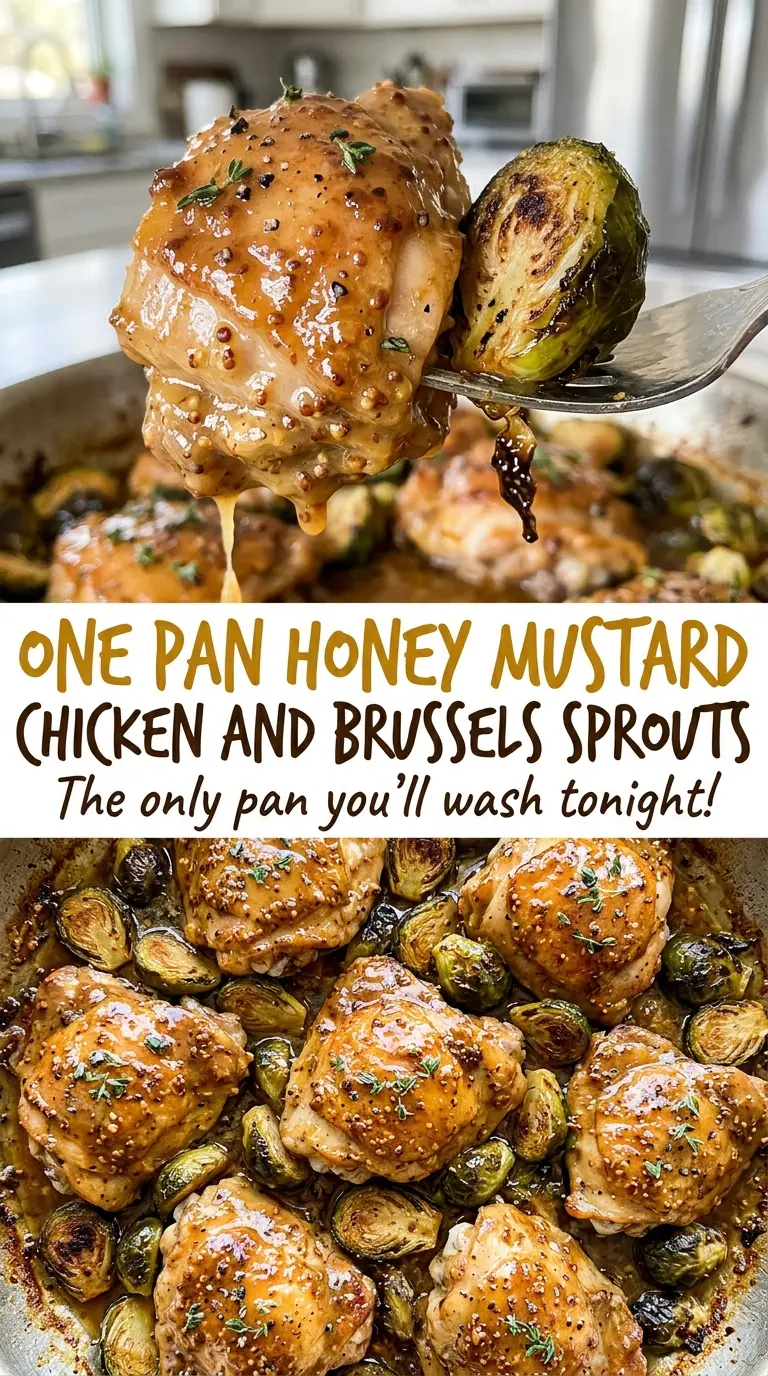
- Brussels sprouts — Choose firm sprouts with compact leaves, then trim and halve them so the flat sides can brown against the pan. They’re the right match for this timing; another vegetable would need its own roasting schedule.
- Olive oil — It helps coat the sprouts so they roast rather than dry out. A regular olive oil is all you need; a specialty bottle won’t make a noticeable difference here. A neutral cooking oil can stand in at the same amount if that’s what you have.
- Boneless, skinless chicken thighs — Their richness suits the sharp mustard and keeps the meat tender through the roast. Use thighs for the timing here; bone-in pieces or chicken breasts won’t cook on the same schedule.
- Dijon mustard — Dijon gives the sauce its smooth texture and assertive tang. Standard grocery-store Dijon works well; swap in the same volume of whole-grain mustard if you want a coarser, seedier glaze.
- Honey — It softens Dijon’s bite and helps the coating brown. Ordinary honey is a good fit; maple syrup can replace it in the same volume for a less floral, slightly different sweetness.
- Apple cider vinegar and garlic — Vinegar keeps the glaze from leaning too sweet, and freshly grated garlic disperses through it evenly. White wine vinegar can replace the cider vinegar in the same amount; finely minced garlic works if you don’t have a grater, though its pieces will be more noticeable.
The Sheet-Pan Timing That Gets the Chicken and Sprouts Ready Together
Get the Pan Hot and Give the Sprouts Contact
Heat the oven to 425°F and line an 18×13-inch rimmed sheet pan with parchment paper. Toss the halved Brussels sprouts with the olive oil, half the salt, and half the pepper in a large bowl. Arrange them cut-side down on the pan so the flat sides have contact with the hot surface. If the pieces are piled on top of one another, they won’t brown as evenly.
Season the Thighs and Mix the Sauce
Pat the chicken thighs dry before placing them among the sprouts; surface moisture can get in the way of browning. Season the chicken with the remaining salt and pepper. In a small bowl, stir together the Dijon, honey, apple cider vinegar, and finely grated garlic until the mixture looks smooth. Transfer half to a clean bowl for finishing the sprouts later.
Roast First, Then Brush on the Glaze
Roast the chicken and sprouts for 15 minutes before adding the honey mustard. Brush the chicken with the sauce that wasn’t reserved, coating the tops without moving the sprouts around. Return the pan to the oven for another 10 to 15 minutes. This second stretch cooks the chicken through and gives the glaze time to set.
Check the Thighs and Finish the Sprouts
Check the thickest part of each thigh with a thermometer; it should reach 165°F, and the Brussels sprouts should be tender and browned. Transfer the chicken to a platter and let it rest for 5 minutes. Toss the sprouts on the sheet pan with the reserved sauce, scraping up any browned bits as you coat them. Serve the chicken alongside the dressed sprouts.
Simple Swaps for a Different Mustard Glaze
Use Maple Syrup Instead of Honey
Replace the honey with the same volume of maple syrup. The glaze stays sweet and roasts well, but the maple brings a deeper, less floral note.
Choose Whole-Grain Dijon for More Texture
Use the same volume of whole-grain mustard in place of Dijon. The sauce will be less smooth, with visible mustard seeds and a slightly more rustic coating on the chicken.
Make the Mustard Gluten-Free
Use gluten-free Dijon mustard in place of regular Dijon, keeping the same volume. The tangy flavor and smooth glaze stay close to the original, and the rest of the listed ingredients are naturally gluten-free.
Storage and Reheating
- Refrigerator: Refrigerate leftovers in a shallow airtight container within 2 hours; they’ll keep for 3 to 4 days. The sprouts soften as they sit.
- Freezer: Freeze cooled portions in an airtight freezer-safe container for up to 2 months. Thaw overnight in the refrigerator; the chicken holds up better than the sprouts, which will be softer.
- Reheating: Cover and microwave in short bursts, turning the chicken and tossing the sprouts between bursts until hot throughout. Long, uncovered reheating can dry out the chicken before the vegetables warm through.
Questions That Come Up With This Sheet-Pan Dinner
One Pan Honey Mustard Chicken and Brussels Sprouts
Ingredients
Equipment
Method
- Preheat the oven to 425°F.
- Line an 18x13-inch rimmed sheet pan with parchment paper.
- Toss the Brussels sprouts in a large bowl with the olive oil, 1/2 teaspoon salt, and 1/4 teaspoon pepper.
- Arrange the Brussels sprouts cut-side down on the sheet pan.
- Pat the chicken dry and arrange it among the Brussels sprouts.
- Season the chicken with the remaining salt and pepper.
- Stir the Dijon mustard, honey, apple cider vinegar, and garlic together in a small bowl.
- Set half of the sauce aside in a clean bowl.
- Roast at 425°F for 15 minutes.
- Brush the chicken with the sauce that has not been set aside.
- Roast at 425°F for 10–15 minutes more, until the thickest part of each thigh reaches 165°F and the Brussels sprouts are tender and browned.
- Transfer the chicken to a platter and let it rest for 5 minutes.
- Toss the Brussels sprouts with the reserved sauce on the sheet pan.
- Serve the Brussels sprouts with the chicken.