

Christmas Garlic Rosemary Prime Rib Sliders
When the roast goes into a hot oven, the garlic and rosemary start to perfume the kitchen before the sliders are even assembled. The first time I made these Christmas…

By Ava
•
•
Reading time: 10 min
Tip: save now, make later.
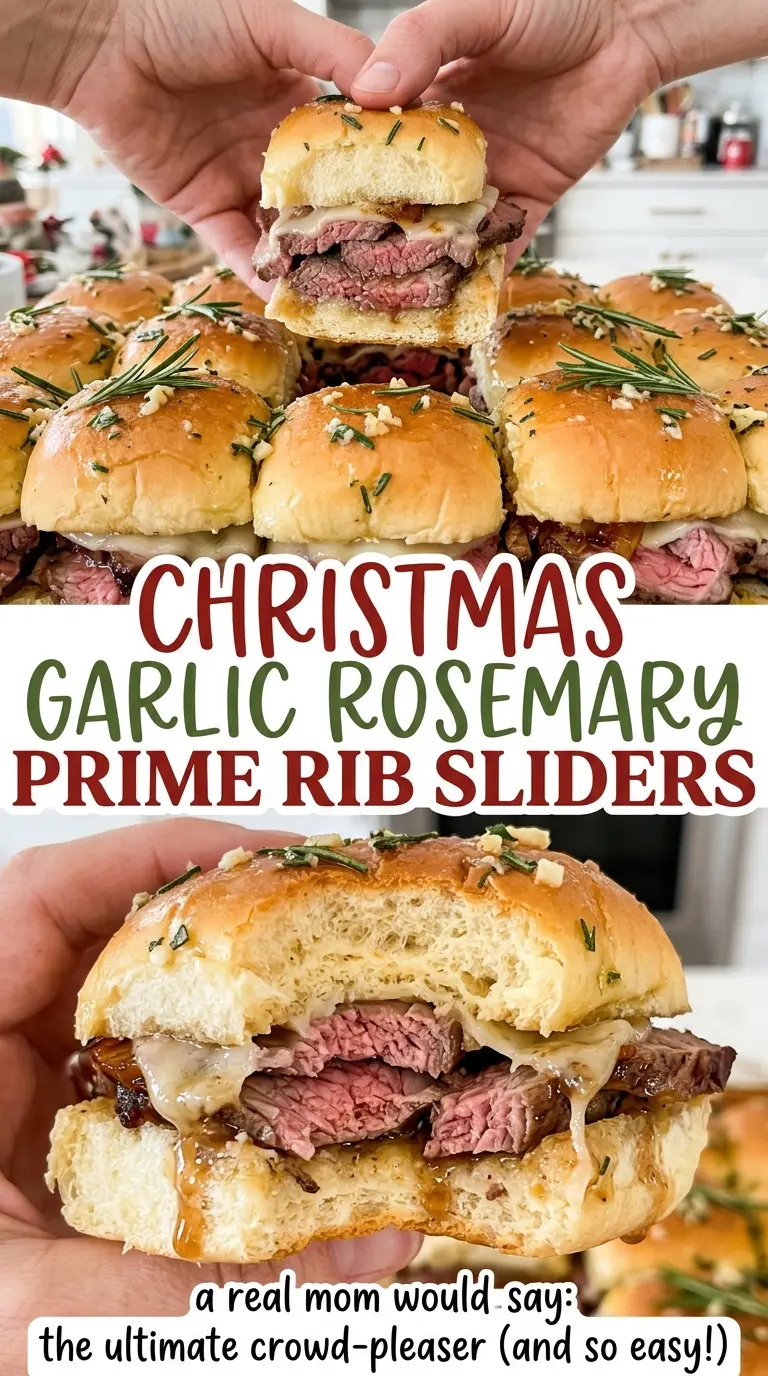
When the roast goes into a hot oven, the garlic and rosemary start to perfume the kitchen before the sliders are even assembled. The first time I made these Christmas Garlic Rosemary Prime Rib Sliders, I focused on getting the roast cooked and nearly forgot that the bread needs only a short turn in the oven. The result is best when the meat stays the star and the rolls come out warm, buttery, and just crisp at the edges.
I roast the beef in two stages, then give it a full rest before slicing it thinly against the grain. That makes the filling easier to bite through, while provolone melts around the slices without burying the beef. The cool horseradish cream brings a sharp, tangy contrast to the rich roast and soft Hawaiian rolls.

Kitchen Note
Leave the strings on the roast through the resting time. They hold the shape together while it cooks, and snipping them off just before slicing keeps the roast easier to handle.
Save these Christmas Garlic Rosemary Prime Rib Sliders for a holiday table: thin-sliced roast, melted provolone, and a tangy horseradish cream.
Why the Prime Rib Gets Two Different Oven Temperatures
A roast this size benefits from a hot start followed by a gentler stretch in the oven. The first 15 minutes at 425°F gives the outside a head start on browning and helps the garlic and rosemary season the surface. Lowering the heat to 325°F after that gives the center time to cook through without keeping the outside at the highest heat for the entire roast.
That matters in sliders because every bite combines seasoned beef, cheese, and soft bread. The roast is cooked on its own before it goes near the rolls, so the bread only needs enough oven time to warm and melt the provolone. Cooking the beef and assembling the rolls as separate stages keeps the rosemary-garlic roast at the center of the sandwich instead of turning the whole dish into one long bake.
A thermometer gives you a better read than the clock alone. Roasts vary in shape, and the thickest part is the place to check; the time range is a guide to when to start checking, not a reason to skip the temperature reading.
What Makes the Roast, Rolls, and Horseradish Cream Work Together
- Boneless rib roast — The roast brings a rich, tender center and enough surface area for the garlic-rosemary seasoning. Choose a tied roast with an even shape so it cooks and slices consistently. A similarly sized boneless beef roast is the closest substitute, but a different cut or shape can change its cooking time; use the thermometer rather than relying only on the clock.
- Fresh rosemary and garlic — Freshly minced garlic and finely chopped rosemary cling to the oiled roast and make a fragrant, savory crust. Fresh rosemary has a brighter, softer aroma than dried; if dried is what you have, use 1 teaspoon in place of the tablespoon of fresh rosemary. Mince the garlic finely so larger pieces don’t scorch on the roast’s surface.
- Prepared horseradish — This supplies the clean, sharp heat that keeps the cream from tasting flat beside rich beef and cheese. Refrigerated prepared horseradish gives a more direct bite than a creamy horseradish condiment. Taste the mixture after stirring; the mustard adds a little tang without taking over.
- Sour cream and Dijon — Sour cream makes the sauce cool and spoonable, while Dijon adds a gentle mustard edge. Plain Greek yogurt can replace sour cream in the same amount; it makes a thicker sauce with a more noticeable tang. Use a smooth, fresh-tasting yogurt so it doesn’t compete with the horseradish.
- Hawaiian rolls and provolone — The rolls bring a soft, slightly sweet contrast to the savory roast, and provolone melts into a mild, cohesive layer. A soft dinner roll can stand in for the Hawaiian rolls at the same count, though it won’t have the same sweetness. Provolone is mild enough to let the beef and sauce come through; standard sliced provolone works well, so there’s no need to seek out a specialty cheese.
- Unsalted butter — Brushing the tops with melted butter helps them turn golden in the final uncovered bake. Ordinary unsalted butter is all you need here; its job is to coat the tops evenly, not to add another strong flavor.
From Rosemary-Rubbed Roast to Golden Slider Tops
Seasoning the Roast
Heat the oven to 425°F and set a rack inside a 9×13-inch roasting pan. Pat the boneless roast dry before rubbing it with olive oil; a dry surface helps the seasoning cling instead of sliding around. Coat it evenly with kosher salt, black pepper, minced garlic, and finely chopped rosemary. Set the roast on the rack with the seasoning facing outward.
Roasting in Two Stages
Roast for 15 minutes at 425°F, then reduce the oven to 325°F without moving the roast. Continue cooking for 60–90 minutes, checking the thickest part with a meat thermometer as it approaches the end of that range. The thermometer should read 145°F before you take the roast out. If the outside looks deeply browned before the center reaches temperature, trust the thermometer rather than pulling it early.
Resting and Slicing for Sliders
Move the roast to a cutting board and let it rest for 20 minutes before slicing. That pause gives the roast time to settle after cooking and makes thin slices easier to manage. Remove the strings, then slice thinly against the grain; look for the direction of the long muscle fibers and cut across them, not along them. Thin slices fit the small rolls better and are easier to bite through.
Building and Baking the Sliders
Heat the oven to 350°F and slice the Hawaiian rolls horizontally while keeping the rolls connected. Set the bottom half in a 9×13-inch baking dish, then layer on the sliced prime rib and provolone before replacing the tops. Brush the melted butter over the tops, covering the edges as well as the centers. Cover with foil and bake for 10 minutes, then uncover for 3–5 minutes; take the dish out when the cheese has melted and the tops are golden.
Stirring the Horseradish Cream
Stir the sour cream, prepared horseradish, and Dijon mustard together in a small bowl until smooth. Refrigerate the sauce until serving so it stays cool beside the hot sliders. Give it a quick stir before setting it out, especially if it has been sitting for a while. Serve it alongside the sliders rather than spreading it over the whole tray, so everyone can add as much as they like.
Three Simple Ways to Adapt These Prime Rib Sliders
Make the horseradish cream punchier
Stir additional prepared horseradish into the finished sauce a little at a time until its heat suits your table. The sauce will taste sharper and cut through the rich beef more strongly; add it gradually so it doesn’t overwhelm the sour cream and Dijon.
Make a gluten-free tray
Use 12 gluten-free slider buns in place of the Hawaiian rolls. Split them individually and arrange the bottoms snugly in the baking dish before adding the beef and provolone. Gluten-free buns can be less soft and more fragile, so handle them gently when adding the tops and serving.
Make the sliders dairy-free
Replace the provolone with dairy-free sliced cheese, use dairy-free sour cream in the horseradish sauce, and brush the rolls with melted dairy-free butter. Choose products that melt and spread well; the sliders will still have the same savory beef and horseradish contrast, though the cheese may melt less smoothly.
Storage and Reheating
- Refrigerator: Refrigerate leftover sliders within 2 hours and keep them covered for 3–4 days. The rolls soften as they sit, but the filling reheats well.
- Freezer: Freeze the baked sliders without the horseradish cream, wrapped tightly as individual portions, for up to 2–3 months. The bread may be softer after thawing; thaw overnight in the refrigerator before reheating.
- Reheating: Cover a baking dish and warm the sliders at 350°F until hot through, then uncover briefly to refresh the tops. Avoid reheating an uncovered tray for the whole time, which can dry the bread before the centers warm.
Questions That Come Up When Making Prime Rib Sliders
Christmas Garlic Rosemary Prime Rib Sliders
Ingredients
Equipment
Method
- Heat the oven to 425°F and set a rack in a 9x13-inch roasting pan.
- Pat the roast dry and rub it with the olive oil.
- Coat the roast with the salt, pepper, garlic, and rosemary.
- Set the roast on the rack and roast for 15 minutes.
- Reduce the oven to 325°F and continue roasting for 60–90 minutes, until a meat thermometer in the thickest part reads 145°F.
- Transfer the roast to a cutting board and rest for 20 minutes.
- Remove the strings and slice the meat thinly against the grain.
- Stir together the sour cream, prepared horseradish, and Dijon mustard in a small bowl.
- Refrigerate the horseradish cream until serving.
- Heat the oven to 350°F.
- Slice the rolls horizontally, keeping them connected, and place the bottom half in a 9x13-inch baking dish.
- Layer the sliced prime rib and provolone over the roll bottoms.
- Replace the tops and brush them evenly with the melted butter.
- Cover the dish with foil and bake for 10 minutes.
- Uncover and bake for 3–5 minutes, until the cheese is melted and the tops are golden.
- Serve with the horseradish cream.