
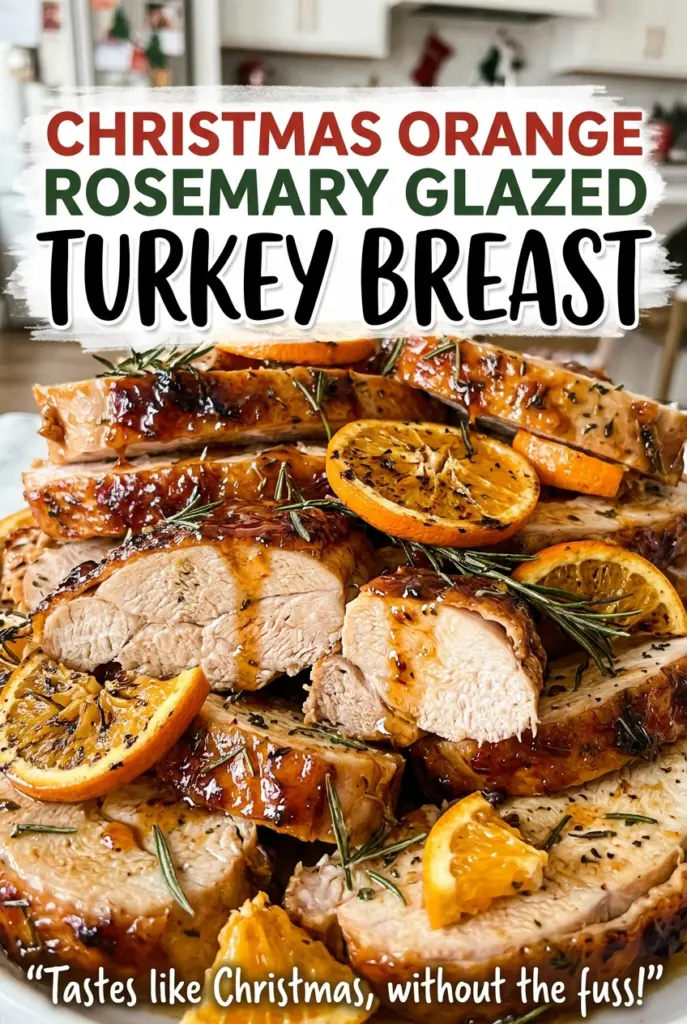
Christmas Orange Rosemary Glazed Turkey Breast
The glaze starts out bright with orange juice and zest, then turns gently syrupy as the honey simmers. I brush it on late in the roast, not at the beginning,…

By Ava
•
•
Reading time: 8 min
Tip: save now, make later.
The glaze starts out bright with orange juice and zest, then turns gently syrupy as the honey simmers. I brush it on late in the roast, not at the beginning, so the sweet citrus has time to cling and shine without spending the whole cook in the oven.
This Christmas Orange Rosemary Glazed Turkey Breast is a bone-in roast with a savory Dijon note tucked into the glaze. The orange brings fragrance, while fresh rosemary keeps the sweetness in check. It’s a useful centerpiece when you want turkey for a smaller gathering without roasting a whole bird.
Dry skin, a thermometer, and a short rest make the process manageable. The finished breast has glossy orange-rosemary skin and slices that are tender enough to serve as the main event.
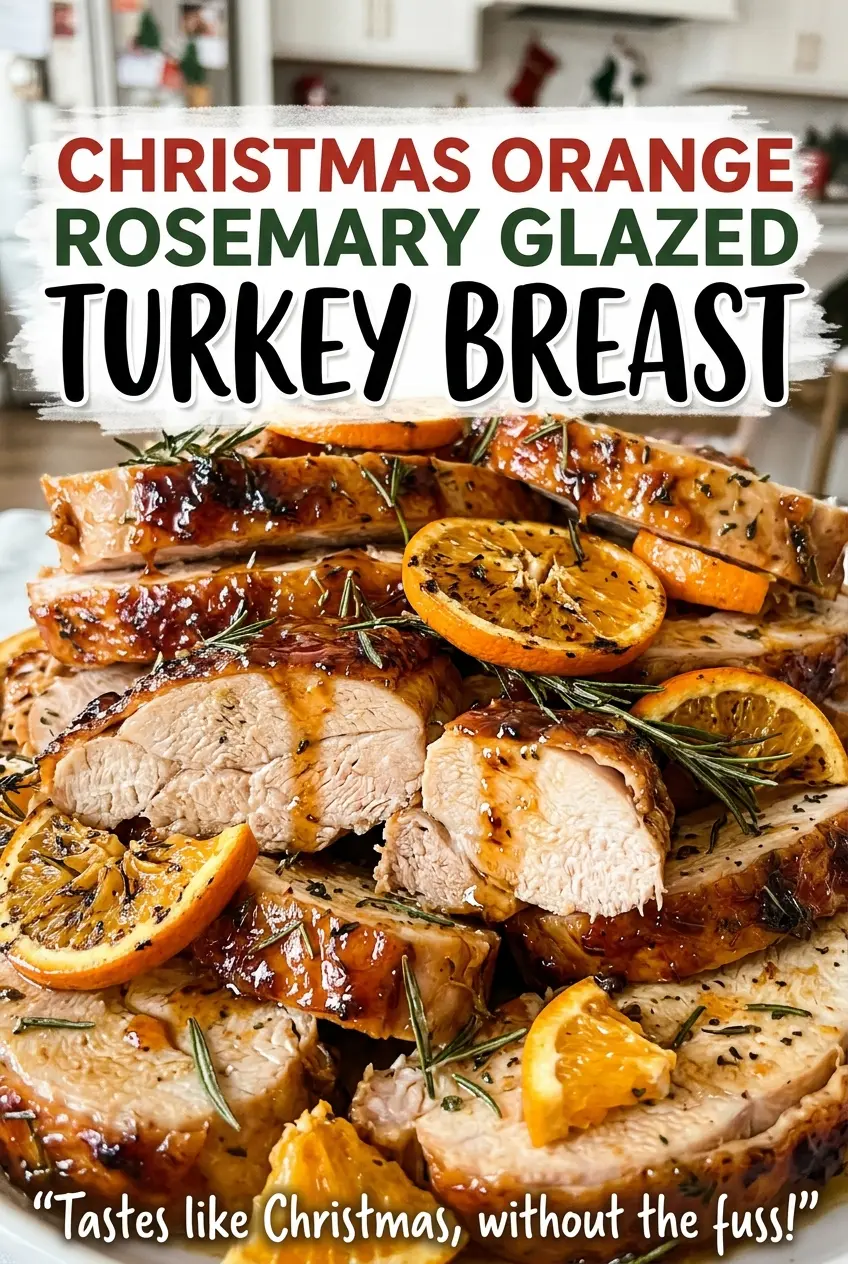
Kitchen Note
I let the turkey rest under a loose foil tent before carving. Keeping the foil loose gives the breast time to settle without trapping as much steam against the glazed skin.
Save Christmas Orange Rosemary Glazed Turkey Breast for a holiday centerpiece with a bright orange-honey glaze and fresh rosemary.
Why the orange glaze waits until the turkey reaches 135°F
Honey gives this glaze its mellow sweetness and helps it cling, but it also means the surface can darken faster than plain roasted turkey skin. If you brush it on at the start, it spends the entire roast exposed to oven heat. Waiting until the breast has already roasted to 135°F gives the orange and honey a shorter finish in which to color and turn glossy.
The timing also lets the turkey do most of its cooking before the glaze goes on. That matters with a thick breast: the center needs time to reach temperature, while the outside is already getting plenty of heat. Late glazing gives you a better balance between a cooked-through breast and a bright, browned coating.
Dijon is doing more than adding mustard flavor. Its sharpness cuts through the honey, and the orange zest keeps the glaze tasting like fresh citrus rather than just sweetness. You get a fragrant finish that complements the turkey instead of covering it up.
What the orange, rosemary, and Dijon each bring to the glaze
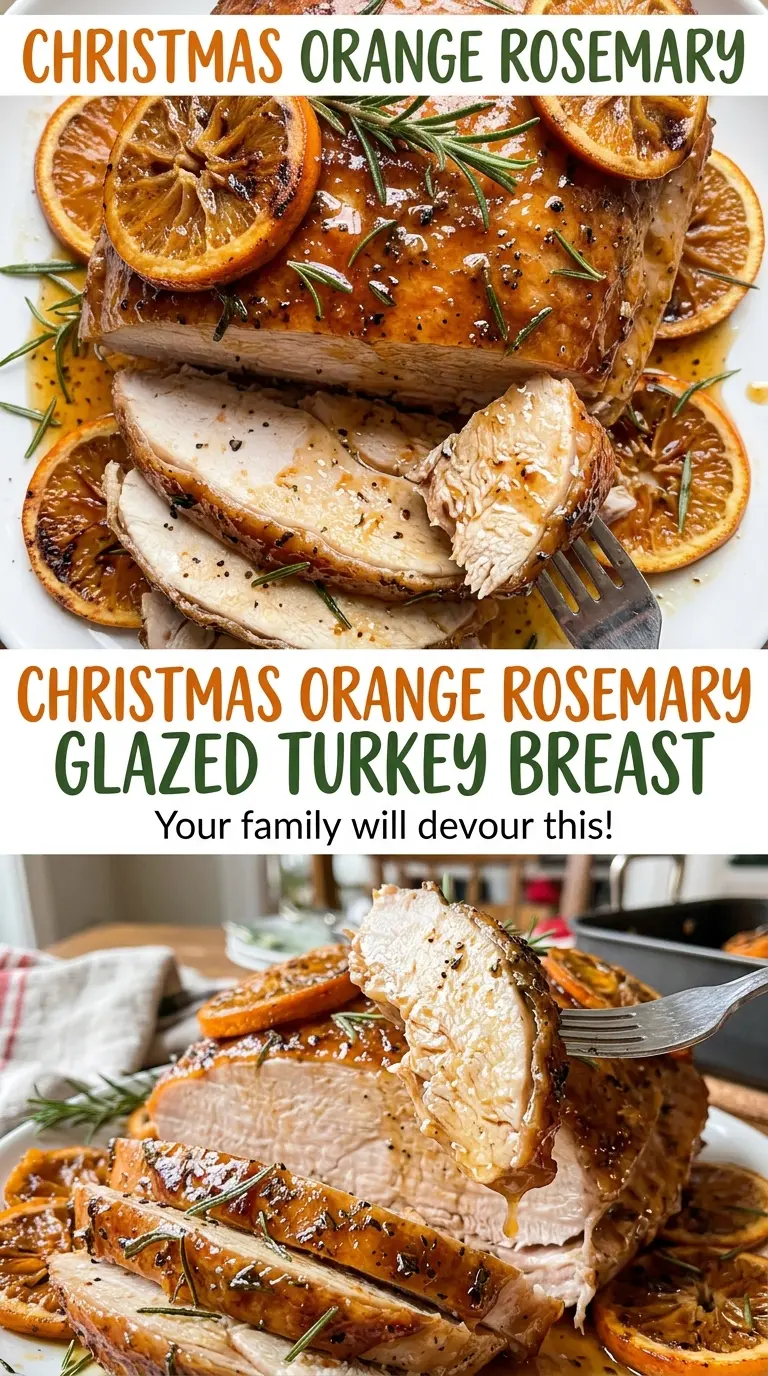
- Fresh oranges — The zest carries the vivid orange aroma, while the juice gives the glaze its liquid base. Use oranges you’d be happy to eat; their zest is a big part of the finished aroma. Bottled juice alone won’t replace the fresh zest.
- Fresh rosemary — Finely chopped rosemary spreads its piney, herbal flavor through the glaze. Fresh leaves give a cleaner texture than dried rosemary here, so I wouldn’t swap in dried without changing the character of the finish.
- Dijon mustard — Dijon brings a little tang and savory depth to balance the honey. It’s worth using Dijon specifically; a milder mustard will shift the glaze’s balance.
- Honey and unsalted butter — Honey gives the glaze body and sweetness, while butter stirred in after simmering rounds it out. Unsalted butter lets the turkey seasoning stay in your control.
- Bone-in, skin-on turkey breast — The skin gives the glaze a surface to coat, and the bone means the thickest part needs careful temperature checking. Start with a fully thawed breast so it roasts evenly.
- Olive oil, kosher salt, and black pepper — The oil coats the skin before roasting, and the salt and pepper season the turkey itself. Patting the surface dry first helps avoid putting oil over a damp layer.
The roasting stages that protect the breast and the glaze
Simmer the citrus until lightly syrupy
Combine the orange zest and juice, honey, Dijon, and finely chopped rosemary in a small saucepan. Simmer over medium heat for 8 to 10 minutes, stirring occasionally, until the mixture looks lightly syrupy rather than watery. Take it off the heat before stirring in the butter. If it still looks thin at the end of the simmer, give it the full stated time and watch for that change in consistency.
Season the breast on a dry surface
Heat the oven to 325°F and set a rack inside a roasting pan. Pat the thawed turkey breast dry, then place it skin side up on the rack. Rub it all over with olive oil and season with kosher salt and black pepper. A damp surface can keep the skin from browning as well, so take a moment to dry it before adding the oil.
Roast the turkey before glazing
Roast for 1 1/2 hours, then check the temperature in the thickest part of the breast, keeping the thermometer away from the bone. Continue roasting until that spot reaches 135°F before brushing on any glaze. The bone can give a misleading reading, so position the thermometer in the meat itself. Let the temperature reading guide the next stage rather than relying on the clock alone.
Brush, finish, and rest
Once the breast reaches 135°F, brush it with the glaze and continue roasting. Brush again every 15 minutes until the thickest part reaches 165°F; this final stretch takes about 30 to 60 minutes more. If the glaze is darkening quickly, keep an eye on the turkey as it finishes and use the temperature reading to know when it’s ready. Transfer the breast to a cutting board, tent loosely with foil, and rest for 20 minutes before carving.
Small adjustments for a different table or dietary need
A smaller roast for a smaller gathering
For a smaller bone-in turkey breast, scale the glaze ingredients down proportionally so you don’t end up with far more glaze than you need. Keep the oven at 325°F and use the same internal-temperature checkpoints; a smaller breast won’t necessarily follow the same roasting time.
A gluten-free version
Choose a Dijon mustard labeled gluten-free and use it in the same amount. Keep the rest of the glaze and turkey ingredients unchanged for the same orange-rosemary finish.
Storage and Reheating
- Refrigerator: Carve and refrigerate in shallow airtight containers within 2 hours. The turkey keeps for 3 to 4 days; the skin softens after storage.
- Freezer: Freeze carved portions in airtight freezer-safe packaging for up to 2 to 6 months for best quality. Thaw in the refrigerator before reheating.
- Reheating: Warm portions covered in the oven or microwave until they reach 165°F. Reheat only what you plan to serve; warming the breast repeatedly can dry it out.
Questions that come up when roasting a glazed turkey breast
Christmas Orange Rosemary Glazed Turkey Breast
Ingredients
Equipment
Method
- Combine the orange zest and juice, honey, Dijon mustard, and rosemary in a small saucepan; simmer over medium heat for 8 to 10 minutes, stirring occasionally, until lightly syrupy.
- Remove the glaze from the heat and stir in the butter.
- Heat the oven to 325°F and set a rack inside a roasting pan.
- Pat the turkey dry and place it skin side up on the rack.
- Rub the turkey all over with the olive oil, then season with the salt and pepper.
- Roast for 1 1/2 hours, then check the temperature in the thickest part of the breast without touching bone.
- Continue roasting until the breast reaches 135°F, then brush it with the glaze.
- Keep roasting, brushing every 15 minutes, until the breast reaches 165°F, about 30 to 60 minutes more.
- Transfer the turkey to a cutting board, tent loosely with foil, and rest for 20 minutes before carving.