
New Year’s Eve Party Snack Board
The board starts to feel crowded when every bite is scattered across it. I’ve found that keeping the cheese and meat in their own clusters gives the whole spread a…

By Ava
•
•
Reading time: 9 min
Tip: save now, make later.
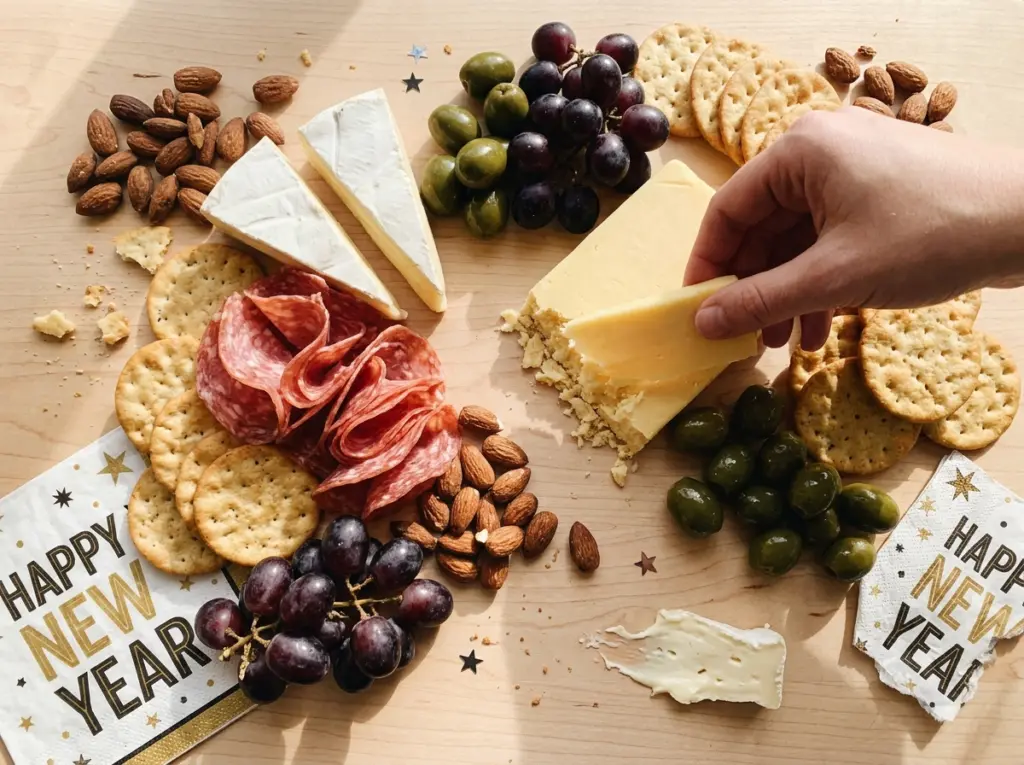
The board starts to feel crowded when every bite is scattered across it. I’ve found that keeping the cheese and meat in their own clusters gives the whole spread a clearer shape, while still leaving room to tuck in the rest. This New Year’s Eve Party Snack Board serves 10 and brings together sharp cheddar, Brie, salami, prosciutto, bread, crackers, produce, and a few bowls for the accompaniments.
What makes this board easy to build is the mix of shapes already in the ingredients: cheddar cubes, Brie wedges, folded salami, and loosely rolled prosciutto. I arrange those first, then work around them instead of trying to plan every inch in advance. The fruit and vegetables fill open spaces, and the almonds go in last, where the board still looks bare. You end up with a festive spread that feels generous without turning into one big jumble of cheese and crackers.
Kitchen Note
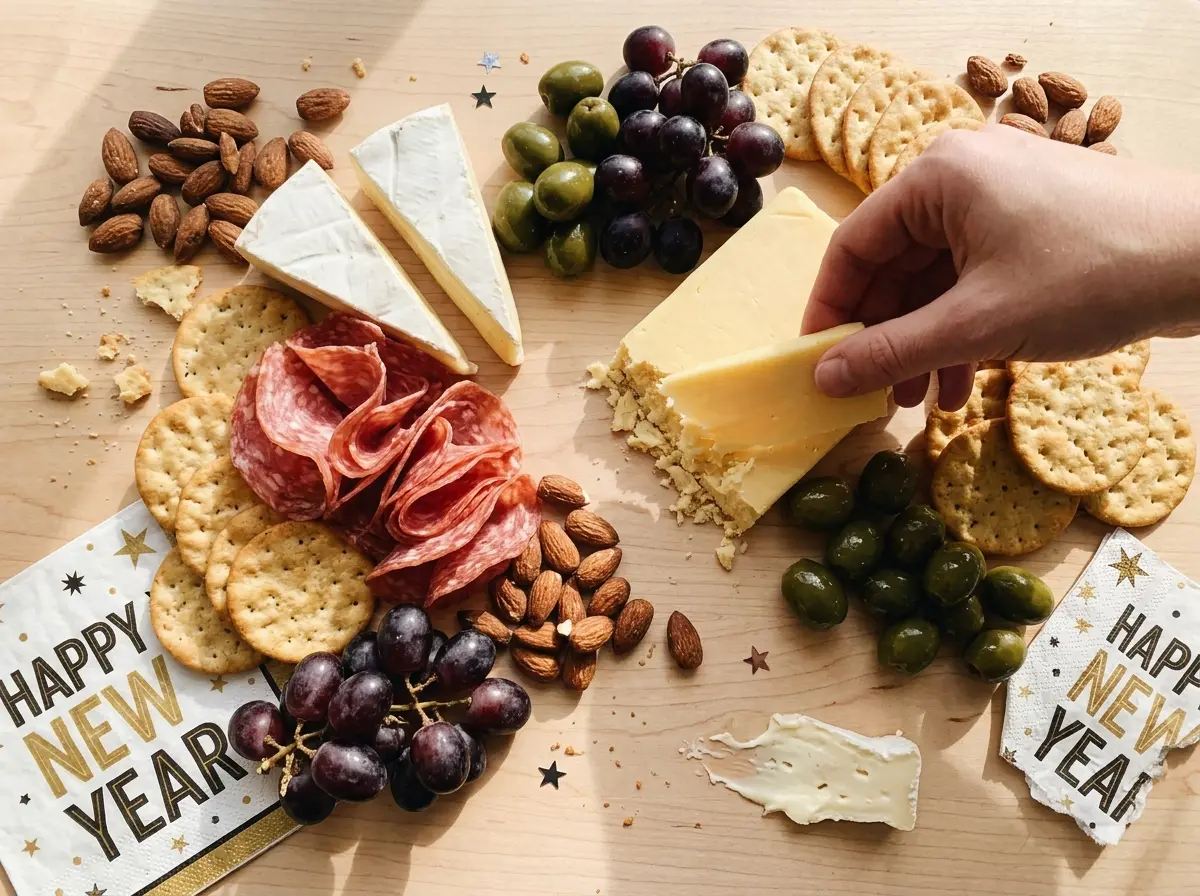
Drain the olives before they go into their bowl. Extra brine can escape onto the board and leave nearby crackers damp.
Save this New Year’s Eve Party Snack Board for a no-cook spread with savory bites, fresh produce, and sweet accompaniments.
Why an Open Patch Makes This Board Look More Abundant
A snack board doesn’t need to be packed edge to edge to look generous. Leaving visible spaces between the main clusters gives each food its own shape, so the board reads as a collection of things to choose from instead of a crowded pile. That little bit of breathing room also gives you a place to add the produce once the cheese and meat are set.
The order matters because the larger pieces establish the layout. Cheese and meat make solid anchors; crackers and baguette slices sit around them; grapes, tomatoes, cucumber, and apricots fill the gaps. Only after those are in place do I add the almonds to the remaining spaces. Their smaller size makes them useful for finishing without burying the other foods. If the board looks uneven while you’re arranging it, look at the spaces between clusters rather than adding more food at random.
Keeping items in separate groups also makes the different shapes easy to spot at a glance. That’s especially helpful here, where the cheddar cubes and Brie wedges have distinct looks, and the salami folds sit differently from the prosciutto rolls. The result feels organized but not overly arranged.
The Sweet, Tangy, and Savory Choices That Balance the Cheese
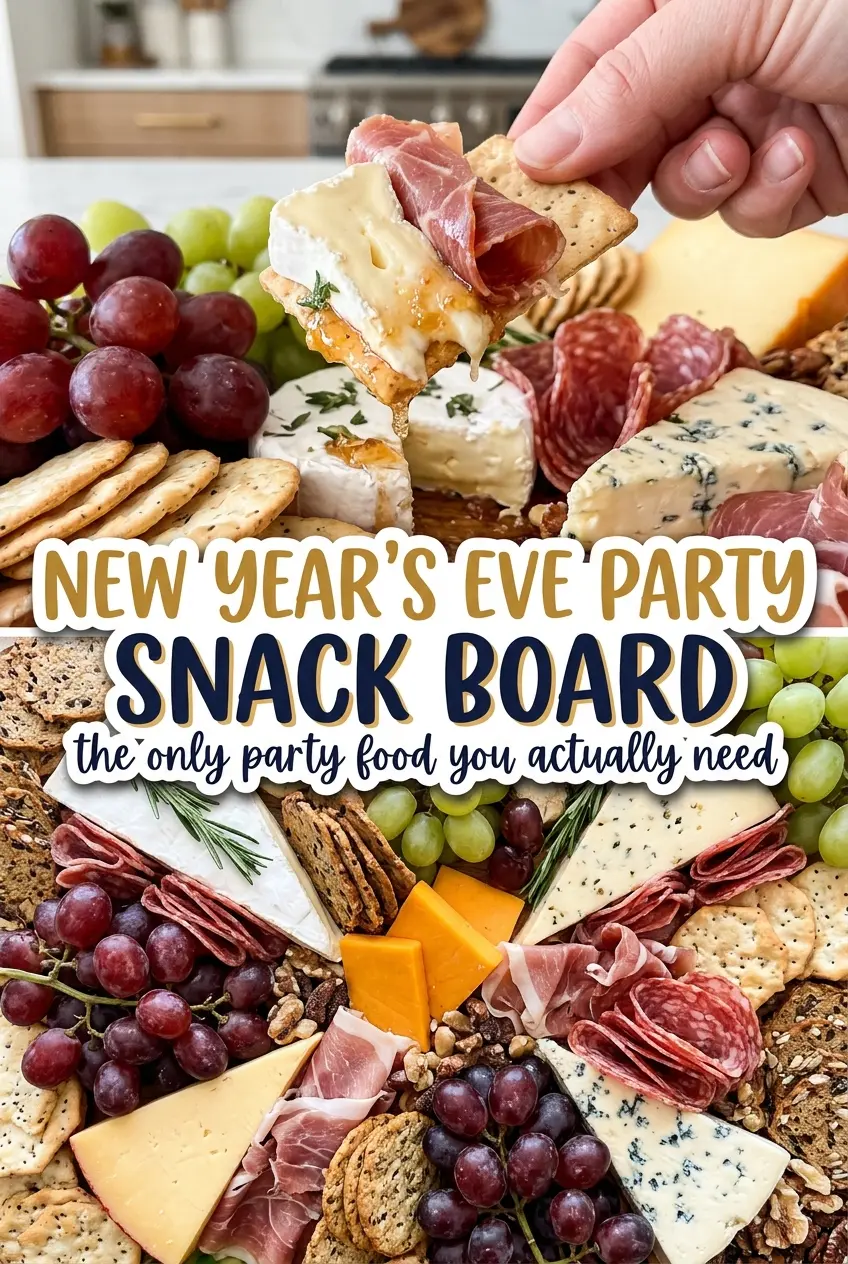
- Sharp cheddar and Brie — The cheddar brings a firm, punchy bite, while Brie is softer and mild. Keep the cheddar in bite-size cubes and the Brie in wedges so each is easy to pick up. If you need to use just one of the two, either works, but you’ll lose the contrast in texture.
- Salami and prosciutto — Salami holds a folded shape, while loosely rolled prosciutto gives the board a lighter, delicate-looking cluster. Fresh, supple slices are easier to fold or roll than dry, stiff ones. One can stand in for the other if needed, though the board will lose some variety in texture.
- Crackers and baguette — An assorted box of crackers is practical; it brings different shapes without needing specialty varieties. The baguette adds a softer, bread-like option alongside the crisp crackers. If you leave out one, the other can still carry the crunchy side of the board, but the mix won’t have the same range.
- Grapes, cherry tomatoes, and cucumber — Choose grapes that are firm enough to separate into small clusters, tomatoes that aren’t split, and a cucumber that slices cleanly. These fresh pieces balance the richer cheese and meat with juicy or crisp bites. Keep the grapes in small clusters and slice the cucumber as you arrange it.
- Dried apricots — Their chewy texture and concentrated sweetness differ from the fresh fruit and vegetables. They’re a good fit as they are; using grapes in their place would make that part of the board juicier and less chewy.
- Olives, mustard, and honey — The olives bring a briny bite, whole-grain mustard adds tang, and honey offers a sweet contrast. Draining the olives matters more than choosing a specialty variety. Use small serving bowls for these accompaniments so each stays in its own place.
- Roasted almonds — Roasted almonds add a crisp, savory finish to the open spaces. A basic roasted version works well here; they don’t need a coating or extra seasoning to do their job.
Build the Board in Four Clear Stages
Set the Cheese and Meat Clusters
Start with the cheddar, Brie, salami, and prosciutto on a large serving board. Give each one its own cluster rather than mixing the slices and pieces together. The cubes and wedges make compact shapes, while the folded and rolled meats add a little height and movement. Keep the groupings distinct so there’s room to build around them.
Make Space for Crackers and Bread
Place the assorted crackers and baguette slices in clusters around the cheese and meat. Tuck them into open areas near the clusters rather than covering the cheese or meat. The crackers bring crisp edges, while the baguette slices provide a different shape. If the board starts to feel crowded, leave a gap for the produce instead of forcing another cluster into place.
Fill the Open Areas with Produce
Add the grapes, cherry tomatoes, cucumber slices, and dried apricots to the open spaces. Keep the grapes in their small clusters, and arrange the cucumber slices where their round shape is easy to see. The tomatoes and apricots can fill smaller pockets that are awkward for bread or cheese. Spread the colors across the board so one area doesn’t hold all the produce.
Set Down the Bowls and Finish with Almonds
Spoon the olives, whole-grain mustard, and honey into three small serving bowls, then set the bowls on the board. Choose open spots where each bowl sits securely without covering another cluster. Once the bowls are in place, fill the remaining spaces with roasted almonds. Adding them last keeps the board’s main groupings visible.
Two Ways to Adapt the Board for Your Table
Make It Vegetarian by Leaving Off the Cured Meats
Omit the salami and prosciutto and arrange the cheeses, crackers, baguette, produce, bowls, and almonds as usual. The board stays varied, but it shifts toward cheese, fruit, and vegetables rather than savory meat bites. Keep the original clusters separate so the larger gaps still feel intentional.
Use Two Smaller Boards Instead of One Large Board
Divide the same components between two serving boards when one large board doesn’t suit your table. Keep the cheese and meat in separate clusters on each board, then distribute the crackers, produce, bowls, and almonds between them. The spread takes up less uninterrupted space, and each board can be placed where it’s easiest to reach.
Make-Ahead and Leftovers
- Make-ahead: Keep the components covered and refrigerated until you’re ready to arrange the board. Assemble close to serving so the crackers and baguette don’t sit beside moist foods for long.
- Serving: Because the board includes perishable cheese, meat, and cut cucumber, don’t leave it at room temperature for more than 2 hours.
- Leftovers: Refrigerate leftover perishable components promptly, covered and separated from the crackers and baguette. Use them within 3 to 4 days; the bread may soften after sitting on the board.
Questions That Come Up When Building This Snack Board
New Year's Eve Party Snack Board
Ingredients
Equipment
Method
- Set the cheddar, Brie, salami, and prosciutto in separate clusters on a large serving board.
- Place the crackers and baguette slices in clusters around the cheese and meat.
- Arrange the grapes, cherry tomatoes, cucumber slices, and dried apricots in open spaces on the board.
- Spoon the olives, mustard, and honey into three small serving bowls and set them on the board.
- Fill the remaining spaces with the almonds.