
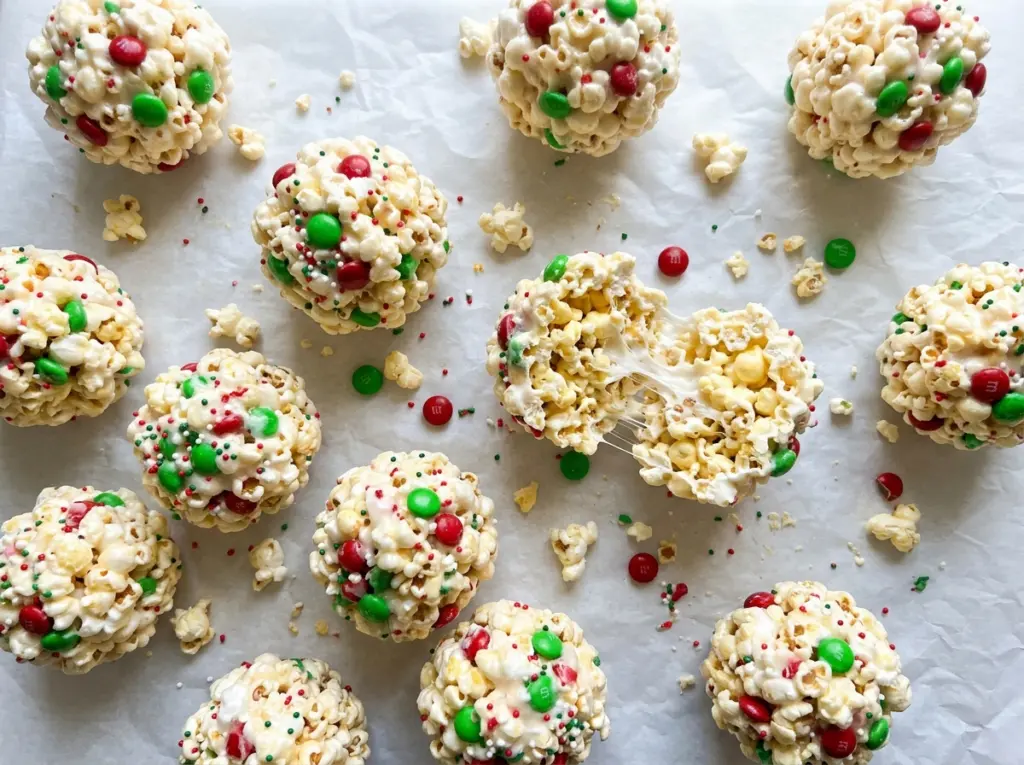
Christmas Popcorn Balls
The syrup is the moment to watch: it starts out clear and loose, then thickens into a candy coating that clings to every piece of popcorn. If it doesn’t reach…

By Ava
•
•
Reading time: 8 min
Tip: save now, make later.
The syrup is the moment to watch: it starts out clear and loose, then thickens into a candy coating that clings to every piece of popcorn. If it doesn’t reach the right temperature, the balls won’t set the way you want; if you wait too long to shape them, the coating firms up before the popcorn can hold together. Christmas Popcorn Balls are all about getting those two moments right.
I cook the sugar mixture until a candy thermometer reads 250–255°F, then pour it over unseasoned popcorn and work quickly while everything is still pliable. The coating gives the popcorn a sweet crunch, while red-and-green sprinkles make each ball look ready for the holidays. A little butter on your hands keeps shaping manageable, and pressing firmly—without crushing the popcorn—helps each ball hold its shape.
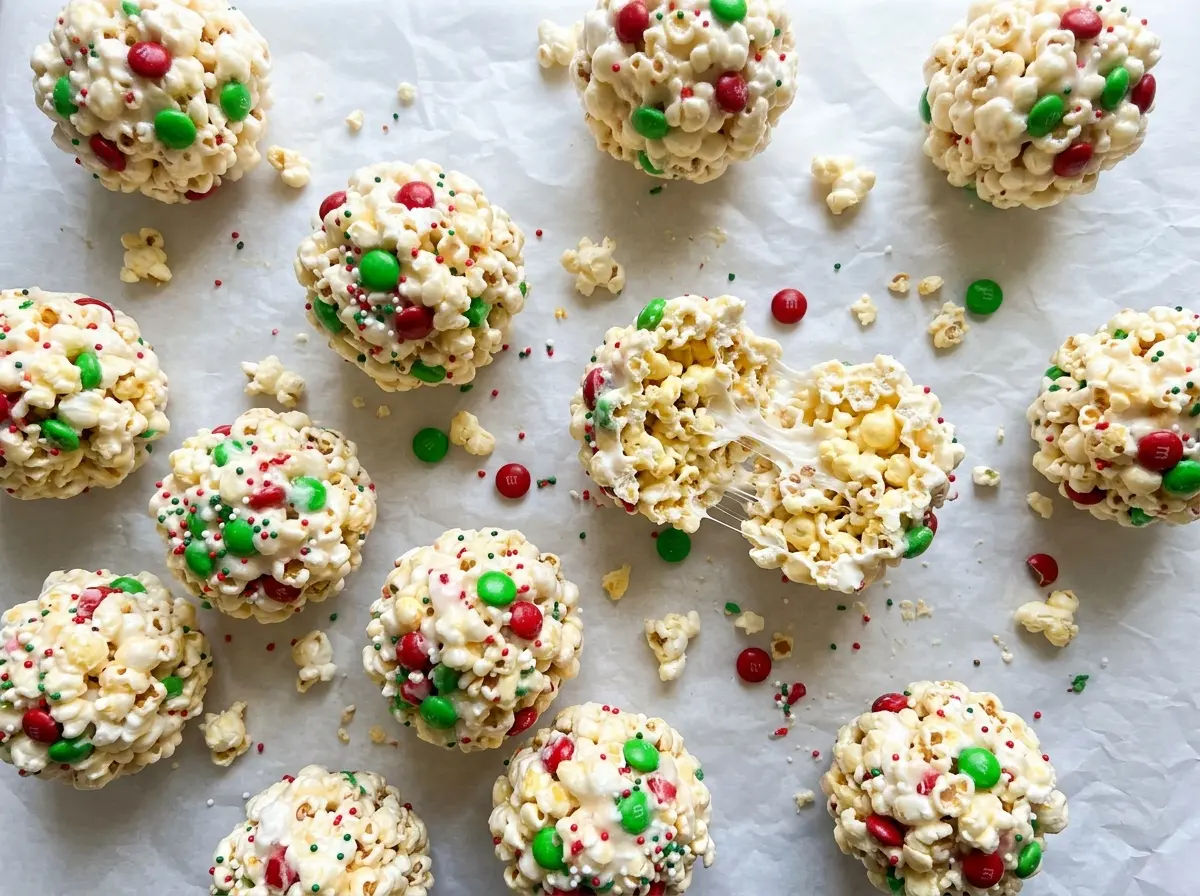
Kitchen Note
Shape the balls while the coating is still pliable, after its brief 2–3 minute cool-down. Butter your hands and the spatula before you start; the coating is sticky, and that little bit of prep makes it much easier to press each ball together.
Save these Christmas Popcorn Balls for a festive treat with a crisp candy coating and cheerful red-and-green sprinkles.
Why Popcorn Balls Turn Grainy Before They Ever Reach the Popcorn
Granulated sugar needs to dissolve fully before the syrup boils. Once the mixture reaches a boil, stirring can encourage sugar crystals to form again, which is how a smooth syrup can turn grainy. I stir only while the sugar dissolves and the mixture comes to a boil, then leave it alone as it cooks.
The corn syrup helps keep the sugar from crystallizing as readily, while the candy thermometer gives you a clear endpoint. At 250–255°F, the syrup is concentrated enough to coat the popcorn and firm up as it cools. Going by appearance alone is a gamble: a syrup that hasn’t cooked long enough may not bind the popcorn, and cooking past the target can make the finished balls harder than intended. The thermometer is doing useful work here, not just confirming a guess.
Keep the saucepan steady and give the temperature time to climb after you stop stirring. The difference between a coating that holds and one that stays tacky comes down to that final stretch of cooking.
Why Corn Syrup and Granulated Sugar Need Each Other Here
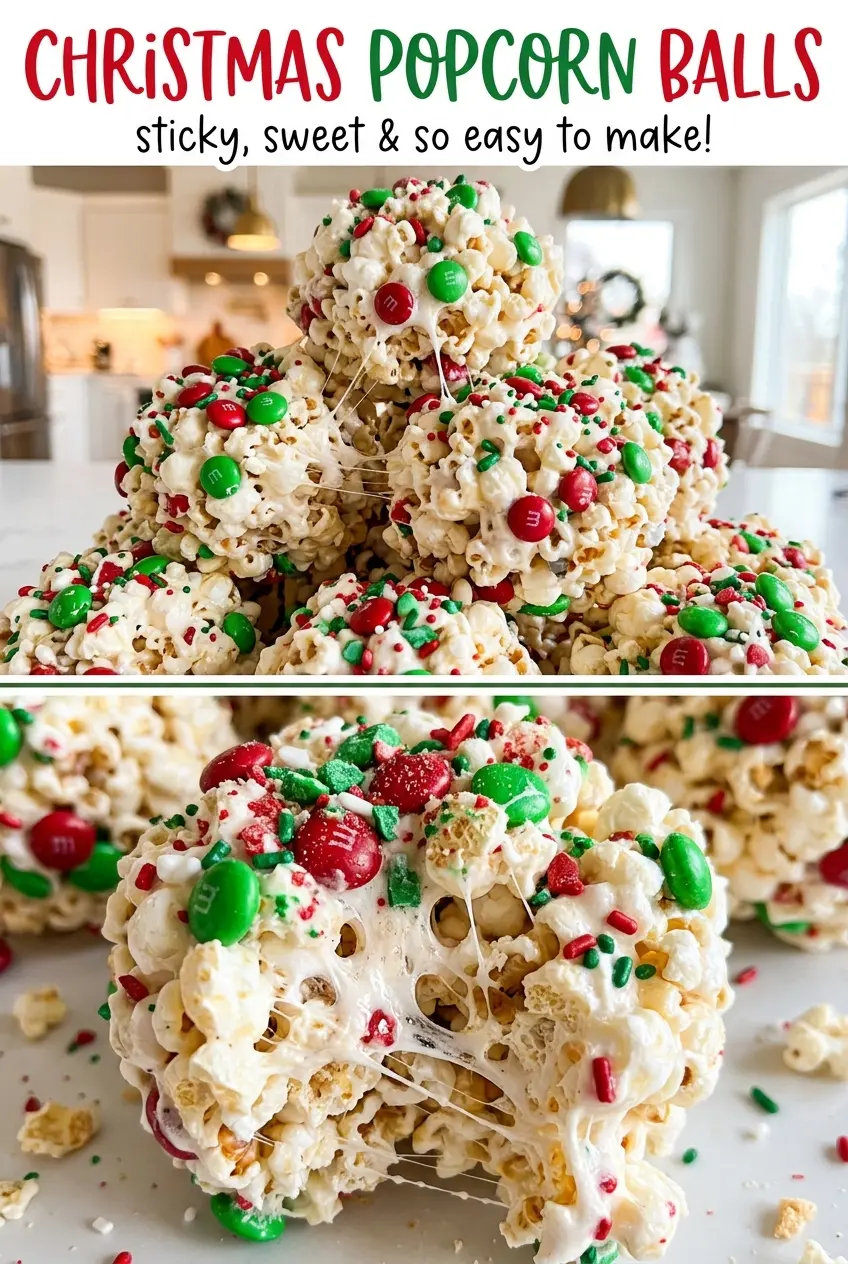
- Unseasoned popcorn gives the candy coating a clean, crisp base. Remove every unpopped kernel before you start; a hard kernel is an unpleasant surprise in a bite. Plain popcorn is the right choice here, since buttery or salted popcorn would change the balance of the coating.
- Granulated sugar and light corn syrup work together to create the coating. Sugar supplies the candy structure, while corn syrup helps limit crystallization. There isn’t a dependable one-for-one swap for the corn syrup in this mixture; changing it can affect both the texture and how well the balls hold.
- Water helps the sugar dissolve evenly at the start of cooking. It cooks away as the syrup reaches its target temperature, so it doesn’t leave the coating watery.
- Unsalted butter goes into the saucepan for richness, then the remaining portion greases your hands and spatula. Dividing it matters: the butter in the syrup contributes to the coating, while the butter on your hands makes shaping less sticky.
- Vanilla extract adds a warm note to the candy. Stir it in after you take the pan off the heat so it joins the syrup just before it coats the popcorn.
- Kosher salt and holiday sprinkles do different jobs: the salt balances the sweetness, and the sprinkles bring the red-and-green finish. An inexpensive sprinkle blend works well; press it onto the balls while the surface is tacky so it stays in place.
The Candy-Stage Timing That Makes Eight Balls Hold Together
Set Up the Popcorn Before the Syrup Cooks
Line a rimmed baking sheet with parchment paper, then put the popped popcorn in an 8-quart heatproof bowl. Pick out any unpopped kernels before the hot syrup is anywhere near the bowl. Having both the bowl and the baking sheet ready saves a scramble once the coating is mixed in. Use a heatproof spatula for tossing.
Cook the Syrup to the Thermometer Reading
Combine the sugar, light corn syrup, water, 2 tablespoons of butter, and kosher salt in a 2-quart saucepan. Cook over medium heat, stirring until the sugar dissolves and the mixture boils; this takes about 3–5 minutes. Stop stirring, then cook until a candy thermometer reads 250–255°F, about 5–8 minutes more. Keep an eye on the thermometer near the end so the syrup doesn’t cook past the target.
Coat, Shape, and Let the Balls Set
Take the saucepan off the heat and carefully stir in the vanilla. Pour the hot syrup over the popcorn and toss with the heatproof spatula until the pieces are evenly coated, then let the mixture cool for 2–3 minutes. Grease your hands and the spatula with the remaining butter and shape the popcorn into 8 balls, pressing firmly enough to hold them together without crushing the pieces. Press on the sprinkles while the balls are still tacky, set them on the prepared baking sheet, and let them cool until firm, about 20–30 minutes.
Three Changes for Different Christmas Popcorn Balls
Make Smaller Popcorn Balls
Shape the coated popcorn into smaller portions instead of 8 full-size balls. They’ll be easier to serve as bite-size treats, though the smaller shape takes a little more care to press together without crushing the popcorn.
Leave the Sprinkles Off
Skip the holiday sprinkles for a simple, glossy-looking popcorn ball. The candy coating still binds the popcorn, so this is an easy choice if you want the sweet crunch without the extra decoration.
Choose a Gluten-Free Sprinkle Blend
For a gluten-free batch, use popcorn labeled gluten-free and replace the usual holiday sprinkles with a gluten-free-certified red-and-green blend. The appearance stays festive, and the sprinkle choice won’t change how the candy coating binds the popcorn.
Storage and Reheating
- Room temperature: Once the balls are completely cool and firm, store them in an airtight container for up to 3 days. The popcorn gradually loses its crispness, so they’re best sooner.
- Freezer: Freezing isn’t a good fit; thawing can soften the popcorn and make the candy coating sticky.
- Reheating: No reheating is needed. Don’t microwave the finished balls—the candy coating can soften unevenly and become hot.
The Popcorn Ball Problems Worth Solving Before You Start
Christmas Popcorn Balls
Ingredients
Equipment
Method
- Line a rimmed baking sheet with parchment paper.
- Place the popcorn in an 8-quart heatproof bowl.
- Combine the sugar, corn syrup, water, 2 tablespoons of the butter, and salt in a 2-quart saucepan.
- Cook over medium heat, stirring until the sugar dissolves and the mixture boils, about 3-5 minutes.
- Stop stirring and cook until it reaches 250-255°F on a candy thermometer, about 5-8 minutes more.
- Remove the pan from the heat and carefully stir in the vanilla extract.
- Pour the hot syrup over the popcorn and toss with a heatproof spatula until evenly coated.
- Let cool for 2-3 minutes, until cool enough to handle but still pliable.
- Use the remaining 1 tablespoon butter to grease your hands and the spatula.
- Shape the popcorn into 8 balls, pressing firmly enough to hold them together without crushing the popcorn.
- Press the sprinkles onto the balls while they are still tacky and set them on the prepared baking sheet.
- Let the popcorn balls cool until firm, about 20-30 minutes.