
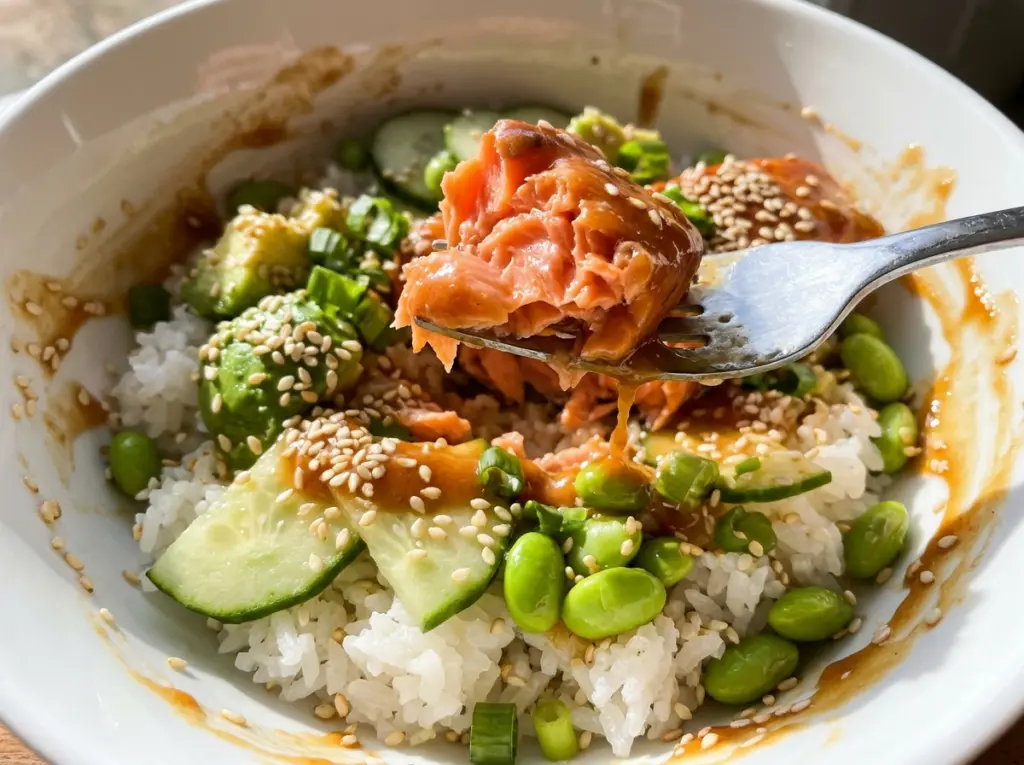
Miso Glazed Salmon Rice Bowls
When the glaze hits the hot oven, the honey turns glossy around the salmon while the miso settles into a savory, lightly sweet coating. I pair it with plain rice…

By Ava
•
•
Reading time: 9 min
Tip: save now, make later.
When the glaze hits the hot oven, the honey turns glossy around the salmon while the miso settles into a savory, lightly sweet coating. I pair it with plain rice and cool cucumber so the bowl has contrast without asking you to make a separate sauce or side. These miso glazed salmon rice bowls come together from a short list of ingredients, but the little details—especially rinsing the rice and watching the thickest part of the fish—make the finished bowl feel balanced.
I like white miso here because it brings plenty of savory depth without overpowering the salmon. Honey rounds it out, and a little rice vinegar keeps the glaze from tasting heavy. The cucumber and scallions go on at the end, so they stay fresh against the warm rice and flaky fish. Each bowl is simple, but you get tender rice, rich salmon, and a crisp bite of cucumber in the same forkful.
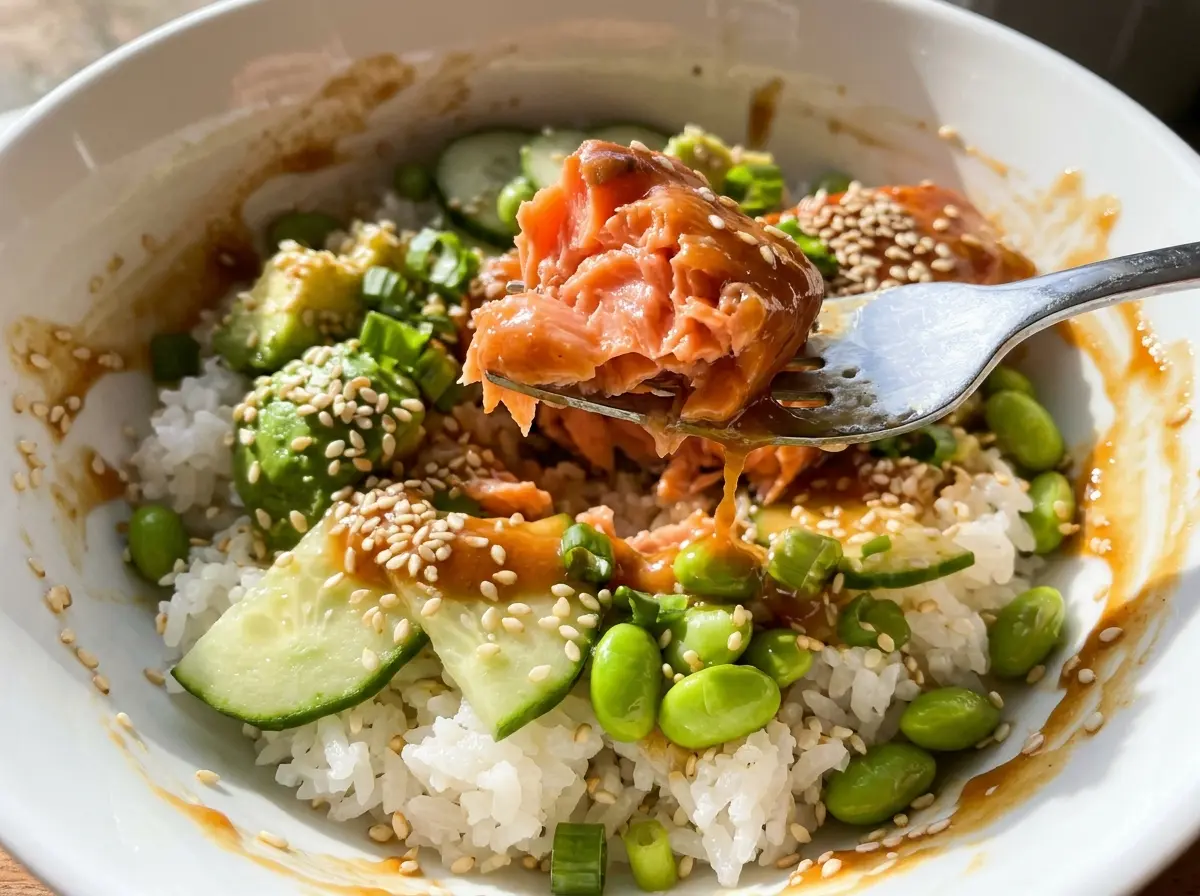
Kitchen Note
White miso can sit in dense little pockets when you first start whisking. I keep going until the glaze looks smooth and even, so every salmon portion gets the same savory-sweet coating.
Save these miso glazed salmon rice bowls for a night when you want a savory-sweet glaze, tender rice, and crisp cucumber in one bowl.
Why Rinsing the Rice Keeps the Bowl From Turning Gummy
Long-grain white rice can cook up soft and separate, but excess starch on the surface makes the grains cling together in a sticky mass. Rinsing under cool water until it runs mostly clear removes much of that surface starch before the rice ever reaches the saucepan. It takes an extra minute at the sink, and it makes a noticeable difference once the rice is fluffed.
Use a fine-mesh sieve and move the rice gently under the water rather than pressing it into the mesh. The water doesn’t have to look perfectly clear; mostly clear is the right cue. After that, the rice cooks with its measured water and salt, covered over low heat, without needing to be stirred. Leaving the lid on during the simmer helps the rice cook evenly instead of letting steam escape while the grains are still firm.
This matters in a bowl because the rice is the base, not just a side. You want it tender enough to catch the glaze, but distinct enough that it doesn’t eat like porridge beneath the salmon.
What Gives the Miso Glaze Its Sweet-Savory Balance
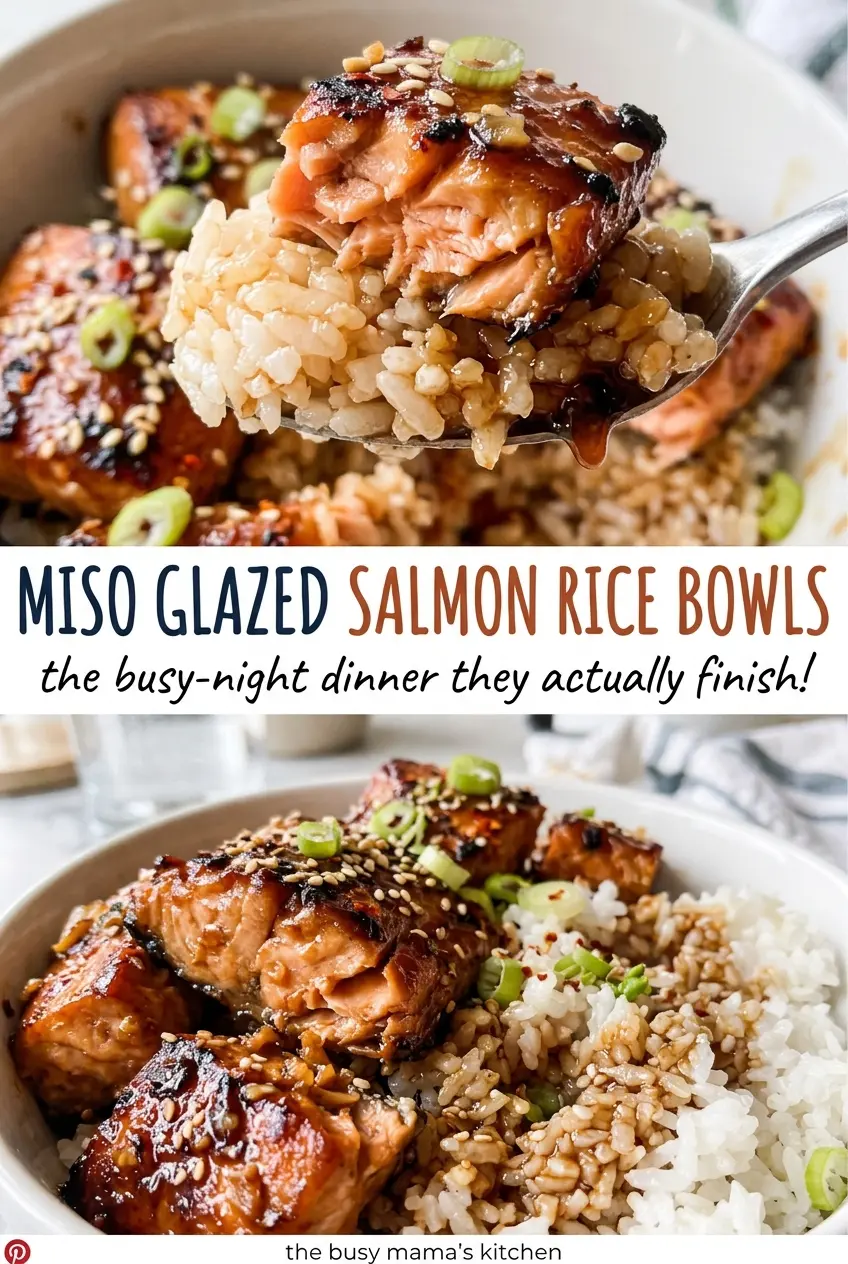
- White miso — It supplies the glaze’s deep, savory character. Choose a tub that smells pleasantly fermented and tastes mellow rather than sharply salty; a dry or crusted surface is a sign it may not be fresh. Its thick texture is part of what lets the glaze cling to the fish.
- Honey — Honey softens miso’s savory edge and helps the glaze turn glossy as it bakes. A standard honey works well here, so there’s no need to seek out a specialty variety.
- Low-sodium soy sauce — It loosens the miso and adds a second layer of savory flavor without pushing the glaze too salty. Stick with low-sodium soy sauce; regular soy sauce would make the balance saltier.
- Rice vinegar — The small amount of acidity cuts through the honey and the richness of the salmon. Its mild taste fits more smoothly into this glaze than a sharper vinegar would.
- Toasted sesame oil and fresh ginger — Toasted sesame oil brings a fragrant, nutty note, while finely grated fresh ginger gives the glaze a clean, warm lift. Fresh ginger blends into the mixture more evenly than a large chopped piece would.
- Long-grain white rice — It cooks into tender grains that hold their shape under the salmon. Rinsing is the useful prep detail here; the variety gives you the right base without needing a richer or stickier rice.
- Salmon, cucumber, scallions, and sesame seeds — Skin-on salmon portions bake skin-side down on the lined pan. Thinly sliced cucumber adds cool crunch, and scallions and sesame seeds finish the bowls with fresh flavor and a little texture.
Build the Bowls in the Right Order for Tender Rice and Flaky Fish
Rinse and Simmer the Rice
Rinse the long-grain white rice in a fine-mesh sieve under cool water until the water runs mostly clear. Combine it with the water and kosher salt in a 2-quart saucepan, then bring it to a boil over medium-high heat. Cover, reduce the heat to low, and simmer for 15 to 18 minutes, until the water is absorbed and the rice is tender. If you see water still pooling on top, keep the lid on and give the rice time to finish rather than stirring it.
Whisk the Miso Glaze
While the rice cooks, whisk the white miso, honey, low-sodium soy sauce, rice vinegar, toasted sesame oil, and finely grated ginger in a small bowl. Work out any thick miso streaks against the side of the bowl, then brush the even mixture over the salmon portions. If the glaze looks lumpy, keep whisking before it goes on the fish; the oven won’t smooth out concentrated pockets of miso.
Bake Until the Salmon Flakes
Heat the oven to 425°F and line a rimmed baking sheet with parchment paper. Set the salmon skin-side down and brush the glaze over the portions, then bake for 10 to 14 minutes. The fish is ready when it flakes easily and reaches 145°F in the thickest part. Check the thickest portion rather than judging only by the color of the glaze, which darkens as it bakes.
Finish Each Bowl
Remove the rice from the heat and let it stand, covered, for 10 minutes, then fluff it with a fork. Divide the rice among four bowls and top each with salmon, thinly sliced cucumber, scallions, and sesame seeds. Keep the cucumber on top rather than burying it under the hot rice, where it would lose some of its crisp bite.
Two Different Ways to Put These Salmon Bowls Together
Make Flaked-Salmon Bowls
After baking, break each salmon portion into large flakes and distribute them over the rice instead of placing a whole portion on each bowl. You get a little glazed salmon in more bites, though the fish looks less like a single neat fillet.
Turn the Ingredients Into a Chilled Bowl
For a cooler, make-ahead style, chill the cooked rice and baked salmon separately before assembling with the cucumber, scallions, and sesame seeds. The rice will feel firmer when cold, and the glaze won’t be as loose as it is warm, but the cucumber keeps its refreshing crunch.
Storage and Reheating
- Refrigerator: Store the salmon and rice in airtight containers for 3 to 4 days. Keep the cucumber and other bowl toppings separate so they don’t soften against the warm ingredients.
- Freezer: Don’t freeze assembled bowls; cucumber turns watery and loses its crunch. The salmon and rice are best made fresh for this bowl.
- Reheating: Reheat salmon and rice until they reach 165°F, using short bursts in the microwave so the fish doesn’t dry out. Add the cold toppings after reheating rather than warming them with the rice.
Questions That Come Up When Making Miso Salmon Bowls
Miso Glazed Salmon Rice Bowls
Ingredients
Equipment
Method
- Rinse the rice in a fine-mesh sieve under cool water until the water runs mostly clear.
- Combine the rice, water, and salt in a 2-quart saucepan.
- Bring the rice mixture to a boil over medium-high heat.
- Cover the saucepan, reduce the heat to low, and simmer for 15 to 18 minutes, until the water is absorbed and the rice is tender.
- Remove the rice from the heat and let stand, covered, for 10 minutes.
- Fluff the rice with a fork.
- Heat the oven to 425°F.
- Line a rimmed baking sheet with parchment paper.
- Arrange the salmon skin-side down on the sheet.
- Whisk the miso, honey, soy sauce, rice vinegar, sesame oil, and ginger in a small bowl.
- Brush the miso mixture over the salmon.
- Bake for 10 to 14 minutes, until the salmon flakes easily and reaches 145°F in the thickest part.
- Divide the rice among 4 bowls.
- Top the rice with the salmon, cucumber, scallions, and sesame seeds.