
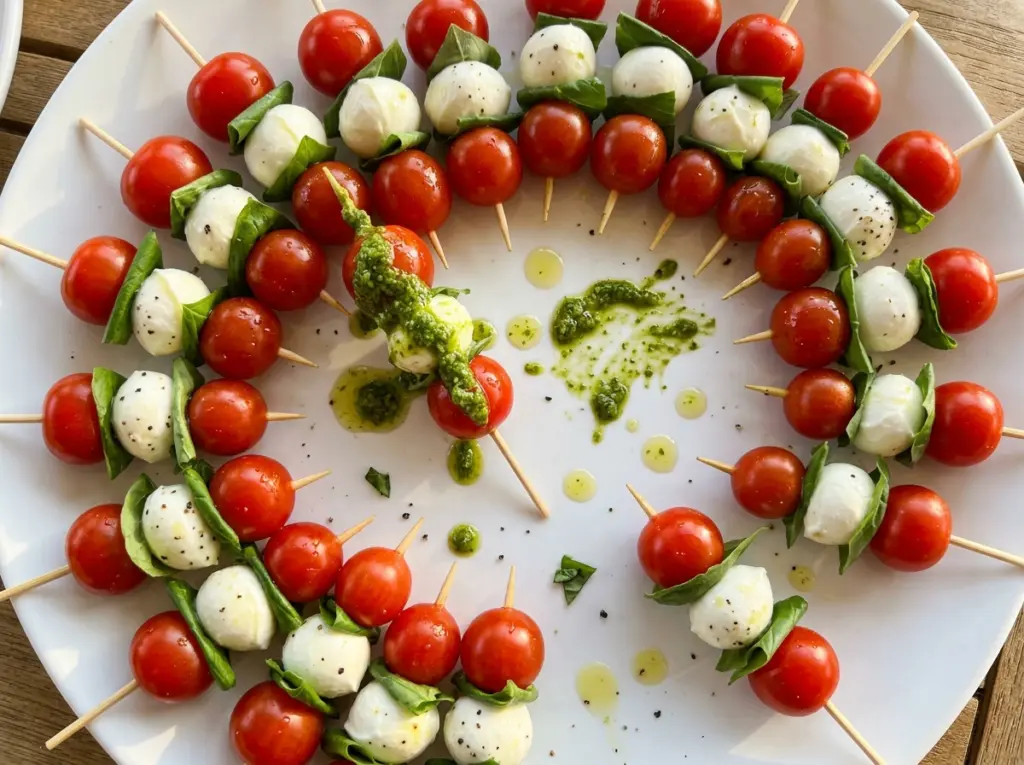
New Year’s Eve Pesto Mozzarella Skewers
A skewer on a party platter has a way of rolling just when you’re trying to make room for one more. These New Year’s Eve Pesto Mozzarella Skewers stay tidy,…

By Ava
•
•
Reading time: 8 min
Tip: save now, make later.
A skewer on a party platter has a way of rolling just when you’re trying to make room for one more. These New Year’s Eve Pesto Mozzarella Skewers stay tidy, are easy to pick up, and bring the familiar tomato, mozzarella, and basil combination to the table without needing a knife or fork. I like them for a celebration because they can be assembled ahead and don’t need cooking.
The small ciliegine mozzarella balls are close in size to the cherry tomatoes, so each bite feels balanced instead of being mostly cheese or tomato. Fresh basil gives every skewer a bright, fragrant note, and prepared pesto adds a savory finish. With just a few components, the details matter: dry tomatoes, well-drained mozzarella, and a neat assembly make the platter look as good as it tastes.
Kitchen Note
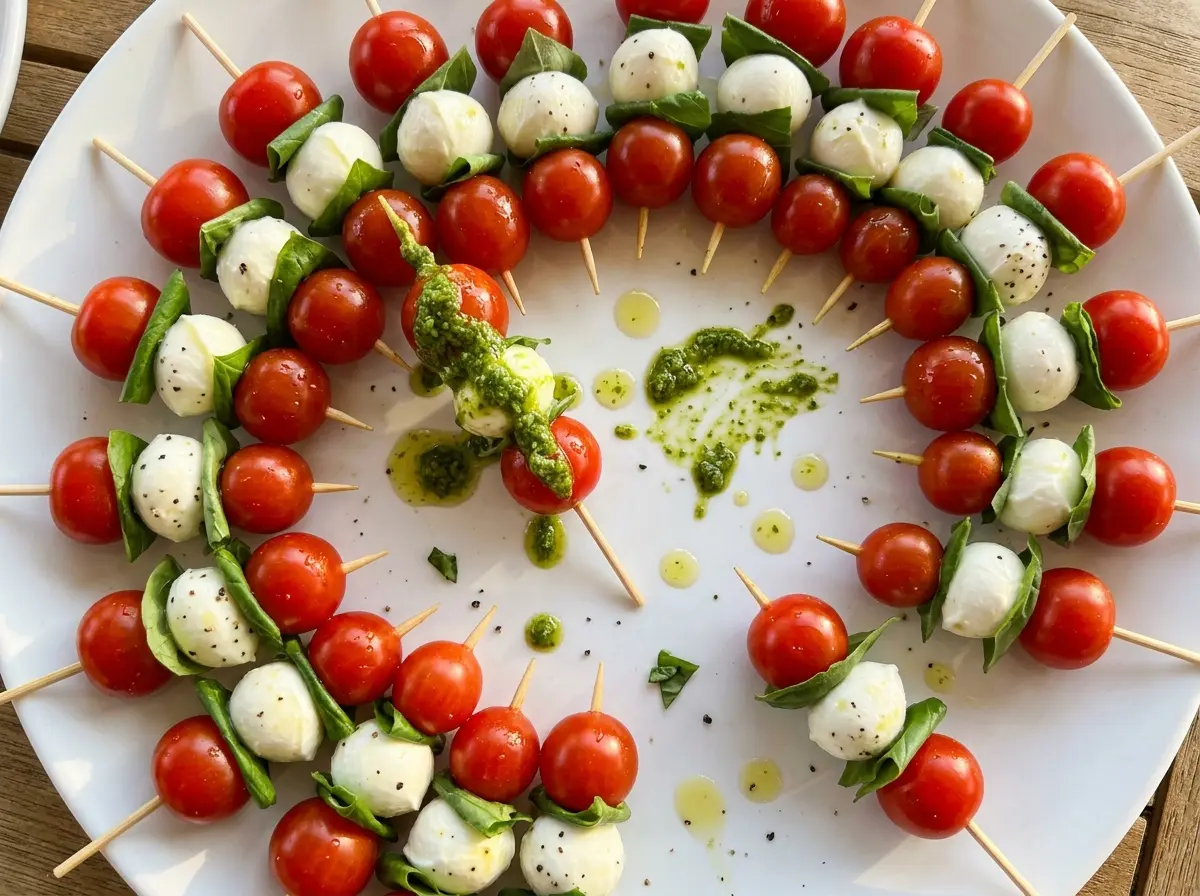
Fold each basil leaf once before threading it. The folded leaf takes up less room on a 6-inch skewer and sits neatly beside the mozzarella instead of flopping off the end.
Save these New Year’s Eve Pesto Mozzarella Skewers for a party platter with fresh basil, creamy mozzarella, and a pesto finish.
Why the 20-Minute Chill Makes These Easier to Serve
These skewers don’t need a long rest to develop flavor; the pesto goes on at the end, and the ingredients are already ready to eat. The short refrigerator chill is about serving them cold and giving the assembled bites a little time to settle before they go onto the table. Even 20 minutes makes a difference when you’re arranging a platter for a gathering.
The window runs from 20 minutes to 2 hours, which gives you room to assemble them before guests arrive without leaving the platter uncovered on the counter. Cover the skewers while they chill so the basil doesn’t dry out and the mozzarella doesn’t pick up refrigerator odors. I wouldn’t treat the full window as a flavor-marination step; these are best understood as fresh, assembled bites, not a dish that improves after sitting overnight.
That timing also helps with party planning. You can finish the assembly, cover the platter, and turn your attention to other food while these stay refrigerated. Save the topping for the last moment, then bring the platter out ready to serve.
Why Ciliegine Make a Better Bite Than a Big Mozzarella Ball

- Ciliegine mozzarella — These small balls make the cheese portion easy to match with a cherry tomato, so the skewer has a consistent bite from end to end. Drain them well before assembly. If ciliegine aren’t available, use fresh mozzarella cut into bite-size pieces and drain those pieces thoroughly; larger chunks make the skewers heavier and less tidy.
- Cherry tomatoes — Pick tomatoes that feel firm and are similar in size to one another. Their skins help them hold together when threaded, while a very soft tomato is more likely to split. Grape tomatoes are a useful swap when they’re closer to the size of your mozzarella.
- Fresh basil — The fresh leaves bring a clean, herbal contrast to the rich cheese and pesto. Choose leaves that are green and supple rather than bruised or limp, and keep them whole so each can be folded onto a skewer. Dried basil won’t give you the same fresh leaf texture or appearance here.
- Prepared basil pesto — Pesto is the concentrated finishing sauce, so choose one with a basil-forward taste you enjoy. A prepared pesto from the refrigerated case or pantry is convenient; the texture varies by brand, so spoon it rather than trying to pour it. A thick pesto stays on the skewers better than a watery one.
- Wooden skewers — The 6-inch size gives enough room for the three components without leaving a long handle that crowds the platter. If you’re buying new skewers, check that they fit the serving dish you plan to use.
Assembling Each Skewer So the Components Stay Put
Threading the Tomato, Mozzarella, and Basil
Start with one cherry tomato, then thread on one drained mozzarella ball and one basil leaf folded over itself. Keep the order consistent across the platter; the repeated pattern makes the skewers look intentional and keeps each bite balanced. Push the skewer through the center of the tomato and mozzarella rather than too close to an edge, where the tomato can split. Handle the cheese gently so it stays whole.
Chilling the Covered Platter
Arrange the assembled skewers on a platter in a single layer, then cover and refrigerate for 20 minutes to 2 hours. A single layer keeps the bites from being pressed together, which can bruise the basil or make the tomatoes roll. If the platter is crowded, use another platter rather than stacking the skewers. Keep them covered during the chill.
Finishing with the Pesto
Spoon the prepared basil pesto over the skewers just before serving. Add it in a light, even pass so the sauce accents the tomato, mozzarella, and basil instead of hiding them. Pesto can vary in thickness, so use a spoon to place it where you want it rather than shaking it over the platter. Once topped, serve the skewers while the basil still looks fresh.
Simple Ways to Change the Skewers for Your Table
Swap in grape tomatoes
Use grape tomatoes in place of the cherry tomatoes, choosing small, firm ones that are close in size to the mozzarella. They give the same juicy tomato bite, though their more oblong shape makes the finished skewers look a little different.
Make a dairy-free version
Replace the mozzarella with firm tofu cut into bite-size cubes, and use a dairy-free basil pesto. Blot the tofu cubes dry before threading so they’re easier to handle. The result won’t have mozzarella’s creamy stretch, but the tofu gives each skewer a sturdy, mild center.
Turn them into platter bites
For a no-skewer presentation, arrange the tomatoes, mozzarella, and folded basil leaves together as individual bites on a platter, then spoon pesto over them before serving. This format is less portable than the skewers, but it works when you want the same combination without handing out picks.
Make-Ahead and Leftovers
- Refrigerator: Keep leftover skewers covered and refrigerated, and use them within 2 days for the freshest basil and best texture. The leaves may darken and soften as they sit.
- Freezer: Freezing isn’t a good fit. The tomatoes turn soft when thawed, and the mozzarella and basil lose their fresh texture.
- Serving: These are served cold, so there’s no reheating step. If the pesto has settled on the platter, spoon a little back over the skewers right before setting them out.
Questions About Making Pesto Mozzarella Skewers
New Year's Eve Pesto Mozzarella Skewers
Ingredients
Method
- Thread one cherry tomato, one mozzarella ball, and one folded basil leaf onto each wooden skewer.
- Arrange the skewers on a platter, cover, and refrigerate for 20 minutes to 2 hours.
- Spoon the pesto over the skewers just before serving.