
Maryland Crab Cakes with Remoulade
The first bite of a crab cake should give you a clear piece of sweet crab, not a mouthful of cracker filling. That balance is what I wanted from these…

By Ava
•
•
Reading time: 9 min
Tip: save now, make later.
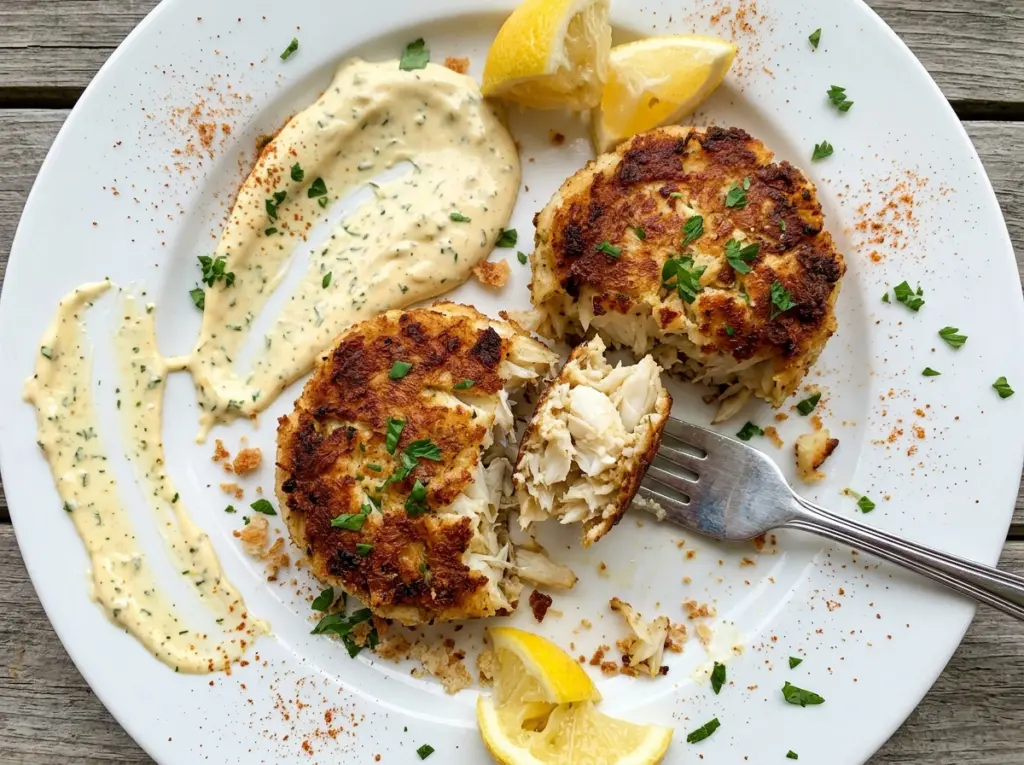
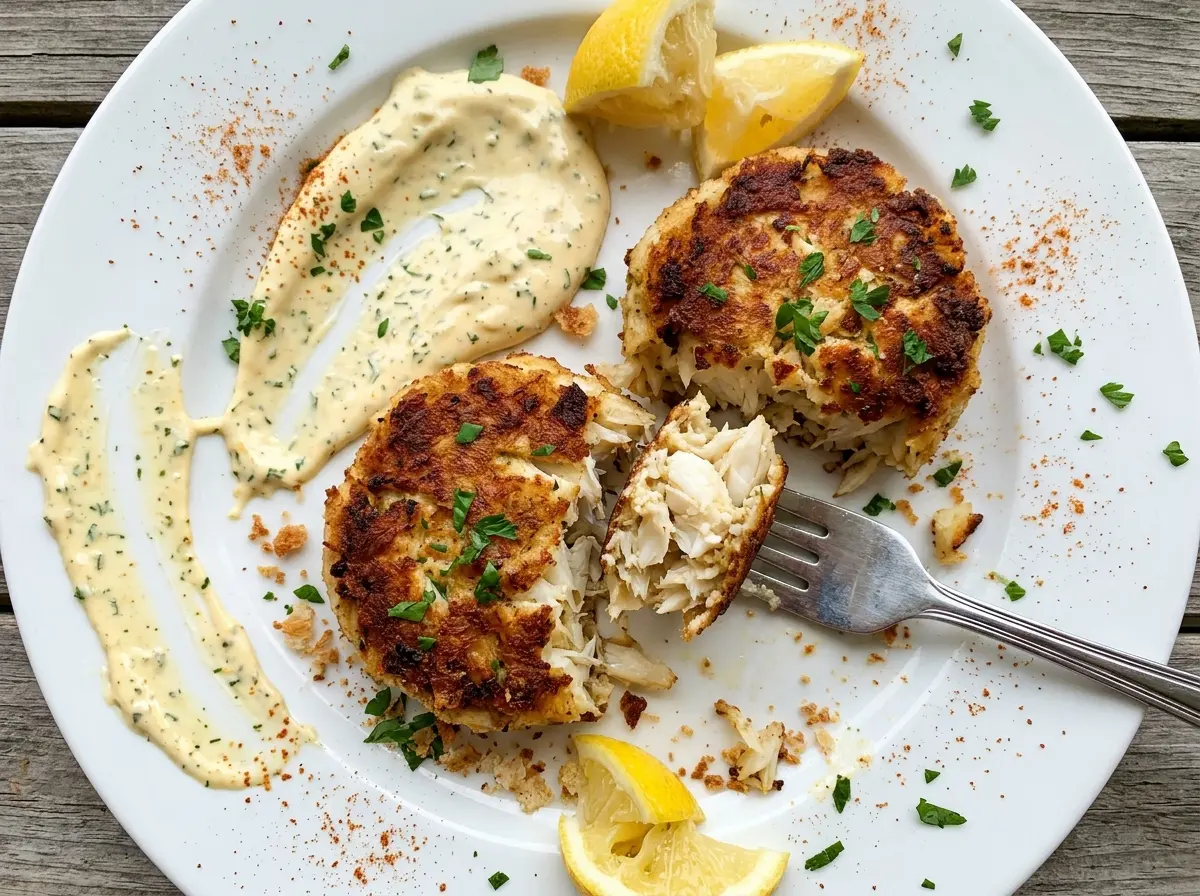
The first bite of a crab cake should give you a clear piece of sweet crab, not a mouthful of cracker filling. That balance is what I wanted from these Maryland Crab Cakes with Remoulade: generous jumbo lump crab, lightly seasoned with Old Bay, lemon, and parsley, with just enough binder to hold each patty together.
The cakes get a crisp, browned outside in the skillet while their centers stay tender. The remoulade brings a cool, tangy contrast, with Dijon, capers, and hot sauce adding a little briny heat to the creamy base. I make it alongside the cakes so it’s ready to serve as soon as they come out of the pan.
This is a satisfying seafood dinner without a complicated sauce or a long list of ingredients. The crab stays in the foreground, and every bite gets a bright lift from the lemony remoulade. Set the sauce beside the warm cakes and let that contrast do its work.
Kitchen Note
Give the shaped patties the full 30 minutes in the refrigerator. That firm-up makes them easier to handle when they go into the skillet.
Save these Maryland crab cakes with remoulade for a seafood dinner with crisp edges, sweet lump crab, and a tangy caper sauce.
Why Eight Smaller Crab Cakes Beat Four Oversized Ones
It’s tempting to pack the whole mixture into a few large patties, but that makes the first flip harder than it needs to be. Jumbo lump crab is delicate, and a smaller cake is easier to turn without pressing or squeezing the pieces together. Each one still has enough room for big chunks of crab, but the patty stays manageable in the skillet.
Shaping eight patties about 3/4 inch thick also gives you a useful balance between browned surface and tender center. Four fit in a 12-inch skillet at a time, leaving room to move a spatula around each cake. Cook them in two batches rather than crowding the pan; the oil stays hot enough to build a deep-golden crust, and you can lift each patty cleanly. The cakes look simple, but that modest size makes the cooking much more controlled.
What the Crab, Crumbs, and Remoulade Ingredients Each Bring

- Jumbo lump crabmeat — The large pieces give these cakes their distinct, tender texture. Pick through it carefully for shells, and keep the pieces intact when mixing. Claw meat works in a pinch, but the cakes will have a finer, less dramatic texture.
- Saltine cracker crumbs — Finely crushed saltines bind the mixture while adding a light, crisp-savory note. Crush them finely so they distribute evenly; coarse pieces can leave the patties harder to shape.
- Egg and mayonnaise — Together they help the mixture hold, while the mayonnaise keeps the crab moist. Use regular mayonnaise rather than a strongly flavored spread so it doesn’t compete with the crab.
- Dijon, Worcestershire, and Old Bay — Dijon gives the crab mixture a little sharpness, Worcestershire brings savory depth, and Old Bay supplies the familiar Maryland-style seasoning. These are doing different jobs, so one shouldn’t be treated as a direct replacement for another.
- Lemon, parsley, and capers — Fresh lemon juice brightens both the cakes and the sauce. Parsley adds a clean herbal note, while the capers make the remoulade briny. If you’re buying capers, the small ones are easy to chop finely and stir through the sauce.
- Hot sauce and paprika — In the remoulade, hot sauce adds heat and paprika brings a gentle savory warmth. The mayonnaise softens both, keeping the sauce creamy rather than sharp.
Mixing and Pan-Frying Without Breaking Up the Crab
Whisk the Seasoned Binder, Then Fold Gently
In a medium bowl, whisk the egg, mayonnaise, Dijon, Worcestershire, Old Bay, lemon juice, parsley, and black pepper until the mixture looks smooth. Add the crabmeat and finely crushed cracker crumbs, then fold just until combined. Use a light hand so you don’t break the jumbo lump into small flakes. Stop when the crumbs are distributed and the mixture holds together.
Shape Even Patties and Let Them Firm
Shape the mixture into eight patties about 3/4 inch thick and set them on a plate. Cover the plate and refrigerate the patties for 30 minutes. Keep the edges tidy, but don’t compress the crab into a dense puck. The patties should feel cohesive enough to lift without losing their loose, tender texture.
Stir Together the Caper Remoulade
In a small bowl, stir the mayonnaise, Dijon, lemon juice, finely chopped capers, parsley, hot sauce, paprika, and kosher salt until evenly combined. Cover and refrigerate the sauce until serving. The finished remoulade should be creamy, with little flecks of parsley and caper throughout. Make sure the capers are chopped finely so they don’t overwhelm a spoonful of sauce.
Cook in Two Batches for a Deep-Golden Crust
Heat 1 1/2 tablespoons of neutral oil in a 12-inch skillet over medium heat until shimmering. Add four crab cakes and cook for 3 to 4 minutes per side, until deeply golden and 160°F in the center. If the cakes are pale when you turn them, give them more time to form the crust rather than rushing the flip. Transfer them to a plate, add the remaining 1 1/2 tablespoons oil, and cook the remaining four the same way.
Simple Ways to Adapt These Crab Cakes
Make Them Gluten-Free with Cracker Crumbs
Replace the saltine crumbs with the same amount of finely crushed gluten-free crackers. Choose a plain, crisp cracker so its seasoning doesn’t take over; the cakes will still hold together, though the exact crunch and saltiness will depend on the brand.
Turn Up the Remoulade’s Heat
Stir more hot sauce into the remoulade a little at a time, tasting as you go. The extra heat gives the cool, creamy sauce a sharper finish without changing the crab mixture or the way the cakes cook.
Storage and Reheating
- Refrigerator: Keep cooked crab cakes and remoulade in separate airtight containers for 3 to 4 days. The cakes will soften in the refrigerator, and the sauce won’t stay as fluffy as when freshly stirred.
- Freezer: Freeze cooked crab cakes in a single layer until firm, then wrap them well and store in an airtight freezer container for up to 2 months. Mayonnaise-based remoulade doesn’t freeze well, so make a fresh batch after thawing.
- Reheating: Warm the cakes gently in a covered skillet over low heat, turning once, until hot throughout. High heat can dry out the crab before the center warms, and the crust will soften somewhat as it reheats.
Questions That Come Up When Making Maryland Crab Cakes
Maryland Crab Cakes with Remoulade
Ingredients
Equipment
Method
- In a medium bowl, whisk the egg, mayonnaise, Dijon mustard, Worcestershire sauce, Old Bay seasoning, lemon juice, parsley, and black pepper until smooth.
- Gently fold in the crabmeat and cracker crumbs until just combined, keeping the crab pieces as intact as possible.
- Shape the mixture into 8 patties about 3/4 inch thick.
- Place the patties on a plate, cover, and refrigerate for 30 minutes.
- In a small bowl, stir together the mayonnaise, Dijon mustard, lemon juice, capers, parsley, hot sauce, paprika, and salt.
- Cover and refrigerate until serving.
- Heat 1 1/2 tablespoons oil in a 12-inch skillet over medium heat until shimmering.
- Cook 4 crab cakes for 3 to 4 minutes per side, until deeply golden and 160°F in the center.
- Transfer the cooked cakes to a plate and add the remaining 1 1/2 tablespoons oil to the skillet.
- Cook the remaining cakes the same way and serve with the remoulade.