
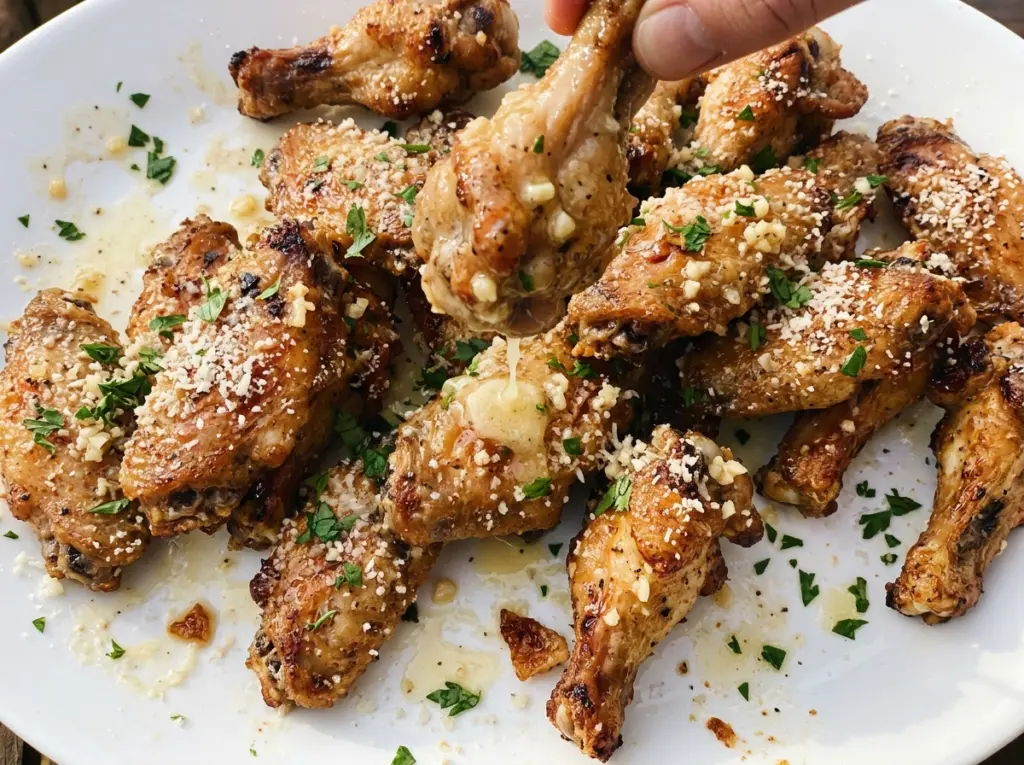
New Year’s Eve Garlic Parmesan Wings
The wings come off the rack with browned, blistered skin, and that’s when I reach for the garlic Parmesan coating. New Year's Eve Garlic Parmesan Wings bring the crisp texture…

By Ava
•
•
Reading time: 9 min
Tip: save now, make later.
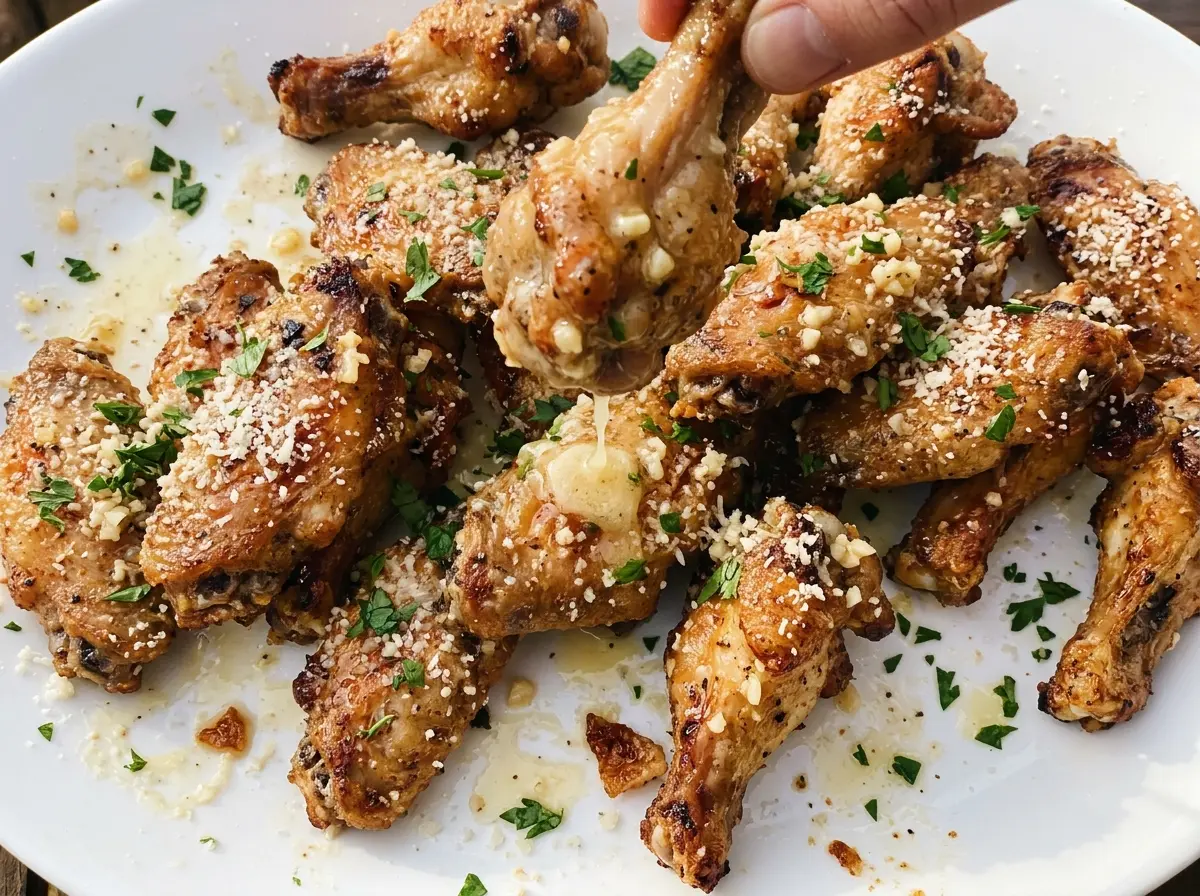
The wings come off the rack with browned, blistered skin, and that’s when I reach for the garlic Parmesan coating. New Year’s Eve Garlic Parmesan Wings bring the crisp texture I want from a party wing without a pot of frying oil or a last-minute stovetop scramble. They’re baked on a rack so the heat can reach the undersides, then tossed while hot in buttery garlic and finely grated Parmesan.
I’ve found that the work starts before the wings ever reach the oven: dry them well, then coat them evenly with aluminum-free baking powder. That light coating helps the skin brown as the wings bake, while the rack gives moisture somewhere to go instead of leaving the bottoms soft. The garlic only needs a brief turn in melted butter; let it become fragrant, not brown, and the finished coating stays savory instead of bitter. Set out a big bowl for tossing, and the wings are ready for the table while the Parmesan still clings to every crisp edge.
Kitchen Note
Toss the wings as soon as they’re hot from the oven, before the butter and Parmesan mixture starts to firm up. A large bowl gives you room to coat them without knocking off the crisp skin.
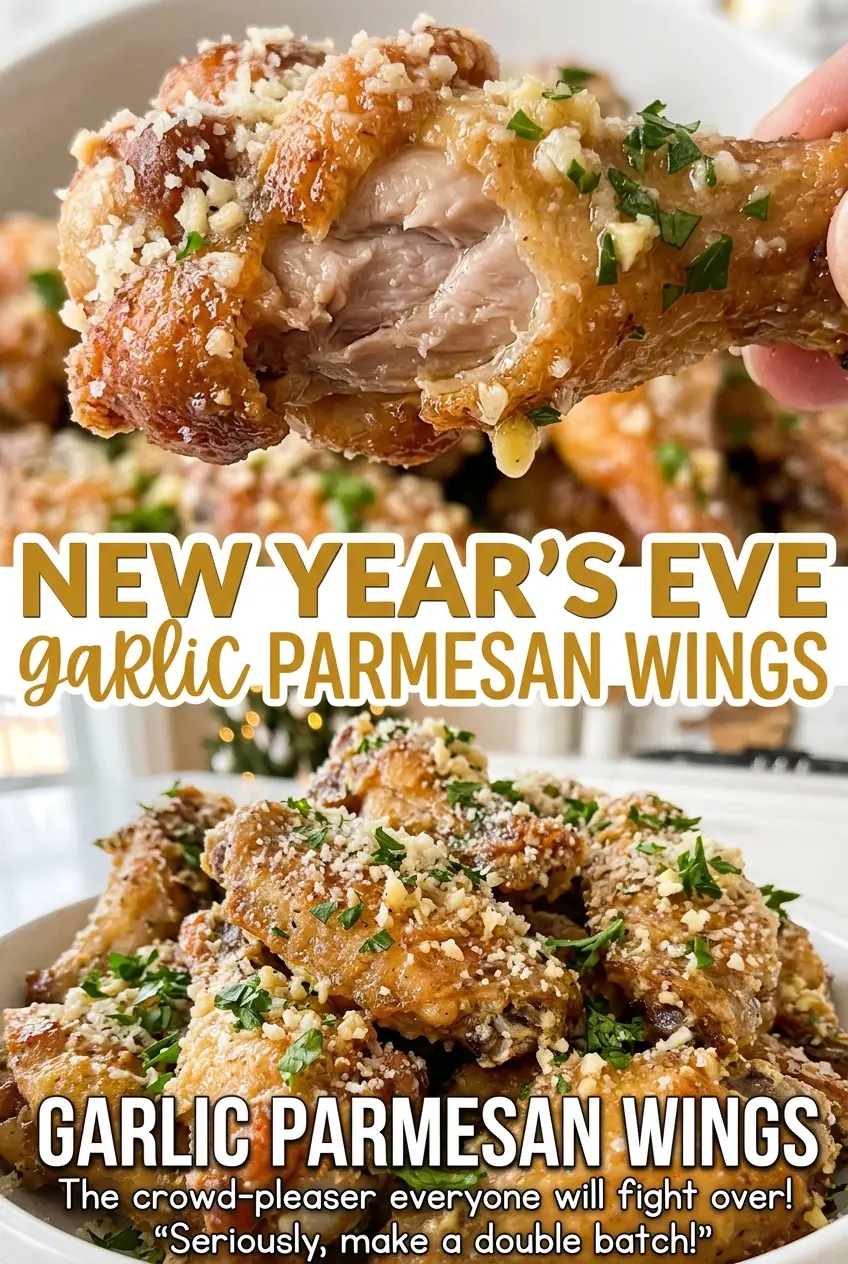
Save these New Year’s Eve Garlic Parmesan Wings for crisp oven-baked skin, a quick garlic butter coating, and Parmesan in every bite.
Why Baking Powder Helps Chicken Skin Crisp Without a Fryer
Wings release moisture as they cook, and a wet surface browns slowly. Patting them very dry before seasoning gives the baking powder a better chance to help dry the skin as it roasts. It’s a small step, but it’s what separates crisp skin from wings that are browned in spots and soft underneath.
The rack matters just as much as the coating. When wings sit directly on a pan, their undersides are in contact with the surface and the moisture they release. A wire rack lifts them above the foil, letting hot air move around the pieces. Arrange them in one layer, with a little space between them; crowded wings trap steam and brown less evenly. The goal isn’t a thick, floury crust. You’re looking for well-browned skin that stays light enough for the butter and Parmesan to cling to it.
What Makes the Garlic Parmesan Coating Cling to the Wings
- Party-cut chicken wings — Flats and drumettes cook at a similar pace and are easy to coat evenly. Fresh wings work well, and frozen wings are fine once fully thawed and patted dry. Whole wings can be separated at the joints, but use party-cut pieces for the most consistent timing.
- Aluminum-free baking powder — It helps the surface brown and crisp without adding a noticeable taste. Don’t swap in baking soda; it’s much stronger and can leave an unpleasant soapy flavor. There isn’t a direct substitute for the same effect, so leaving it out means giving up some crispness.
- Unsalted butter and fresh garlic — Unsalted butter lets the seasoning on the wings stay balanced, while minced fresh garlic gives the coating its aromatic, savory base. If you need a shortcut, use jarred minced garlic in place of fresh; keep the brief cooking time and stop as soon as it smells fragrant.
- Finely grated Parmesan — Fine shreds disperse through the butter and cling to the wings better than thick, coarse shavings. Grating a wedge gives the coating the best texture; pre-grated Parmesan is convenient, but the shaker-style shelf-stable kind won’t melt and cling in quite the same way. Pecorino Romano can stand in for a sharper, saltier finish.
- Fresh parsley — It adds a clean, herbal lift to the rich coating. Chop it just before mixing so it stays bright; finely sliced chives also work, with a more savory, onion-like note.
Getting the Skin Crisp Before the Garlic Butter Goes On
Set Up the Rack for Airflow
Heat the oven to 425°F and set the oven rack in the center position. Line a rimmed baking sheet with foil, place a wire rack on top, and coat the rack with nonstick cooking spray. The foil catches drips, while the rack keeps the wings lifted as they roast. If the rack isn’t coated, the skin can stick when you flip the wings.
Season the Wings Evenly
Pat the party-cut wings very dry before they go into a large bowl. Add the baking powder, kosher salt, and black pepper, then toss until every piece has a light, even coating. Look for a thin dusting rather than clumps of powder; clumps can leave pale patches on the skin. Keep the wings dry during this step instead of rinsing them.
Bake, Flip, and Check the Thickest Pieces
Arrange the wings in a single layer on the prepared rack, leaving space around each piece. Bake for 45 to 55 minutes, flipping them halfway through, until they’re browned and crisp. Start checking the thickest parts toward the end of the baking window; they need to reach 165°F. If the wings are still pale, give them more time rather than pulling them before the skin has browned.
Cook the Garlic Gently, Then Toss
During the last few minutes of baking, melt the butter in a small saucepan over medium-low heat. Stir in the minced garlic and cook for 30 to 60 seconds, just until fragrant; browned garlic turns bitter, so take the pan off the heat before it darkens. Stir in the Parmesan and parsley, then pour the coating over the hot wings in a large bowl. Toss promptly until the butter and cheese are spread over the pieces.
Small Changes for a Different Kind of Garlic Parmesan Wing
Make the Coating Dairy-Free
Use dairy-free butter and finely grated vegan Parmesan in place of the butter and Parmesan. The coating will be a little less rich and may not melt quite as smoothly, but tossing it with the wings while they’re hot helps it spread.
Add a Little Heat
Stir a pinch of red pepper flakes into the butter along with the garlic. The flakes bring a slow, warm kick without covering up the Parmesan or fresh garlic; add more only if you want the heat to be noticeable in every bite.
Storage and Reheating
- Refrigerator: Store cooled wings in an airtight container for 3 to 4 days. The skin softens as the wings sit, and the Parmesan coating firms up.
- Freezer: Freeze in a single layer until solid, then transfer to a freezer-safe container for up to 2 months. The wings remain usable, but the skin won’t be as crisp after thawing.
- Reheating: Arrange the wings on a rack over a baking sheet and warm them in a 350°F oven until steaming hot throughout. Watch the garlic and Parmesan; high heat can darken the coating before the centers are warm.
Questions That Come Up When Baking Garlic Parmesan Wings
New Year's Eve Garlic Parmesan Wings
Ingredients
Equipment
Method
- Preheat the oven to 425°F.
- Place an oven rack in the center position.
- Line a rimmed baking sheet with foil.
- Set a wire rack on top of the baking sheet and coat the rack with nonstick cooking spray.
- In a large bowl, toss the wings with the baking powder, salt, and pepper until evenly coated.
- Arrange the wings in a single layer on the rack.
- Bake for 45 to 55 minutes, flipping halfway through, until browned and crisp and the thickest parts reach 165°F.
- During the last few minutes of baking, melt the butter in a small saucepan over medium-low heat.
- Add the garlic and cook for 30 to 60 seconds until fragrant but not browned.
- Take the saucepan off the heat and stir in the Parmesan and parsley.
- Transfer the hot wings to a large bowl, pour the garlic Parmesan coating over them, and toss to coat before serving.