
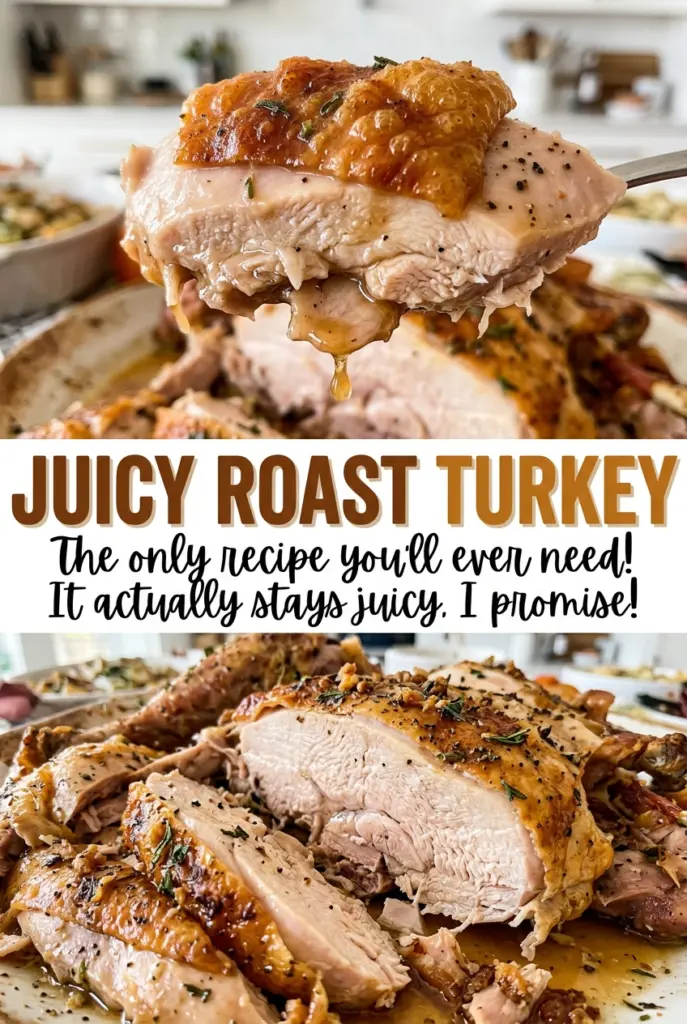
Juicy Roast Turkey
When the turkey is nearly done, the skin should look deeply golden and the kitchen will smell of thyme, sage, and roasting garlic. I built this Juicy Roast Turkey around…

By Ava
•
•
Reading time: 9 min
Tip: save now, make later.
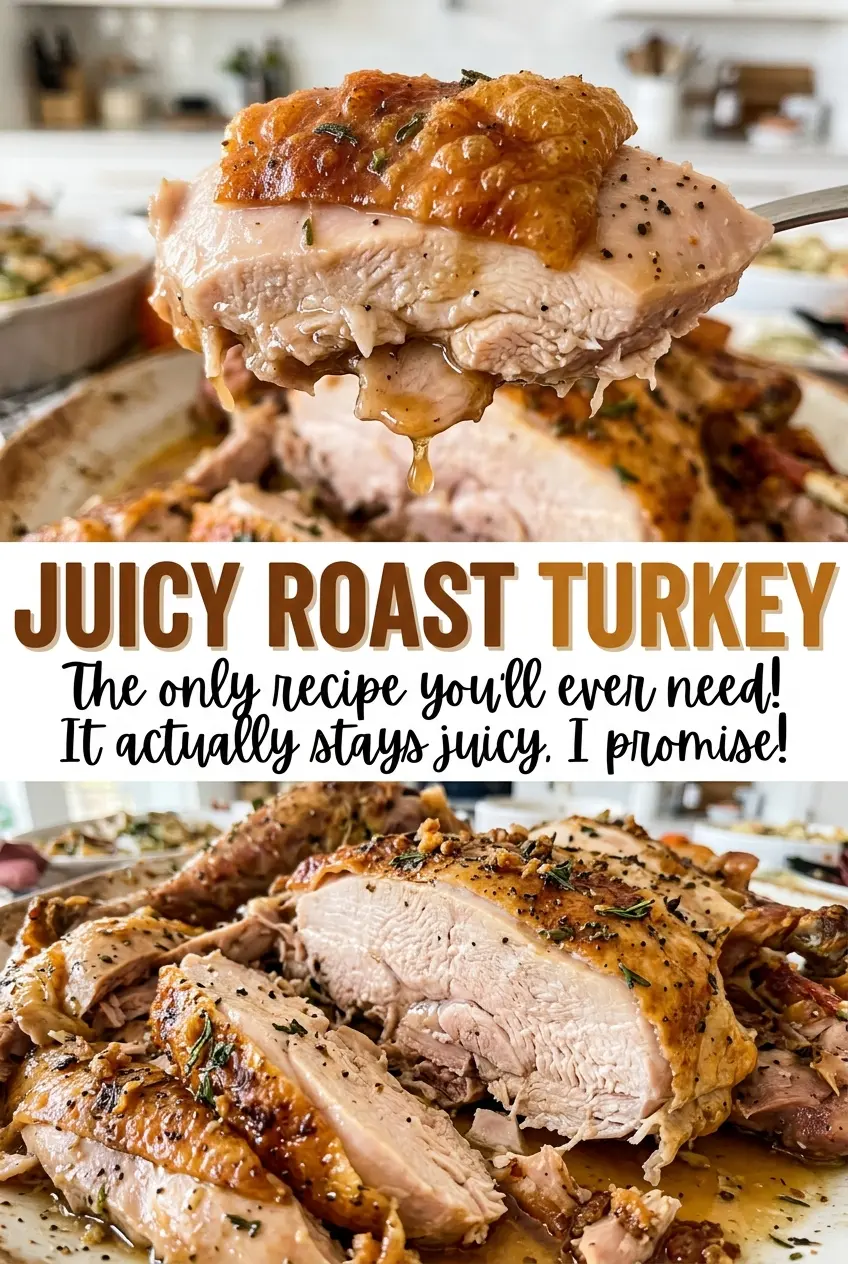
When the turkey is nearly done, the skin should look deeply golden and the kitchen will smell of thyme, sage, and roasting garlic. I built this Juicy Roast Turkey around a long, uncovered chill and a generous layer of herb butter, so the bird gets seasoned before it ever goes into the oven.
Getting the butter beneath the skin makes a difference you can taste, especially across the breast, where the meat is lean. I work it in gently over both the breast and thighs, then spread the rest over the outside. The lemon, onion, and garlic tucked into the cavity lend a soft aromatic note without turning the turkey into a stuffed bird.
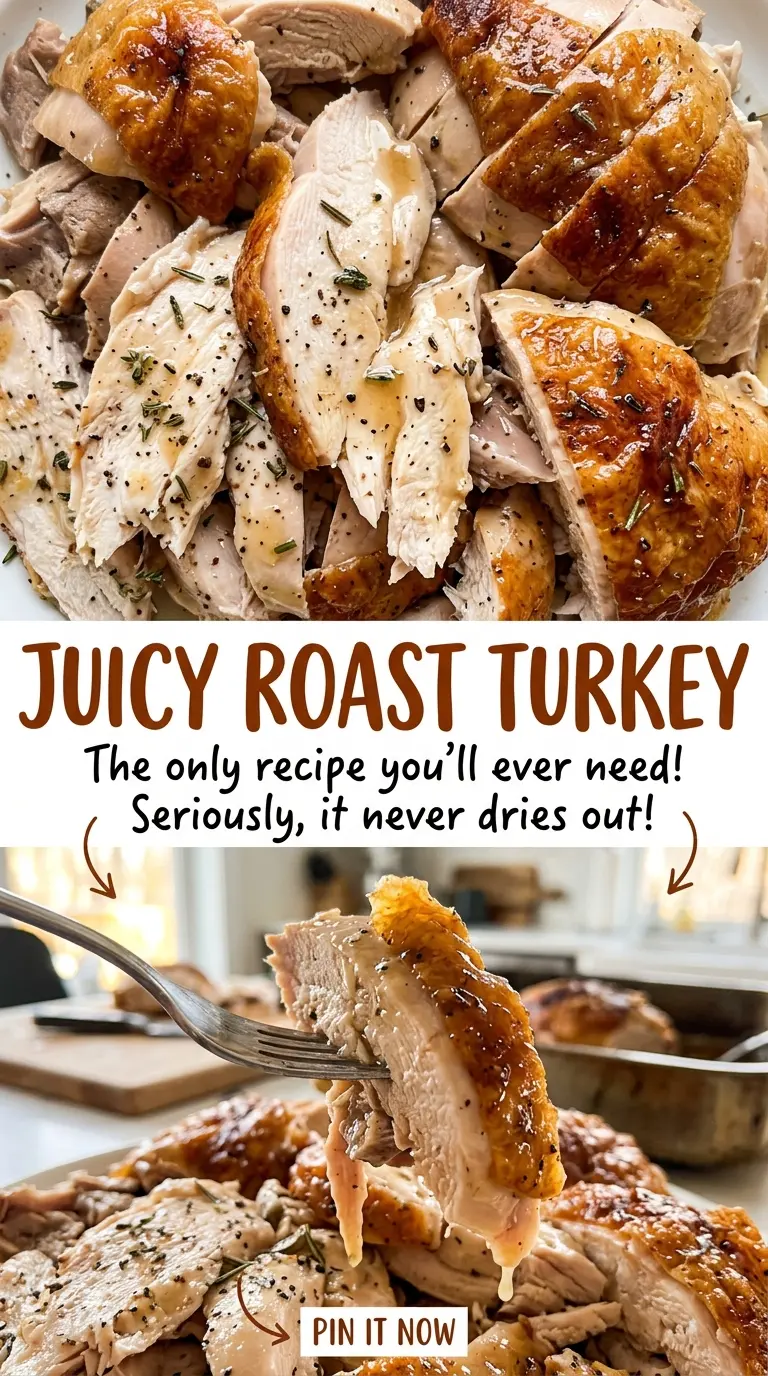
Give the roast time to rest before carving. That pause makes the juices less likely to run straight onto the board, and it gives you room to finish the rest of the meal. The result is tender turkey with fragrant herbs and a browned, buttery outside.
Kitchen Note
The skin over the breast and thighs is delicate, so loosen it with your fingers rather than tugging hard. If it resists, ease your hand forward a little at a time; keeping the skin intact gives the herb butter room to spread.
Save this Juicy Roast Turkey for a tender, herb-buttered centerpiece with golden skin and a make-ahead dry brine.
Why the Uncovered Chill Is More Than Just Seasoning
Salting the turkey and leaving it uncovered in the refrigerator for 24 to 36 hours does two jobs. The salt seasons the meat, while the uncovered time lets moisture on the skin evaporate. Drier skin has a better chance of turning golden in the oven instead of staying damp and soft.
Use a rack set inside the roasting pan so air can move around the bird, and keep the turkey breast-side up. The timing matters: a short rest won’t give the skin the same chance to dry, while going beyond the recipe’s window isn’t necessary. This step also gets a big part of the work done before roast day, so you’re not trying to season and butter a bird in a rush. Patting the turkey dry first gives the salt a clean surface to cling to.
What the Turkey, Butter, and Aromatics Each Bring
- Whole turkey — Choose a fully thawed bird in the recipe’s 12- to 14-pound range, with the neck and giblets removed. A good-quality turkey matters, but the most useful detail is that it is completely thawed so you can season the cavity and reach the meat evenly.
- Diamond Crystal kosher salt — Its light, flaky crystals make it easier to distribute over a large bird. Other salts have different crystal sizes, so don’t swap them spoon-for-spoon without adjusting; using Diamond Crystal keeps the seasoning consistent.
- Unsalted butter, thyme, and sage — Softened butter carries the chopped herbs and spreads beneath the skin. Fresh thyme and sage have a brighter, more distinct aroma here than dried herbs. The butter doesn’t need to be a specialty brand; it does need to be soft enough to mix and spread.
- Onion, lemon, and garlic — These aromatics perfume the cavity as the turkey roasts. Use fresh garlic and a lemon with an unblemished peel, but there’s no need to seek out unusually large or expensive produce.
- Freshly ground black pepper — Grinding it just before seasoning gives the turkey a livelier pepper aroma. Standard whole peppercorns work well; a specialty pepper isn’t needed.
How to Roast the Bird Without Rushing the Finish
Season and Chill the Turkey
Pat the fully thawed turkey dry, then season the cavity and all over the skin with the salt and pepper. Set it breast-side up on a rack in a 16-inch roasting pan and refrigerate it uncovered for 24 to 36 hours. Keep the bird level so it stays in place as it chills. Don’t cover it during this step; the exposed skin is part of the method.
Make the Herb Butter and Work It Under the Skin
Take the turkey out of the refrigerator 30 minutes before roasting and heat the oven to 325°F. Mix the softened butter with the chopped thyme and sage until the herbs are spread evenly through it. Gently loosen the skin over the breast and thighs, then spread the herb butter under the skin and over the outside. If the butter is too firm to spread, let it soften a little longer rather than pressing hard against the skin.
Add the Aromatics to the Cavity
Put the quartered onion and lemon, along with the halved head of garlic, into the cavity. Set the turkey breast-side up on the rack in the roasting pan. Keep the aromatics in the cavity rather than treating them as stuffing; the turkey roasts with space around them and the directions are timed for this unstuffed preparation.
Roast and Check Both Cuts of Meat
Roast for 3 to 3 1/2 hours, beginning to check after 2 1/2 hours. Insert a thermometer into the thickest part of the breast and the innermost thigh, taking care not to touch bone; both spots need to read 165°F. If the breast is ready before the thigh, keep roasting and check again rather than relying on color alone. The thermometer reading, not the clock or the skin color, tells you when the turkey is done.
Rest Before Carving
Transfer the turkey to a carving board and loosely tent it with foil. Let it rest for 30 to 45 minutes before carving; cutting too soon sends more of the juices onto the board. Keep the foil loose rather than wrapping it tightly, so the skin doesn’t get trapped in a pocket of steam. Use the resting time to clear space for carving and serving.
Three Changes That Still Let the Turkey Roast Well
Make the Herb Butter Dairy-Free
Replace the unsalted butter with the same quantity of unsalted plant-based butter, then mix in the thyme and sage as usual. Choose a stick-style product rather than a soft tub spread; it holds together better under the skin. The herbal aroma stays, though the browned skin may taste a little less buttery.
Give the Herbs a Rosemary Note
Replace the thyme with finely chopped fresh rosemary and keep the sage. Rosemary is more piney and assertive, so chop it finely to distribute it through the butter and avoid large, sharp pieces under the skin. The result is a more pronounced savory aroma.
Trade the Lemon for Orange
Use a quartered orange in place of the lemon in the cavity, keeping the onion and garlic. Orange gives the aroma a sweeter citrus note and softens the lemon’s sharper edge. The bird roasts the same way, with no change to the butter or herbs.
Storage and Reheating
- Refrigerator: Refrigerate leftover turkey within 2 hours and use it within 3 to 4 days. The breast meat firms up as it chills, so slice it before storing for easier reheating.
- Freezer: Freeze carved portions in airtight containers or freezer bags for up to 3 months. Removing as much air as possible helps limit freezer burn.
- Reheating: Warm sliced turkey covered in a baking dish with a small splash of water until hot throughout. Leaving it uncovered is the quickest way to dry out the breast.
Questions That Come Up Before the Turkey Goes in the Oven
Juicy Roast Turkey
Ingredients
Equipment
Method
- Pat the turkey dry and season the cavity and all over the skin with the salt and pepper.
- Set it breast-side up on a rack in a 16-inch roasting pan and refrigerate uncovered for 24 to 36 hours.
- Take the turkey out of the refrigerator 30 minutes before roasting.
- Heat the oven to 325°F.
- Mix the butter, thyme, and sage.
- Gently loosen the skin over the breast and thighs and spread the herb butter under the skin and over the outside.
- Put the onion, lemon, and garlic in the cavity, then set the turkey breast-side up on the rack.
- Roast for 3 to 3 1/2 hours, beginning to check after 2 1/2 hours, until a thermometer inserted into the thickest part of the breast and the innermost thigh, without touching bone, reads 165°F.
- Transfer the turkey to a carving board, loosely tent it with foil, and rest for 30 to 45 minutes before carving.