

Cornbread Sausage Dressing
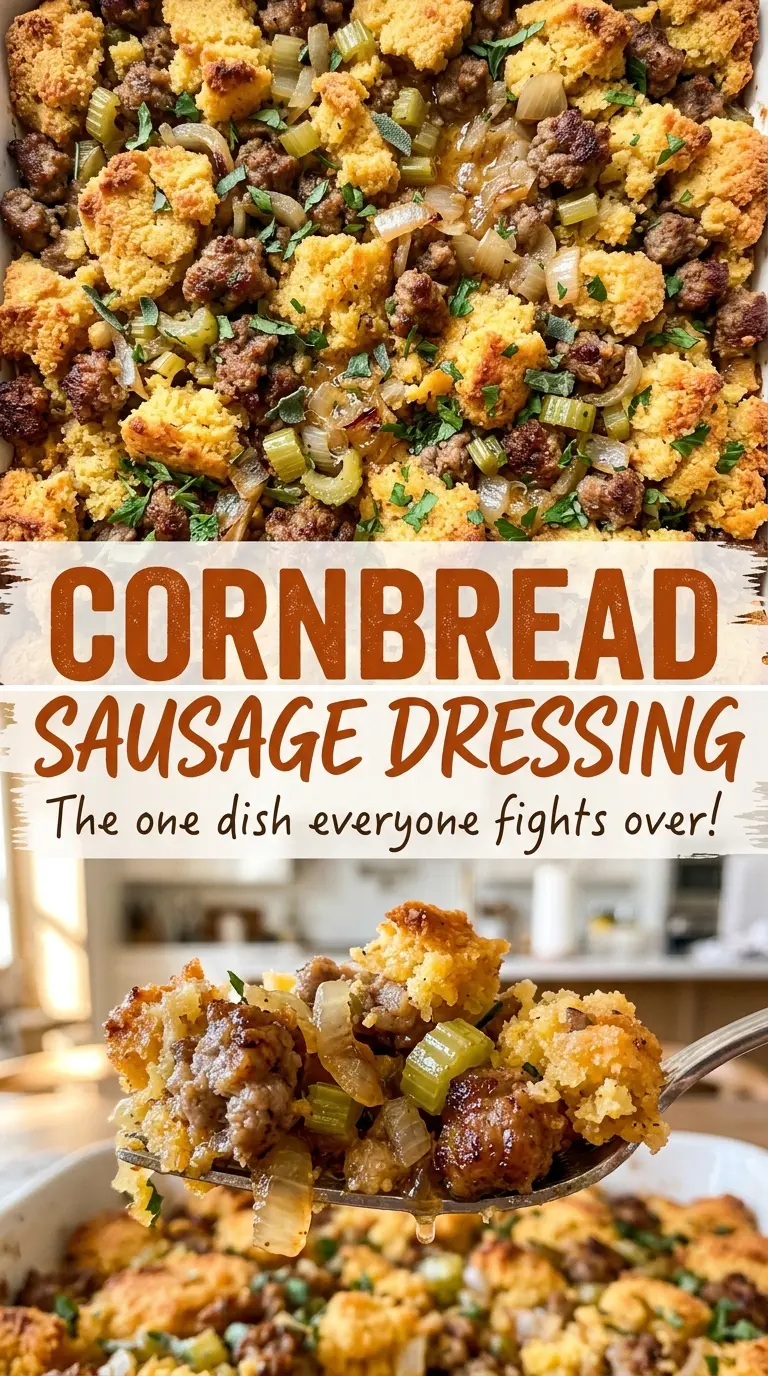
When the sausage starts browning in the skillet, it releases the savory smell that tells me this dressing is going to have plenty of character before it even reaches the…

By Ava
•
•
Reading time: 9 min
Tip: save now, make later.
When the sausage starts browning in the skillet, it releases the savory smell that tells me this dressing is going to have plenty of character before it even reaches the oven. I like that the cornbread is made from scratch here: it brings a tender, slightly grainy crumb, while the dried bread cubes give each scoop enough structure to hold together.
I bake the cornbread first, then crumble it into a large bowl with the cooked sausage and vegetables. The broth and eggs bring the two kinds of bread together without turning the whole dish into a uniform paste. Once the top is golden and the center has set, the dressing rests briefly so it serves in generous, warm pieces.

Kitchen Note
I keep the skillet after browning the sausage and melt the remaining butter right in it for the onion and celery. There’s no need to wash it between steps, and the same pan keeps the cooking moving.
Save this cornbread sausage dressing for its tender cornbread crumb, savory sausage, and golden baked top.
Why This Dressing Needs Two Kinds of Bread
Using only cornbread can make a dressing that’s tender but difficult to serve neatly. Plain dried bread cubes bring a firmer, more absorbent texture, so the finished bake has some structure beneath its soft cornbread crumb. Each kind of bread has a different job, and neither has to take over the whole pan.
The broth and eggs help those textures come together. Broth moistens the cubes and crumbled cornbread, while the eggs set as the dressing bakes. Tossing the mixture until it’s evenly moistened matters more than stirring it until it looks smooth; you want the different pieces to stay visible. The result is a dressing with a cohesive center and a browned top, rather than a pan of uniform stuffing. Using plain dried cubes also gives you room for the sausage, sage, and thyme to season the whole dish without competing with extra herbs already on the bread.
What Each Bread and Binder Brings to the Pan
- Yellow cornmeal and all-purpose flour — Cornmeal gives the cornbread its distinct texture; flour keeps the crumb from being too coarse to crumble into the dressing. Standard grocery-store cornmeal works well. A much coarser grind will make a grainier cornbread, so stick with regular yellow cornmeal for the texture intended here.
- Buttermilk and eggs — Buttermilk brings moisture and a gentle tang to the cornbread, while the egg helps it hold together. Use fresh buttermilk; there’s no need for a specialty brand. The eggs in the dressing have a separate job, helping the broth-moistened mixture set as it bakes.
- Bulk breakfast sausage — Its seasoning is part of the dressing’s flavor, so choose sausage you like eating on its own. Bulk sausage is convenient to break up as it browns. A hot breakfast sausage works as a direct flavor change; see the variation below.
- Yellow onion, celery, sage, and thyme — Finely chopped vegetables soften into the dressing instead of leaving large crisp pieces. Rubbed sage and dried thyme give the dish its familiar savory aroma. Ordinary dried herbs are right for this preparation; fresh herbs would change the balance and texture.
- Plain dried bread cubes — Their dryness helps them take up the broth without starting out soft. Choose unseasoned cubes so you control the herbs and salt in the pan. Seasoned cubes may bring extra salt and flavors that compete with the sausage and sage.
- Low-sodium chicken broth — Broth moistens both breads, and a low-sodium version leaves more control over the overall seasoning. The eggs help bind that moisture into the baked dressing rather than leaving it loose.
- Unsalted butter — Butter enriches the cornbread and gives the onion and celery a little fat to soften in. Use it divided as listed; ordinary unsalted butter is all you need.
Build the Dressing in Stages, Then Let the Oven Set It
Bake the Cornbread Until the Center Tests Clean
Heat the oven to 400°F and grease an 8-inch square baking pan with cooking spray. Whisk the cornmeal, flour, sugar, baking powder, and 1 teaspoon of the salt in a large bowl. In another bowl, whisk the buttermilk, 1 egg, and 4 tablespoons of melted butter, then stir the wet mixture into the dry ingredients just until combined. Spread the batter in the pan and bake for 20 to 25 minutes, until golden and a toothpick inserted in the center comes out clean; let it cool completely in the pan, about 30 minutes, before crumbling it into a large bowl.
Brown the Sausage in a Wide Skillet
Heat a 12-inch skillet over medium heat and cook the bulk sausage for 8 to 10 minutes, breaking it into small pieces as it browns. Look for browned bits throughout, not one large compact layer. Cook it to 160°F, then transfer it to the bowl with the crumbled cornbread. Breaking it up as it cooks gives the dressing a more even distribution of sausage.
Soften the Vegetables Before Seasoning
Melt the remaining 1 tablespoon of butter in the same skillet. Add the finely chopped onion and celery, then cook for 6 to 8 minutes, until softened. Stir in the rubbed sage, dried thyme, black pepper, and remaining 1/2 teaspoon of salt. The vegetables should be tender rather than browned hard around the edges.
Toss the Breads and Moisten Them Evenly
Add the plain dried bread cubes and cooked vegetables to the bowl with the cornbread and sausage, then toss to combine. In a separate bowl, whisk the chicken broth with the 2 eggs. Pour that mixture over the bread and toss until everything is evenly moistened; turn the mixture from the bottom of the bowl so the liquid doesn’t collect in one spot. Transfer it to a greased 9×13-inch baking dish.
Cover First, Then Brown the Top
Heat the oven to 350°F if it’s no longer at that temperature. Cover the dish with foil and bake for 25 minutes, then uncover it and bake for another 20 to 25 minutes. The top should be golden, and the center should reach 160°F. Rest the dressing for 10 minutes before serving so it can settle into pieces instead of falling apart as soon as you scoop it.
Two Changes That Keep the Cornbread Dressing’s Character
Use Hot Breakfast Sausage for More Heat
Swap the mild bulk breakfast sausage for the same amount of hot bulk breakfast sausage. Keep the remaining ingredients and method the same. The dressing gets a pepperier, more assertive sausage flavor without changing its bread-and-herb base.
Make a Dairy-Free Cornbread Base
Use unsalted plant-based butter in place of the butter, and replace the buttermilk with unsweetened soy milk stirred with lemon juice and rested for 5 minutes. Choose a bulk breakfast sausage made without dairy as well. The cornbread will be a little less rich, but the acidic milk substitute keeps it tender; the eggs and remaining dressing method stay the same.
Storage and Reheating
- Refrigerator: Refrigerate leftovers within 2 hours and keep them covered for 3 to 4 days. The top softens as it sits.
- Freezer: Freeze cooled portions in airtight containers for up to 2 months. Thaw overnight in the refrigerator for more even reheating.
- Reheating: Cover and reheat in a 350°F oven until the center reaches 165°F. Uncover near the end if you want to bring back some crispness; leaving it uncovered the whole time can dry the dressing out.
Questions That Come Up Before the Dressing Goes in the Oven
Cornbread Sausage Dressing
Ingredients
Equipment
Method
- Preheat the oven to 400°F.
- Grease an 8-inch square baking pan with nonstick cooking spray.
- Whisk the cornmeal, flour, sugar, baking powder, and 1 teaspoon of the salt in a large bowl.
- Whisk the buttermilk, 1 egg, and 4 tablespoons melted butter in a second bowl.
- Stir the wet mixture into the dry ingredients just until combined.
- Spread the batter in the pan.
- Bake for 20 to 25 minutes, until golden and a toothpick inserted in the center comes out clean.
- Cool the cornbread completely in the pan, about 30 minutes.
- Crumble the cornbread into a large bowl.
- Preheat the oven to 350°F.
- Grease a 9x13-inch baking dish with cooking spray.
- Cook the sausage in a 12-inch skillet over medium heat for 8 to 10 minutes, breaking it up, until browned and cooked to 160°F.
- Transfer the sausage to the bowl with the crumbled cornbread.
- Melt the remaining 1 tablespoon butter in the skillet.
- Add the onion and celery, and cook for 6 to 8 minutes until softened.
- Stir in the sage, thyme, pepper, and remaining 1/2 teaspoon salt.
- Add the bread cubes and cooked vegetables to the bowl and toss to combine.
- Whisk the broth and 2 eggs in a separate bowl.
- Pour the broth mixture over the bread mixture and toss until evenly moistened.
- Transfer the mixture to the prepared baking dish and cover with foil.
- Bake for 25 minutes.
- Uncover and bake for 20 to 25 minutes, until golden on top and the center reaches 160°F.
- Rest for 10 minutes before serving.