
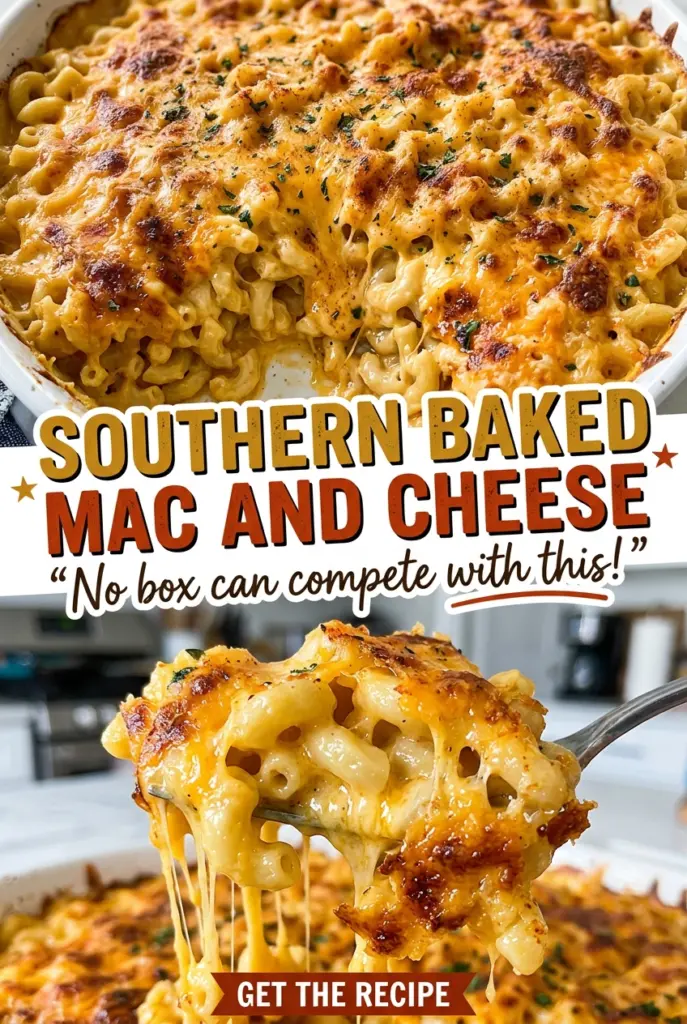
Southern Baked Mac and Cheese
The edges start bubbling before the middle of this casserole has finished setting, and that’s exactly what I watch for as it bakes. Southern baked mac and cheese isn’t a…

By Ava
•
•
Reading time: 9 min
Tip: save now, make later.
The edges start bubbling before the middle of this casserole has finished setting, and that’s exactly what I watch for as it bakes. Southern baked mac and cheese isn’t a stovetop cheese sauce poured over noodles; it’s an oven-baked dish with a tender, custardy center and a golden top. The first time I made it, I expected the texture to be loose and saucy. Instead, the eggs and milk set around the pasta, so each scoop holds together while staying soft.
I cook the elbows just shy of al dente because they keep cooking in the oven. Then I layer the macaroni with both cheeses before pouring the egg mixture evenly over everything. That gives the cheese a place throughout the casserole, not just a blanket on top. Once the edges bubble and the center reaches 160°F, a short rest makes the slices easier to serve, with plenty of melted cheese in every bite.
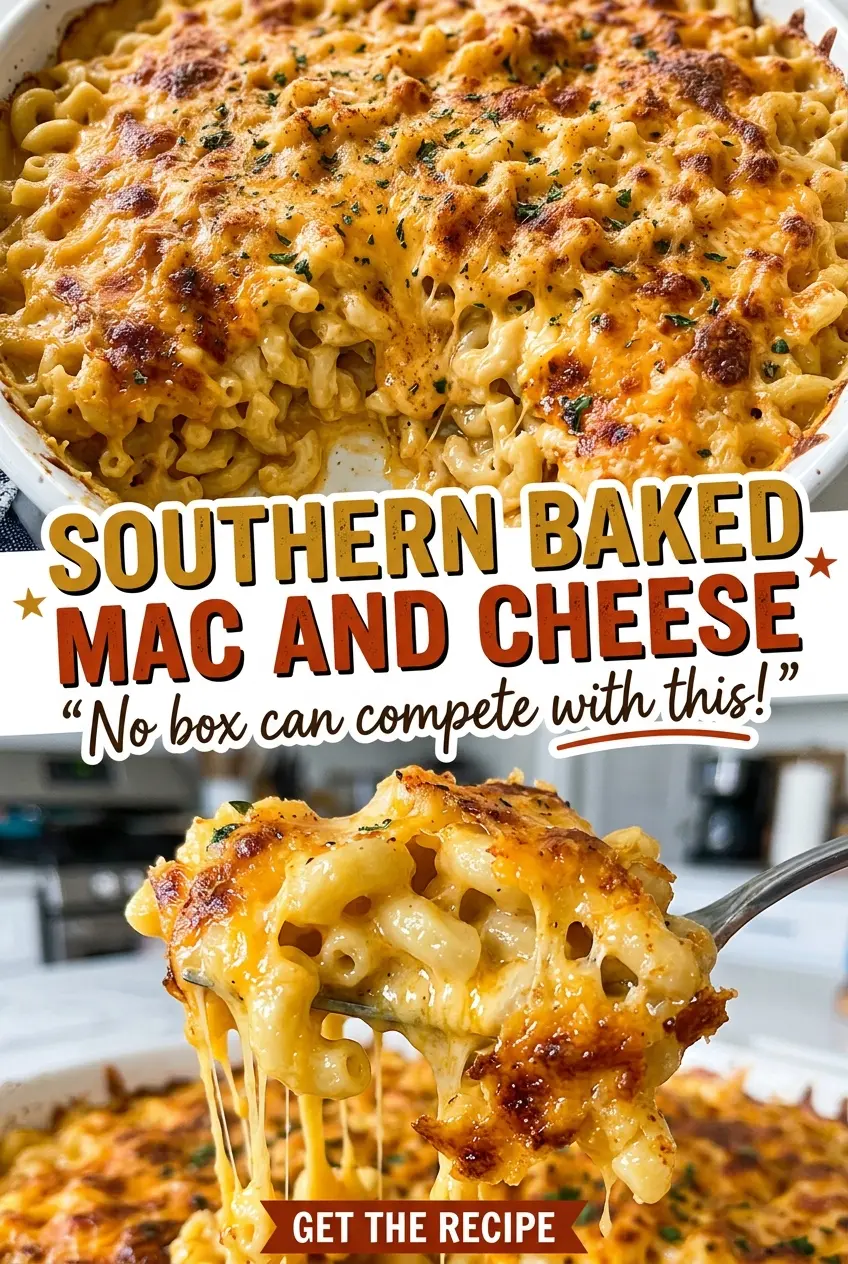
Kitchen Note
Toss the drained macaroni with the melted butter while it’s still warm. That light coating helps the elbows stay separate and makes them easier to spread into even layers.
Save Southern Baked Mac and Cheese for a bubbling, golden-topped casserole with cheese layered all the way through.
Why the Cheese Belongs Between the Macaroni, Not Only on Top
A thick layer of cheese on top looks inviting, but it leaves the middle of a casserole dependent on whatever melts down from the surface. Here, splitting the cheese between two layers gives the pasta more even coverage. The lower layer melts into the macaroni underneath it, and the upper layer meets the custard and browns as the casserole bakes. You get a little of both in each serving: creamy cheese among the elbows and a golden, bubbly top.
The egg mixture is poured over the assembled layers, rather than stirred into the pasta before it goes into the dish. That lets it travel through the spaces between the macaroni and set as it bakes. Spread the layers out across the pan instead of piling them in the middle, then pour slowly over the whole surface. The aim is an even casserole, not a dry, cheesy cap with a soft center underneath. It’s a small difference in assembly, but it’s what makes this baked version feel like one cohesive dish.
What the Cheddar, Monterey Jack, and Custard Each Bring
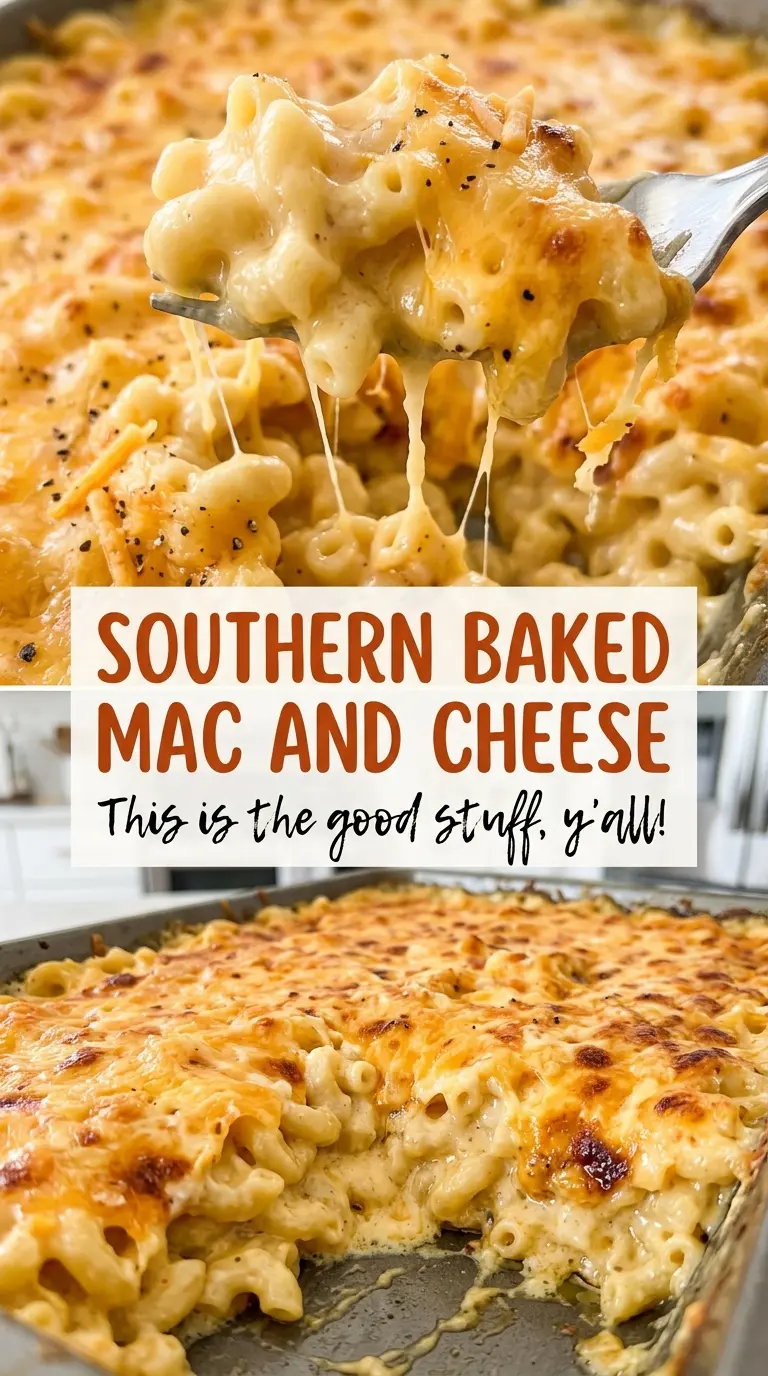
- Sharp cheddar — This brings the familiar pronounced cheese flavor. A block of sharp cheddar is a good choice; grate it yourself so it distributes easily through the layers. Mild cheddar works if that’s what you have, but the finished dish will taste less sharp.
- Monterey Jack — Jack melts smoothly and softens the cheddar’s sharper edge. Pepper Jack is a straightforward one-for-one swap if you’d like a gentle chile kick; the casserole will taste spicier and less mellow.
- Evaporated milk and whole milk — Evaporated milk adds concentrated dairy richness, while whole milk keeps the custard fluid enough to pour. Don’t replace the evaporated milk with the same volume of regular milk; the mixture will be thinner and less rich. If needed, 2% milk can stand in for the whole milk, though the casserole will be a little less creamy.
- Eggs — These are what help the milk mixture set around the macaroni. They aren’t just there for richness, so leaving them out changes the structure. Whisk until the whites and yolks are fully combined for an even custard.
- Elbow macaroni and dry mustard — Elbows hold their shape and leave plenty of room for cheese and custard. Another short pasta can work in the same amount, but the shape will change how the casserole scoops. Dry mustard adds a quiet savory tang; it doesn’t make the dish taste like prepared mustard.
Getting the Pasta and Custard to Bake Evenly
Butter the baking dish first
Heat the oven to 350°F and grease a 9×13-inch baking dish with the softened butter. Coat the base and corners so the macaroni doesn’t cling as the cheese melts. Set the dish aside while you cook the pasta. Having it ready makes it easier to move straight from draining to layering.
Stop the macaroni just shy of al dente
Bring the water to a boil in a large pot, add the macaroni and salt, and cook it until it’s 2 minutes shy of al dente. The elbows should still have a slight firmness at the center; fully tender pasta can turn soft during baking. Drain it well, then toss it with the melted butter. Excess water left on the noodles will dilute the custard.
Whisk the custard and build the layers
Whisk the eggs with both milks, the remaining salt, black pepper, and dry mustard until the mixture looks uniform. Spread half the macaroni in the dish, scatter half of each cheese over it, then repeat with the rest. Pour the egg mixture slowly and evenly over the top so it can settle through the casserole. If one section gets much more liquid than another, the bake will be less even.
Bake until the center is set, then let it rest
Bake for 35 to 45 minutes, until the center reaches 160°F and the top is golden with bubbling edges. The edges can look ready before the middle has finished setting, so check the center rather than relying on color alone. Take the casserole out once both cues are there. Rest it for 10 minutes before serving; the custard firms up a little and the portions hold together better.
Three Changes That Keep the Casserole Familiar
Make it gluten-free with elbow-shaped pasta
Replace the macaroni with an equal weight of gluten-free elbow pasta. Cook it until 2 minutes shy of al dente, using the package timing as a guide; gluten-free brands vary, and overcooked pasta is more likely to soften in the casserole. The flavor stays close to the original, though the texture depends more on the brand.
Give the cheese a little heat
Use Pepper Jack in place of the Monterey Jack. It melts into the same cheese layers but brings a noticeable chile warmth, so this version is less mild. Keep the sharp cheddar for its stronger, classic cheese flavor.
Add a subtle smoky note
Swap part of the sharp cheddar for smoked cheddar, keeping the total cheese amount the same. The smoke comes through in the finished casserole, so use a partial swap rather than replacing all the sharp cheddar if you want the familiar cheddar flavor to stay in front.
Storage and Reheating
- Refrigerator: Refrigerate leftovers within 2 hours and keep them for 3 to 4 days. The pasta softens as it sits, and the custard becomes firmer when chilled.
- Freezer: Freeze portions in airtight containers for up to 2 months. Thaw in the refrigerator overnight; the texture may be a little softer after thawing.
- Reheating: Reheat covered in a 325°F oven with a small splash of milk until the center reaches 165°F. Leave it covered so the top doesn’t dry out before the middle is hot.
Questions I Get About This Baked Mac and Cheese
Southern Baked Mac and Cheese
Ingredients
Equipment
Method
- Heat the oven to 350°F.
- Grease a 9x13-inch baking dish with 1 tablespoon softened butter.
- Bring the water to a boil in a large pot.
- Add the macaroni and 1 tablespoon salt, and cook until 2 minutes shy of al dente.
- Drain the macaroni well.
- Toss the drained macaroni with the 2 tablespoons melted butter.
- In a large bowl, whisk the eggs, evaporated milk, whole milk, remaining 3/4 teaspoon salt, black pepper, and dry mustard until combined.
- Spread half the macaroni in the prepared dish.
- Scatter half of both cheeses over the macaroni.
- Repeat with the remaining macaroni and cheeses.
- Pour the egg mixture evenly over the top.
- Bake for 35 to 45 minutes, until the center reaches 160°F and the top is golden and bubbling at the edges.
- Let the casserole rest for 10 minutes before serving.