
Greek Salmon
The olive oil, lemon, and garlic hit the warm pan first, then the tomatoes start to soften around the salmon while the olives turn the cooking juices briny and bright.…

By Ava
•
•
Reading time: 8 min
Tip: save now, make later.
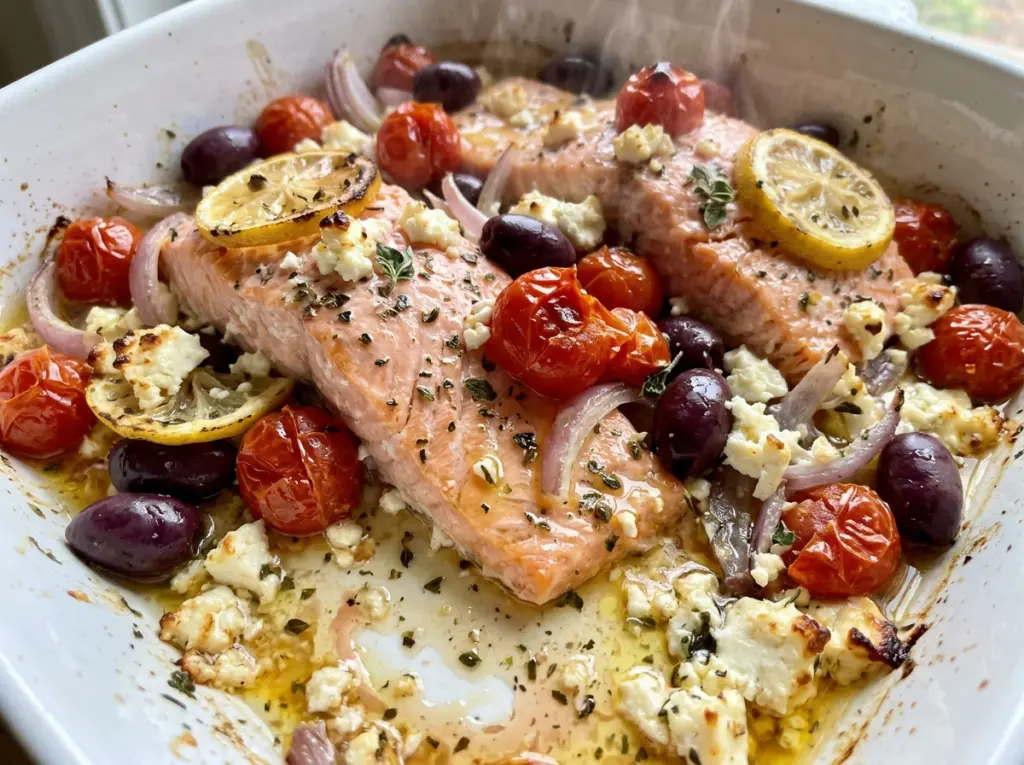
The olive oil, lemon, and garlic hit the warm pan first, then the tomatoes start to soften around the salmon while the olives turn the cooking juices briny and bright. Greek Salmon is the kind of one-dish dinner where the vegetables cook right alongside the fish, so there’s no separate sauce to make or extra pan to wash. I like that the lemon and oregano season everything without covering up the salmon’s flavor.
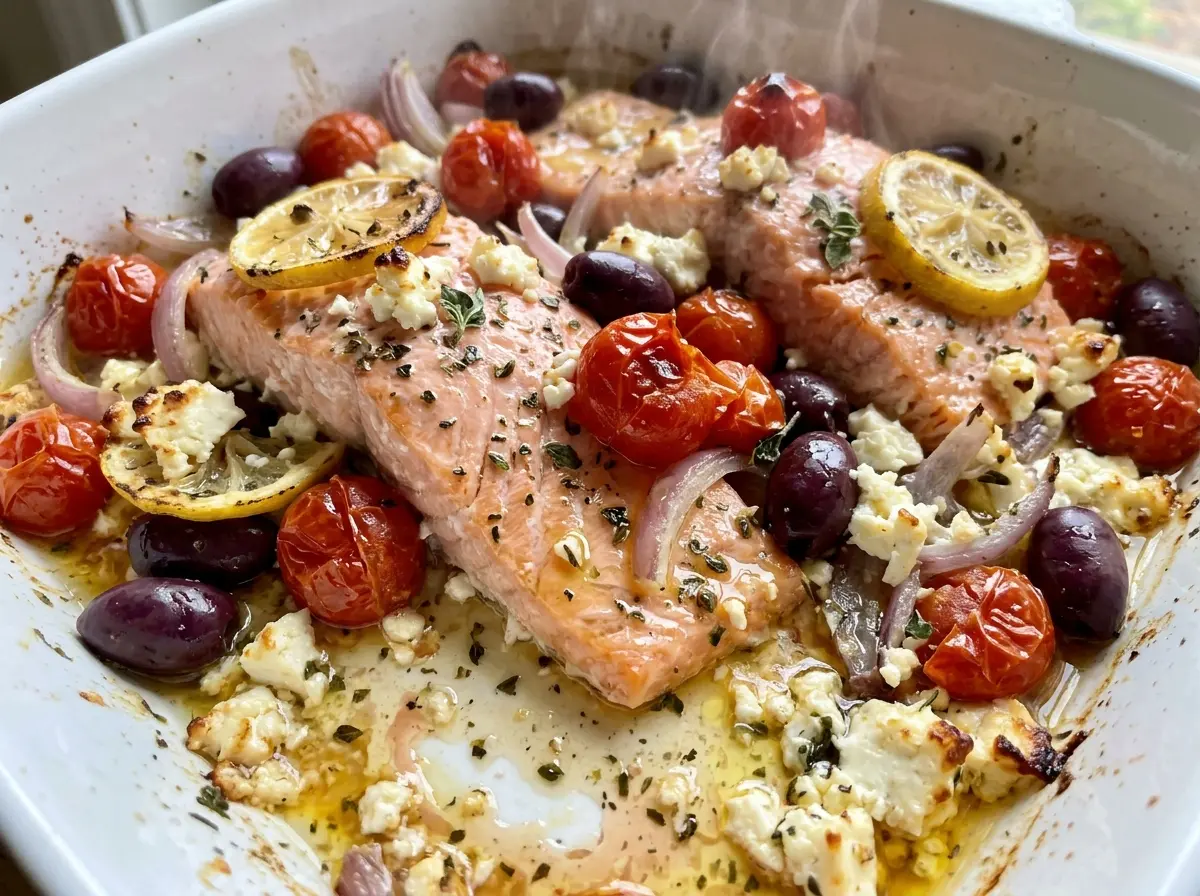
The placement matters more than it might seem: the salmon goes skin-side down, with the tomatoes and olives arranged around it rather than piled on top. That leaves the fish exposed to the oven’s heat while the vegetables soften in the same dish. Brush the lemon-and-oil mixture over the salmon before baking, then finish with feta and parsley for a salty, fresh contrast against the warm tomatoes.
Kitchen Note
I chop the parsley and crumble the feta before the salmon goes into the oven. The finishing step comes quickly once the fish is cooked, and having both ready means the salmon can be topped while it’s still hot.
Save this Greek Salmon for a bright, no-fuss dinner with lemony tomatoes, briny olives, and feta.
Why the Tomatoes and Olives Belong Beside the Salmon, Not on Top
It’s easy to think of the tomatoes and olives as a topping, but keeping them around the fish gives each part of the dish room to do its job. The salmon stays exposed so the oven can cook its surface evenly, while the cut tomatoes soften in the open spaces of the baking dish. The olives season those juices as they warm, and the lemon-and-oregano oil ties the fish and vegetables together.
Give the vegetables a little space rather than stacking them in a heap. A crowded pile holds more moisture in one spot and makes it harder to tell how the tomatoes are cooking. Arranged around the fillet, they’re easy to scoop alongside the fish at serving time, and you can see when they’ve softened. This layout also makes the 9×13-inch dish useful: there’s room for the salmon and for the vegetables to sit beside it, not over it.
The arrangement is especially helpful if your fillet is broad. Keep it centered as much as the dish allows, then distribute the tomatoes and olives around the edges. They don’t need to form a perfect border; just avoid covering the top of the fish.
What Gives This Greek Salmon Its Briny, Lemony Character
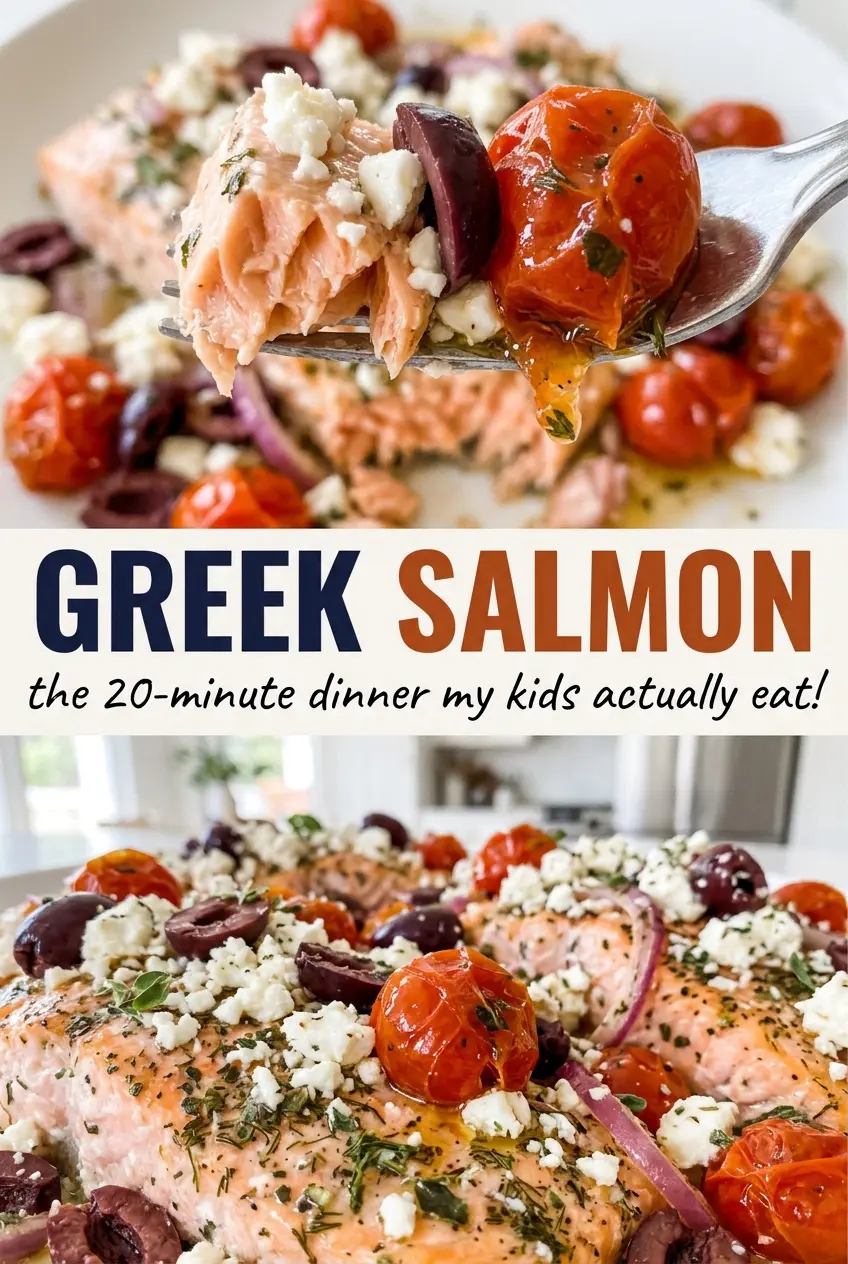
- Skin-on salmon — The skin helps the fillet hold together as it bakes in the dish. Choose a piece that looks moist and has a clean, mild smell; the freshest fish matters more here than paying extra for a particular label. Skinless salmon works too, though it’s more delicate to lift.
- Kalamata olives — Their deep, tangy saltiness gives the vegetables and fish a distinctly Greek-inspired edge. Pitted olives save prep time; if you only have whole olives, remove the pits before halving them. Green olives can stand in, but they’ll give the dish a sharper, less fruity note.
- Lemon and garlic — Fresh lemon juice brings a brighter, less flat acidity than bottled juice, while minced garlic spreads through the oil mixture. If bottled lemon juice is what you have, use it measure-for-measure; the result will still work, though the citrus flavor is less lively.
- Dried oregano — Dried oregano is concentrated enough to season the oil evenly and suits the quick oven bake. Rub it between your fingertips as you add it to release its aroma. Fresh oregano can be used in its place, but its flavor is greener and less concentrated.
- Feta and parsley — Crumbled feta adds a salty, creamy finish, and fresh parsley keeps that topping from feeling heavy. Since these go on after baking, choose feta you enjoy eating on its own; a dairy-free feta-style crumble is the most useful replacement when you need a dairy-free finish.
From Lemon-Garlic Oil to a Just-Cooked Fillet
Whisk the Seasoning into the Oil
Heat the oven to 400°F. In a small bowl, whisk together the olive oil, minced garlic, dried oregano, kosher salt, black pepper, and lemon juice. Keep whisking until the seasonings are distributed through the oil; they may settle while you work, so give the mixture another quick whisk before brushing. The lemon and oil won’t become a thick dressing, and that’s fine.
Arrange the Salmon and Vegetables
Set the salmon skin-side down in a 9×13-inch baking dish. Brush the lemon-and-oil mixture over the fish, getting the garlic and oregano across the surface rather than leaving them pooled in the bowl. Halve the cherry tomatoes and kalamata olives, then arrange them around the salmon. Keep them beside the fillet instead of covering it so the fish remains exposed as it bakes.
Bake Until the Thickest Part Reaches 145°F
Bake for 12 to 16 minutes, checking the thickest part of the salmon rather than relying on the clock alone. The fillet’s thickness affects how quickly it cooks, so use an instant-read thermometer to check the center. Remove the dish when that spot reaches 145°F; cooking well past the target is the quickest way to turn salmon dry. The tomatoes will be softened by the time the fish is ready.
Add the Feta and Parsley
Sprinkle the cooked salmon with crumbled feta and chopped fresh parsley. Let it rest for 3 minutes before serving so the topping can settle onto the warm fish. Use a broad spatula to lift portions from the dish, and spoon some of the tomatoes and olives alongside each piece. The skin may remain attached to the dish as you serve, which is one reason a broad spatula helps.
Three Simple Swaps for Different Tables
Make It Dairy-Free with a Feta-Style Crumble
Use the same amount of dairy-free feta-style crumble in place of the feta and add it after baking just as you would the original. It keeps the salty, crumbly finish, though the flavor and melt will vary by brand. Check that the product is suitable for your dietary needs.
Use Green Olives for a Brighter, Sharper Bite
Swap the kalamata olives one-for-one with pitted green olives, halved. They’re a workable match in the baking dish, but their brininess is more direct and less fruity, so the finished fish tastes a little sharper.
Trade Cherry Tomatoes for Grape Tomatoes
Use grape tomatoes in the same amount and halve them before arranging them around the salmon. Their size and juiciness suit the same bake, with a similar soft, sweet-tart result.
Storage and Reheating
- Refrigerator: Store leftovers in a covered container within 2 hours and use them within 3 to 4 days. The tomatoes will soften further and the salmon will be less moist after chilling.
- Freezer: Cooked salmon can be frozen, though the tomatoes and fish both soften after thawing. Pack portions airtight and use within 2 to 3 months for the best quality.
- Reheating: Warm a portion covered in a 275°F oven until the center reaches 165°F. Avoid high heat or a long reheat; salmon dries out quickly once it’s already cooked.
Questions That Come Up When Baking Greek Salmon
Greek Salmon
Ingredients
Equipment
Method
- Preheat the oven to 400°F.
- Whisk the olive oil, garlic, oregano, salt, pepper, and lemon juice in a small bowl.
- Place the salmon skin-side down in a 9x13-inch baking dish.
- Brush the salmon with the oil mixture.
- Arrange the tomatoes and olives around the salmon.
- Bake for 12-16 minutes, until the thickest part of the salmon reaches 145°F.
- Sprinkle the salmon with feta and parsley.
- Let it rest for 3 minutes before serving.