
Gingerbread Coffee Cake
The oat topping should clump when you stir in the melted butter, not turn into a sandy layer. Those little clusters bake up crisp against the soft cake, which is…

By Ava
•
•
Reading time: 8 min
Tip: save now, make later.
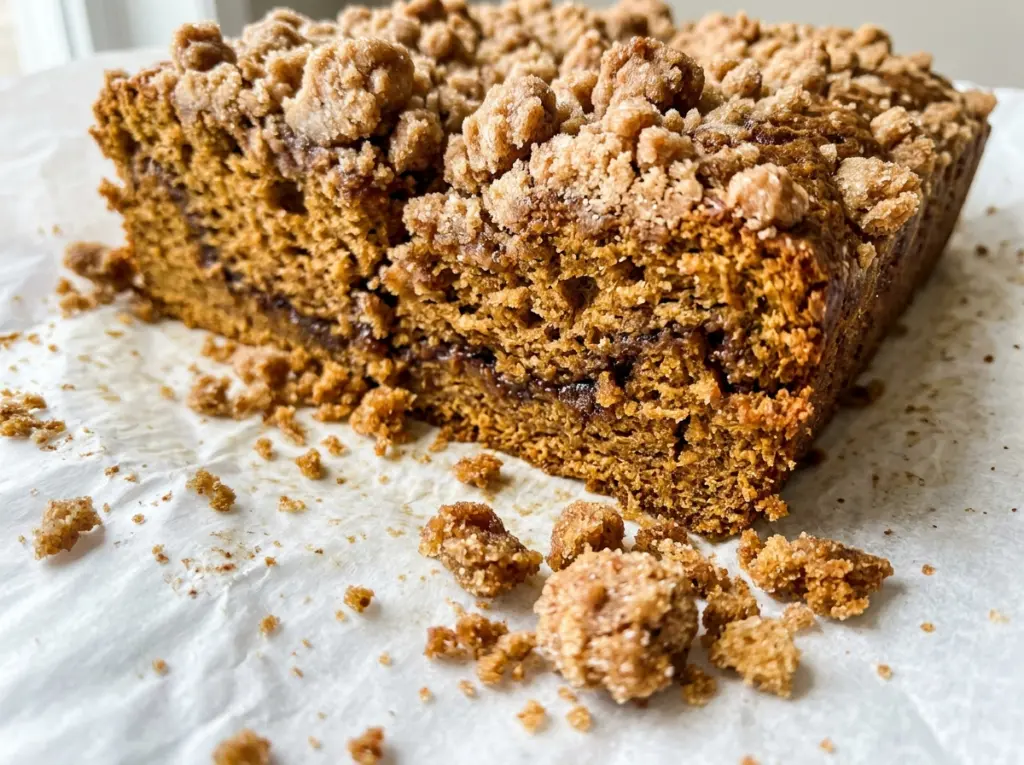
The oat topping should clump when you stir in the melted butter, not turn into a sandy layer. Those little clusters bake up crisp against the soft cake, which is one of my favorite contrasts in this gingerbread coffee cake. The smell of ginger and molasses starts drifting through the kitchen well before the cake is ready.
I whisk the wet ingredients until smooth, then fold in the flour mixture just until the dry streaks disappear. That quick, gentle mixing keeps the cake tender; a few extra turns of the spoon can make a heavier crumb. Use unsulphured molasses rather than blackstrap, too, so the gingerbread flavor stays warm instead of bitter.
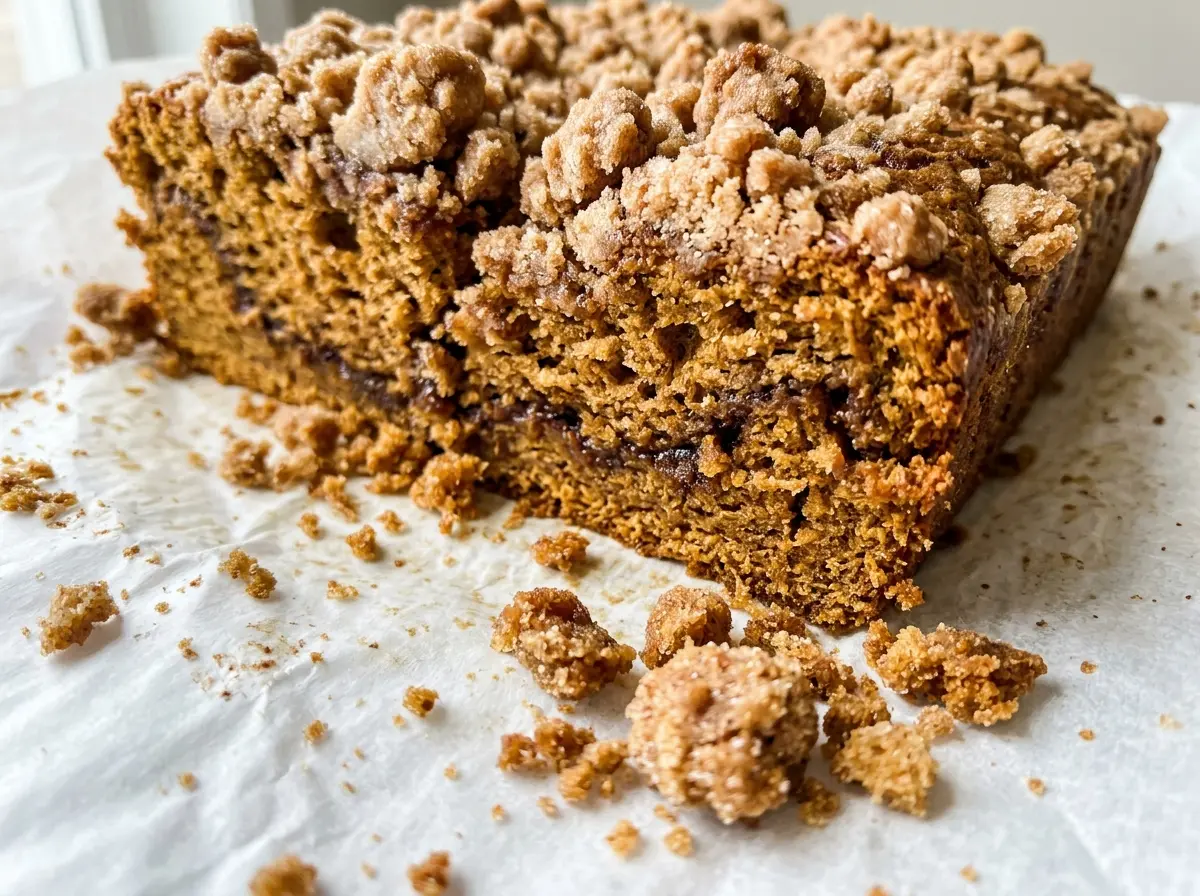
Once the center is set and the top is freckled with toasted oats, let the cake rest in its dish before slicing. The crumb stays soft, with a buttery, crisp oat layer on top.
Kitchen Note
Stop folding as soon as you no longer see dry flour. The batter will look thick, and that’s right; working it until perfectly smooth can make the finished cake dense.
Save this gingerbread coffee cake for a cozy bake: soft molasses cake under a crisp, buttery oat topping.
Why the Oat Topping Should Stay Clumpy
This topping isn’t meant to disappear into a fine, even coating. The old-fashioned oats give it a distinct bite, and the brown sugar and melted butter help them gather into small clumps. Those clumps toast on top of the cake while the batter underneath stays soft.
If the mixture looks loose at first, keep stirring until the oats are lightly coated and you can see some clusters forming. It doesn’t need to hold together like dough. Scatter it across the batter rather than pressing it down; that leaves little pockets of crisp topping instead of a compact layer.
The contrast is what makes this coffee cake feel different from a plain spice cake. You get soft, fragrant crumb in each bite, with a few toasted oats adding a little crunch. A sandy, uniformly thin layer still tastes good, but it won’t give you those crisp clusters.
What the Molasses, Buttermilk, and Oats Bring to This Cake

- Unsulphured molasses — This gives the cake its deep gingerbread flavor and moist crumb. Choose unsulphured molasses, not blackstrap; blackstrap is much more intense and can bring a bitter edge. There isn’t a direct swap among the listed ingredients, so this is the one to buy specifically for the cake.
- Old-fashioned rolled oats — Their larger flakes keep the topping pleasantly nubby after baking. Quick oats are finer and won’t give quite the same distinct texture. A store-brand tub is fine; freshness matters less here than using rolled oats rather than a finer cut.
- Buttermilk — It brings tang and moisture, and it works with the baking soda in the batter. Use plain buttermilk rather than trying to replace it with another listed ingredient; that changes the balance of the batter.
- Neutral vegetable oil — Oil keeps the cake moist and makes the wet mixture easy to whisk together. A basic neutral vegetable oil is a good fit; strongly flavored oils would distract from the ginger and molasses.
- Ground ginger, cinnamon, and cloves — These supply the familiar gingerbread warmth. Spices with a strong aroma will give you a more fragrant cake; if yours have been open for a long time and smell faint, the finished spice flavor will be quieter.
Mixing and Baking the Cake Without a Heavy Crumb
Make the oat clusters first
Heat the oven to 350°F and coat a 9×13-inch baking dish with nonstick cooking spray. Stir the oats and packed light brown sugar together in a medium bowl, then pour in the melted butter. Mix until the oats look coated and small clumps form; if you stop while the butter is still sitting at the bottom, the topping won’t distribute evenly.
Whisk the dry and wet mixtures separately
In a medium bowl, whisk together the flour, baking powder, baking soda, ground ginger, cinnamon, cloves, and fine salt. In a large bowl, whisk the granulated sugar, oil, eggs, molasses, buttermilk, and vanilla until smooth. Separate bowls help the leaveners and spices spread through the flour before it meets the wet ingredients.
Fold, spread, and top
Add the flour mixture to the wet mixture and fold just until no dry streaks remain. Don’t keep stirring to chase every small lump; overmixing can make the cake tough. Spread the batter evenly in the prepared dish, then scatter the oat topping across the surface so it’s spread from edge to edge.
Bake until the center is set
Bake for 35 to 42 minutes, until the center is set and a toothpick inserted in the center comes out with a few moist crumbs. A toothpick coated in wet batter means the middle needs more time, while a few moist crumbs are the cue to stop. Cool the cake in the dish for 20 minutes before cutting and serving so the crumb can settle.
Three Simple Ways to Change the Gingerbread Cake
Bake it without the oat topping
Leave off the oat mixture for a simpler, uniformly soft cake with the ginger and molasses front and center. The top won’t have the crisp buttery contrast, but the cake itself still has plenty of spice and moisture.
Make a milder spice version
Leave out the ground cloves for a gentler spice finish. Ginger and cinnamon still give the cake its warm character, while the clove’s sharper, lingering note fades into the background.
Let ginger lead the spice
For a more direct ginger flavor, leave out the cinnamon and cloves. The cake will taste less like a rounded mixed spice and more distinctly gingery, with the molasses still giving it depth.
Storage and Reheating
- Refrigerator: Keep the covered cake refrigerated for up to 4 days. The oat topping softens as it sits.
- Freezer: Freeze individual pieces or a larger portion tightly wrapped for up to 2 months. Thaw overnight in the refrigerator.
- Reheating: Warm a piece briefly in the microwave, just until heated through. Long heating dries the cake and makes the topping softer.
Questions That Come Up When Baking Gingerbread Coffee Cake
Gingerbread Coffee Cake
Ingredients
Equipment
Method
- Preheat the oven to 350°F.
- Coat a 9x13-inch baking dish with nonstick cooking spray.
- Stir the oats and brown sugar together in a medium bowl.
- Stir in the melted butter until the mixture forms clumps.
- Whisk the flour, baking powder, baking soda, ginger, cinnamon, cloves, and salt together in a medium bowl.
- In a large bowl, whisk the granulated sugar, oil, eggs, molasses, buttermilk, and vanilla until smooth.
- Fold the flour mixture into the wet mixture just until no dry streaks remain.
- Spread the batter evenly in the prepared dish.
- Scatter the oat topping over the batter.
- Bake for 35 to 42 minutes, until the center is set and a toothpick inserted in the center comes out with a few moist crumbs.
- Cool the cake in the dish for 20 minutes before cutting and serving.