
No Bake Samoa Cookies
The coconut turns golden in the skillet before you’ve had time to think about anything else, and it smells like toasted sugar even though there’s no sugar in the pan.…

By Ava
•
•
Reading time: 9 min
Tip: save now, make later.
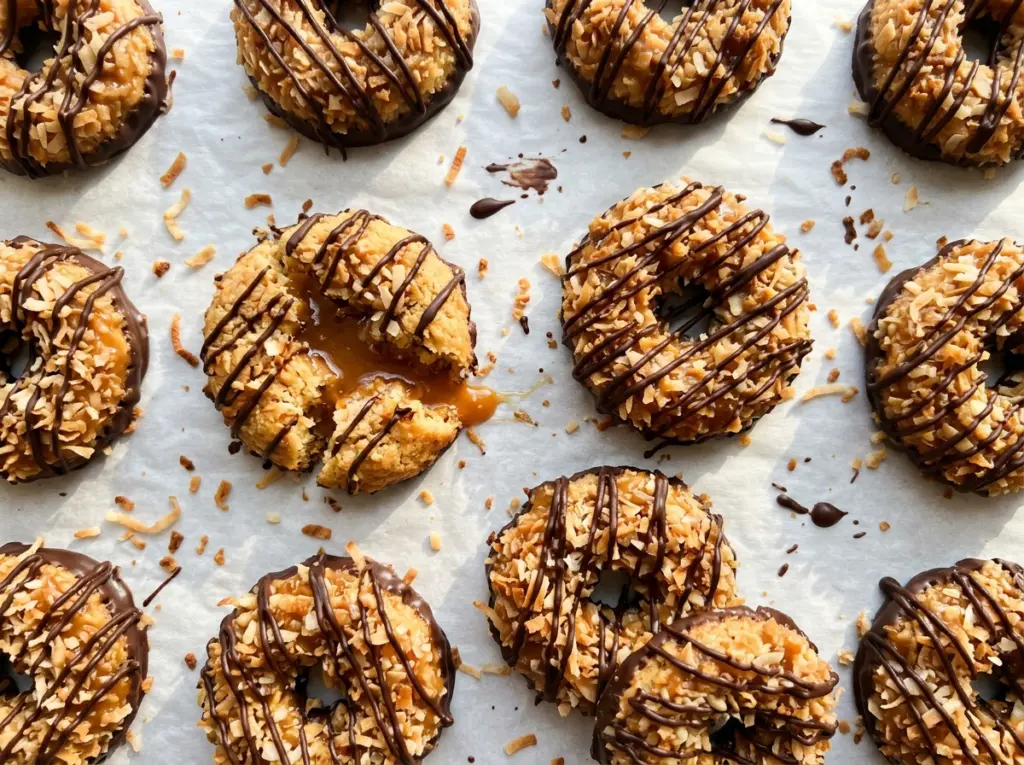
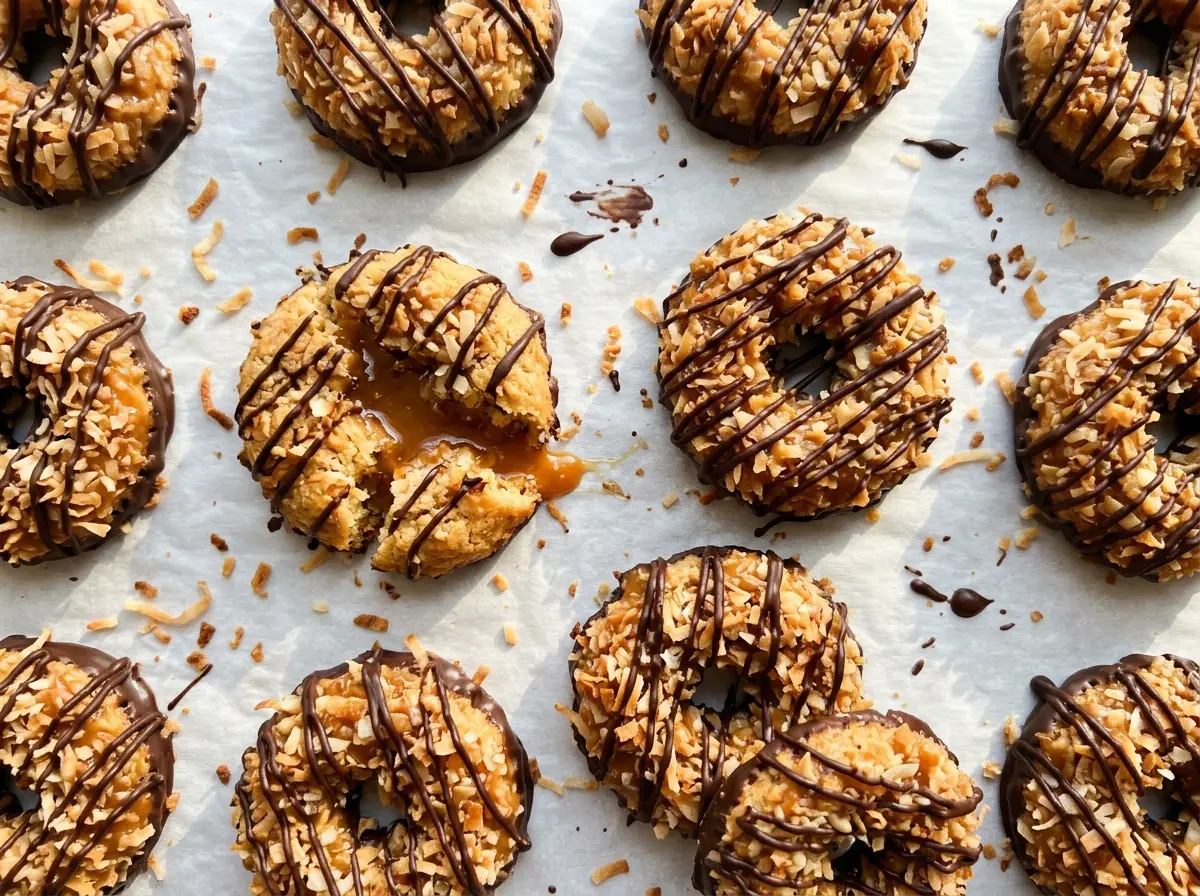
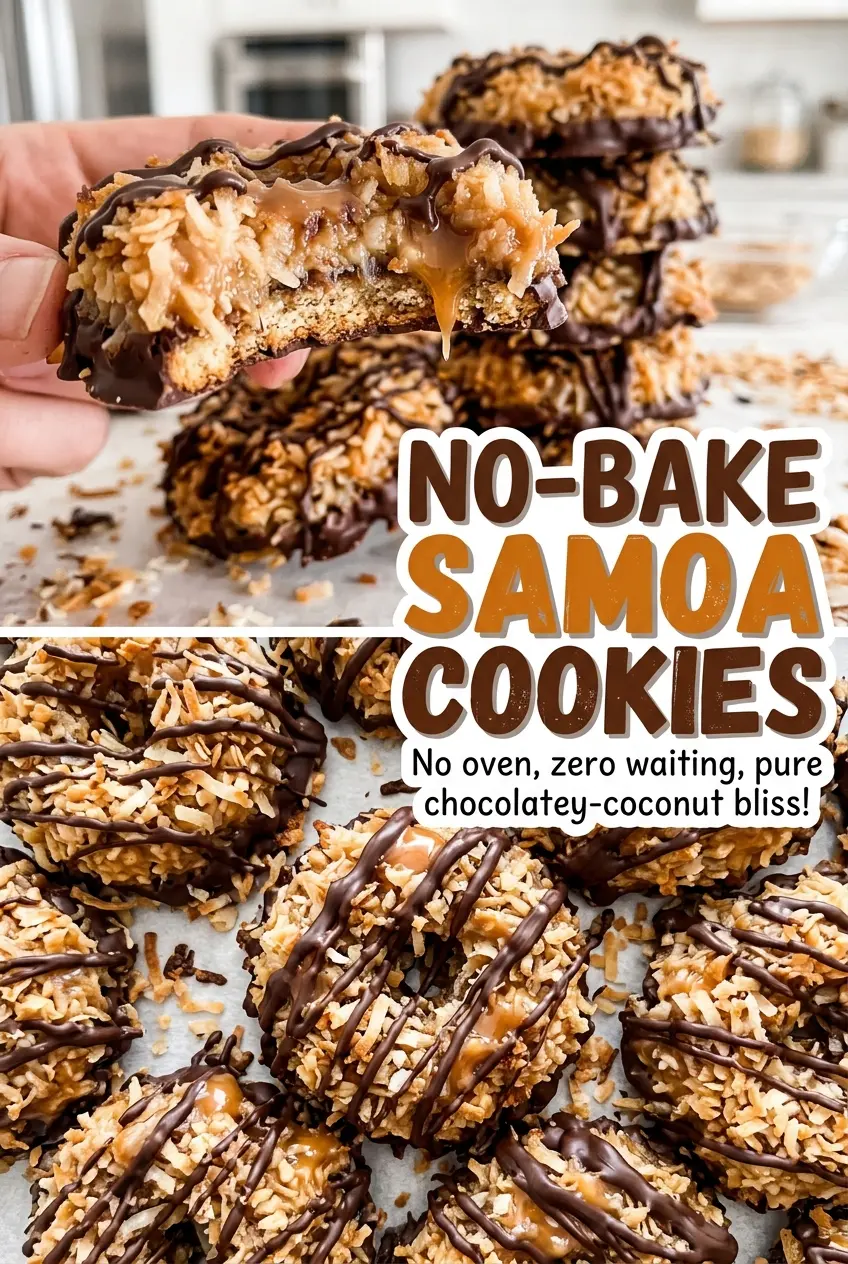
The coconut turns golden in the skillet before you’ve had time to think about anything else, and it smells like toasted sugar even though there’s no sugar in the pan. That little bit of browning gives these No Bake Samoa Cookies their familiar deep, nutty flavor without turning on the oven. I like how the shortbread stays crisp under the chewy coconut-caramel topping, with chocolate on the bottom and a thin drizzle over the top.
The order of assembly makes the cookies easier to handle: toast the coconut, stir it into warm caramel, and get the chocolate ready before you start topping. The caramel mixture spreads while it’s warm, and the chocolate coating gives each cookie a firm base. These are a nice project when you want a cookie with plenty of texture but don’t want to bake a batch from scratch.
Each one has a buttery crunch, a soft, chewy middle, and just enough semisweet chocolate to balance the sweet topping. Set them out once the chocolate has set, and they’re ready to share.
Kitchen Note
Leave a little space between the cookies on the parchment. It gives you room to drizzle chocolate without joining the cookies into one big chocolate sheet.
Save these No Bake Samoa Cookies for a no-oven treat with crisp shortbread, chewy toasted coconut, and a chocolate finish.
Why the Chocolate Bottom Belongs Under the Caramel
It’s easy to think of the chocolate as decoration, but the layer underneath is part of the cookie’s structure. A dip across each shortbread base gives you a chocolate bite from the bottom up, not just a few lines on top. It also gives the cookie a firmer foundation once the coconut-caramel topping goes on.
That order matters more than it looks. If you put the topping on first, you’d have to handle a sticky, uneven cookie while trying to coat its base. Dipping the plain shortbread first keeps the cookie easy to hold, and placing it chocolate-side down on parchment lets the coating settle while you work on the topping. The shortbread stays recognizable beneath the chewy layer instead of disappearing into it.
There’s a useful balance in the finish, too. The chocolate on the base is a full coating, while the chocolate on top is a drizzle. That contrast lets the toasted coconut and caramel stay front and center, with semisweet chocolate cutting through the sweetness in every bite.
What the Shortbread, Coconut, and Caramel Each Bring
- Round shortbread cookies — Choose cookies sturdy enough to lift and dip without crumbling. An inexpensive plain shortbread works well; there’s no need for a specialty brand. A gluten-free round shortbread cookie is a practical one-for-one base if you need a gluten-free version, though the exact crunch depends on the cookie you buy.
- Sweetened shredded coconut — The fine shreds toast evenly and tuck into the caramel rather than making the topping bulky. The skillet does the flavor work, so a standard bag is fine. Unsweetened shredded coconut can be used in the same quantity, but the topping will taste less sweet and may seem a little drier.
- Soft caramels and heavy cream — Soft caramels melt into a cohesive topping, while the cream helps them turn smooth and spoonable. Brand differences are minor as long as the caramels are soft and unwrapped. Caramel sauce isn’t a good stand-in: it’s looser and won’t hold the coconut in the same mound.
- Semisweet chocolate chips and coconut oil — Semisweet chocolate keeps the finish from tasting sugary, and the coconut oil helps the melted chocolate flow for dipping and drizzling. Basic chips are fine. If you’d rather have a darker finish, bittersweet chocolate chips can replace the semisweet ones in the same amount; the result will taste less sweet.
- Vanilla and kosher salt — Vanilla rounds out the caramel, and a small amount of salt keeps the topping from tasting one-note. The standard versions from your pantry are all you need; add them after taking the caramel off the heat so their flavor stays clear.
Toast, Melt, Dip, and Top Without a Mess
Toast the Coconut Until It’s Golden
Line a baking sheet with parchment and arrange the shortbread cookies in a single layer. Set a large dry skillet over medium-low heat, add the coconut, and stir often for 5 to 8 minutes. Watch for an even golden color rather than waiting for every shred to turn deep brown. Transfer the toasted coconut to a bowl as soon as it’s ready so the hot skillet doesn’t keep browning it.
Make a Smooth Coconut-Caramel Mixture
Put the unwrapped caramels and heavy cream in a medium saucepan over medium-low heat. Stir for 4 to 6 minutes, until the caramels have melted and the mixture looks smooth, not lumpy. If it still has visible pieces, keep stirring over the same gentle heat rather than turning the burner up; a higher temperature can scorch the caramel before it melts evenly. Take the pan off the heat, then stir in the vanilla, salt, and toasted coconut.
Melt the Chocolate and Coat Each Base
Combine the chocolate chips and coconut oil in a microwave-safe bowl. Microwave at 50% power in 30-second intervals, stirring between each interval, until the chocolate is smooth. Dip the bottom of each cookie into the bowl and let excess chocolate drip back before setting it chocolate-side down on the parchment. If you rush the drip, extra chocolate can pool around the edges.
Spread the Topping and Finish the Drizzle
Spoon about 1 tablespoon of the warm coconut-caramel mixture onto each cookie and gently spread it to the edges. Work with the topping while it’s still warm enough to move; pressing too hard can crack the shortbread. Drizzle the remaining chocolate over the tops. If it has thickened, microwave it in 10-second intervals, stirring until fluid, then refrigerate the cookies for 20 to 30 minutes, until the chocolate is set.
Three Small Changes for a Different Batch
Use a gluten-free shortbread base
Replace the regular cookies with 24 round gluten-free shortbread cookies of a similar size. The topping and chocolate stay the same, while the base may have a slightly different crunch depending on the brand.
Go darker with bittersweet chocolate
Use bittersweet chocolate chips instead of semisweet for both the base and the drizzle. The more intense chocolate gives the sweet caramel a sharper contrast without changing the assembly.
Make a half batch
Halve every ingredient and use 12 cookies for a smaller batch. Keep the same visual cues for toasting coconut and melting caramel rather than assuming the shorter ingredient list will take half the time.
Storage and Serving
- Refrigerator: Keep the cookies in an airtight container for up to 5 days. The caramel firms when cold, so the topping will be chewier straight from the fridge.
- Freezer: Freeze in a sealed container with parchment between layers for up to 2 months. Thaw in the refrigerator so condensation doesn’t soften the shortbread.
- Serving: Let chilled cookies sit at room temperature for about 10 minutes before serving. Don’t microwave them; the chocolate can melt before the caramel softens evenly.
Questions That Come Up While Making No Bake Samoa Cookies
No Bake Samoa Cookies
Ingredients
Equipment
Method
- Line a baking sheet with parchment paper and arrange the cookies in a single layer.
- Toast the coconut in a large, dry skillet over medium-low heat for 5 to 8 minutes, stirring often, until golden; transfer it to a bowl.
- Combine the caramels and heavy cream in a medium saucepan and cook over medium-low heat for 4 to 6 minutes, stirring until smooth; remove from the heat and stir in the vanilla, salt, and toasted coconut.
- Combine the chocolate chips and coconut oil in a microwave-safe bowl and microwave at 50% power in 30-second intervals, stirring between each, until smooth.
- Dip the bottom of each cookie in the melted chocolate, let the excess drip back into the bowl, and place it chocolate-side down on the prepared baking sheet.
- Spoon about 1 tablespoon of the warm coconut-caramel mixture onto each cookie and gently spread it to the edges.
- If the remaining chocolate has thickened, microwave it in 10-second intervals, stirring until fluid, then drizzle it over the cookies.
- Refrigerate the cookies for 20 to 30 minutes, until the chocolate is set.