
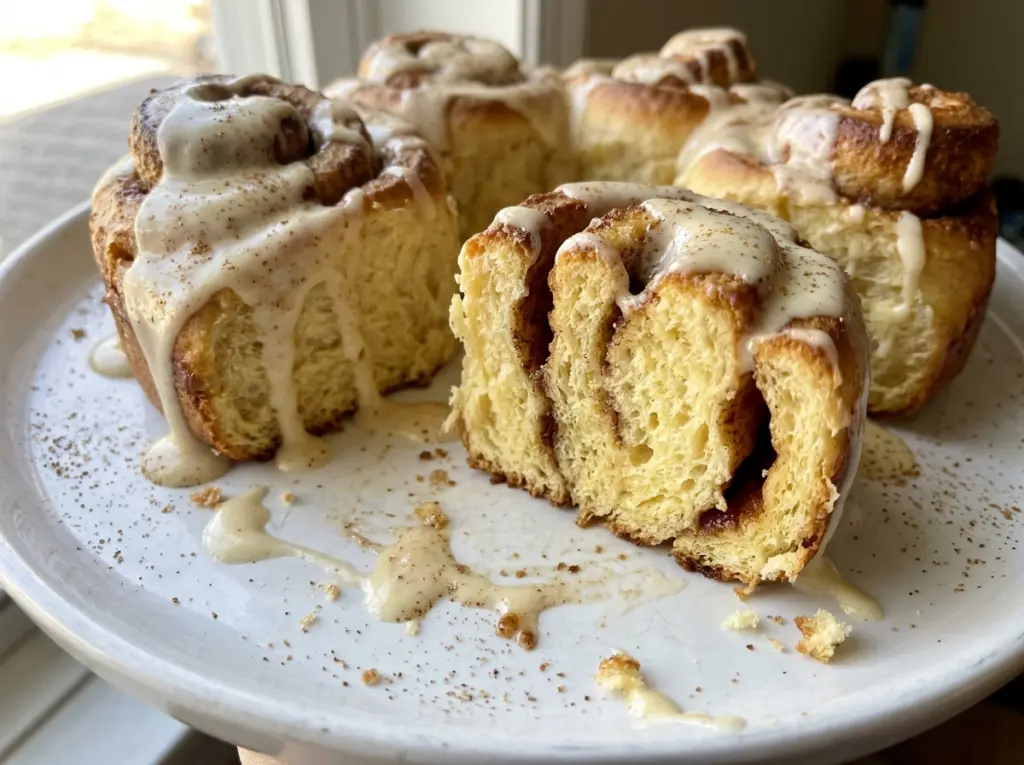
Eggnog Brioche Cinnamon Rolls
The dough starts out shaggy, then turns smooth and stretchy once the butter works in. That change is the part I watch for most closely when I make these eggnog…

By Ava
•
•
Reading time: 10 min
Tip: save now, make later.
The dough starts out shaggy, then turns smooth and stretchy once the butter works in. That change is the part I watch for most closely when I make these eggnog brioche cinnamon rolls; it tells me the dough is ready for its first rise. Eggnog gives the rolls a gentle holiday-spice note, while the brown sugar and cinnamon make a soft, fragrant spiral inside.
Brioche dough is richer and tackier than a basic roll dough, so it needs patient mixing rather than a heavy dusting of flour. I add the softened butter a tablespoon at a time after the flour has come together, then let the dough rise until it has doubled. Once the rolls are baked and golden, a short rest in the pan gives the cream cheese icing time to settle into the warm swirls without disappearing completely. The centers stay tender, and the tops hold a little tangy sweetness.
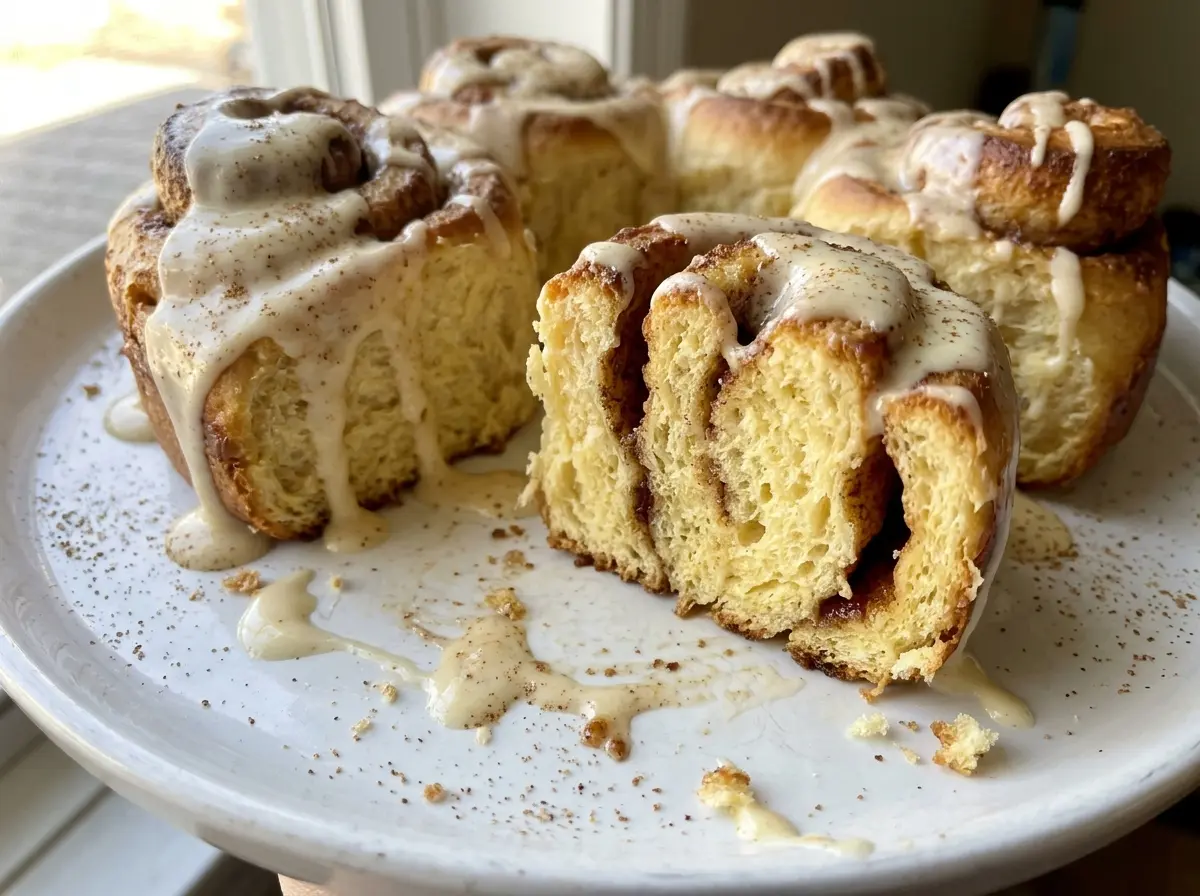
Kitchen Note
Leave that half-inch border along one long edge bare when you spread on the filling. It gives the log a cleaner seam to pinch closed and keeps more of the cinnamon sugar tucked inside the rolls.
Save these eggnog brioche cinnamon rolls for a soft, buttery center, cinnamon-sugar spirals, and a tangy cream cheese finish.
Why the Butter Goes In After the Dough Starts to Form
These rolls get their brioche texture from butter worked into the dough, but adding it too early makes it harder for the flour and eggs to come together first. I start by mixing the eggnog, sugar, yeast, eggs, flour, and salt until the dough is shaggy. At that point, the dough hook has something to gather and develop before the softened butter goes in.
Add the butter one tablespoon at a time with the mixer on low. Each piece should begin disappearing into the dough before the next one goes in. Afterward, the longer knead on medium-low brings the dough together into a smooth, elastic mass that still feels tacky. That tackiness is normal for this enriched dough; adding extra flour to make it feel like a lean bread dough can leave the rolls heavier. Give the mixer time to do the work, and look for elasticity rather than a dry, firm ball.
This order also makes the dough easier to judge. Early on, it looks uneven and slightly sticky; after kneading, it stretches and pulls away more cleanly while retaining a soft feel. That shift is a better cue than trying to make the dough feel completely dry.
What Eggnog and Soft Butter Bring to These Rolls

- Eggnog — It brings the dough its characteristic creamy, gently spiced flavor, and it also loosens the yeast mixture. Use eggnog you enjoy drinking; a strongly flavored carton will come through in the finished rolls. The recipe uses eggnog in the dough and again in the icing, so a different liquid would change both the richness and the flavor.
- Active dry yeast — This yeast gets stirred into warm eggnog and sugar, then stands until foamy. That foam is a useful sign that the yeast has activated. Keep the liquid in the specified warm range; too much heat can damage the yeast.
- Room-temperature eggs — Eggs at room temperature blend into the yeast mixture more evenly than cold eggs and help keep the dough from getting chilled at the start. Set them out before mixing so they are ready when the yeast mixture is foamy.
- Softened unsalted butter — Butter gives the dough its rich, tender crumb and makes the filling spreadable. Softened means pliable enough to blend and spread without melting; melted butter changes the feel of both the dough and the filling.
- Brown sugar, cinnamon, and nutmeg — Packed light brown sugar melts into the butter as the rolls bake, while cinnamon and nutmeg make the filling taste warm rather than plain-sweet. Fresh-smelling ground spices matter more here than a premium brand; stale spices lose their fragrance.
- Cream cheese — Softened cream cheese gives the icing its slight tang and helps balance the sweet rolls. Let it soften along with the icing butter so the mixture beats smooth instead of retaining cold lumps.
- All-purpose flour and neutral oil — All-purpose flour gives the dough enough structure for its buttery enrichment. Neutral oil coats the bowl, work surface, and pan without adding a competing flavor; use it as directed rather than dusting the oiled surface with extra flour.
Building the Dough, Shaping the Spirals, and Baking to the Center
Wake the Yeast and Build a Shaggy Dough
Warm the eggnog to 105–110°F, stir in the sugar and active dry yeast, and let it stand for 5–10 minutes until foamy. If there’s no foam, check that the eggnog wasn’t too hot and that the yeast is active before moving on. Whisk in the room-temperature eggs, then mix in the flour and salt with the dough hook on low for 2–3 minutes. The mixture should look rough and shaggy, not smooth yet.
Knead in the Butter and Let the Dough Rise
With the mixer on low, add the softened butter a tablespoon at a time, then knead on medium-low for 8–10 minutes. Look for dough that is smooth, elastic, and tacky; it shouldn’t look dry or crumbly. Transfer it to a bowl coated with oil, cover, and leave it at room temperature for 1 1/2–2 hours, until doubled in size. If the room is cool, the rise may take longer, so use the doubled size as your cue.
Spread, Roll, and Proof the Cinnamon Filling
Oil the work surface and pan, then roll the dough into a 16-by-12-inch rectangle. Stir the brown sugar, cinnamon, and nutmeg together, spread the softened filling butter over the dough, and scatter the sugar mixture evenly on top. Roll from the long edge opposite the bare border, pinch the seam closed, and cut the log into 12 equal rolls. Arrange them cut-side up in the pan, cover, and let them rise for 45–60 minutes until puffy; heat the oven to 350°F during the final 20 minutes.
Bake Until Golden, Then Ice While Warm
Bake the rolls for 25–30 minutes, until the tops are golden brown and the centers are set. If the tops are browning before the centers look set, keep using the center as your doneness cue. While they bake, beat the softened cream cheese and butter until smooth, then beat in the powdered sugar, eggnog, and vanilla. Rest the rolls in the pan for 10 minutes before spreading on the icing so it softens over the warm tops without running straight off.
Two Simple Ways to Change the Finish
Make the Filling Cinnamon-Forward
Leave the nutmeg out of the brown sugar and cinnamon mixture. The filling will taste more directly of cinnamon, with less of the warm, rounded spice note nutmeg brings.
Serve the Brioche Without Icing
Skip the cream cheese icing for a less-sweet roll that lets the buttery dough and cinnamon filling stand out. The rolls will have a simpler finish and won’t need the extra tang of the icing.
Storage and Reheating
- Refrigerator: Keep leftover iced rolls covered in the refrigerator for up to 4 days. The brioche firms when chilled, and the icing will become less soft.
- Freezer: Freeze baked, cooled rolls without icing in an airtight container for up to 2 months. Thaw in the refrigerator and add freshly made icing after warming.
- Reheating: Warm an individual roll briefly in the microwave until just warm. Long heating can dry out the brioche; short bursts are easier to control.
Questions That Come Up While Making Eggnog Brioche Rolls
Eggnog Brioche Cinnamon Rolls
Ingredients
Equipment
Method
- Warm 1 cup eggnog to 105-110°F.
- Stir the granulated sugar and yeast into the warm eggnog, then let stand for 5-10 minutes, until foamy.
- Whisk the eggs into the yeast mixture in the bowl of a stand mixer.
- Add the flour and salt, then mix with the dough hook on low until a shaggy dough forms, 2-3 minutes.
- With the mixer running on low, add 1/2 cup softened butter, one tablespoon at a time.
- Knead on medium-low for 8-10 minutes, until the dough is smooth, elastic, and tacky.
- Coat a bowl with 1 teaspoon neutral oil and transfer the dough to the bowl.
- Cover and let rise at room temperature for 1 1/2-2 hours, until doubled in size.
- Coat a clean work surface with 2 teaspoons neutral oil.
- Brush a 9x13-inch baking pan with the remaining 2 teaspoons neutral oil.
- Turn out the dough and roll it into a 16x12-inch rectangle.
- Stir together the brown sugar, cinnamon, and nutmeg in a small bowl.
- Spread 6 tablespoons softened butter over the dough, leaving a 1/2-inch border along one long edge.
- Sprinkle the sugar mixture evenly over the butter.
- Starting at the opposite long edge, roll the dough into a log and pinch the seam closed.
- Cut the log into 12 equal rolls.
- Arrange the rolls cut-side up in the prepared pan.
- Cover and let rise for 45-60 minutes, until puffy.
- Heat the oven to 350°F during the final 20 minutes of rising.
- Bake for 25-30 minutes, until golden brown and the centers are set.
- Beat the cream cheese and 2 tablespoons softened butter in a medium bowl until smooth.
- Beat in the powdered sugar, remaining 2 tablespoons eggnog, and vanilla until smooth.
- Let the rolls rest in the pan for 10 minutes.
- Spread the icing over the rolls.