
Brown Sugar Ham Glaze
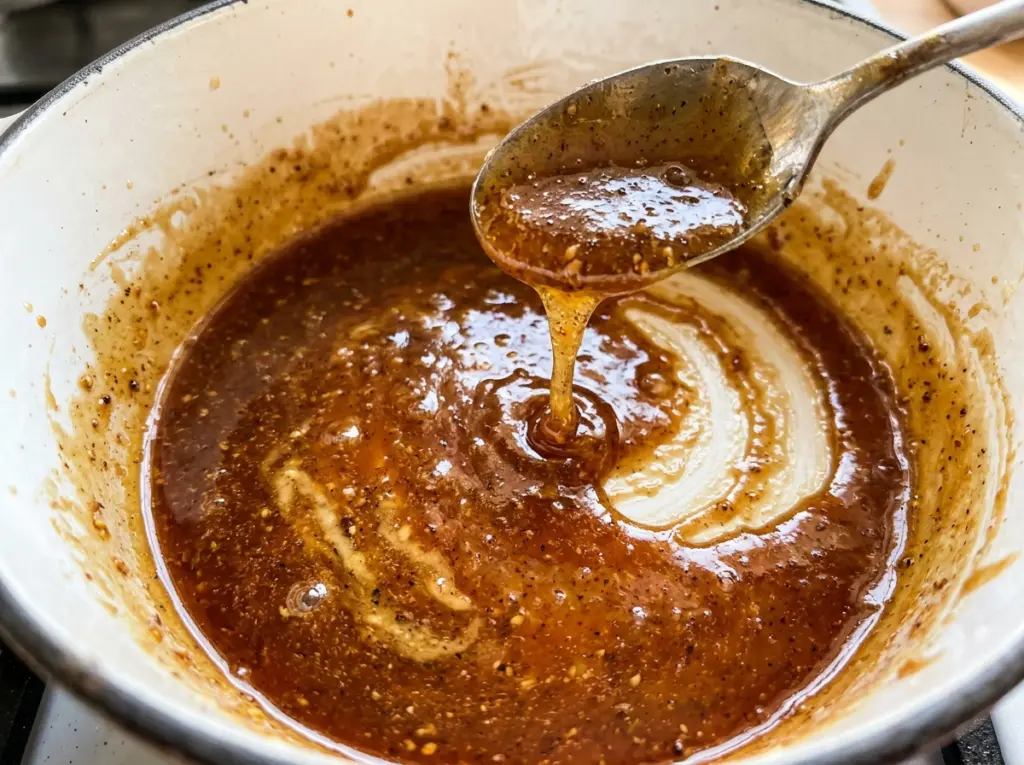
As the whisk circles the saucepan, the brown sugar changes from sandy and loose to a smooth, glossy glaze. The Dijon and apple cider vinegar keep all that sweetness from…

By Ava
•
•
Reading time: 8 min
Tip: save now, make later.
As the whisk circles the saucepan, the brown sugar changes from sandy and loose to a smooth, glossy glaze. The Dijon and apple cider vinegar keep all that sweetness from tasting flat, while honey helps the glaze cling to the ham instead of running straight off. I like how quickly the whole mixture comes together, but it needs a little attention at the stove.
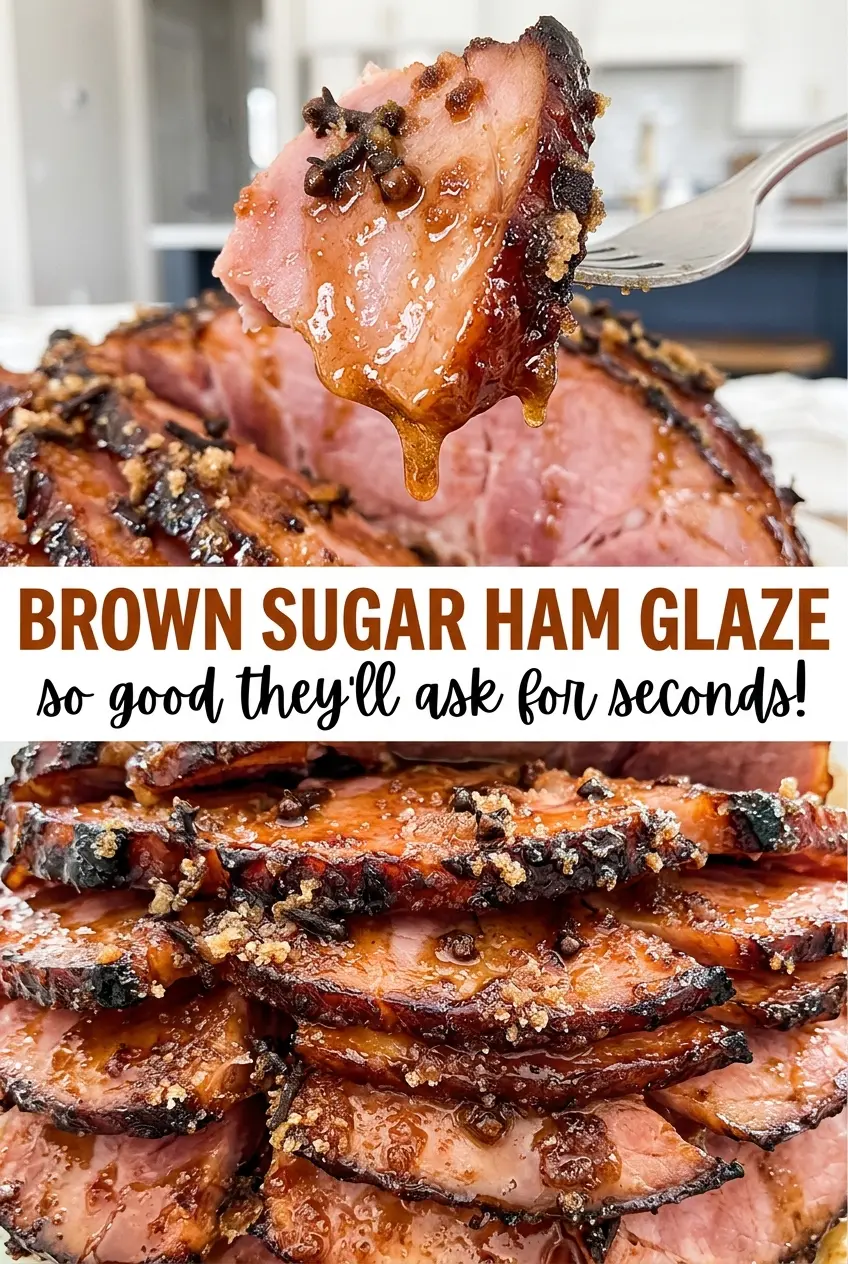
This Brown Sugar Ham Glaze is brushed over an 8- to 10-pound ham near the end of baking, with another layer added every 10 minutes. That timing gives the glaze a chance to turn shiny and sticky without leaving the sugar exposed to the oven for too long. The finished coating is sweet, gently tangy, and warmly spiced with cloves.
Kitchen Note
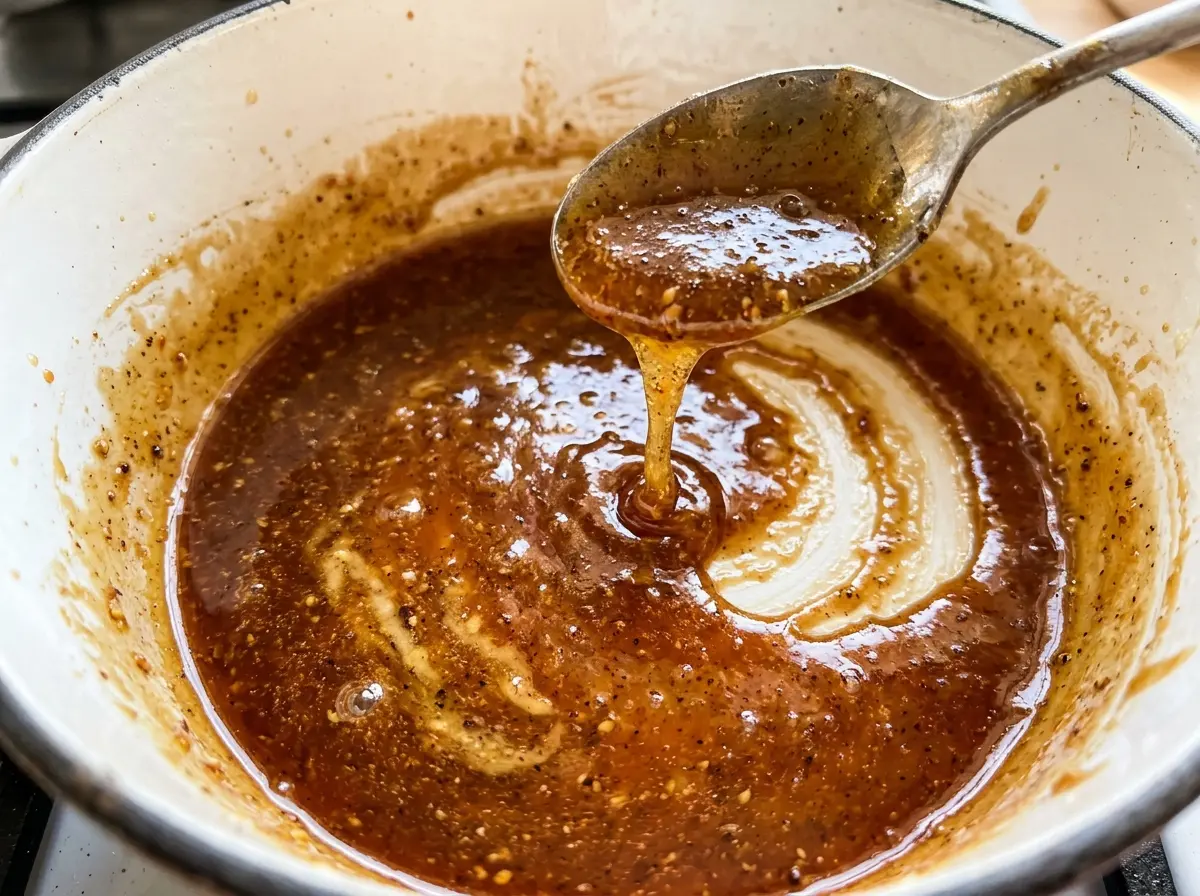
Keep whisking for the full simmer so the sugar dissolves instead of settling into a gritty layer at the bottom. The glaze is ready when it looks smooth and glossy, not merely hot.
Save this Brown Sugar Ham Glaze for a glossy, sweet-tangy finish with a little warmth from ground cloves.
Why Brown Sugar Glaze Belongs at the End, Not the Beginning
Brown sugar and honey bring plenty of sugar to the pan, which is what gives the glaze its shine and sticky finish. In the oven, though, sugar can darken quickly. Leave this coating on the ham for too much of its baking time and the outside can turn overly dark before the ham is ready. Treating it as a finishing glaze gives it time to cling and caramelize without asking it to withstand the full bake.
The mustard and vinegar matter here, too. They cut through the sweetness and make each thin coat taste balanced rather than candy-like. Brushing on several layers gives the glaze a chance to build gradually over the surface instead of pooling in one thick, sugary patch. If you’re used to putting a sweet glaze on before the ham goes into the oven, hold it back for the final stretch; the shorter exposure is what protects the color and texture.
That last-half-hour window also makes the coating easy to manage. Each pass adds a fresh sheen, and the ham gets a few minutes in the oven between coats. The result is a glossy exterior with a clear sweet-and-tangy taste, not a burnt sugar crust.
What Brown Sugar, Dijon, and Vinegar Each Bring to the Glaze
- Light brown sugar — It supplies the glaze’s main sweetness and helps create its lacquered finish. Packed sugar gives you a consistent amount; dark brown sugar works one-for-one if that’s what you have, with a deeper molasses note. The regular grocery-store bag is fine here.
- Honey — Honey adds a round sweetness and helps the glaze coat the ham. A mild, everyday honey is a good choice; a strongly flavored variety will make its own character more noticeable. For a maple variation, use maple syrup in its place, as described below.
- Dijon mustard — Dijon brings a sharp, savory edge that keeps the glaze from tasting one-note. A standard jar works well; if needed, yellow mustard can stand in one-for-one, though the result will taste milder and more familiar.
- Apple cider vinegar — Its acidity balances the sugar and honey, and its slight fruitiness suits ham. White wine vinegar can replace it in the same amount for a cleaner, less apple-like tang. There’s no need for a specialty bottle.
- Unsalted butter — Butter rounds out the sharp ingredients and gives the glaze a smooth, rich finish. Any fresh, standard unsalted butter is suitable; the premium version won’t make a noticeable difference in a glaze this bold.
- Ground cloves — Cloves give the mixture its warm, distinctive spice. Use a fresh-smelling jar, since old ground spices lose their aroma. If you don’t have them, leave them out rather than adding an equal measure of cinnamon; the glaze will be less warmly spiced but will still work.
From Sandy Saucepan to Glossy Layers on the Ham
Whisk Everything Together Before Heating
Add the brown sugar, honey, Dijon mustard, apple cider vinegar, unsalted butter, and ground cloves to a small saucepan. Whisk until the ingredients are evenly combined, scraping the bottom where the sugar likes to collect. Starting with everything together helps the butter and sweeteners blend as the pan warms. Keep the mixture moving rather than letting a dry patch of sugar sit against the saucepan.
Simmer Until the Glaze Turns Smooth
Set the saucepan over medium-low heat and bring the mixture to a gentle simmer. Stir constantly for 3 to 5 minutes, watching for the sugar to dissolve and the surface to become smooth and glossy. Small, gentle bubbles are what you want; a hard boil can make the sugar cook too fast around the edges. Take the pan off the heat once no gritty sugar remains.
Brush on Thin Coats Near the Finish
Brush the glaze over an 8- to 10-pound ham during the last 30 minutes of baking. Add another layer every 10 minutes so the coating builds in several passes. Spread each coat across the surface rather than leaving a thick puddle in one spot. The glaze should look shiny as it warms against the ham.
Simple Swaps That Change This Ham Glaze Without Losing Its Shine
Make It Dairy-Free
Replace the unsalted butter with the same amount of dairy-free butter or vegan buttery sticks. Choose a plain version rather than one with added herbs or garlic; the glaze will be a little less rich but will still turn smooth and brushable.
Give It a Maple Note
Use maple syrup in place of the honey, keeping the same amount. The glaze takes on a woodsy, distinctly maple sweetness and may feel a touch looser in the saucepan, but it still brushes easily over the ham.
Try Whole-Grain Mustard
Swap the Dijon for the same amount of whole-grain mustard. Its mustard flavor is still savory and tangy, but the visible seeds give the glaze a more textured look and a slightly more rustic finish.
Storage and Reheating
- Refrigerator: Refrigerate unused glaze in a covered container within 2 hours and use it within 4 days. It will firm up as the butter chills.
- Freezer: Freeze unused glaze in an airtight, freezer-safe container for up to 2 months. Thaw it in the refrigerator before warming.
- Reheating: Warm it gently in a small saucepan over low heat, stirring until it loosens enough to brush. Don’t let it boil; high heat can scorch the sugar before the glaze is evenly warm.
Questions That Come Up While Making Brown Sugar Ham Glaze
Brown Sugar Ham Glaze
Ingredients
Method
- Whisk the brown sugar, honey, Dijon mustard, apple cider vinegar, butter, and ground cloves together in a small saucepan.
- Bring to a gentle simmer over medium-low heat, stirring constantly, for 3 to 5 minutes, until the sugar dissolves and the glaze is smooth and glossy.
- Brush the glaze over an 8- to 10-pound ham during the last 30 minutes of baking.
- Apply another layer every 10 minutes.