
Healthy Mediterranean Chicken Bowls
The chicken gives a steady sizzle when it hits the skillet, and the smoked paprika turns fragrant as the first side cooks. I used to rush the bowls straight from…

By Ava
•
•
Reading time: 9 min
Tip: save now, make later.
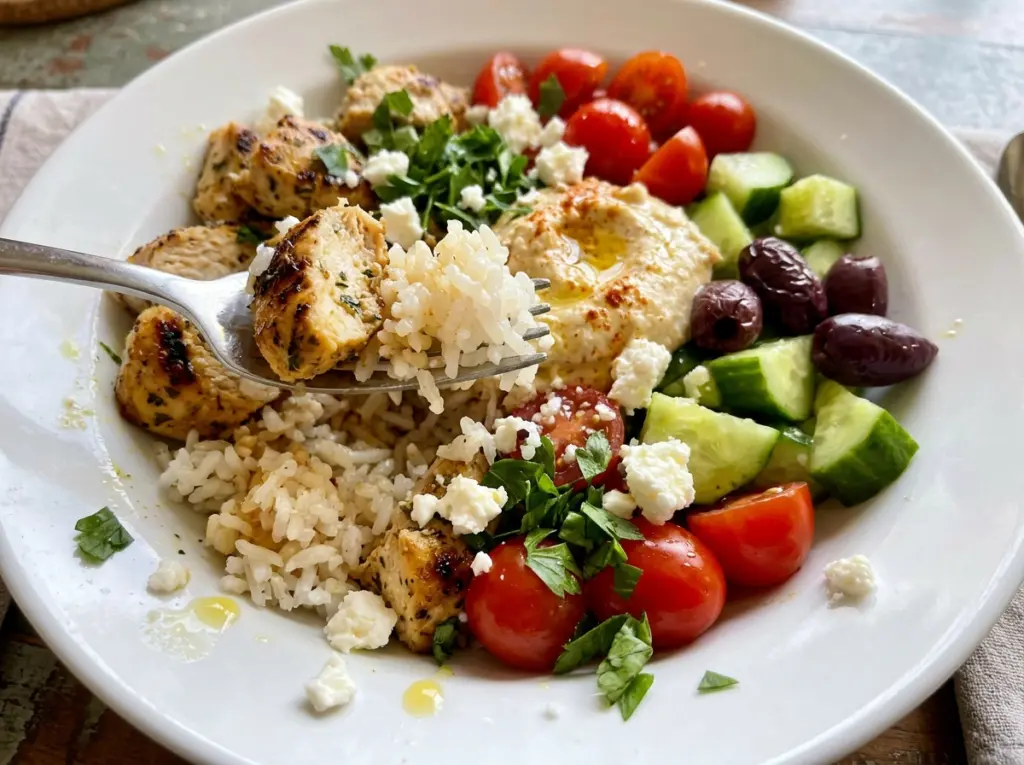
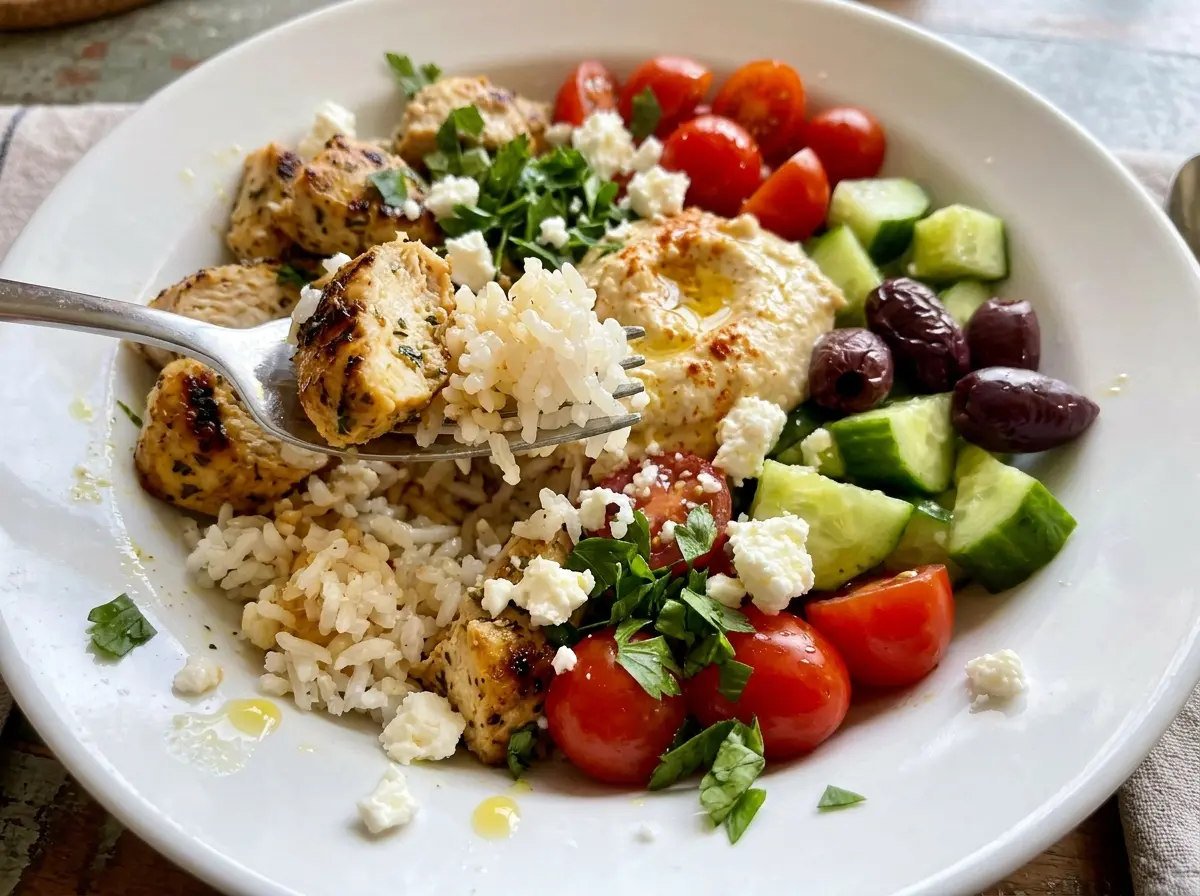
The chicken gives a steady sizzle when it hits the skillet, and the smoked paprika turns fragrant as the first side cooks. I used to rush the bowls straight from the pan to the table, but a few minutes of resting makes the chicken easier to slice and keeps the pieces juicy. These Healthy Mediterranean Chicken Bowls bring that warm, savory chicken together with fluffy quinoa, crisp vegetables, and a cool yogurt sauce.
The balance is what makes this one feel satisfying without a heavy dressing. Lemon and dill brighten the Greek yogurt, while Kalamata olives and feta bring a salty, briny contrast to the mild quinoa and chicken. I keep the vegetables fresh and the sauce spooned over the top, so the bowl has distinct textures instead of turning into one soft mix. The finished bowl is fresh and hearty, with lemon-dill yogurt running through every bite.
Kitchen Note
Cook the chicken in two batches rather than crowding the skillet. A little room around each piece helps the chicken sear instead of steaming against its neighbors.
Save these Healthy Mediterranean Chicken Bowls for a fresh, filling meal with warm quinoa, skillet chicken, and a cool lemon-dill sauce.
Why These Bowls Need Contrast, Not a Bigger Pour of Sauce
When every part of a bowl is soft, rich, or heavily dressed, the flavors blur together. Here, the quinoa gives you a mild, fluffy base, the chicken brings warm seasoning, and the cucumber and tomatoes add a cool, juicy bite. Olives and feta provide the sharper, saltier notes, so the yogurt sauce only needs to tie the components together. A generous pour can cover up the fresh vegetables and make the grains feel wet.
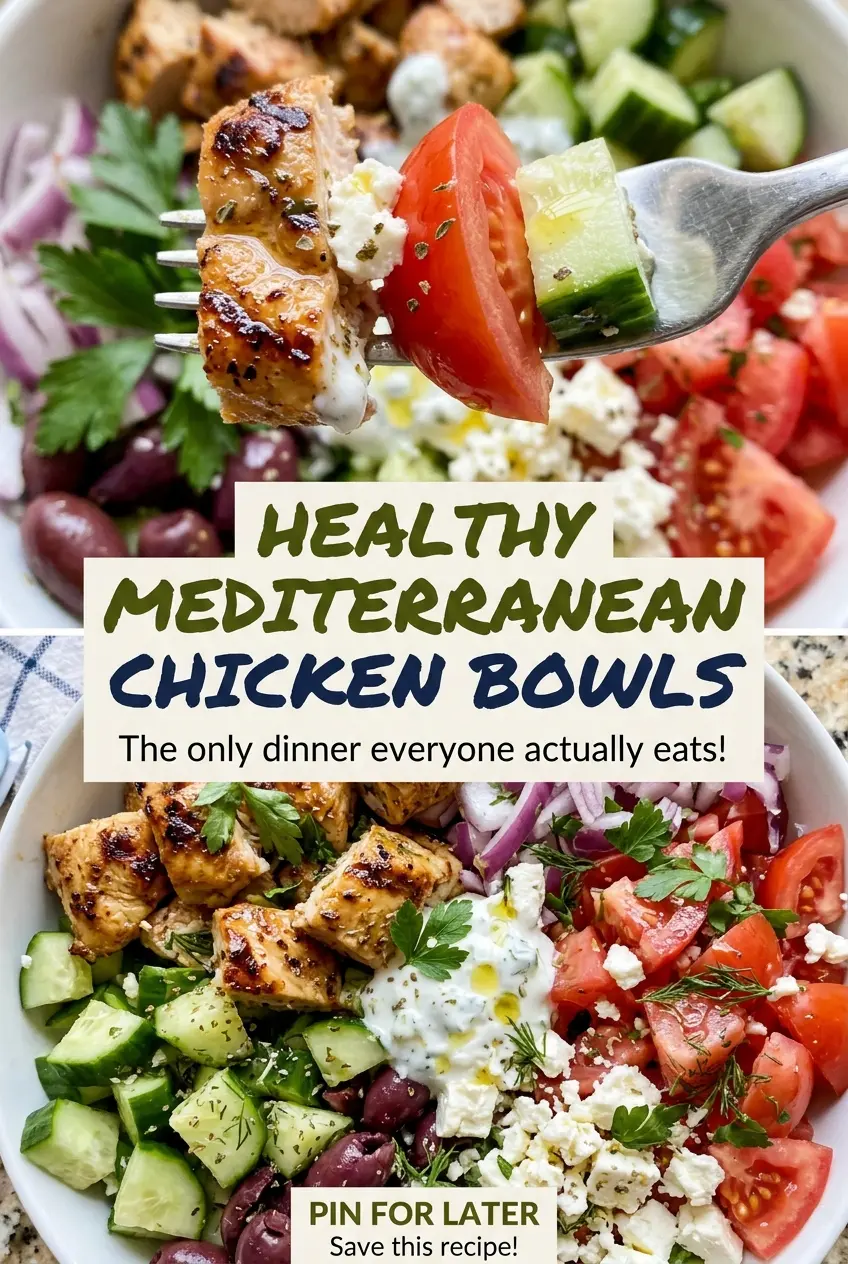
Spoon the sauce over the assembled bowls rather than stirring it through the quinoa and toppings. That keeps the contrast in each forkful: you can catch a little lemon and dill with the chicken, then get a crisp piece of cucumber or a briny olive. Thinly sliced red onion adds a little bite without taking over the bowl. The combination works because none of the toppings has to carry the whole meal on its own.
What Each Ingredient Brings to These Mediterranean Bowls
- Quinoa — Rinsing it before cooking helps wash away the natural surface coating that can taste bitter. It makes a light, gluten-free base; rice isn’t a one-for-one swap because it needs a different cooking time and liquid balance.
- Chicken breasts and seasonings — Boneless, skinless breasts take on the oregano, garlic, and smoked paprika while cooking quickly when pounded to an even thickness. The spices don’t need to be expensive; fresh, fragrant dried spices matter more than a specialty brand. There isn’t another cut that keeps the same timing, so use the breasts for the skillet method here.
- Greek yogurt, lemon, and dill — Thick plain Greek yogurt makes a sauce that clings instead of running straight to the bottom of the bowl. Fresh lemon and dill give it a bright, clean finish. Chopped parsley works in place of dill, though the sauce will lose dill’s distinctive flavor.
- English cucumber and cherry tomatoes — English cucumber has a tender skin and fewer large seeds, while cherry tomatoes are easy to halve and stay juicy. A regular cucumber works too; scoop out its watery seed center before dicing. Grape tomatoes can stand in for cherry tomatoes with the same prep.
- Red onion, Kalamata olives, and feta — Thinly sliced onion gives a crisp bite, while Kalamata olives and feta bring the salty, tangy notes that make the mild grains and chicken pop. Another brined black olive will work, but the bowl will taste less fruity and distinctive than it does with Kalamata olives.
How to Cook the Quinoa and Sear the Chicken Evenly
Let the Quinoa Finish Steaming Off the Heat
Combine the rinsed quinoa and water in a 2-quart saucepan and bring it to a boil over high heat. Cover the pan, lower the heat, and simmer for 15 minutes, until the water has been absorbed. Take it off the heat and leave it covered for 5 minutes; that brief rest lets the grains finish steaming. Fluff with a fork before dividing it among the bowls.
Season the Chicken Before It Hits the Skillet
Sprinkle the chicken evenly with the oregano, garlic powder, smoked paprika, kosher salt, and black pepper. The breasts should already be pounded to an even 1/2-inch thickness so they cook at a similar pace. Spread the seasoning over both sides rather than letting it collect in one spot. Keep the seasoned pieces ready while the skillet heats.
Sear in Batches and Check the Center
Heat half the olive oil in a 12-inch skillet over medium-high heat. Cook half the chicken for 3–5 minutes per side, until the thickest part reaches 165°F, then transfer it to a cutting board. Add the remaining oil and cook the rest of the chicken the same way. If the skillet is crowded, the pieces won’t brown as well, so keep the two batches separate.
Rest the Chicken Before Slicing
Let the cooked chicken rest on the cutting board for 5 minutes before slicing. Cutting immediately sends more of the juices onto the board instead of keeping them in the meat. Slice across the breasts into pieces that are easy to scoop up with the quinoa and toppings. The short rest also gives you time to stir together the sauce.
Stir the Sauce and Assemble the Bowls
Stir the Greek yogurt, lemon juice, and chopped fresh dill in a small bowl until smooth. Divide the fluffed quinoa among four bowls, then top with the sliced chicken, diced cucumber, halved tomatoes, red onion, olives, and feta. Spoon the sauce over the top just before serving. Keeping the ingredients in clear layers leaves the vegetables crisp and the sauce cool.
Two Easy Ways to Adapt These Chicken Bowls
Make the bowls dairy-free
Use an equal amount of thick, plain, unsweetened dairy-free yogurt in place of the Greek yogurt, and leave off the feta. The lemon and dill still give the sauce a fresh lift, though the dairy-free version may taste less tangy and creamy than the original.
Go lighter on the briny toppings
Leave out the Kalamata olives if you prefer a milder bowl, keeping the feta for a smaller salty accent. You’ll lose the olives’ fruity, briny character, but the cucumber, tomatoes, and lemon-dill sauce will taste more prominent.
Storage and Reheating
- Refrigerator: Store the chicken, quinoa, vegetables, and sauce in separate airtight containers for 3–4 days. The cucumber and tomatoes soften after sitting, so the bowls are crispest when freshly assembled.
- Freezer: Freeze the cooked chicken and quinoa separately in airtight containers for up to 2 months for best quality. The fresh vegetables, feta, and yogurt sauce don’t freeze well; prepare those fresh.
- Reheating: Warm the chicken and quinoa separately in the microwave, covered, until steaming hot throughout. Add the cold vegetables and sauce afterward; reheating an assembled bowl wilts the vegetables and can loosen the yogurt sauce.
Questions That Come Up While Making These Bowls
Healthy Mediterranean Chicken Bowls
Ingredients
Equipment
Method
- Combine the quinoa and water in a 2-quart saucepan.
- Bring the mixture to a boil over high heat.
- Cover, reduce the heat to low, and simmer for 15 minutes, until the water is absorbed.
- Remove the quinoa from the heat and let stand covered for 5 minutes.
- Fluff the quinoa with a fork.
- Sprinkle the chicken evenly with the oregano, garlic powder, smoked paprika, salt, and pepper.
- Heat half the olive oil in a 12-inch skillet over medium-high heat.
- Cook half the chicken for 3–5 minutes per side, until it reaches 165°F.
- Add the remaining oil and cook the rest of the chicken for 3–5 minutes per side, until it reaches 165°F.
- Transfer the chicken to a cutting board and rest for 5 minutes.
- Slice the chicken.
- Stir the Greek yogurt, lemon juice, and dill together in a small bowl until smooth.
- Divide the quinoa among four bowls and top with the chicken, cucumber, tomatoes, red onion, olives, and feta.
- Spoon the yogurt sauce over the bowls.