
Easy Skillet Chicken With Cranberry Balsamic Sauce – Cozy Dinner Recipe
The chicken should give a steady sizzle as it hits the skillet; if it lands with a quiet hiss and starts releasing water, the pan wasn’t hot enough. I let…

By Ava
•
•
Reading time: 9 min
Tip: save now, make later.
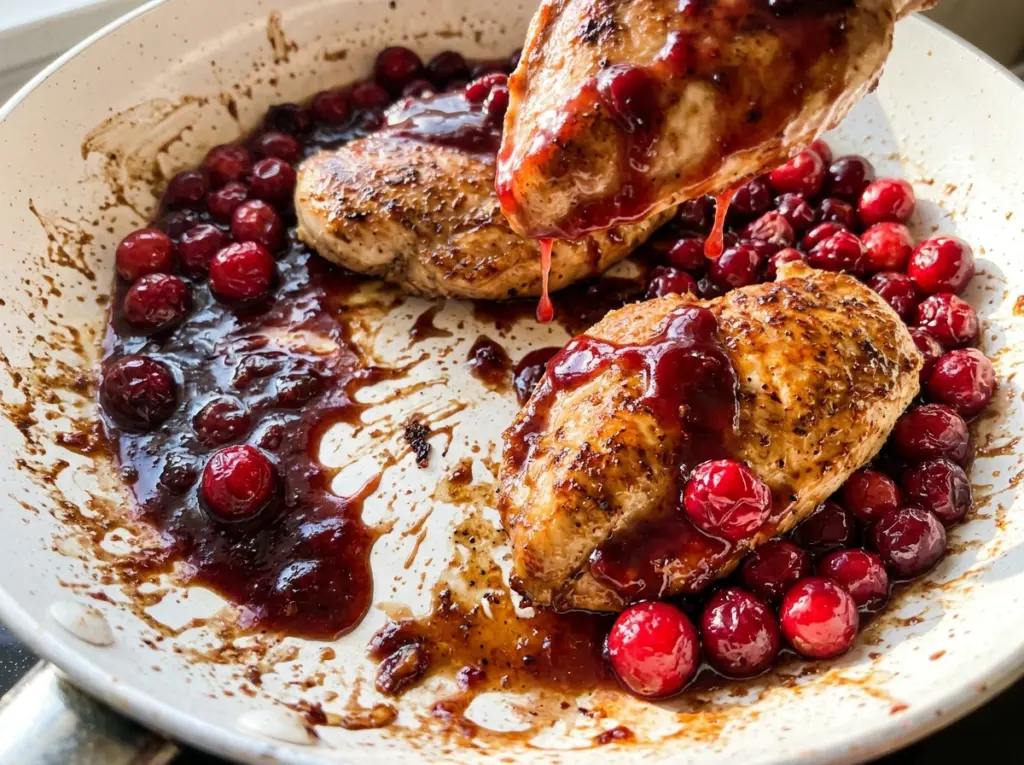
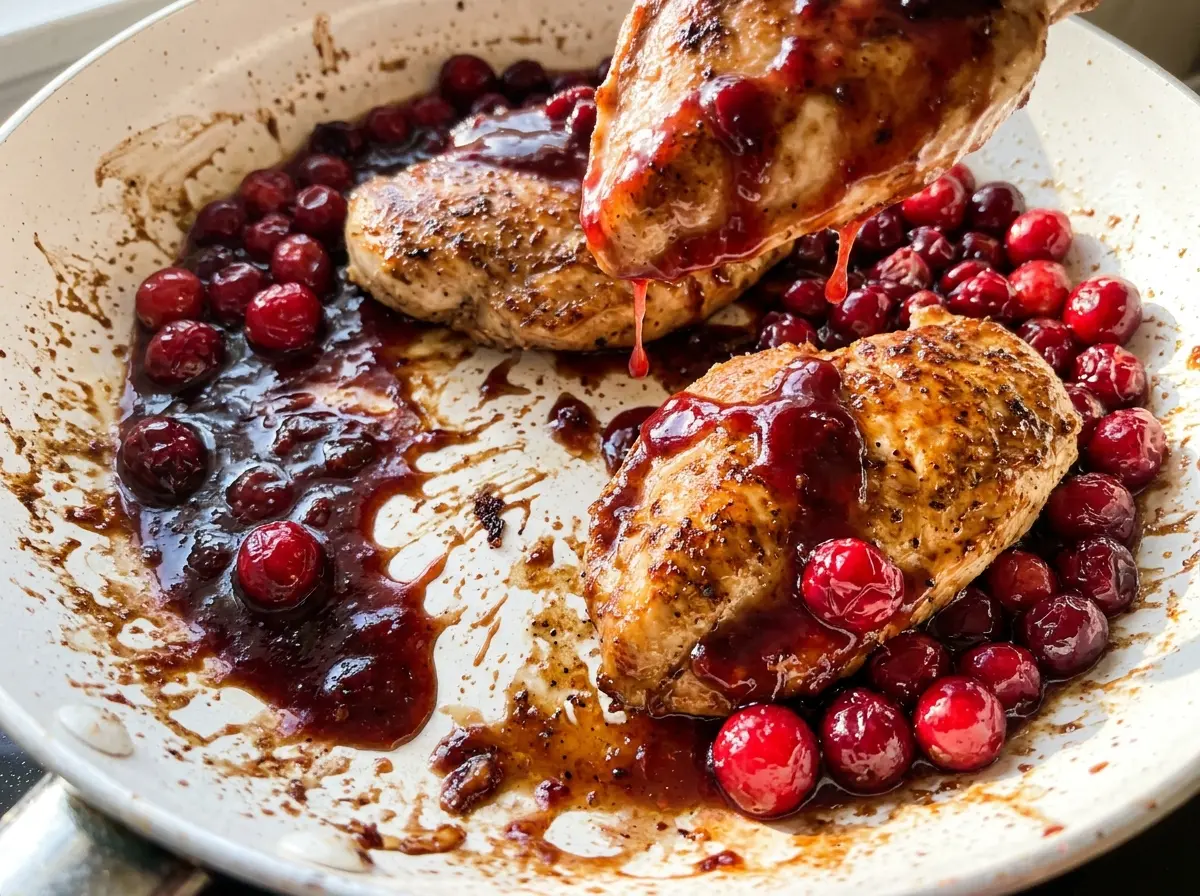
The chicken should give a steady sizzle as it hits the skillet; if it lands with a quiet hiss and starts releasing water, the pan wasn’t hot enough. I let the oil shimmer first, then leave each breast alone long enough to form a golden sear before turning it. Those browned marks are part of the sauce, not something to scrub away. In this easy skillet chicken with cranberry balsamic sauce, the same pan carries those savory bits into a bright, tangy finish.
Fresh cranberries soften and pop as they simmer, while balsamic vinegar brings a sharp edge that keeps the sauce from tasting like cranberry jam. I like this balance with chicken because the sauce is bold without burying the seared flavor. A little butter stirred in at the end makes it glossy, and the chicken goes back into the skillet just long enough to pick up the sauce. Each serving gets tender chicken and plenty of tart, sweet cranberry spooned over the top.
Kitchen Note
Pounding the breasts to an even 3/4-inch thickness helps them cook at the same pace from edge to center. It’s worth taking a minute here; uneven pieces can leave you waiting on the thick end while the thinner part dries out.
Save this skillet chicken with cranberry balsamic sauce for a cozy dinner with a tart, glossy cranberry finish.
Why the Cranberries Need to Burst Before the Sauce Can Coat the Chicken
Whole cranberries don’t turn into a smooth sauce just because they’ve softened. As most of them burst during the simmer, their fruit pulp and natural pectin help the liquid cling to the chicken instead of running thin across the plate. That’s the change I’m watching for: plenty of berries split, and the sauce looks thicker than it did when it first went into the pan.
The other part of the balance is the sharpness of the balsamic. Brown sugar rounds off that acidity, while Dijon gives the sweetness a savory counterpoint. Chicken broth keeps the mixture firmly in sauce territory rather than making it taste like a dessert topping. If you stop while the cranberries are still mostly intact, the sauce can seem too loose and sharply vinegary; let the simmer do its work before deciding it needs more sweetness. This is a tart, savory sauce, and its flavor settles into place as the berries cook down.
What the Cranberries, Balsamic, and Butter Each Bring

- Chicken breasts — Boneless, skinless breasts make this a quick skillet dinner, and the sear gives them color before they finish gently in the sauce. They don’t need to be an expensive cut; even thickness and careful cooking matter more here.
- Cranberries — Fresh and frozen berries both work in this sauce. Frozen cranberries can go straight into the skillet; they don’t need to be thawed first. Choose firm fresh berries if you’re buying them, since soft or wrinkled ones may not hold up as well through the simmer.
- Balsamic vinegar — It gives the sauce its dark, tangy backbone. Regular balsamic vinegar is the right choice; balsamic glaze is already reduced and sweetened, so it can make the sauce too sweet and thick.
- Light brown sugar — Its mild molasses flavor softens the vinegar’s bite without taking over the cranberries. Packed light brown sugar gives a balanced sweetness; the darker version makes the finished sauce taste more strongly of molasses.
- Dijon mustard — Dijon brings a quiet savory tang that keeps the sauce from leaning too sweet. A standard jar works well; there’s no need for a specialty mustard.
- Unsalted butter — Stirring it in after the skillet comes off the heat gives the sauce a smooth, glossy finish. Unsalted butter also lets the chicken seasoning and sauce stay in balance.
How to Sear the Chicken, Then Build the Cranberry Sauce in One Pan
Get a Golden Sear Without Overcooking the Breasts
Pat the chicken dry, season both sides with kosher salt and black pepper, and heat the olive oil in a 12-inch skillet over medium-high until it shimmers. Add the breasts and cook for 5–7 minutes per side, adjusting the heat as needed if they brown too quickly. Check the thickest part of each breast; it needs to reach 165°F before you transfer the chicken to a plate. If the chicken sticks when you try to turn it, give it a little more time to form its sear rather than pulling it away by force.
Let the Cranberries Simmer Until the Sauce Thickens
Lower the heat to medium and stir the chopped shallot in the same skillet for 1–2 minutes, just until softened. Add the cranberries and the remaining sauce ingredients, then bring everything to a simmer uncovered. Cook for 8–12 minutes, stirring occasionally, until most of the cranberries have burst and the sauce has thickened. If the liquid still looks thin, keep it at a gentle simmer and give the berries more time rather than covering the skillet.
Finish with Butter and Warm the Chicken Through
Take the skillet off the heat before stirring in the butter; it should melt into the sauce and leave it glossy. Return the chicken and any juices collected on the plate to the pan, then turn each breast to coat it well. Simmer gently for 1–2 minutes, just until the chicken is hot. A hard boil at this stage can tighten the chicken and make the sauce reduce more than you want.
Three Easy Ways to Adjust the Sauce Without Losing Its Balance
Make the Finish Dairy-Free
Replace the unsalted butter with 2 tablespoons of dairy-free butter and stir it in off the heat the same way. The sauce will still turn glossy, though the exact richness depends on the brand of plant-based butter you use.
Lean into a Deeper Brown-Sugar Note
Use dark brown sugar in place of the light brown sugar, keeping the amount the same. It adds a more pronounced molasses taste and makes the sauce seem a little richer, while the cranberries still bring the tartness.
Trade the Rosemary for Thyme
Use dried thyme in the same quantity as the dried rosemary for a softer, earthier herbal note. It’s a good fit if you want the cranberry and balsamic to stand out without rosemary’s more piney aroma.
Storage and Reheating
- Refrigerator: Store the chicken and sauce together in an airtight container for 3–4 days. The sauce will firm up as it chills.
- Freezer: Freeze the chicken coated with sauce in an airtight freezer-safe container for up to 2–3 months. Thaw it overnight in the refrigerator before reheating.
- Reheating: Warm it in a covered skillet over low heat, stirring the sauce gently and adding a splash of chicken broth if it has become too thick. Avoid a hard boil, which can dry out the chicken.
Questions I Get Asked About This Skillet Chicken
Easy Skillet Chicken With Cranberry Balsamic Sauce – Cozy Dinner Recipe
Ingredients
Equipment
Method
- Pat the chicken dry.
- Season both sides of the chicken with the salt and pepper.
- Heat the olive oil in a 12-inch skillet over medium-high heat until shimmering.
- Add the chicken and cook for 5–7 minutes per side, adjusting the heat as needed, until the thickest part of each breast reaches 165°F.
- Transfer the chicken to a plate.
- Reduce the heat to medium and add the shallot to the skillet.
- Cook for 1–2 minutes, stirring, until softened.
- Add the cranberries, chicken broth, balsamic vinegar, brown sugar, Dijon mustard, and rosemary.
- Bring to a simmer and cook uncovered for 8–12 minutes, stirring occasionally, until most cranberries have burst and the sauce has thickened.
- Remove the skillet from the heat and stir in the butter until melted.
- Return the chicken and any accumulated juices to the skillet, and turn to coat with the sauce.
- Simmer gently for 1–2 minutes until hot.