
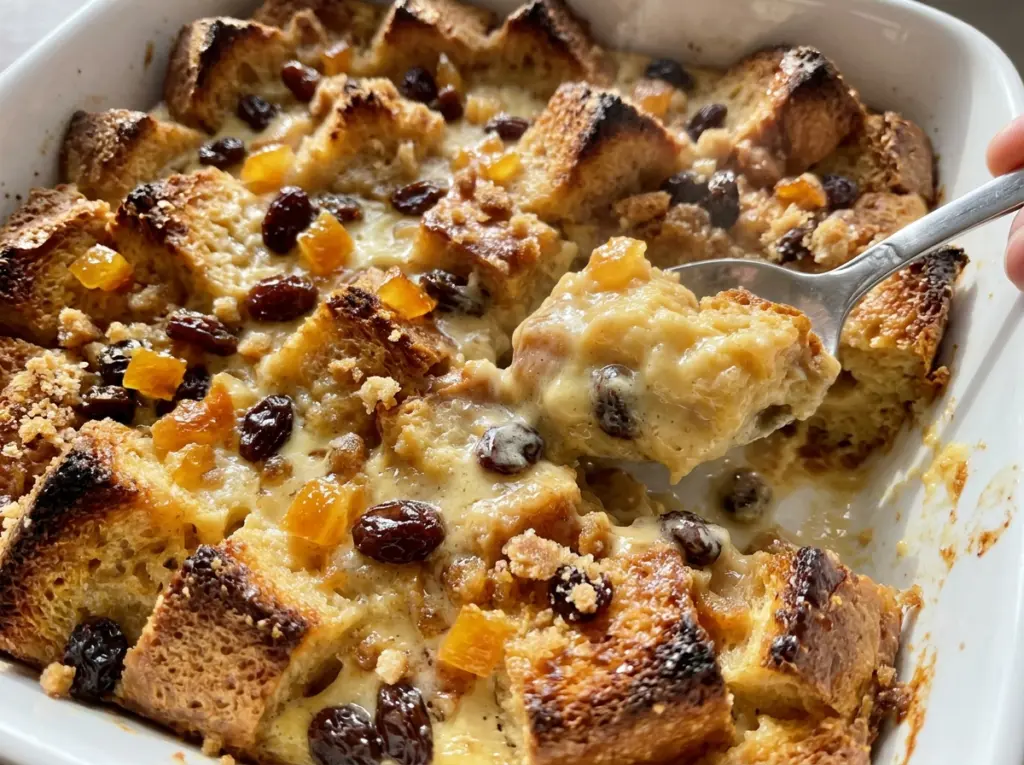
Easy Panettone Bread Pudding
The custard runs between the golden pieces of bread as soon as it hits the pan, and that’s when I know this is going to be a soft, spoonable pudding…

By Ava
•
•
Reading time: 8 min
Tip: save now, make later.
The custard runs between the golden pieces of bread as soon as it hits the pan, and that’s when I know this is going to be a soft, spoonable pudding rather than a dry stack of cubes. Easy Panettone Bread Pudding makes use of the sweet, airy loaf in a way that gives every bite a little golden top and a tender middle.
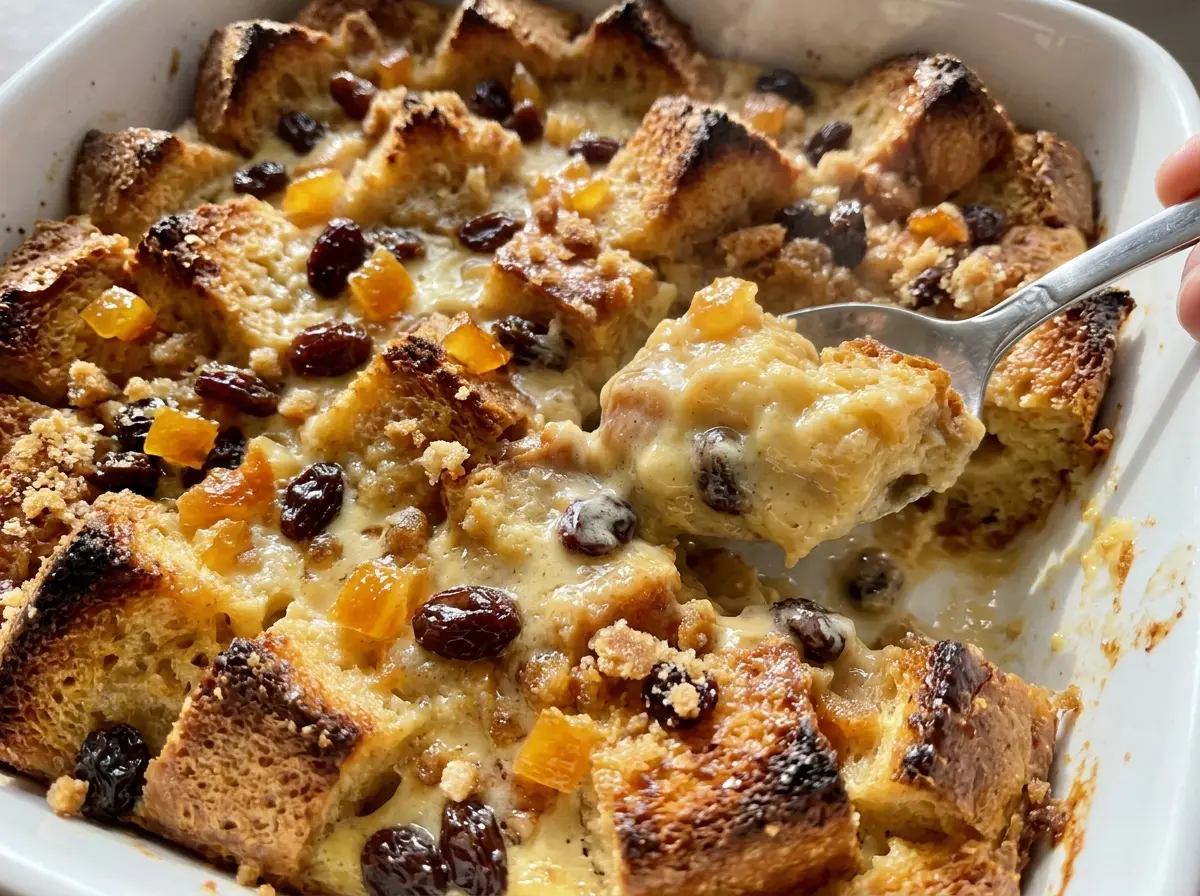
I cut the panettone into even cubes so they soften at the same pace, then let the custard sit with the bread before baking. That short pause gives the cubes time to take in the milk, cream, and eggs instead of leaving a puddle at the bottom of the dish. Once baked, the top is puffed and golden, with custardy pieces tucked underneath.
Kitchen Note
When you press the cubes into the custard, use a light touch. I want each piece damp all over, not flattened; keeping the airy crumb intact gives the pudding a soft texture instead of a dense one.
Save this Easy Panettone Bread Pudding for a soft custard center and a puffed, golden top.
Panettone Already Brings the Sweetness, So the Custard Stays Gentle
Panettone isn’t neutral bread. It’s a sweet, enriched loaf with its own buttery aroma, so the custard doesn’t need to taste like cake batter to make a satisfying dessert. The granulated sugar sweetens the eggs and dairy, while the vanilla rounds out the flavor without covering up the bread.
The balance matters because the bread is the main event here. A richer custard gives the cubes a tender center, but adding much more sweetness would crowd out panettone’s own flavor. The combination of whole milk and heavy cream keeps the custard creamy, while the eggs help it set into soft pieces rather than stay loose. The result has a golden top and a distinct panettone flavor in every bite, not just a sweet coating around ordinary bread.
What Panettone and the Custard Each Bring to the Dish
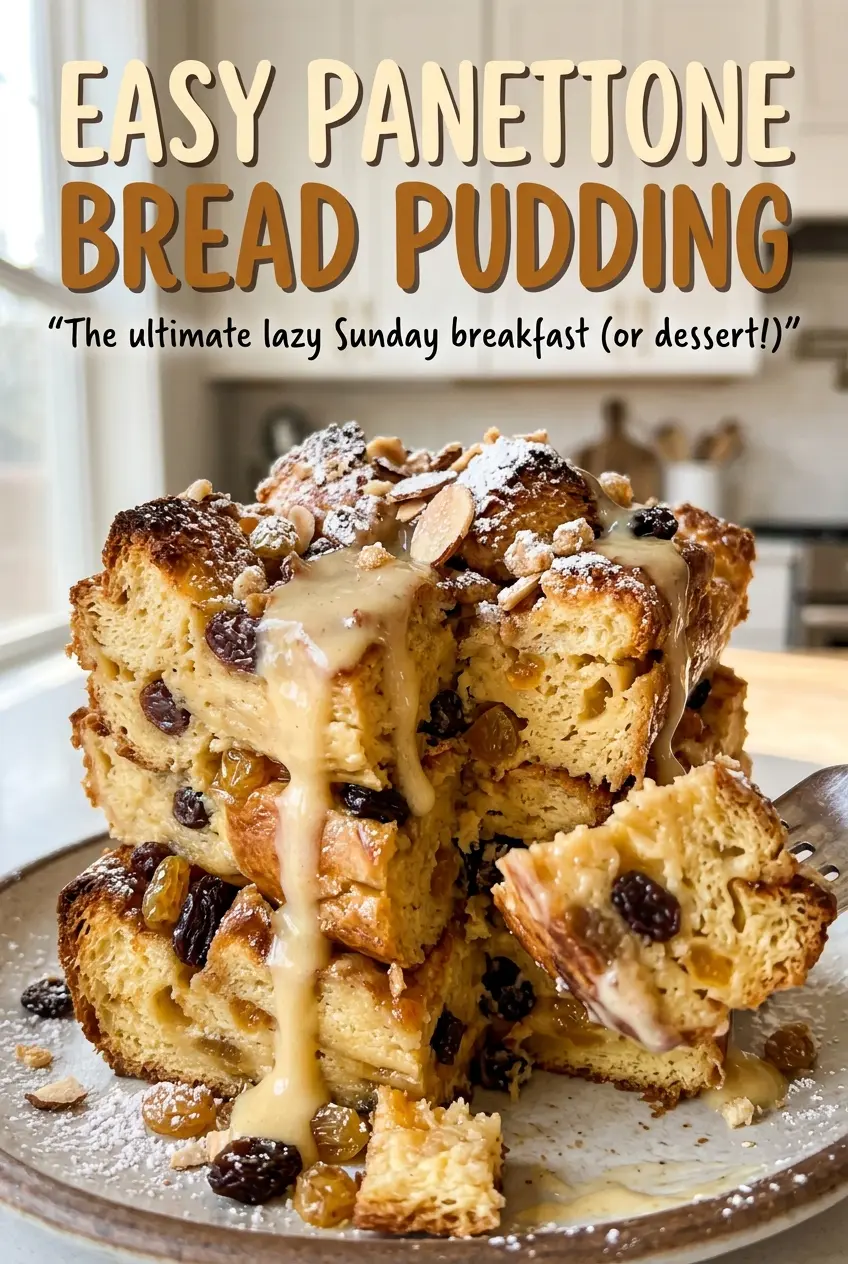
- Panettone — Its light, enriched crumb gives the pudding its character and absorbs the custard without losing all its texture. A fresh loaf works; cut it into even 1-inch cubes so the pieces soften consistently. If panettone isn’t available, brioche is the closest easy swap, though the finished pudding won’t have panettone’s distinctive flavor.
- Eggs — The eggs are what turn the milk and cream into a custard that holds together after baking. Use large eggs and whisk them with the sugar until blended; there isn’t a simple egg-free swap that gives this version the same set.
- Whole milk and heavy cream — The milk keeps the custard from feeling too heavy, while the cream gives it a fuller texture. Both work best plain and unflavored. If you don’t have heavy cream, you can use whole milk in its place, but the custard will be less rich.
- Granulated sugar — It dissolves readily into the eggs and sweetens the custard without adding a competing flavor. Brown sugar can stand in if needed; expect a deeper, molasses-like note.
- Vanilla and salt — Vanilla gives the custard a warm aroma, and a small amount of salt keeps the sweetness from tasting flat. A basic vanilla extract is fine here; there’s no need to use an expensive bottle.
- Butter — Softened butter coats the baking dish and helps the pudding release at serving time. Spread it into the corners and along the sides, where custard can otherwise cling.
How to Soak and Bake the Panettone Without Losing Its Texture
Coat the Dish and Arrange the Cubes
Heat the oven to 350°F, then grease a 9×13-inch baking dish with the softened butter. Arrange the 1-inch panettone cubes in the dish in an even layer so the custard has room to reach them all. If the cubes are piled high in one spot, the center pieces can stay drier while the ones underneath turn very soft. Spread them out before adding the liquid.
Whisk a Smooth, Even Custard
Whisk the eggs and granulated sugar in a large bowl until they’re combined. Add the whole milk, heavy cream, vanilla, and salt, then whisk again until the mixture looks uniform. You’re blending the ingredients, not trying to whip a frothy topping; a foamy mixture can make it harder to judge whether the custard is evenly combined. Scrape the bottom of the bowl once with the whisk so no sugar is left sitting there.
Give the Bread Time to Take in the Custard
Pour the custard evenly over the panettone, moving around the dish rather than pouring all in one place. Gently press the cubes so they make contact with the liquid, then let everything stand for 20 minutes. That pause lets the custard soak into the bread before the eggs begin to set in the oven. If a few cubes sit above the liquid, press them down lightly rather than stirring the whole dish.
Bake Until Puffed, Then Let It Settle
Bake for 45–55 minutes, until the top is puffed and golden and the center reaches 160°F. The top can look ready before the middle has finished setting, so check the center rather than relying on color alone. If it needs more time, return it to the oven and check again. Let the pudding rest for 10 minutes before serving; the custard settles during that pause.
Two Panettone Pudding Variations Worth Trying
Make It Dairy-Free
Replace the butter with a dairy-free buttery spread, the whole milk with unsweetened oat milk, and the heavy cream with a dairy-free whipping cream. Choose an unsweetened cream alternative so the pudding doesn’t become overly sweet. The custard will be a little less rich, but the eggs still give it structure.
Use Chocolate Panettone
Swap in a 1-pound chocolate panettone and keep the rest of the ingredients and method the same. The chocolate makes the pudding taste more dessert-like and brings a deeper flavor to the custard, so it’s a good choice when you want the bread itself to stand out in a different way.
Choose a Citrus Panettone
A 1-pound citrus panettone brings a brighter aroma while keeping the soft, custard-soaked texture. The citrus note changes the character of the pudding without needing extra flavorings, and the same cube size and baking method work.
Storage and Reheating
- Refrigerator: Cover leftovers and refrigerate for 3–4 days. The bread softens more as it sits, so the texture becomes more uniform.
- Freezer: Freeze cooled portions in an airtight container for up to 2 months. Thaw them in the refrigerator before reheating; the custard may be a little less silky after freezing.
- Reheating: Warm a portion in a 325°F oven, covered loosely, or use the microwave for a single serving. Heat leftovers to 165°F, and avoid leaving the dish uncovered for a long reheat or the edges can dry out.
Questions I Get Asked About Panettone Bread Pudding
Easy Panettone Bread Pudding
Ingredients
Equipment
Method
- Heat the oven to 350°F.
- Grease a 9x13-inch baking dish with the butter.
- Arrange the panettone cubes in the prepared dish.
- In a large bowl, whisk the eggs and sugar until combined.
- Whisk in the milk, heavy cream, vanilla, and salt.
- Pour the custard evenly over the panettone and gently press the cubes into it.
- Let stand for 20 minutes.
- Bake for 45–55 minutes, until puffed and golden and the center reaches 160°F.
- Let rest for 10 minutes before serving.