
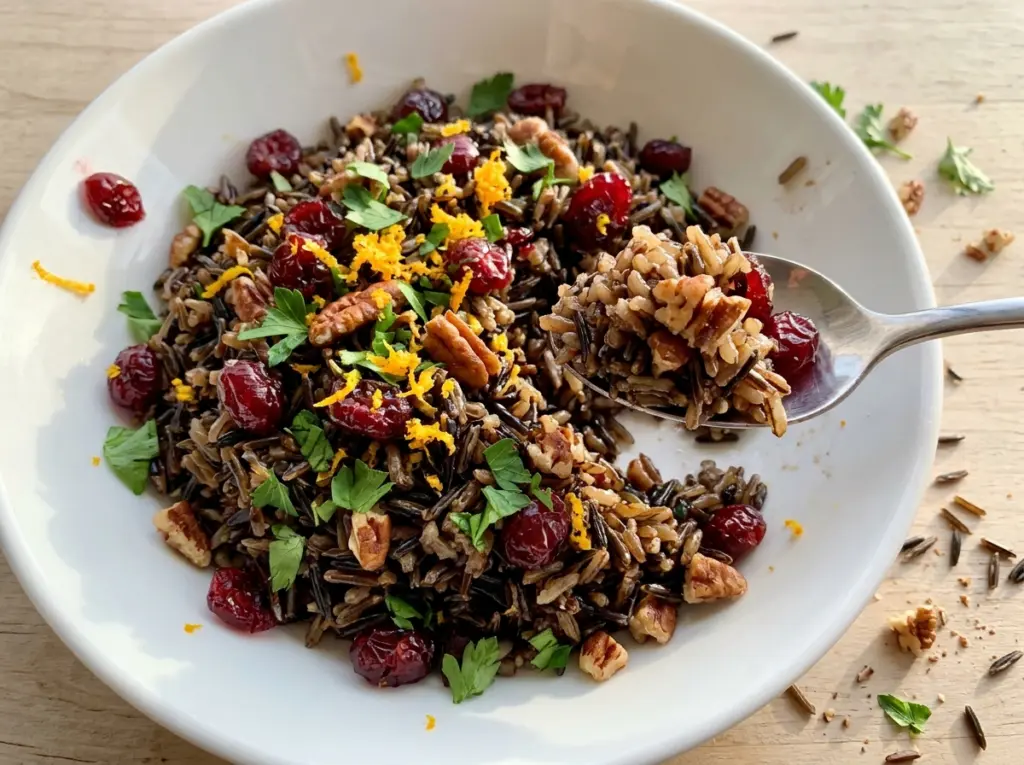
Cranberry Pecan Wild Rice Pilaf With Fresh Orange Zest – Homemade Recipe
The pecans smell warm and toasty before anything else has a chance to happen in the pan. A few minutes later, the butter softens the onion and celery, and the…

By Ava
•
•
Reading time: 9 min
Tip: save now, make later.
The pecans smell warm and toasty before anything else has a chance to happen in the pan. A few minutes later, the butter softens the onion and celery, and the kitchen starts smelling like a proper pilaf is underway. I like that this cranberry pecan wild rice pilaf builds its flavor in one saucepan instead of asking you to juggle a skillet and a pot.
The wild rice blend simmers in low-sodium chicken broth until the grains are tender and most of the liquid is absorbed. Then the cranberries, orange zest, and pecans go in off the heat, where they keep their separate textures and flavors. The fresh citrus lifts the nutty rice without making the dish taste sweet.
It’s a generous side for six, with enough contrast to stand beside a simple roast or a weeknight main. Each forkful brings tender grains, tart fruit, and a little crunch from the pecans.
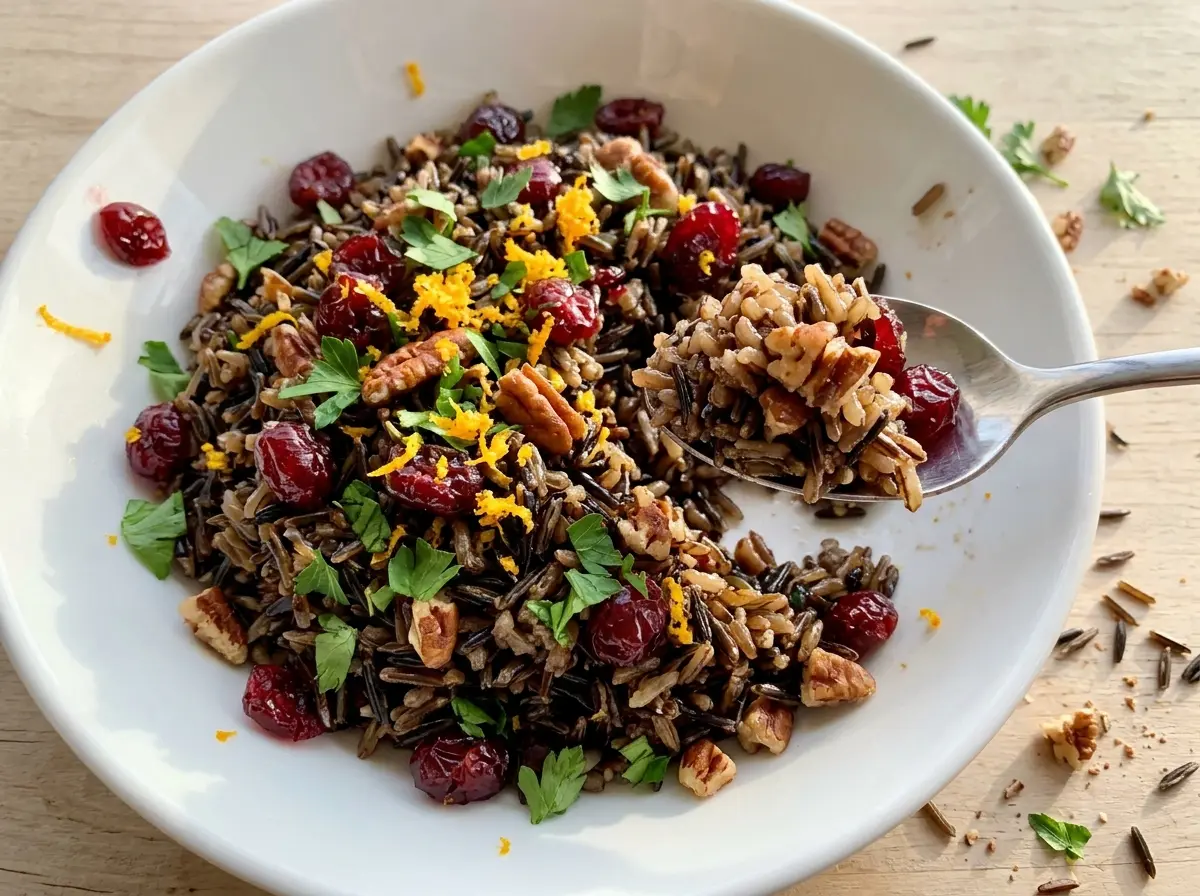
Kitchen Note
I grate the orange zest before the rice starts simmering and keep it beside the cranberries. Stirring it in after the pan comes off the heat keeps that fresh citrus aroma bright.
Save this cranberry pecan wild rice pilaf for its tart cranberries, toasted pecans, and fresh orange finish.
Why the Dried Cranberries Stay Out of the Simmering Pot
The rice needs the broth to itself while it cooks. Dried cranberries are concentrated and absorb liquid as they soften; simmering them for the full 45 to 55 minutes would change the balance of the pot and leave them much softer. Adding them after the rice is tender gives the grains time to finish without the fruit competing for that cooking liquid.
The covered rest gives the cranberries a little time to warm and soften, but they still read as distinct bites rather than melting into the rice. That contrast matters in a pilaf with several textures: the blend stays tender, the cranberries stay chewy, and the pecans bring their own bite. It’s a small timing choice that keeps the fruit from taking over the bowl.
It also helps the orange zest stay noticeable. The fruit and zest are stirred in together once the saucepan is off the heat, so the citrus doesn’t disappear into a long simmer.
How the Wild Rice Blend, Orange Zest, and Broth Shape the Pilaf

- Wild rice blend — An unseasoned blend keeps the dish’s flavor balanced and lets the broth, fruit, and zest do their jobs. Choose a plain, uncooked blend rather than a quick-cooking or seasoned packet; those products don’t follow the same simmer. A familiar store brand is fine. If you want a different dried fruit, dried cherries can replace the cranberries in the same amount, with a rounder, less tart flavor.
- Low-sodium chicken broth — The broth is absorbed into the grains, so it supplies the main savory seasoning. Low-sodium broth gives you more control over the salt, and a basic grocery-store version works well. For a vegetarian pilaf, use vegetable broth in the same amount; the result will have a less chicken-forward, more vegetable-savoury base.
- Unsalted butter — Butter carries the flavor of the onion and celery into the rice, while unsalted butter lets the measured kosher salt stay in control. There’s no need for a premium brand here; use butter that tastes fresh. For a dairy-free version, olive oil works in the same amount, though the base will taste less buttery.
- Pecans — Fresh pecans make a difference because stale nuts can taste flat or slightly bitter. A standard bag is perfectly good when it smells clean and nutty. Chopped walnuts are the closest easy substitute; use the same volume and watch them closely as they toast, since they can darken quickly.
- Dried cranberries and orange zest — Choose cranberries that are soft and pliable rather than hard and dry. Finely grated fresh zest adds fragrant citrus oils without bringing extra liquid into the pan. Lemon zest can replace it in the same amount for a sharper, less sweet citrus note.
From Fragrant Pecans to a Covered 10-Minute Finish
Toast the Pecans Until Fragrant
Set a dry 3-quart saucepan over medium heat and stir the chopped pecans often for 3 to 4 minutes. They’re ready when they smell toasted; don’t wait for them to turn very dark, because nuts can scorch quickly in a dry pan. Transfer them to a small bowl as soon as they’re fragrant. This also clears the saucepan for the rest of the pilaf.
Soften the Aromatics, Then Coat the Rice
Melt the butter in that same saucepan over medium heat, then add the finely chopped onion and celery. Cook for 4 to 5 minutes, stirring occasionally, until the pieces have softened. Add the uncooked wild rice blend and stir for 1 minute so the grains are coated in butter. Keep the heat at medium here; the goal is to coat the rice, not brown the vegetables.
Simmer Gently Until the Grains Are Tender
Stir in the broth, kosher salt, and black pepper, then bring the mixture to a boil. Cover the saucepan and reduce the heat to low for a 45- to 55-minute simmer. Look for tender grains with most of the broth absorbed; the blend, not the clock alone, tells you when it’s ready. If the rice still feels firm, keep it covered and give it more time within that cooking range.
Finish Off the Heat and Let It Stand
Remove the saucepan from the heat before stirring in the cranberries, orange zest, and toasted pecans. Fold them through so the fruit and nuts are distributed without crushing the tender grains. Cover the pan and let it stand for 10 minutes before serving. That covered pause lets the flavors settle together without returning the fruit and nuts to a full simmer.
Two Useful Ways to Change the Sweetness or Make It Plant-Based
Make the Pilaf Plant-Based
Use olive oil instead of the butter and vegetable broth instead of chicken broth. Both swaps keep the same basic cooking method, while the finished pilaf tastes a little less rich and more focused on the toasted nuts and citrus.
Dial Back the Sweet-Tart Fruit
Use 1/4 cup dried cranberries instead of 1/2 cup when you want the rice and pecans to lead. The dish will be less tart and fruity, but the orange zest still gives each serving a fresh finish.
Storage and Reheating
- Refrigerator: Refrigerate leftovers within 2 hours and keep them in an airtight container for 3 to 4 days. The grains will firm up as they chill.
- Freezer: Freeze in an airtight container for up to 2 months. Thaw in the refrigerator; the rice and cranberries may be a little softer after freezing.
- Reheating: Microwave covered, stirring halfway through, until steaming throughout. Keep it covered so the rice doesn’t dry out at the edges.
Questions That Come Up While Cooking Wild Rice Pilaf
Cranberry Pecan Wild Rice Pilaf With Fresh Orange Zest – Homemade Recipe
Ingredients
Equipment
Method
- Toast the pecans in a dry 3-quart saucepan over medium heat for 3 to 4 minutes, stirring often, until fragrant; transfer them to a small bowl.
- Melt the butter in the same saucepan over medium heat.
- Add the onion and celery and cook for 4 to 5 minutes, stirring occasionally, until softened.
- Add the wild rice blend and stir for 1 minute to coat the grains in butter.
- Stir in the broth, salt, and pepper.
- Bring the mixture to a boil.
- Cover and reduce the heat to low.
- Simmer for 45 to 55 minutes, until the rice is tender and most of the broth is absorbed.
- Remove the saucepan from the heat and stir in the cranberries, orange zest, and toasted pecans.
- Cover and let stand for 10 minutes before serving.