
Easy Candied Pecans
When the oven door opens, the cinnamon reaches you before the pecans do. Then there’s that warm, toasted smell, and the sugar coating has gone from damp and patchy to…

By Ava
•
•
Reading time: 9 min
Tip: save now, make later.
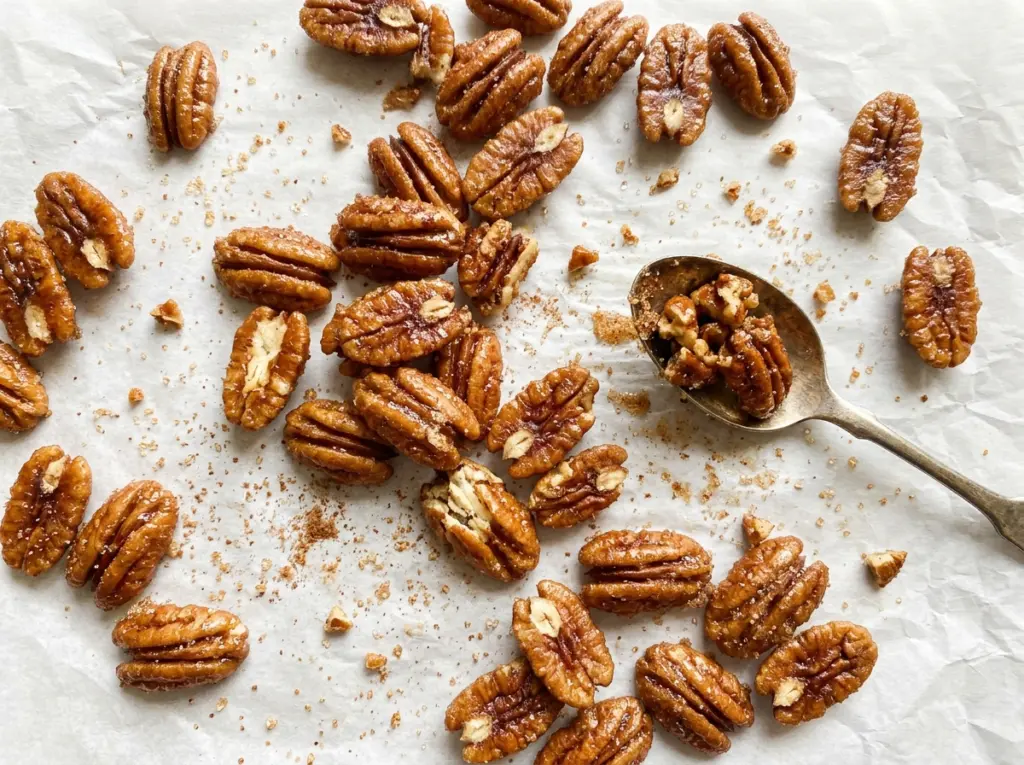
When the oven door opens, the cinnamon reaches you before the pecans do. Then there’s that warm, toasted smell, and the sugar coating has gone from damp and patchy to dry and lightly crisp. That change is what makes Easy Candied Pecans feel like more than pecans tossed with sugar: each half gets a thin, even coating without turning into a hard candy shell.
I whisk the egg white just until foamy, then use it to help the vanilla and cinnamon sugar cling to the pecans. The oven does the rest at a steady 300°F, and a stir every 15 minutes keeps the pieces from sitting in one spot too long. Let them cool all the way on the baking sheet before you taste one; the coating firms as the heat leaves, and the finished pecans have a sweet cinnamon crunch around their toasted centers.
Kitchen Note
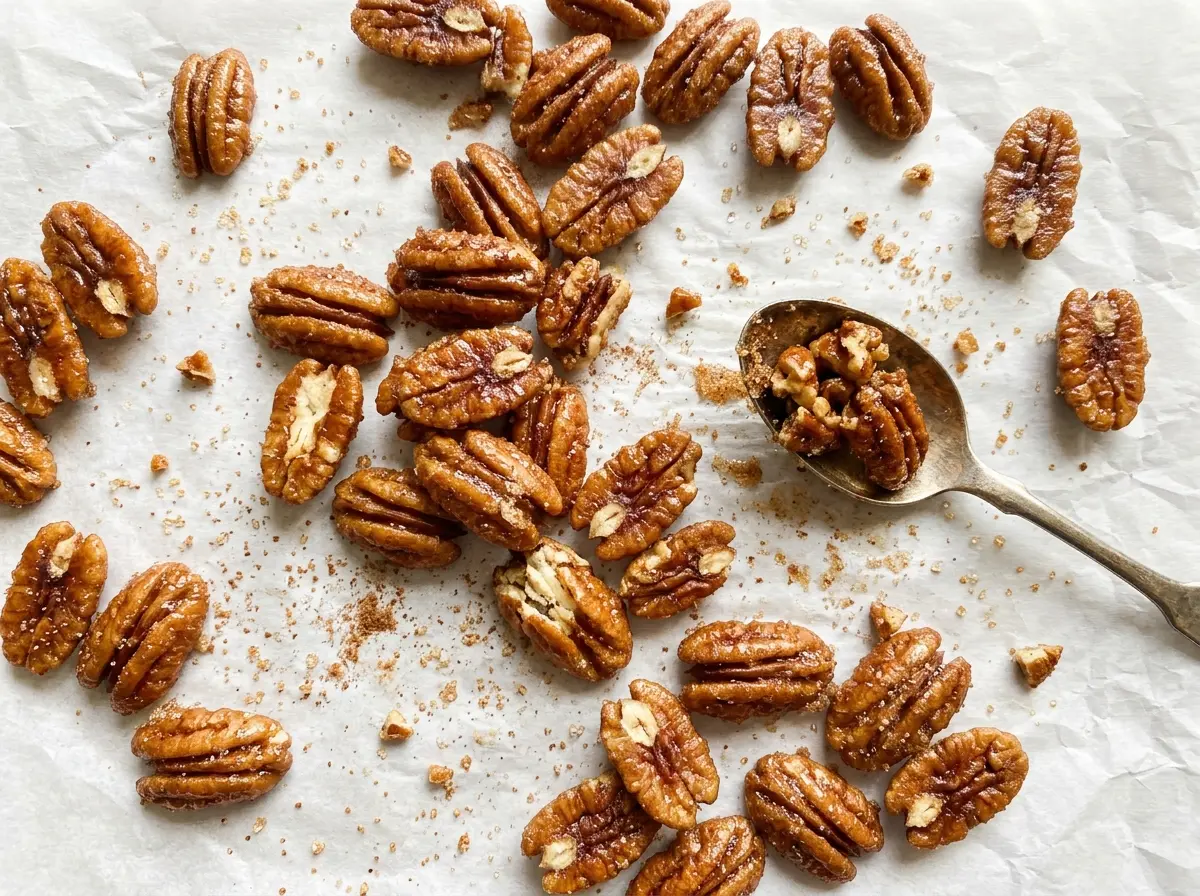
A large rimmed baking sheet is worth using here. When you stir the pecans, its raised edge keeps them from rolling off the parchment and makes the job much less fussy.
Save these Easy Candied Pecans for a crunchy cinnamon-sugar snack or a batch you can portion out after they cool.
Why These Pecans Get a Dry Cinnamon Coating, Not a Candy Shell
Some candied nuts are cooked in a syrup until the sugar turns glossy and hard. This batch takes a different route: the foamy egg white gives the dry sugar mixture something to cling to, and the oven gradually dries that coating around each pecan. You get a light, crisp finish instead of a thick layer of brittle caramel.
That distinction matters when you’re judging what’s happening in the oven. The pecans don’t need to look lacquered or bubbling, and the sugar doesn’t need to melt into a pan of syrup. The coating starts out visibly damp, then dries as the nuts bake. Stirring at regular intervals redistributes the coating and lets the pecans bake more evenly. If the pan looks a little uneven at first, keep going; the finished texture comes from drying the coating, not from chasing a shiny glaze.
The slower bake also gives the pecans time to smell toasted without relying on a blast of high heat. Once the coating is dry and the nuts smell warm and roasted, they’re ready to come out. Cooling finishes the texture, so judge the result when the pecans are no longer hot rather than expecting a hard crunch straight from the oven.
The Pecans, Sugar, and Cinnamon That Shape the Coating
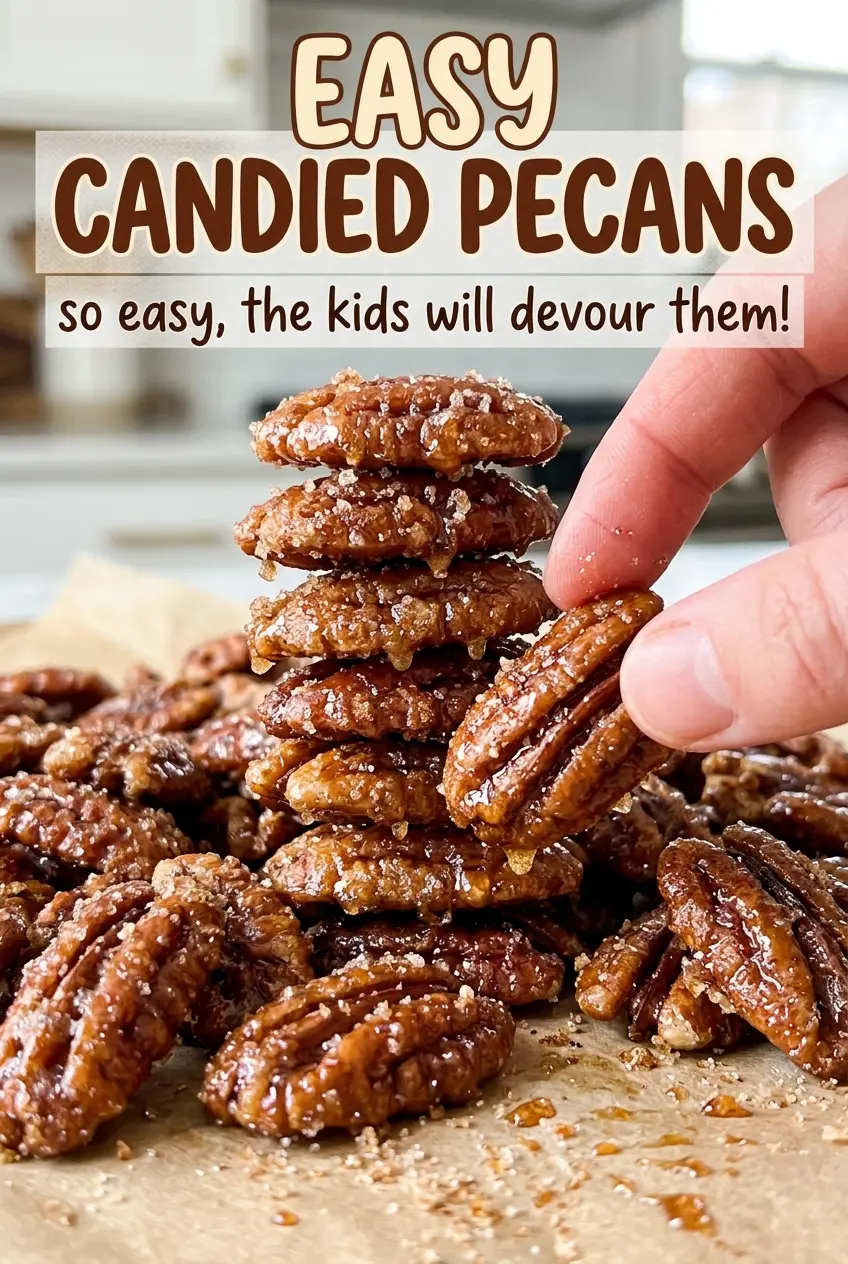
- Pecan halves — Look for pieces that are fairly uniform in size, so they bake at a similar pace. Fresh pecans should smell nutty, not stale or bitter; their natural oils are the main flavor underneath the sweet coating. Halves are easiest to toss and turn without breaking. I don’t recommend changing to a different nut if you want the same bake and texture.
- Egg white — This is the binder that helps the cinnamon sugar cling without adding a wet syrup. A fresh large egg white whisks readily into foam; keep whisking only until it looks foamy, rather than trying to make stiff peaks. There isn’t an equal one-for-one substitute I’d use for this exact coating.
- Granulated sugar — Its dry, fine crystals distribute well through the cinnamon and salt and bake into the light coating. Regular granulated sugar is the right choice here; brown sugar brings extra moisture and can leave the coating softer and stickier. No specialty sugar is needed.
- Ground cinnamon — Fresh, fragrant cinnamon gives the coating its familiar warm taste. If the jar smells faint or dusty, the finished pecans will taste flatter. The cinnamon is easy to leave out for a simpler vanilla-sugar version, though you’ll lose that defining spice.
- Vanilla extract — Vanilla rounds out the sweetness and gives the egg-white coating a warmer aroma. Use the extract you keep for baking; there’s no need for an expensive bottle. I wouldn’t replace it with a larger pour of another liquid, since extra moisture changes how the coating bakes.
- Fine salt — Fine salt spreads through the sugar mixture more evenly than coarse crystals, so a little reaches across the whole batch. It keeps the sweetness from tasting one-note. The fine grind matters more here than choosing a specialty salt.
Getting the Egg White Coating Even Before the Long Bake
Foam the egg white, then add the vanilla
Heat the oven to 300°F and line a large rimmed baking sheet with parchment paper before you start coating the nuts. In a large bowl, whisk the egg white until foamy; you’re looking for a layer of small bubbles, not peaks that stand up on the whisk. Whisk in the vanilla extract once the white is foamy. If the egg white is still completely clear and loose, give it another short whisk before moving on.
Coat the pecans before adding the dry mixture
Add the pecan halves to the egg-white mixture and toss until they’re coated. In a separate small bowl, stir the granulated sugar, cinnamon, and fine salt together so the cinnamon isn’t left in little pockets. Sprinkle that mixture over the pecans and toss again until the coating looks distributed over the nuts. Take a moment here; a quick, thorough toss now is easier than trying to correct bare patches after baking.
Spread, stir, and bake until dry
Spread the coated pecans in a single layer on the prepared baking sheet. Bake for 45 to 50 minutes, stirring every 15 minutes so the nuts shift position and the coating doesn’t stay undisturbed on one section of the pan. Look for a dry coating and a toasted pecan aroma as they near the end of the bake. If the coating still looks wet, use the full baking window rather than pulling the tray early.
Let the coating set on the pan
Take the baking sheet from the oven and leave the pecans on it until they’ve cooled completely. They’ll be softer while hot, so don’t use that first warm bite to judge the final crunch. Once cool, the coating should feel dry rather than tacky. Waiting also makes it easier to lift the pecans from the parchment without pulling apart the coating.
Easy Ways to Change the Shape or Spice of the Batch
Make a vanilla-forward batch without cinnamon
Leave out the ground cinnamon and keep the other ingredients and method the same. The pecans still get a sweet, crisp coating, with the vanilla coming through more clearly and none of the warm spice.
Turn the cooled halves into pecan crunch
Once the pecans are completely cool, chop them coarsely for a smaller, more spoonable crunch. Keep the pieces fairly large if you want the cinnamon coating to remain noticeable in each bite; finer chopping makes a crumbly finish.
A naturally gluten-free and dairy-free option
The listed ingredients contain no wheat or dairy, so there’s no replacement needed for those diets. Keep the pecans, egg white, sugar, cinnamon, vanilla, and salt as listed for the same crisp coating; this version does contain egg.
Storage and Reheating
- Room temperature: Once completely cool, keep the pecans in an airtight container for up to 2 weeks. Humidity can soften the coating over time.
- Freezer: They freeze well for up to 2 months in an airtight freezer-safe container. Thaw them while still sealed so condensation forms on the container, not on the pecans.
- Reheating: Reheating isn’t necessary; serve them at room temperature. Avoid warming them in a microwave, which can make the coating sticky and unevenly hot.
Questions That Come Up While Making Candied Pecans
Easy Candied Pecans
Ingredients
Equipment
Method
- Heat the oven to 300°F.
- Line a large rimmed baking sheet with parchment paper.
- In a large bowl, whisk the egg white until foamy.
- Whisk in the vanilla extract.
- Add the pecans and toss until coated with the egg white mixture.
- In a small bowl, stir together the sugar, cinnamon, and salt.
- Sprinkle the sugar mixture over the pecans and toss until evenly coated.
- Spread the pecans in a single layer on the prepared baking sheet.
- Bake for 45 to 50 minutes, stirring every 15 minutes, until the coating is dry and the pecans smell toasted.
- Let the pecans cool completely on the baking sheet before serving.