
Cinnamon Pie
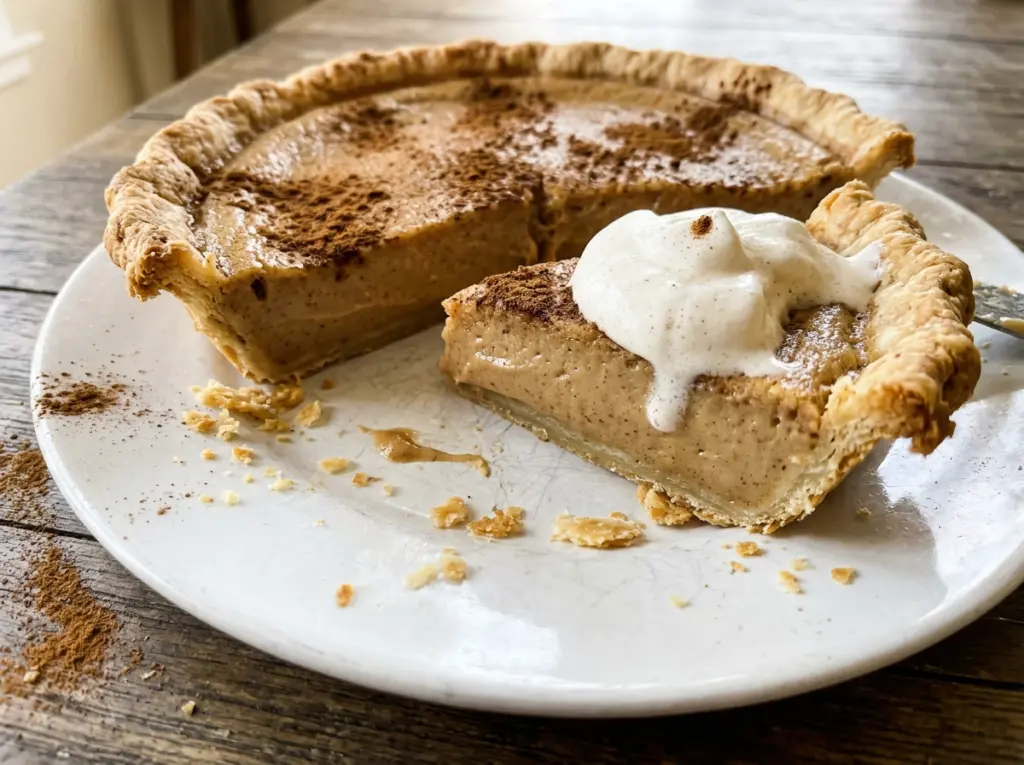
When this pie comes out of the oven, the edges look settled but the center still has a gentle wobble. That’s exactly what I want to see. Cinnamon pie can…

By Ava
•
•
Reading time: 8 min
Tip: save now, make later.
When this pie comes out of the oven, the edges look settled but the center still has a gentle wobble. That’s exactly what I want to see. Cinnamon pie can look like a simple custard, but the filling needs enough structure to slice cleanly without baking until it turns firm and rubbery.
I make this version with a refrigerated pie crust and a cinnamon filling whisked smooth before it goes into the oven. The bake starts hot, then drops to a lower temperature so the filling can finish setting more gently. Cooling takes patience, but it gives the custard time to settle into a tender slice with a clear cinnamon warmth and a buttery crust.
Kitchen Note
Let the melted butter cool before it goes into the egg mixture. Warm butter can start setting the eggs in little bits, and cooled butter whisks in smoothly.
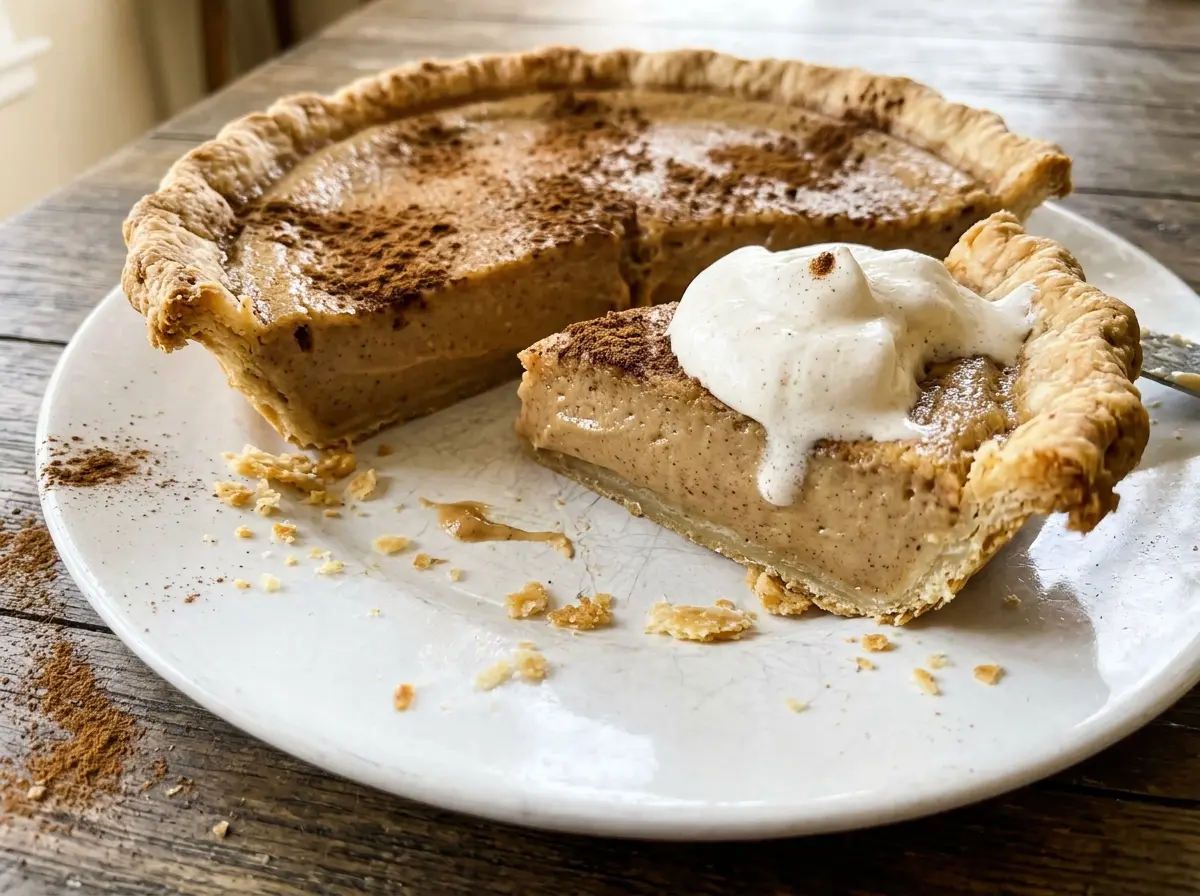
Save this cinnamon pie for its silky custard, mellow cinnamon, and crisp-edged pie crust.
Why the Flour Belongs in a Pie That Looks Like Custard
Eggs give the filling its custard texture, while flour helps the milk-based mixture hold together as it bakes and cools. Without that bit of structure, a slice of this pie would be more delicate to lift and more likely to slump onto the plate. The flour doesn’t turn the filling into cake; it supports the soft set that makes a neat slice possible.
Whisking the flour with the sugar, cinnamon, eggs, and salt before adding milk gives you a chance to smooth out dry pockets while the mixture is still thick. Once the milk goes in, the filling becomes much looser, and any flour clumps are harder to break up. A smooth mixture at this point means the finished custard won’t have little floury lumps interrupting its texture. The cinnamon is mixed through the filling rather than used as a topping, so its warmth runs through each bite.
What Gives This Cinnamon Custard Its Gentle, Rounded Flavor

- Ground cinnamon — It carries the defining flavor, so use cinnamon that smells fragrant when you open the jar. If it has been sitting in the pantry for ages and barely smells like anything, the pie will taste muted. There isn’t a direct substitute that gives the same familiar cinnamon character.
- Whole milk — Its fat gives the custard a fuller, smoother feel than a lower-fat milk would. Keep whole milk for the intended texture; a lower-fat swap would make the filling less rich.
- Eggs — Eggs set the filling as it bakes and help it hold together after cooling. Use large eggs as listed, and bring them to the bowl without leaving bits of shell behind.
- All-purpose flour — This is the small amount of structure that helps the custard slice. It also needs to be whisked in evenly; a flour substitute changes how the filling thickens, so I don’t recommend swapping it casually.
- Refrigerated unbaked pie crust — A 9-inch crust fits the pie plate and gives the soft filling a sturdy base. Keep it cold until you’re ready to fit it into the plate, so it’s easier to handle and crimp.
- Unsalted butter and vanilla — Butter rounds out the filling, and vanilla softens the sharp edge of the cinnamon. Unsalted butter keeps the salt level controlled; the vanilla extract adds background warmth rather than taking over.
The Two-Temperature Bake That Lets the Custard Set Gently
Fit and Crimp the Cold Crust
Heat the oven to 425°F, then fit the refrigerated crust into a 9-inch pie plate and crimp the edges. Press the crust into the corners so it sits against the plate rather than bridging over them. A snug fit helps prevent gaps between the crust and filling. Keep the crimp even around the rim so the exposed edge browns at a similar rate.
Whisk the Filling Until Smooth
In a medium bowl, whisk the eggs, sugar, flour, cinnamon, and salt until the mixture looks uniform, with no dry streaks of flour. Gradually whisk in the milk; adding it in stages makes the thick mixture easier to loosen without leaving clumps. Whisk in the melted butter and vanilla last. If you spot a floury lump, press it against the side of the bowl with the whisk before pouring.
Start Hot, Then Lower the Heat
Pour the filling into the crust and bake for 15 minutes at 425°F. Then reduce the oven to 350°F and cover the crust edges with foil to slow their browning while the center finishes. Bake for 35 to 45 minutes, until the filling is set around the edges and the center still jiggles slightly. A thermometer inserted near the center should read 175°F; don’t wait for the whole surface to look rigid.
Let the Center Finish Setting
Move the pie to a rack and let it cool for at least 3 hours before slicing. The filling continues to firm as it cools, so cutting while it’s warm gives you a soft, messy wedge instead of a slice that holds its shape. A fully cooled pie should feel set at the edges while keeping a tender, custardy middle. Use a sharp knife and wipe it between slices for cleaner edges.
Two Crust Edges That Suit This Cinnamon Pie
A Soft Pinched Rim
For a rounded, homemade-looking edge, pinch the crust between your fingers as you crimp around the plate. Keep the points low rather than pulling them thin; a thicker rim gives you a little more crust in each slice and is easy to cover with foil during the bake.
A Neat Fork-Pressed Rim
For an even, simple pattern, press the tines of a fork around the edge as you crimp it. This gives the pie a tidy finish without changing the filling or bake. Press firmly enough to mark the dough, but not so hard that you push the crust through to the plate.
Storage and Reheating
- Refrigerator: Cover the cooled pie and refrigerate it for 3 to 4 days. The custard firms when cold, so slices will be a little denser straight from the refrigerator.
- Freezer: Freezing isn’t recommended; custard can turn watery or grainy after thawing, and the crust can lose its crisp texture.
- Reheating: This pie is best served chilled or brought briefly to room temperature. Skip reheating, which can make the egg-based filling tough or cause it to separate.
Questions That Come Up With Cinnamon Pie
Cinnamon Pie
Ingredients
Equipment
Method
- Heat the oven to 425°F.
- Fit the pie crust into a 9-inch pie plate and crimp the edges.
- In a medium bowl, whisk the eggs, sugar, flour, cinnamon, and salt until smooth.
- Gradually whisk in the milk, then whisk in the melted butter and vanilla.
- Pour the filling into the crust and bake for 15 minutes at 425°F.
- Reduce the oven to 350°F, cover the crust edges with foil, and bake for 35 to 45 minutes, until the filling is set around the edges, the center still jiggles slightly, and a thermometer inserted near the center reads 175°F.
- Cool the pie on a rack for at least 3 hours before slicing.