
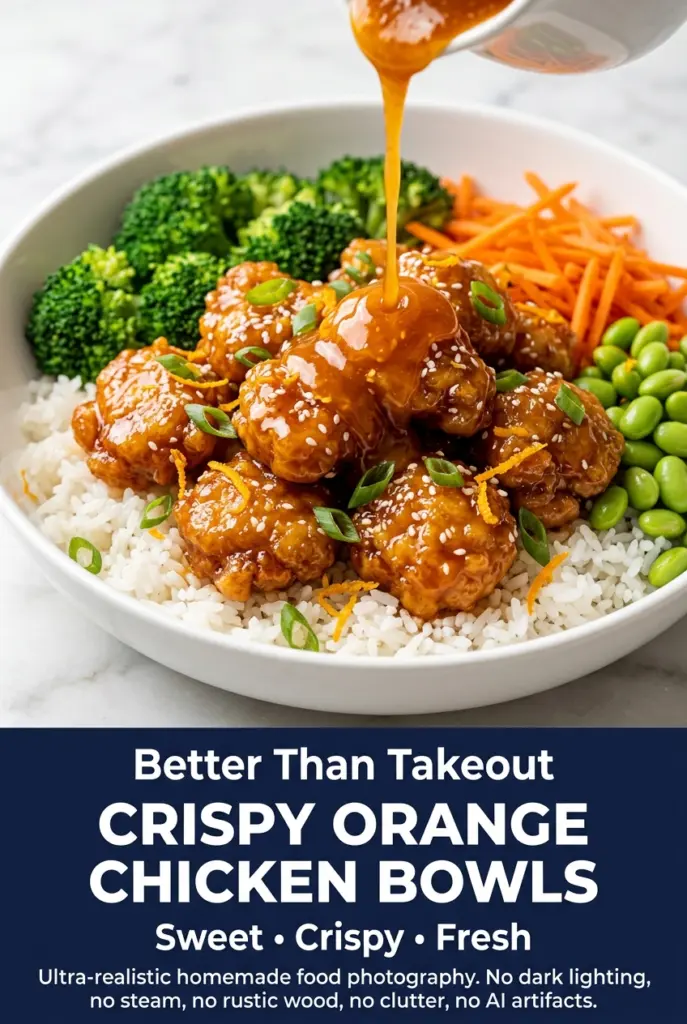
Crispy Orange Chicken Bowls
Crispy Orange Chicken Bowls hit that sweet spot between takeout comfort and a dinner you can actually pull off on a weeknight. The chicken stays shatteringly crisp under a glossy…

By Ava
•
•
Reading time: 10 min
Tip: save now, make later.
Crispy Orange Chicken Bowls hit that sweet spot between takeout comfort and a dinner you can actually pull off on a weeknight. The chicken stays shatteringly crisp under a glossy orange glaze, and the rice, broccoli, carrots, and edamame give every bite enough contrast that the bowl never feels heavy or one-note.
The part that makes this version work is the layering. The chicken gets a cornstarch-and-flour coating for a thin, crackly crust, then the sauce is cooked separately until it’s thick enough to cling instead of soaking straight through. Orange juice and zest bring the bright citrus, but soy sauce, garlic, ginger, and honey keep it grounded so it tastes balanced, not candy-sweet. If you’ve ever had orange chicken turn limp the second it hits the sauce, this method fixes that.
Below you’ll find the details that matter most: how to fry in batches without steaming the coating, when the sauce is ready to toss, and the small swaps that make these bowls work for different diets and schedules.
The chicken stayed crisp even after I tossed it in the sauce, and the orange glaze thickened up beautifully in just a couple minutes. My husband went back for seconds before I even sat down.
Crispy Orange Chicken Bowls are the kind of dinner you’ll want to pin for busy nights when you want that sticky citrus glaze and crisp coating to stay intact.

The Crispiest Part Happens Before the Sauce Ever Touches the Pan
The biggest mistake with orange chicken bowls is rushing the chicken straight into sauce before the coating has a chance to set. Cornstarch helps, but the real trick is frying in batches so the oil stays hot enough to crisp the outside before the chicken starts releasing steam. If the pan gets crowded, the coating turns pale and soft instead of forming that thin, craggy shell that holds up later.
The second place people lose texture is in the sauce timing. The glaze should be thickened first and reduced until it looks glossy and lightly syrupy. If it’s still thin when the chicken goes in, it will soak into the crust instead of sitting on top of it. The goal is a coating, not a bath.
- Chicken breast — Lean chicken breast works well here because the breading and sauce add enough richness. Cut the pieces evenly so they finish at the same time; uneven chunks are where dry edges start.
- Cornstarch plus flour — Cornstarch gives the crispness and flour gives the coating a little structure. All cornstarch alone can go glassy and brittle, while all flour tends to fry up heavier.
- Orange juice and zest — Juice carries the sauce, but zest is what makes it taste like actual orange instead of sweet syrup. Fresh zest matters here; bottled juice alone won’t give you the same brightness.
- Low-sodium soy sauce — This keeps the glaze savory enough to balance the honey and brown sugar. Regular soy sauce works, but the sauce can get salty fast, especially after it reduces.
- Rice vinegar — The vinegar sharpens the citrus and keeps the sauce from tasting flat. If you don’t have it, use apple cider vinegar in the same amount for a slightly softer finish.
Frying, Thickening, and Tossing Without Losing the Crunch
Season and Coat the Chicken
Season the chicken first so the meat itself isn’t bland under the glaze. The beaten egg helps the cornstarch and flour cling in a thin, even layer, which fries up more crisply than a heavy batter. Press the coating on lightly and shake off any clumps; thick patches tend to fall off in the oil. Let the coated chicken sit for a couple of minutes while the oil heats so the crust adheres better.
Fry in Hot Oil, Not Steamy Oil
Heat the oil until it’s hot enough to sizzle immediately when the chicken goes in, around 350°F. If you don’t have a thermometer, a small piece should bubble briskly without smoking the oil. Fry in batches and give the pieces space; once the pan is crowded, the temperature drops and the coating turns greasy instead of crisp. Pull the chicken when it’s deeply golden and cooked through to 165°F.
Build the Glaze Until It Clings
Whisk the orange juice, zest, soy sauce, honey, brown sugar, rice vinegar, garlic, and ginger in a saucepan and let it come to a gentle simmer. Stir in the cornstarch slurry and cook just until the sauce turns glossy and lightly thickened. If it still looks thin and watery, give it another minute or two; if it gets too thick, it won’t coat the chicken evenly. Turn the heat low before adding the chicken so the glaze stays smooth.
Toss Fast and Serve Right Away
Add the fried chicken to the sauce and toss quickly until every piece looks lacquered. Don’t leave it sitting in the pan, because the coating starts absorbing sauce almost immediately. Spoon it over the rice with the vegetables, then finish with green onions and sesame seeds while the chicken is still hot and the crust is at its best.
How to Adapt These Orange Chicken Bowls for Different Kitchens
Bake the Chicken Instead of Frying
Toss the coated chicken with a little oil and bake it on a lined sheet pan at 425°F until crisp and cooked through. You won’t get the same shattering crust as frying, but you’ll still get good color and a cleaner finish with less mess. Flip the pieces once halfway through so the bottoms don’t turn soft.
Make It Gluten-Free
Swap the all-purpose flour for a 1:1 gluten-free blend and use tamari instead of soy sauce. The texture stays close to the original, though the coating may brown a little faster, so watch the oil closely. The sauce itself doesn’t need any changes.
Turn It Into a Vegetarian Bowl
Use extra-firm tofu or cauliflower florets instead of chicken, then coat and fry or roast them the same way. Tofu gives you a softer, more delicate bite, while cauliflower brings a little more chew and holds onto the glaze well. Dry the tofu thoroughly before coating or the crust will slide off.
Storage and Reheating
- Refrigerator: Store the chicken, sauce, rice, and vegetables separately for up to 4 days. The coating softens once sauced, which is normal.
- Freezer: The chicken freezes best before saucing. Freeze the cooked, cooled chicken pieces on a tray, then move them to a bag for up to 2 months.
- Reheating: Reheat the chicken in a 375°F oven or air fryer until hot and crisp again, then toss with warmed sauce right before serving. Microwaving the sauced chicken will soften the crust fast.
Questions I Get Asked About This Recipe
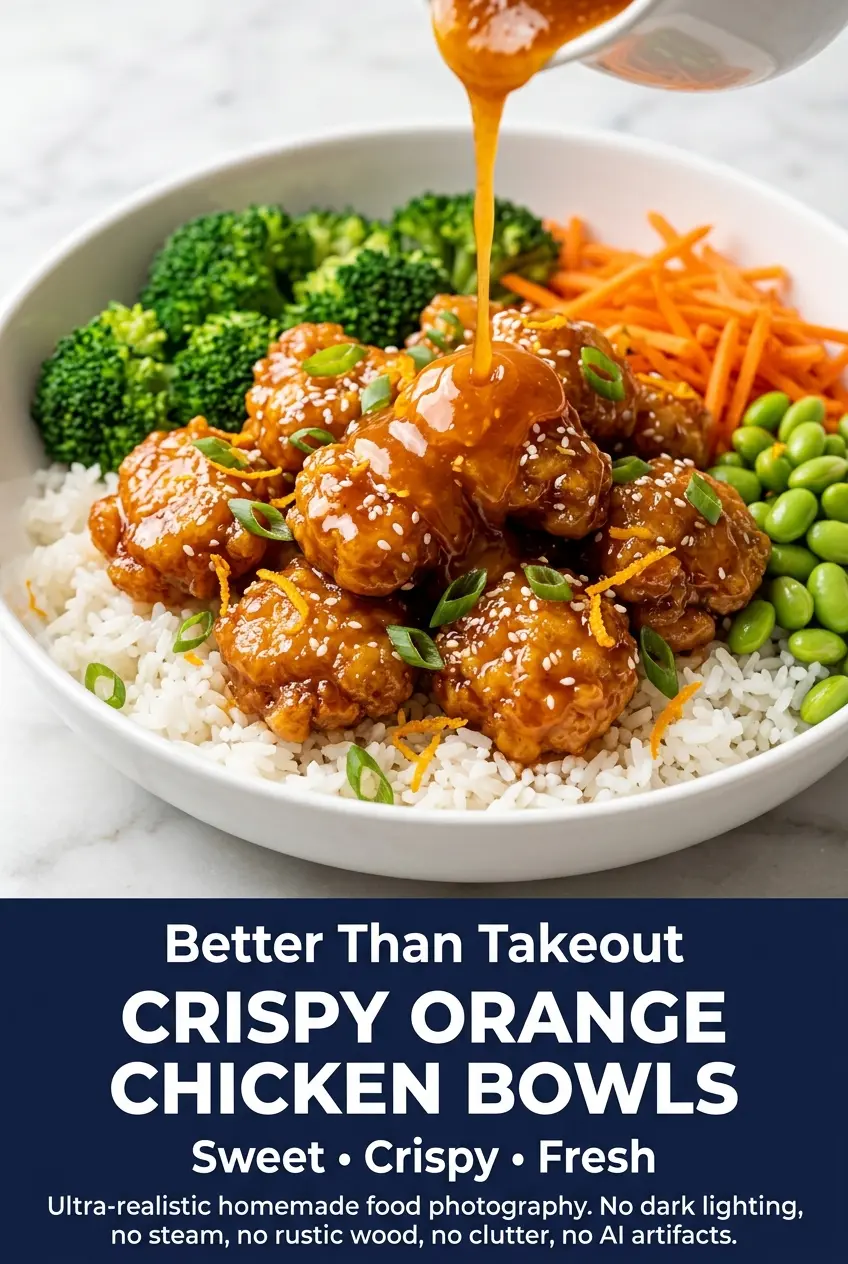
Crispy Orange Chicken Bowls
Ingredients
Equipment
Method
- Season the chicken pieces with the salt, black pepper, and garlic powder. Make sure every piece looks evenly coated.
- Dip each chicken piece into the beaten eggs, letting excess drip off. Each piece should look glossy and lightly sticky.
- Coat the egged chicken in the cornstarch and all-purpose flour mixture. Press lightly so the coating clings.
- Heat the vegetable oil in a deep skillet over medium-high heat until it reaches 350°F. Confirm the oil temperature before frying.
- Fry the chicken in batches for 4–5 minutes until golden brown and cooked through to an internal temperature of 165°F. Move pieces occasionally for even browning.
- Transfer the fried chicken to a paper towel-lined plate. Let it rest so the coating stays crisp.
- In a saucepan, combine the orange juice, orange zest, soy sauce, honey, brown sugar, rice vinegar, garlic, and ginger. Stir to fully blend the mixture.
- Bring the sauce to a gentle simmer over medium heat. Look for small bubbles around the edges, not a hard boil.
- Whisk together the cornstarch and water, then stir the slurry into the simmering sauce. The sauce will start to thicken.
- Cook the sauce for 2–3 minutes until glossy and slightly thickened. It should coat the back of a spoon.
- Add the crispy chicken to the sauce and toss until every piece is evenly coated. Keep tossing until the glaze looks smooth and adheres.
- Divide the cooked jasmine rice among four serving bowls. Pile the rice in the center so the toppings have a base.
- Arrange the steamed broccoli florets, shredded carrots, and shelled edamame around the rice. Spread them out for color and even bites.
- Spoon the orange chicken over the rice. Make sure the pieces are visible and the glaze is distributed.
- Garnish with the sliced green onions and sesame seeds before serving immediately. Finish with a fresh, speckled look on top.