
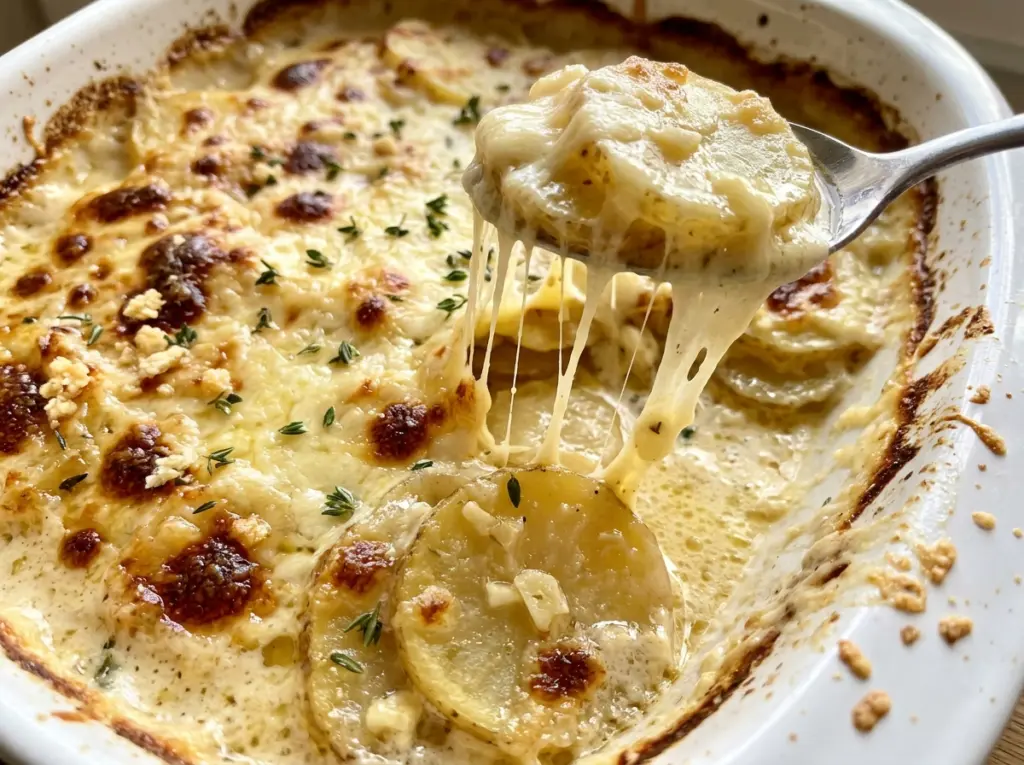
Creamy Au Gratin Potatoes
When the foil comes off, the potatoes should be tender already; the final stretch is for the golden top, not for rescuing firm slices. That small distinction is what makes…

By Ava
•
•
Reading time: 9 min
Tip: save now, make later.
When the foil comes off, the potatoes should be tender already; the final stretch is for the golden top, not for rescuing firm slices. That small distinction is what makes creamy au gratin potatoes feel reliably rich instead of rushed. I arrange the thin rounds in close, overlapping layers, pour the cheddar sauce across them, and let the covered bake soften the potatoes before the cheese on top starts to brown. The first time I judged the whole dish by its color, the top looked ready before the center was. Now I trust the knife test before uncovering.
The sauce starts with butter and flour, then whole milk goes in gradually so it stays smooth. A gentle simmer thickens it before the cheddar is stirred in off the heat. That gives the potatoes a creamy sauce underneath and leaves some cheese for a golden finish. After the gratin rests, the layers hold together better when you scoop into the dish.
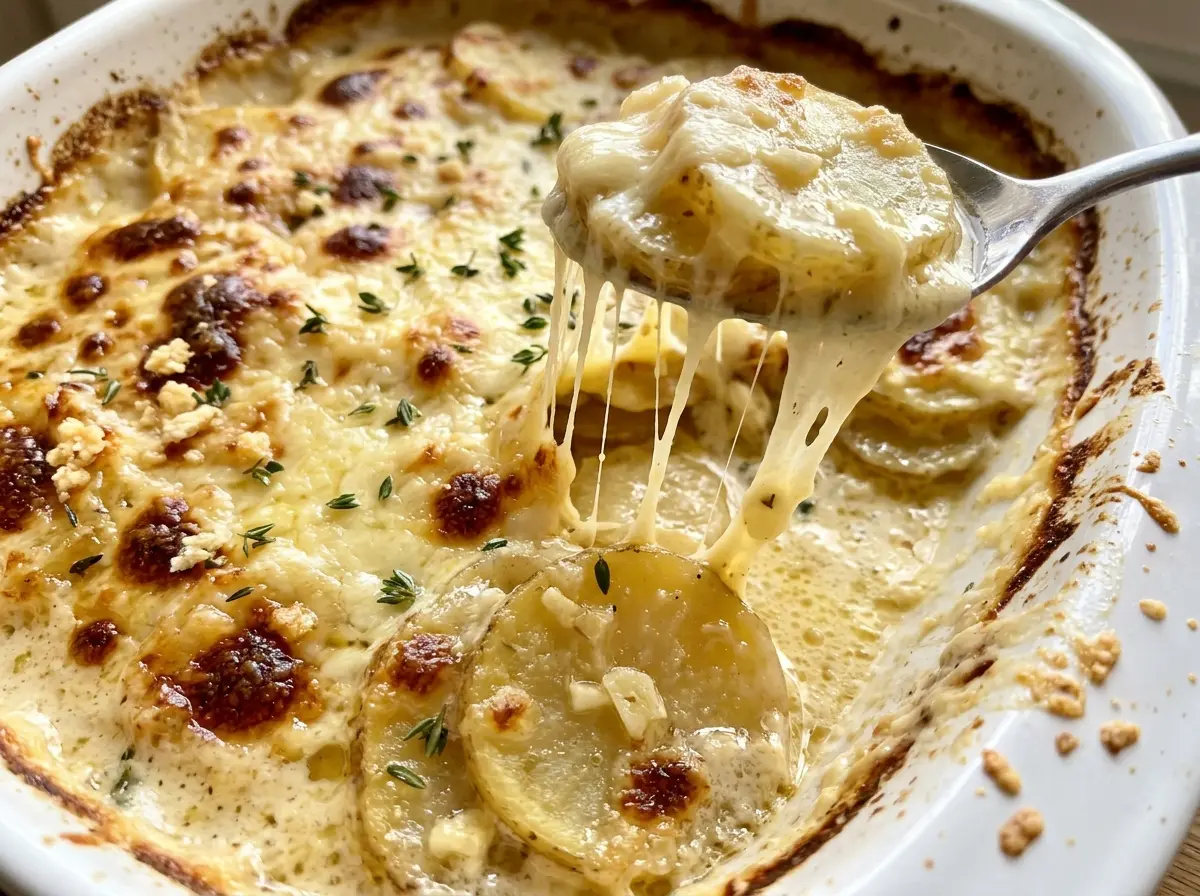
Kitchen Note
Give the gratin its full 15-minute rest after baking. The sauce settles as it cools slightly, so the first scoop stays creamy instead of sliding apart.
Save these creamy au gratin potatoes for their tender layers under a golden cheddar crust.
Why the cheddar has two jobs in this gratin
Cheddar in the sauce seasons the potatoes from the inside out, while the cheese on top gives you the browned, savory finish. Putting all of it in one place changes the balance: all sauce means no cheddar crust, and all topping leaves the creamy base without that same cheese flavor. Here, most of the cheddar melts into the sauce after it has thickened, and the rest goes over the potatoes once they’re tender.
That order also helps the sauce stay smooth. The flour and butter thicken the milk first, so the cheddar melts into a stable, creamy base rather than having to do the thickening itself. Sharp cheddar brings enough flavor to come through the potatoes without needing another cheese. Keep the saucepan off the heat when you stir it in; the residual warmth is enough to melt it. The result is a creamy middle with a distinct layer of browned cheese on top, not one uniform blanket of cheese.
Which ingredients give this gratin its creamy layers

- Russet potatoes — Their starchy texture softens beautifully in the sauce. Choose firm potatoes without soft spots; there’s no need to seek out a specialty variety. Yukon Gold potatoes can stand in at the same weight, but they’ll make a firmer layer that’s less fluffy. Peel them and keep the slices even so they cook at the same pace.
- Whole milk — It gives the sauce its body and a rounded, creamy taste. A store-brand whole milk works well; expensive milk won’t improve the finished gratin. Two-percent milk can replace it in the same volume, though the sauce will taste lighter and feel a little less rich.
- Sharp cheddar — Sharpness matters more than brand here because the potatoes soften the cheese’s bite. A mild cheddar works in the same quantity, but the cheese flavor will be gentler. Keep the cheese divided between the sauce and topping for the balance this version is built around.
- Butter and flour — Together, they form the roux that thickens the milk before the cheese goes in. Standard unsalted butter and all-purpose flour are fine; there’s no need to buy premium brands for this step. For a gluten-free version, use a cup-for-cup gluten-free flour blend in place of the all-purpose flour.
- Garlic — Fresh minced garlic gives the sauce a savory background without taking over the cheddar. Use cloves that feel firm and fresh. If garlic isn’t available, leave it out rather than adding an unlisted seasoning; the sauce will still thicken normally.
Building the sauce before the potatoes go under foil
Slice and layer the potatoes evenly
Heat the oven to 350°F and coat a 9×13-inch baking dish with cooking spray. Peel the russets, then slice them into 1/8-inch-thick rounds. Arrange the slices in overlapping layers so they cover the dish rather than sitting in a loose pile. Consistent thickness matters more than making every round the same diameter.
Cook the garlic just until fragrant
Melt the butter in a medium saucepan over medium heat, then add the minced garlic. Cook it for 30 seconds; it should smell fragrant, not browned. Garlic can turn bitter if it darkens, so have the flour ready to go in as soon as that short cook is done. Whisk the flour into the butter and cook the roux for 1 minute.
Whisk the milk into a smooth cheese sauce
Gradually whisk in the whole milk, salt, and pepper until the mixture is smooth. Bring it to a gentle simmer, whisking often so nothing catches on the bottom of the pan. Cook for 3 to 5 minutes, until the sauce coats the back of a spoon; it should look thickened, not watery. Take the pan off the heat and stir in 1 1/2 cups of cheddar until melted.
Cover first, then uncover for the golden top
Pour the sauce evenly over the layered potatoes and cover the dish tightly with foil. Bake for 50 to 60 minutes, until a knife slides easily into the potatoes. Remove the foil and scatter the remaining 1/2 cup cheddar over the top. Bake uncovered for 20 to 25 minutes, until the top is golden and the potatoes are tender. Let the dish rest before serving.
A gluten-free roux or a more pronounced cheddar crust
Make the sauce gluten-free
Replace the all-purpose flour with the same amount of a cup-for-cup gluten-free flour blend. Whisk it into the melted butter as you would the flour, then add the milk gradually; the sauce may need steady whisking to become smooth. The potatoes and cheddar stay the same, while the sauce’s texture can vary a little by blend.
Put all the cheddar on top
For a stronger cheddar crust, leave the cheese out of the sauce and scatter all of it over the potatoes after the covered bake. The roux-thickened milk still makes a creamy base, while the cheddar flavor becomes more concentrated in the browned top. Use the same total amount of cheese and keep the uncovered bake until the top is golden.
Storage and Reheating
- Refrigerator: Store covered or in an airtight container for 3 to 4 days. The sauce will firm up as it chills.
- Freezer: This gratin doesn’t freeze especially well; the potatoes can turn mealy and the sauce may separate after thawing. Refrigerating leftovers gives a better texture.
- Reheating: Warm a portion in the microwave or cover the baking dish and reheat in a 350°F oven until hot throughout. Reheating uncovered can dry the top before the middle warms.
The questions that come up when the gratin goes into the oven
Creamy Au Gratin Potatoes
Ingredients
Equipment
Method
- Heat the oven to 350°F.
- Coat a 9x13-inch baking dish with cooking spray.
- Slice the potatoes into 1/8-inch-thick rounds.
- Arrange the potatoes in overlapping layers in the prepared dish.
- Melt the butter in a medium saucepan over medium heat.
- Add the garlic and cook for 30 seconds.
- Whisk in the flour and cook for 1 minute.
- Gradually whisk in the milk, salt, and pepper until smooth.
- Bring the sauce to a gentle simmer, whisking often.
- Cook for 3 to 5 minutes until thick enough to coat the back of a spoon.
- Remove the sauce from the heat and stir in 1 1/2 cups of the cheddar until melted.
- Pour the cheese sauce evenly over the potatoes.
- Cover the dish tightly with foil.
- Bake for 50 to 60 minutes, until a knife slides easily into the potatoes.
- Remove the foil and sprinkle the remaining 1/2 cup cheddar over the top.
- Bake uncovered for 20 to 25 minutes, until the top is golden and the potatoes are tender.
- Rest for 15 minutes before serving.