
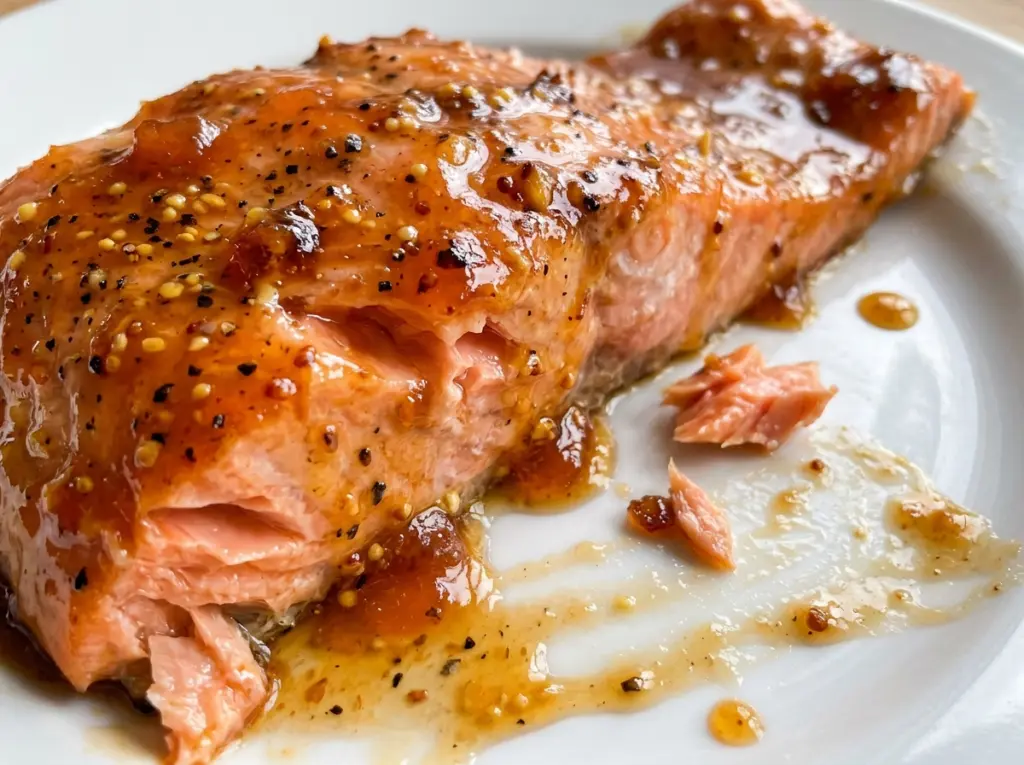
Apricot Dijon Glazed Salmon
As the apricot preserves warm in the saucepan, they loosen into a glossy glaze with a sweet smell and a little tang from the Dijon. That balance is what makes…

By Ava
•
•
Reading time: 8 min
Tip: save now, make later.
As the apricot preserves warm in the saucepan, they loosen into a glossy glaze with a sweet smell and a little tang from the Dijon. That balance is what makes this salmon feel special without turning dinner into a project. The apricot Dijon glazed salmon comes out tender beneath a bright, sticky coating, with enough lemon and soy sauce to keep the fruitiness from taking over.
I like the contrast between the mellow glaze and the clean, rich taste of salmon. The skin stays underneath the fillet as it bakes, while the top gets brushed with glaze near the end, so the fruit flavor remains distinct instead of baking on for the entire cook. A little of the glaze stays separate for serving, which gives each piece a fresh, tangy finish.
Cut into the center and you get moist flakes under that shiny apricot coat, with a gentle Dijon bite in every forkful.
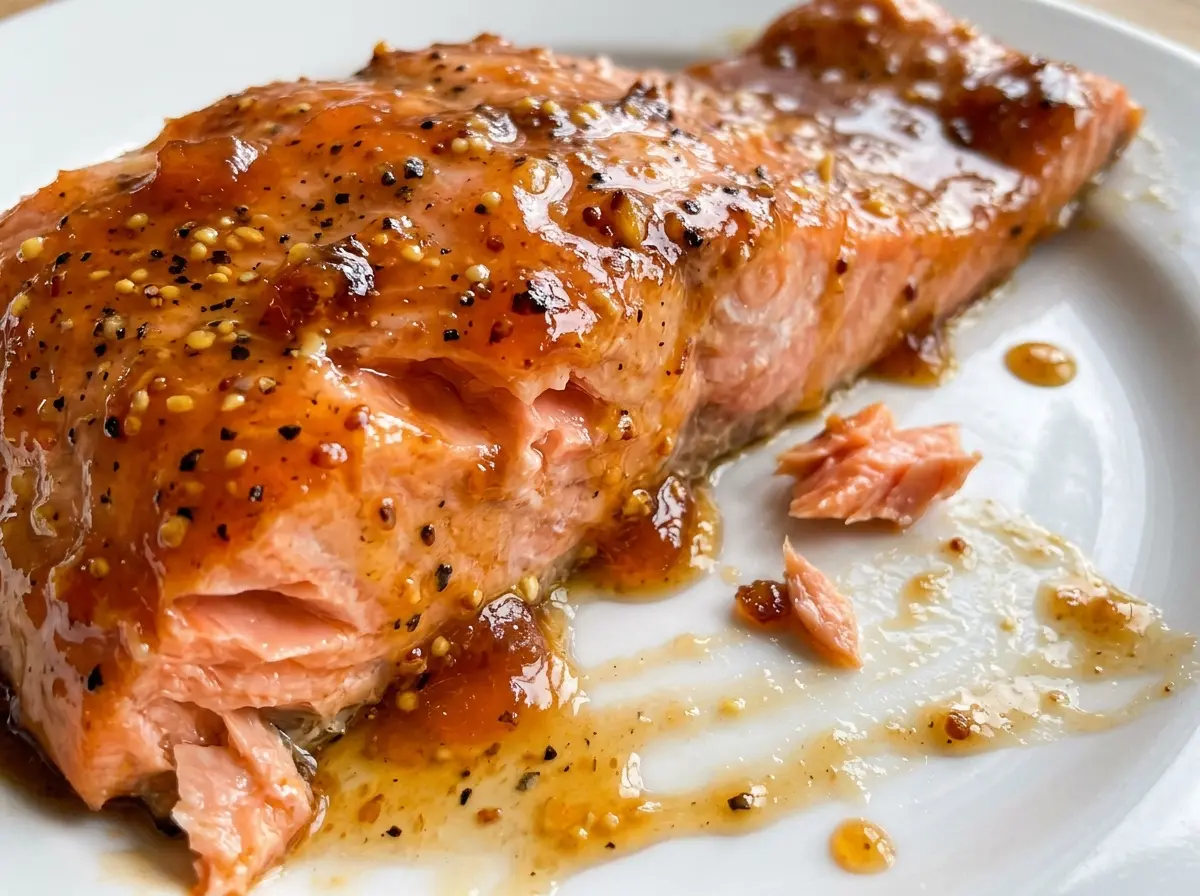
Kitchen Note
Set aside the serving glaze before the brush touches the salmon. Using a clean bowl keeps that portion separate, and it gives you a fresh spoonful to finish the fish at the table.
Save this apricot Dijon glazed salmon for a dinner with tender flakes, a glossy fruit-and-mustard coating, and a bright lemony finish.
Why the Center-Cut Piece Matters More Than a Minute on the Timer
Salmon fillets aren’t all the same thickness from end to end. A center-cut piece gives you a more even shape, so the thinner edges are less likely to finish long before the middle. That matters with a short bake like this one: a timer helps, but the thickness of the fish still has the final say.
Center-cut salmon also gives you a broad, even surface for the glaze. You can brush it across the top without chasing narrow tail pieces that cook at a different pace. If your fillet tapers at one end, tuck the thin end under itself to make the thickness more consistent before baking. That small adjustment helps the whole piece finish closer together, while the thickest part remains the spot to check for doneness.
The skin-on fillet is useful here, too. It provides a layer between the flesh and the hot baking sheet, and the parchment keeps cleanup simple. You don’t need to flip the fish; it stays skin-side down from the start through the short rest.
Apricot Preserves Bring More Than Sweetness

- Apricot preserves — They give the glaze its fruit flavor and a naturally thick, clingy texture. Choose preserves with a taste you enjoy on toast; a bargain jar works fine here, though very large fruit pieces can make brushing less even. Peach preserves are the closest swap, used measure-for-measure, with a softer, less distinctive fruit note.
- Dijon mustard — Dijon brings a sharp, savory edge that keeps the preserves from tasting like a dessert topping. A smooth, standard Dijon blends cleanly into the glaze. Whole-grain mustard can replace it measure-for-measure, but expect a more textured, speckled coating.
- Fresh lemon juice — The acidity lifts the sweet preserves and brightens the finished fish. Fresh juice has a cleaner, livelier taste than bottled juice; bottled lemon juice can stand in measure-for-measure if that’s what you have, though the glaze will taste less fresh.
- Soy sauce — Just a small amount adds savory depth behind the fruit and mustard. Tamari is a useful measure-for-measure replacement, and certified gluten-free tamari makes the glaze suitable for a gluten-free meal.
- Center-cut salmon and olive oil — A center-cut fillet cooks more evenly, while the skin helps protect the underside. Pat the fish dry before adding oil and seasoning; a dry surface lets the glaze sit on top instead of sliding over moisture. A neutral cooking oil can replace olive oil without changing the method.
The Two-Stage Bake That Keeps the Glaze Bright
Warm the glaze gently and save a clean portion
Heat the oven to 400°F and line a rimmed baking sheet with parchment paper. Stir the apricot preserves, Dijon, fresh lemon juice, and soy sauce together in a small saucepan over medium-low heat. After 2 to 3 minutes, the preserves should be melted and the mixture should bubble gently; a hard boil isn’t needed. Take the pan off the heat and transfer 2 tablespoons of glaze to a clean bowl for serving.
Season the salmon while the glaze cools
Pat the salmon dry, then set it skin-side down on the prepared baking sheet. Rub the top with olive oil so the seasoning has an even surface to cling to. Sprinkle on the kosher salt and black pepper, spreading them across the fillet rather than leaving them in one spot. Keep the fish in one piece for this bake so the thickest part is easy to check.
Brush near the end, then check the thickest part
Bake the salmon for 8 to 10 minutes before brushing the top with the remaining glaze. Return it to the oven for 4 to 8 minutes, until the thickest part reaches 145°F. The surface should look glossy, and the flesh should flake when nudged, but rely on the temperature at the thickest point rather than the flakes at the edge. Rest the fish for 3 minutes before serving it with the reserved glaze.
Three Smart Swaps for the Apricot-Dijon Balance
Use peach preserves for a softer fruit note
Replace the apricot preserves measure-for-measure with peach preserves. The glaze stays sweet and brushable, but peach has a gentler, rounder flavor, so the Dijon comes through a little more clearly.
Make the glaze gluten-free with tamari
Use certified gluten-free tamari in place of the soy sauce, keeping the same measure. The glaze retains its savory balance, with a slightly rounder taste; the salmon, preserves, mustard, and lemon stay the same.
Try whole-grain mustard for a more textured glaze
Swap the Dijon measure-for-measure with whole-grain mustard. Its mustard seeds make the coating visibly speckled and give it a little texture, while the apricot and lemon still keep the overall taste bright.
Storage and Reheating
- Refrigerator: Refrigerate leftovers in an airtight container within 2 hours and use them within 3 to 4 days. The glaze will firm up when cold.
- Freezer: Freeze cooked salmon in an airtight freezer-safe container for up to 2 to 3 months for best quality. Thaw it in the refrigerator; the glaze may look less glossy afterward.
- Reheating: Warm portions in the microwave at reduced power in short bursts, stopping as soon as the fish is warm. Long, high-power heating dries the salmon and can make the glaze overly sticky.
Questions That Come Up While Baking This Salmon
Apricot Dijon Glazed Salmon
Ingredients
Equipment
Method
- Heat the oven to 400°F.
- Line a rimmed baking sheet with parchment paper.
- Combine the apricot preserves, Dijon mustard, lemon juice, and soy sauce in a small saucepan over medium-low heat, stirring until melted and bubbling gently, 2 to 3 minutes.
- Remove the glaze from the heat and set aside 2 tablespoons in a clean bowl for serving.
- Pat the salmon dry and place it skin-side down on the prepared baking sheet.
- Rub the top of the salmon with the olive oil.
- Season the salmon with the salt and pepper.
- Bake for 8 to 10 minutes.
- Brush the salmon with the remaining glaze and return it to the oven for 4 to 8 minutes, until the thickest part reaches 145°F.
- Rest the salmon for 3 minutes.
- Serve the salmon with the reserved glaze.