
Cranberry Relish
The food processor turns a bowl of firm cranberries into ruby flecks in just a few pulses, and the orange peel perfumes the whole mixture before you even reach for…

By Ava
•
•
Reading time: 7 min
Tip: save now, make later.
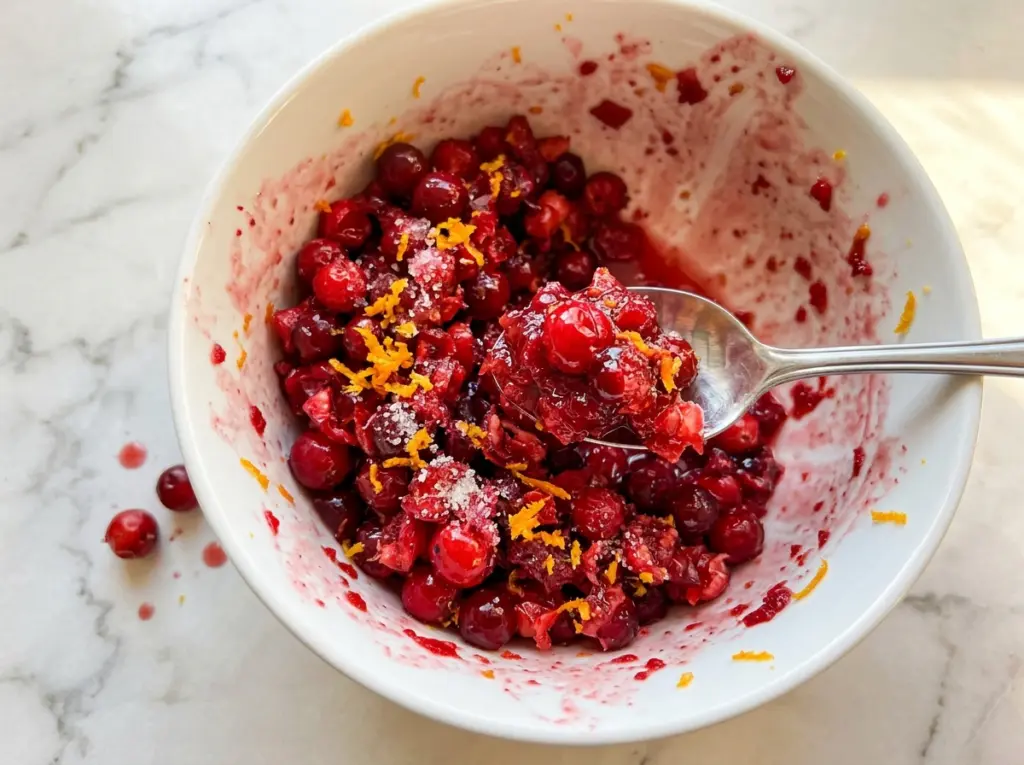
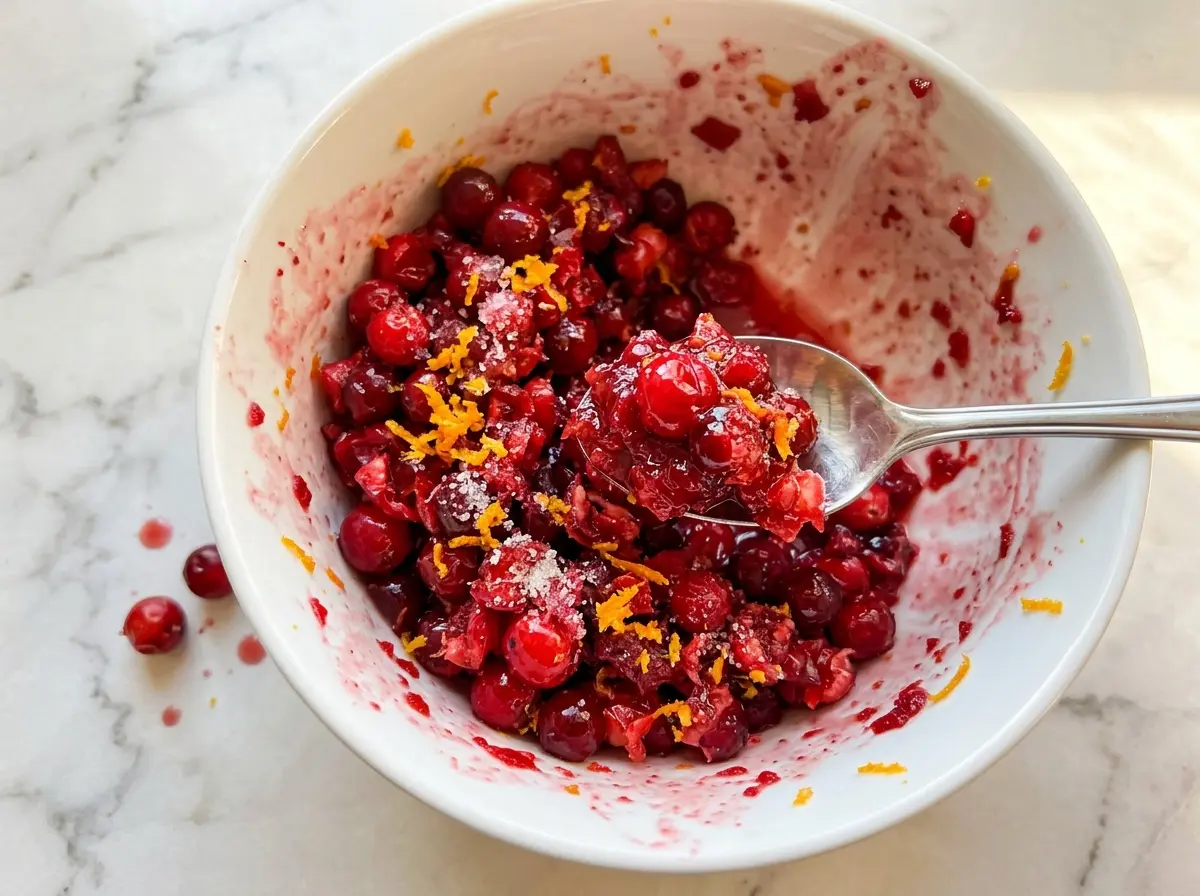
The food processor turns a bowl of firm cranberries into ruby flecks in just a few pulses, and the orange peel perfumes the whole mixture before you even reach for a spoon. I like this Cranberry Relish when I want the bright, tart taste of fresh cranberries without simmering a pot or ending up with a soft, jammy sauce.
Using the orange whole, peel and all, gives the relish more than a splash of citrus juice could: you get fragrant orange oils and little bits of peel alongside the berries. The brief chill gives the sugar time to mingle with the fruit, while the chopped cranberries keep their fresh bite. A little sweetness, a little tang, and plenty of texture make each spoonful lively.
Kitchen Note
Check the orange pieces for seeds before they go into the processor. The peel stays in, but a stray seed can bring an unpleasant bitter note to the whole batch.
Save this Cranberry Relish for a make-ahead side with fresh cranberry bite and orange peel in every spoonful.
Why this relish should stay chopped, not smooth
A cooked cranberry sauce softens as it simmers, but this relish gets its character from fresh fruit that still has a little bite. That distinction comes down to the food processor: it chops the berries quickly, but a few extra pulses can turn the mixture pasty. The goal is small, distinct cranberry pieces, not a uniform purée.
That texture matters when you scoop it, too. The chopped fruit holds onto its tartness, and the orange pieces are easy to notice rather than disappearing into a smooth spread. I stop the processor as soon as the berries are finely chopped, even if a few pieces look slightly larger than the rest. More blending won’t make the relish better; it only takes away the fresh, spoonable texture that sets it apart.
What the orange, cranberries, and sugar each bring

- Navel orange — Including the peel gives the relish its aromatic citrus character and adds little flecks of color. Choose a fresh orange with a clean-smelling peel; a standard grocery-store navel orange is all you need. Orange juice alone won’t provide the same texture or fragrant oils, so I wouldn’t swap it in here.
- Fresh cranberries — Firm berries chop into defined pieces and give the relish its tart backbone. Rinse them and pick over the bag before processing, setting aside any shriveled or soft berries. Fresh cranberries are the best fit for this crisp, raw texture; frozen berries tend to soften and release more liquid as they thaw.
- Granulated sugar — Regular white sugar balances the cranberries’ sharpness without adding another flavor that competes with the orange. The inexpensive standard kind works well; specialty sugars don’t improve this quick relish. If you want a less-sweet result, the variation below reduces the sugar while keeping the same fruit.
How to chop the fruit without overprocessing it
Chop the orange first
Trim the ends of the scrubbed orange, quarter it, and remove the seeds. Add the orange pieces, including the peel, to the food processor and pulse until they’re coarsely chopped. You should see small pieces rather than a smooth orange paste. Starting with the orange on its own gives it a head start before the firmer cranberries go in.
Pulse the cranberries with the sugar
Add the rinsed, picked-over cranberries and granulated sugar to the processor. Pulse until the cranberries are finely chopped but not pureed, checking the texture as you go instead of holding the button down. The mixture should look like finely chopped fruit, with visible bits of cranberry and orange. If the bowl still has a few larger pieces, use another brief pulse rather than running the processor continuously.
Let the relish chill
Transfer the chopped mixture to a covered container and refrigerate it for at least 2 hours before serving. The relish will be cold throughout, and the sugar and fruit will have time to mingle. Keep the container covered while it chills so the fresh citrus aroma stays with the relish. Serve it cold, straight from the refrigerator.
Two ways to adjust the sweetness and texture
A sharper, lower-sugar relish
Use 1/2 cup granulated sugar instead of 3/4 cup for a more tart, fruit-forward result. The berries will still chop and chill well, but their natural sharpness will come through more clearly. This is a simple lower-sugar adjustment, not a sugar-free version.
A chunkier chop for more texture
For a coarser relish, stop pulsing while the cranberry pieces are still a little larger than finely chopped. The flavor stays the same, but each bite has more distinct berry texture. Keep an eye on the processor so the fruit doesn’t go from chunky to smooth in a few extra pulses.
Making Ahead and Serving
- Refrigerator: Keep the relish covered and use it within 3 to 4 days. The fruit may soften a little and release more juice as it sits.
- Freezer: Freeze it in an airtight container for up to 1 month. Thaw it in the refrigerator; the texture will be softer after freezing, so give it a gentle stir before serving.
- Serving: Serve cold. Don’t heat it; cooking changes the crisp, fresh texture that makes this relish distinct.
Questions that come up when making cranberry relish
Cranberry Relish
Ingredients
Equipment
Method
- Add the orange pieces, including the peel, to a food processor and pulse until coarsely chopped.
- Add the cranberries and sugar, then pulse until the cranberries are finely chopped but not pureed.
- Transfer the relish to a covered container.
- Refrigerate for at least 2 hours before serving.