
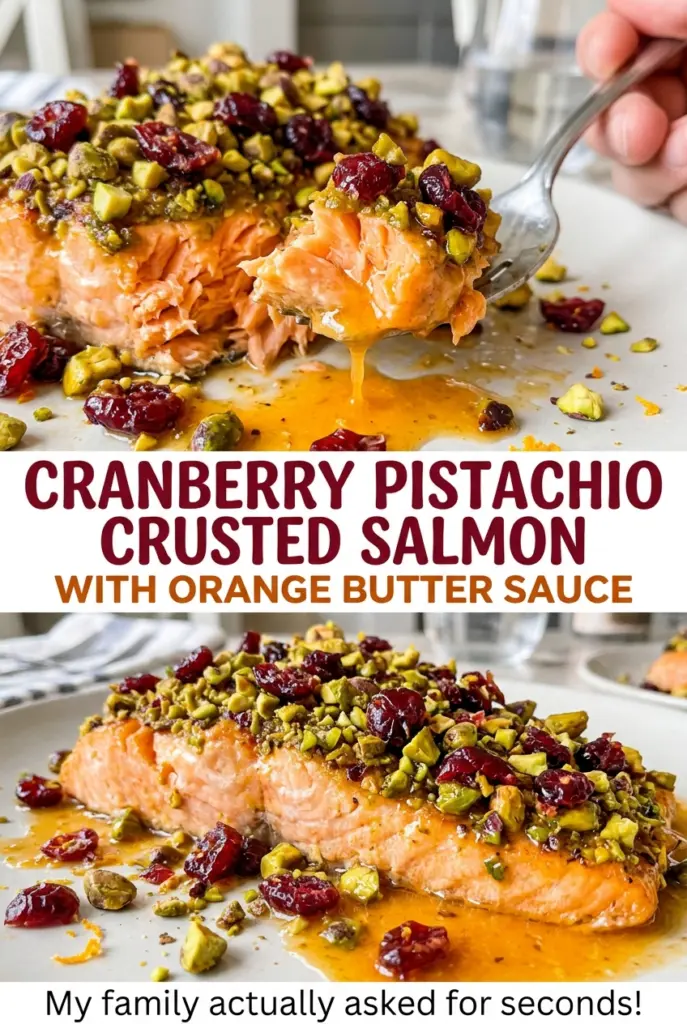
Cranberry Pistachio Crusted Salmon with Orange Butter Sauce
When the salmon comes out of the oven, the panko is golden and the cranberry pieces have softened just enough to turn pleasantly chewy. The first time I made this,…

By Ava
•
•
Reading time: 9 min
Tip: save now, make later.
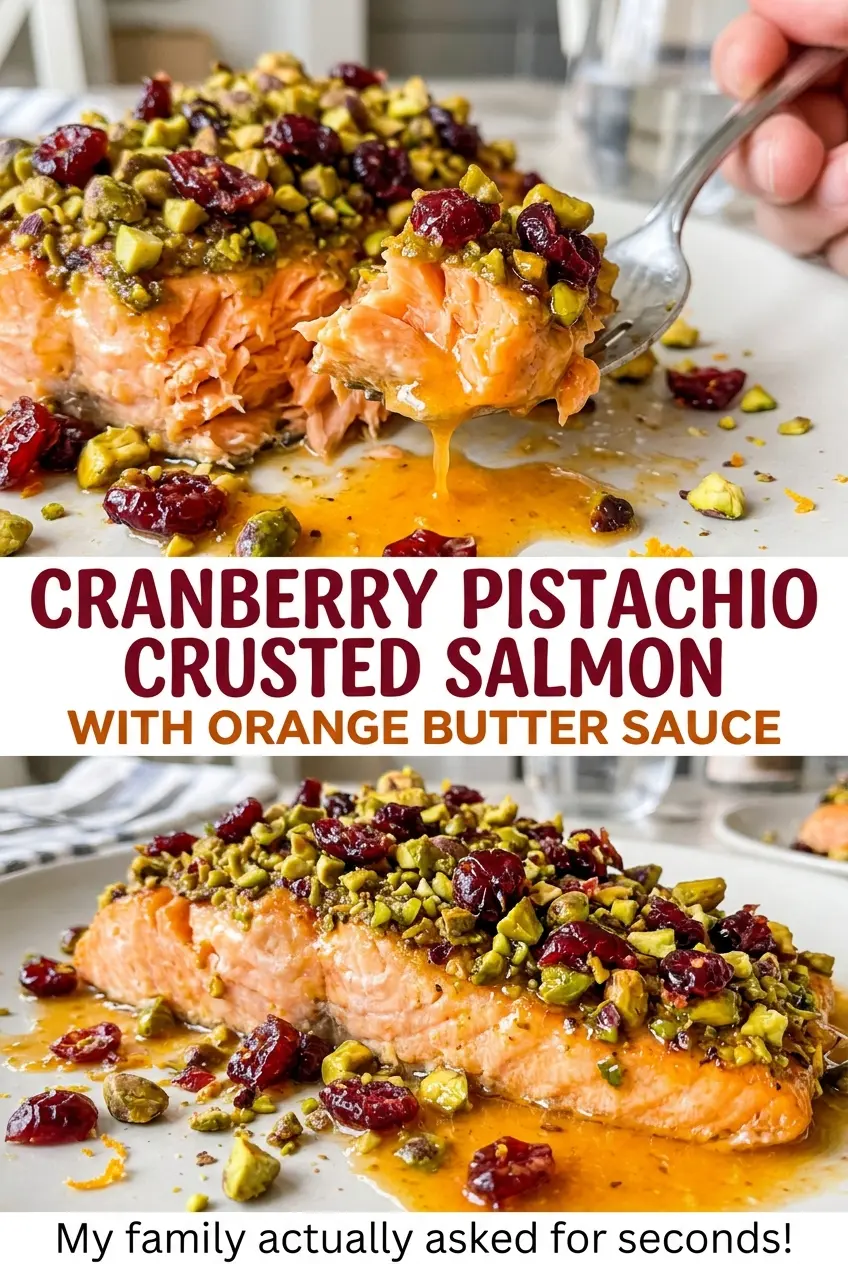
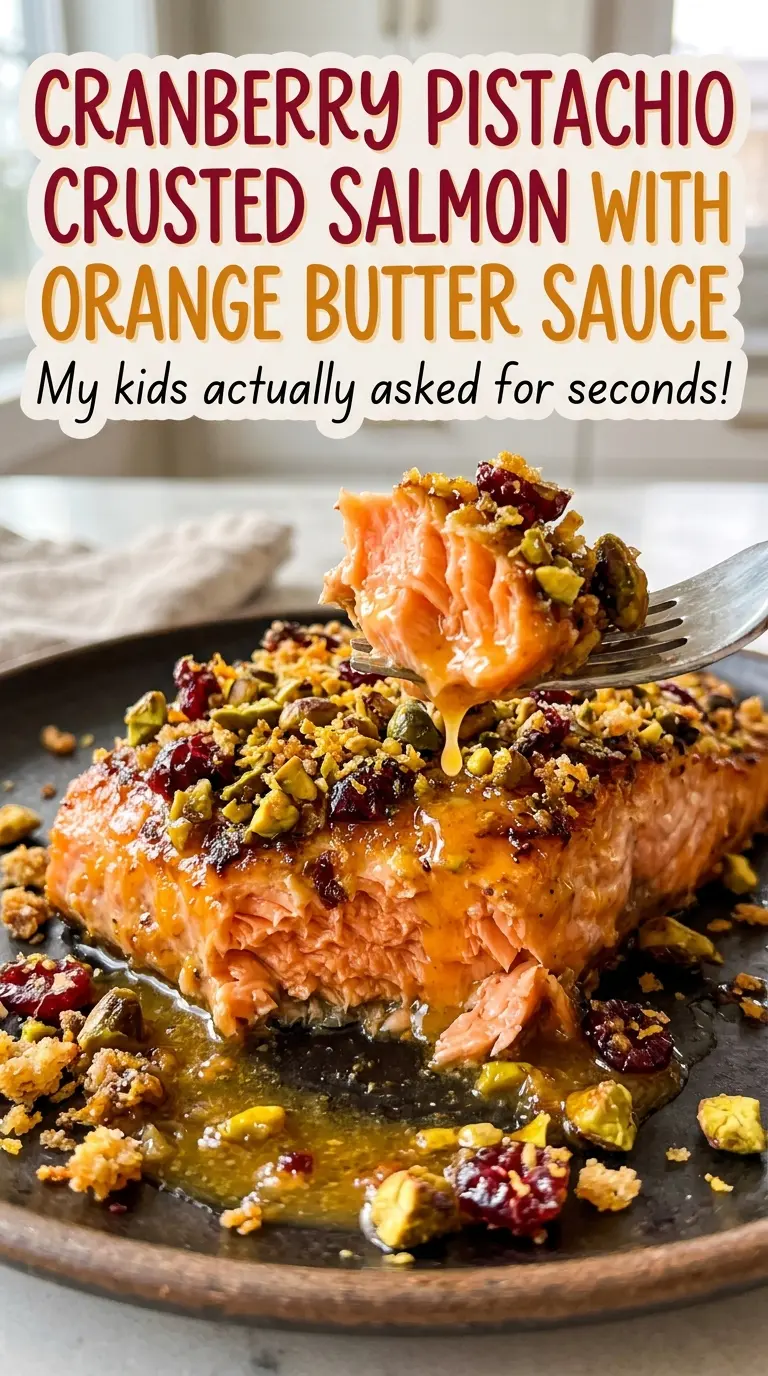
When the salmon comes out of the oven, the panko is golden and the cranberry pieces have softened just enough to turn pleasantly chewy. The first time I made this, I was surprised by how much the orange butter sauce changed each bite: its bright, buttery finish cuts through the rich fish and the sweet-tart crust without taking over.
This Cranberry Pistachio Crusted Salmon with Orange Butter Sauce gets its crunch from a simple mix of finely chopped pistachios, dried cranberries, and panko. Dijon mustard gives that mixture something to hold on to, while orange zest carries the citrus into the crust. The result is a little crisp, a little tender, and far more balanced than a sweet topping might suggest.
The sauce comes together on the stovetop while the salmon bakes, so both parts are ready at about the same time. You get flaky fish, a crisp, nutty top, and a glossy orange-butter finish on the plate.
Kitchen Note
Portions that are close in thickness finish at about the same time, which makes serving easier. If one piece is noticeably thinner, check that portion first so it doesn’t spend extra minutes in the oven while the thickest piece finishes.
Save this cranberry pistachio salmon for a dinner that deserves a crisp, nutty topping and a bright orange butter sauce.
Why Dijon Keeps the Cranberry-Pistachio Crust in Place
A crunchy topping needs more than a pile of crumbs sitting on fish. The thin coat of Dijon mustard gives the chopped cranberry and pistachio mixture a tacky surface to grip, so it bakes onto the salmon instead of sliding off when you serve it. The mustard flavor stays in the background; it doesn’t make the fish taste like a sandwich.
There’s a useful balance in the topping, too. Panko stays light and crisp, while the cranberries bring concentrated sweetness and a chewy bite. Finely chopping the fruit and nuts helps the mixture settle into an even layer rather than leaving large pieces that roll away or brown unevenly. A little olive oil helps the crumbs toast, and orange zest connects that crunchy top to the sauce.
Press the mixture onto the mustard-coated tops rather than stirring it into the fish or piling it loosely. A thin, even layer gives each portion a crisp finish without burying the salmon. That contrast is what makes the dish feel composed: flaky fish underneath, a lively crunch above, and a smooth sauce alongside.
What the Cranberries, Pistachios, and Orange Bring to the Plate
- Salmon — Skin-on portions are sturdy to handle, and the skin rests against the parchment as the crust bakes. Choose pieces with a fresh, mild scent and similar thickness when possible; thickness affects how evenly the portions finish.
- Dried cranberries — Their concentrated sweet-tart flavor holds up against the rich fish and butter sauce. Chop them finely so they distribute through the crust instead of forming big sticky clusters. Dried cherries work in the same amount for a rounder, less tangy fruit note.
- Pistachios — These add a distinctive buttery nuttiness and a green fleck to the topping. Shelled, unsalted nuts keep prep simple and let you control the seasoning. Finely chopped almonds can replace them in the same amount, though the crust will taste milder.
- Panko — The larger, airy crumbs make a lighter, crisper crust than fine breadcrumbs. For a gluten-free version, use an equal amount of gluten-free panko; the topping may be a little less airy but still toasts well.
- Orange zest and juice — The zest gives the crust fragrant citrus without adding liquid, while the juice forms the bright base of the sauce. Freshly grated zest has the clearest aroma; for the juice, plain 100% orange juice is a practical option.
- Butter and Dijon — Unsalted butter lets the sauce stay balanced as it reduces, and cold butter helps it turn silky when whisked in off the heat. Dijon contributes a gentle tang beneath the crust; a smooth, everyday Dijon is all you need.
How to Bake the Crust and Finish the Orange Butter Sauce
Dry and Season the Salmon
Heat the oven to 400°F and line an 18×13-inch rimmed baking sheet with parchment paper. Pat the salmon dry, set the portions skin-side down, and season with 1/2 teaspoon of the kosher salt and the black pepper. Brush Dijon over the tops, keeping the coating even so the crust has a consistent surface to cling to. A dry surface also keeps excess moisture from softening the topping.
Press on the Cranberry-Pistachio Topping
Stir the finely chopped cranberries and pistachios with the panko, orange zest, and olive oil in a small bowl. The mixture should look lightly coated, not wet or clumped into a paste. Scatter it across the mustard-coated tops, then press gently so the pieces stay in place. Keep the layer even from edge to edge for consistent browning.
Bake Until the Center Is Ready
Bake for 12–16 minutes, watching for a golden crust and checking the thickest part of each portion with an instant-read thermometer. The salmon is ready when it reaches 145°F. The exact point in that window depends on the thickness of your portions, so use the thermometer rather than relying on the crust color alone. Lift the portions carefully; the topping is crisp and can loosen if handled roughly.
Reduce the Orange and Wine
While the salmon bakes, melt 1 tablespoon of the butter in a 1-quart saucepan over medium heat. Add the minced shallot and cook for 2 minutes, until softened, then pour in the dry white wine and orange juice. Let the liquid simmer for 8–10 minutes, until it has reduced to about 1/3 cup. Keep it at a steady simmer rather than a hard boil, and check the volume as it reduces.
Whisk in the Cold Butter
Take the saucepan off the heat before adding the remaining cold butter, cut into cubes. Whisk in a few cubes at a time, letting each addition blend into the reduced liquid before adding more. The finished sauce should look smooth and glossy rather than oily. Whisk in the remaining 1/4 teaspoon salt, then serve the sauce with the salmon.
Easy Swaps for a Different Crust or a Gluten-Free Dinner
Use dried cherries for a softer fruit note
Replace the dried cranberries with the same amount of finely chopped dried cherries. They bring a gentler tang and a slightly rounder sweetness, while keeping the chewy fruit texture that works well with the nuts.
Trade pistachios for almonds
Use the same amount of finely chopped almonds in place of the pistachios. The flavor is more neutral and the green color disappears, but the nuts still give the crust a pleasing crunch.
Make the topping gluten-free
Swap in an equal amount of gluten-free panko. It keeps the crumbly crunch without changing the fruit-and-nut balance; check the topping as it bakes, since different brands can brown at slightly different rates.
Storage and Reheating
- Refrigerator: Store leftover salmon and sauce separately in airtight containers for 3–4 days. The topping softens in the refrigerator.
- Freezer: The cooked salmon can be frozen in an airtight freezer-safe container for up to 2–3 months, though the crust will lose its crispness. The butter sauce is best made fresh; freezing and thawing can cause it to separate.
- Reheating: Warm the salmon in a 300°F oven, loosely covered, until it reaches 165°F. The cover helps keep the fish from drying out, but the crust will soften; high heat can dry the salmon before the center warms through.
Questions That Come Up When Making This Salmon
Cranberry Pistachio Crusted Salmon with Orange Butter Sauce
Ingredients
Equipment
Method
- Heat the oven to 400°F.
- Line an 18x13-inch rimmed baking sheet with parchment paper.
- Pat the salmon dry and place it skin-side down on the baking sheet.
- Season the salmon with 1/2 teaspoon of the salt and the pepper, then brush the tops with Dijon mustard.
- Stir the cranberries, pistachios, panko, orange zest, and olive oil together in a small bowl.
- Press the mixture onto the mustard-coated salmon.
- Bake for 12–16 minutes, until the crust is golden and the thickest part of each portion reaches 145°F on an instant-read thermometer.
- While the salmon bakes, melt 1 tablespoon of the butter in a 1-quart saucepan over medium heat.
- Add the shallot and cook for 2 minutes until softened.
- Add the wine and orange juice and simmer for 8–10 minutes, until reduced to about 1/3 cup.
- Remove the saucepan from the heat and whisk in the remaining 6 tablespoons of cold butter a few cubes at a time.
- Whisk in the remaining 1/4 teaspoon salt.
- Serve the sauce with the salmon.