
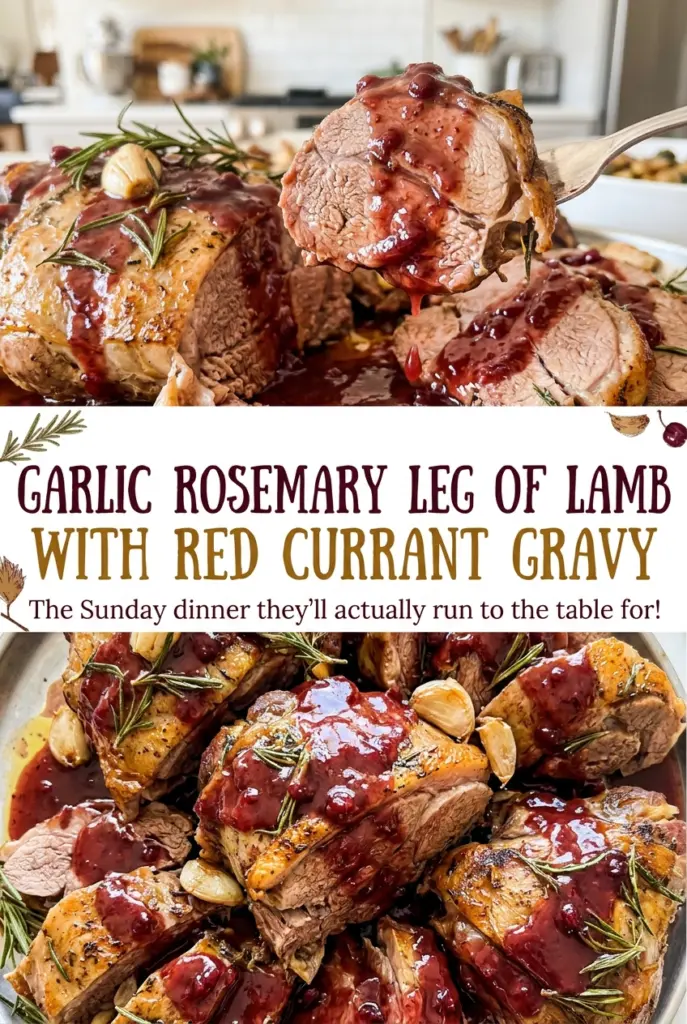
Garlic Rosemary Leg of Lamb with Red Currant Gravy
The moment the lamb comes out of the oven, the rosemary and garlic have worked their way into the warm, savory aroma around the roasting pan. I don’t judge a…

By Ava
•
•
Reading time: 10 min
Tip: save now, make later.
The moment the lamb comes out of the oven, the rosemary and garlic have worked their way into the warm, savory aroma around the roasting pan. I don’t judge a leg of lamb by the clock alone; the thermometer and a proper rest are what make this garlic rosemary leg of lamb with red currant gravy reliable, whether the roast is closer to five pounds or six.
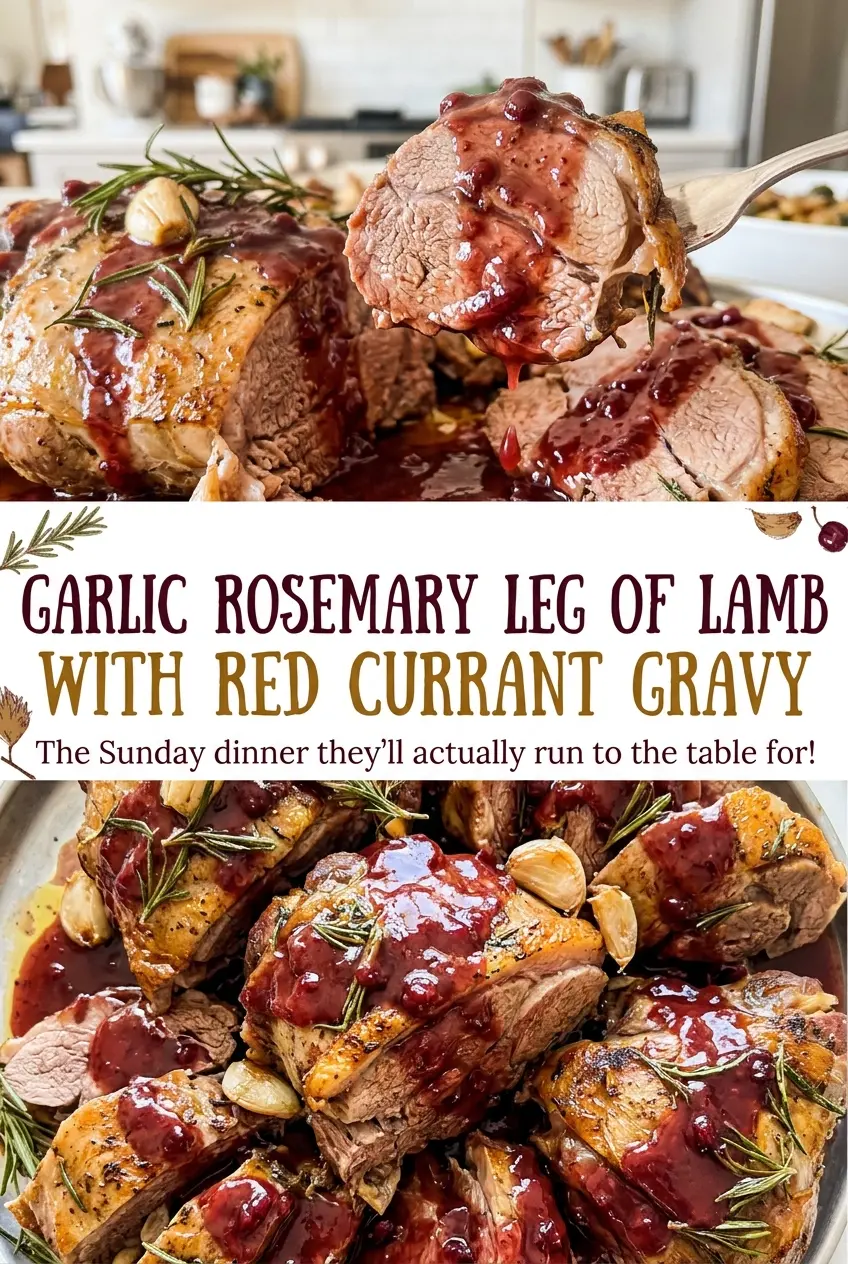
Shallow slits let the garlic sit just under the surface, while olive oil helps the rosemary, salt, and pepper cling to the meat. The gravy starts with those lamb drippings, then red currant jelly and red wine vinegar bring a sweet-tart note to the wine-and-broth base. Together, the roast and its glossy gravy make a generous centerpiece with plenty of savory flavor in every slice.
Give the lamb time to rest while you finish the gravy, then slice across the grain and bring both to the table together. The result is tender roast lamb with a bright, smooth sauce alongside it.
Kitchen Note
When you pour off the drippings, give the fat time to rise into a clear layer before spooning it away. The darker juices underneath are worth keeping; they bring the roasted lamb flavor into the gravy.
Save this garlic rosemary leg of lamb with red currant gravy for a roast with tender slices and a bright, sweet-tart sauce.
Why Red Currant Gravy Needs Both Fruit and Vinegar
Fruit jelly in a meat gravy can sound like it will make the sauce taste sugary, but red currant jelly brings more than sweetness. Its fruitiness plays against the rich, savory drippings, beef broth, and red wine, giving the lamb a little contrast in each bite. The jelly also helps the finished gravy feel cohesive rather than like plain broth poured over a roast.
Red wine vinegar keeps that fruit from taking over. It adds a sharp edge that lifts the deeper flavors and makes the sauce taste balanced, not candy-sweet. Add the jelly and vinegar with the liquids after the flour-and-butter base is smooth; the simmer gives them time to blend into the gravy. The goal is a lightly thickened sauce that still pours easily over sliced lamb, not a sticky glaze or a dense paste.
This balance is what makes the gravy feel tailored to the roast. The lamb is seasoned simply with garlic, rosemary, salt, and pepper, so the sauce can bring a brighter counterpoint without masking the meat.
What Gives the Lamb and Gravy Their Character
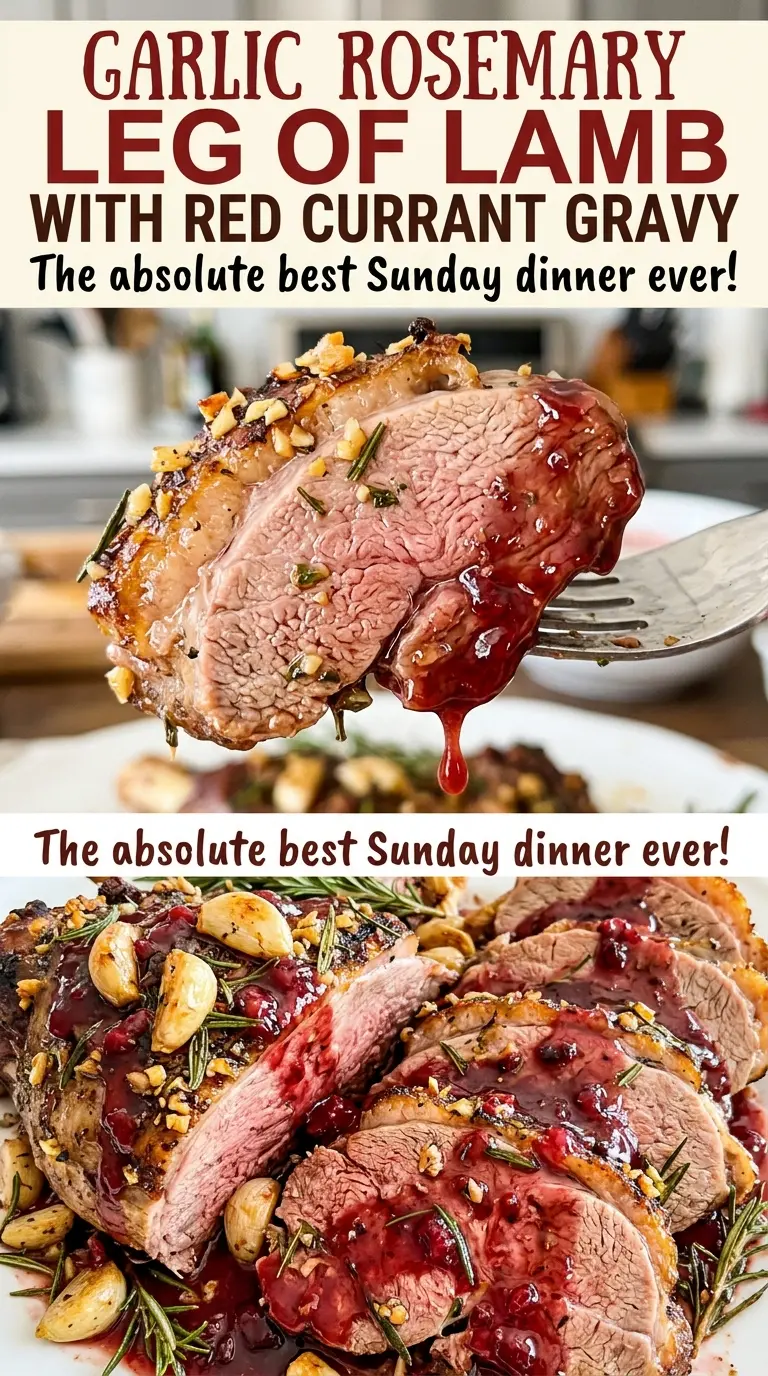
- Bone-in leg of lamb — Choose a roast in the stated size range so the timing and seasoning suit the cut. A bone-in leg gives you the classic centerpiece shape; look for a roast with a layer of fat on one side, since that side faces up in the pan.
- Fresh garlic and rosemary — Fresh rosemary gives the rub a piney, fragrant character, and garlic slivers tucked into the meat season it from within. Rosemary quality matters here because it’s used directly on the roast; discard any woody stems and chop the leaves finely.
- Olive oil, kosher salt, and black pepper — Olive oil carries the chopped rosemary over the lamb’s surface, while kosher salt and freshly ground pepper keep the seasoning direct and savory. Freshly grinding the pepper gives a more pronounced aroma than pre-ground pepper.
- Low-sodium beef broth and dry red wine — These form the savory liquid base, with the wine adding depth and the broth keeping the sauce from becoming too wine-forward. Low-sodium broth leaves room for the lamb drippings and seasoning to shape the final taste.
- Red currant jelly and red wine vinegar — Use a jelly you enjoy eating; a clear, smooth jelly blends readily into gravy. The vinegar supplies the tart counterbalance, so don’t leave it out if you want the fruit to stay bright rather than overly sweet.
- Butter and all-purpose flour — Whisked together, they make the roux that gives the gravy body. Fresh flour and ordinary unsalted butter are fine; cook the flour in the melted butter for the full minute so the finished sauce doesn’t taste raw.
Roasting the Lamb and Building a Smooth Gravy
Set Up the Roast and Tuck in the Garlic
Set a rack in the middle of the oven and heat it to 325°F, then place a roasting rack in a roasting pan. Pat the lamb dry so the oil and herb rub can coat the surface instead of sliding over moisture. Use a small, sharp knife to make shallow slits all over the meat, then tuck a garlic sliver into each one. Rub the lamb with olive oil, finely chopped rosemary, kosher salt, and freshly ground black pepper.
Roast Until the Thermometer Reaches the Target
Set the lamb on the roasting rack with the fattiest side facing up. Roast for 2 to 2 1/2 hours, checking the thickest part with a thermometer and keeping the probe away from the bone. Take it out when that reading reaches 145°F; the clock gives you a useful window, but the temperature tells you when this roast has reached its target. If the probe touches bone, reposition it in the thickest meat for a dependable reading.
Rest the Lamb While You Start the Gravy
Transfer the roast to a cutting board and let it rest for at least 15 minutes while you make the gravy. Pour the drippings into a heatproof measuring cup, wait for the fat to rise, and spoon off the fat. Keep the remaining juices for the sauce. This pause gives you time to make the gravy without leaving the lamb sitting in the roasting pan.
Whisk the Gravy Until It Pours Smoothly
Melt the butter in a medium saucepan over medium heat, whisk in the flour, and cook the roux for 1 minute. Gradually whisk in the dry red wine and low-sodium beef broth, then add the reserved lamb juices, red currant jelly, and red wine vinegar. Bring the mixture to a simmer and cook for 5 to 8 minutes, whisking often, until smooth and lightly thickened. Slice the lamb across the grain and serve it with the gravy.
Three Useful Ways to Adapt This Lamb Roast
Make the Gravy Gluten-Free
Replace the all-purpose flour with the same amount of a gluten-free all-purpose flour blend that works for roux. Whisk it into the butter and cook it the same way; the gravy may be a little less glossy, but it will still thicken. Check that the broth and other packaged ingredients are gluten-free if that matters for your meal.
Use Beef Broth Instead of Red Wine
For a wine-free gravy, replace the 1/2 cup of dry red wine with an additional 1/2 cup of low-sodium beef broth. The sauce will lose some wine depth and taste more straightforwardly savory, while the red currant jelly and vinegar still give it its sweet-tart finish.
Trade Rosemary for Fresh Thyme
Use 2 tablespoons of finely chopped fresh thyme in place of the rosemary. Thyme makes the herb seasoning more earthy and less piney, while the garlic and pepper still suit the lamb. Keep the rest of the rub and roasting method unchanged.
Storage and Reheating
- Refrigerator: Store cooked lamb and gravy in separate airtight containers for 3 to 4 days. The lamb will firm up as it chills, and the gravy may thicken.
- Freezer: Freeze sliced lamb and gravy separately in airtight containers for up to 2 to 3 months for best quality. Thaw overnight in the refrigerator before reheating.
- Reheating: Warm lamb covered in the microwave with a spoonful of gravy, using short bursts so it doesn’t dry out. Reheat leftovers to 165°F; warm the gravy gently in a saucepan and whisk it smooth, adding a little broth if it has become too thick.
Questions That Come Up When Roasting Leg of Lamb
Garlic Rosemary Leg of Lamb with Red Currant Gravy
Ingredients
Equipment
Method
- Set a rack in the middle of the oven and heat the oven to 325°F.
- Set a roasting rack in a roasting pan.
- Pat the lamb dry.
- Use a small, sharp knife to make shallow slits all over the lamb.
- Tuck a garlic sliver into each slit.
- Rub the lamb all over with the olive oil, rosemary, salt, and pepper.
- Set the lamb on the roasting rack with the fattiest side facing up.
- Roast for 2 to 2 1/2 hours, until a thermometer inserted into the thickest part without touching bone reads 145°F.
- Transfer the lamb to a cutting board.
- Rest it for at least 15 minutes while you make the gravy.
- Pour the pan drippings into a heatproof measuring cup and let the fat rise.
- Spoon off the fat and reserve the remaining juices.
- Melt the butter in a medium saucepan over medium heat.
- Whisk in the flour and cook for 1 minute.
- Gradually whisk in the wine and broth.
- Add the reserved pan juices, red currant jelly, and vinegar.
- Bring to a simmer and cook for 5 to 8 minutes, whisking often, until the gravy is smooth and lightly thickened.
- Slice the lamb across the grain and serve with the gravy.