
Brussels Sprouts with Bacon and Maple Mustard Pan Glaze
The bacon starts to crackle before the Brussels sprouts even hit the pan, and those savory drippings are what make this skillet dish taste like more than a side of…

By Ava
•
•
Reading time: 8 min
Tip: save now, make later.
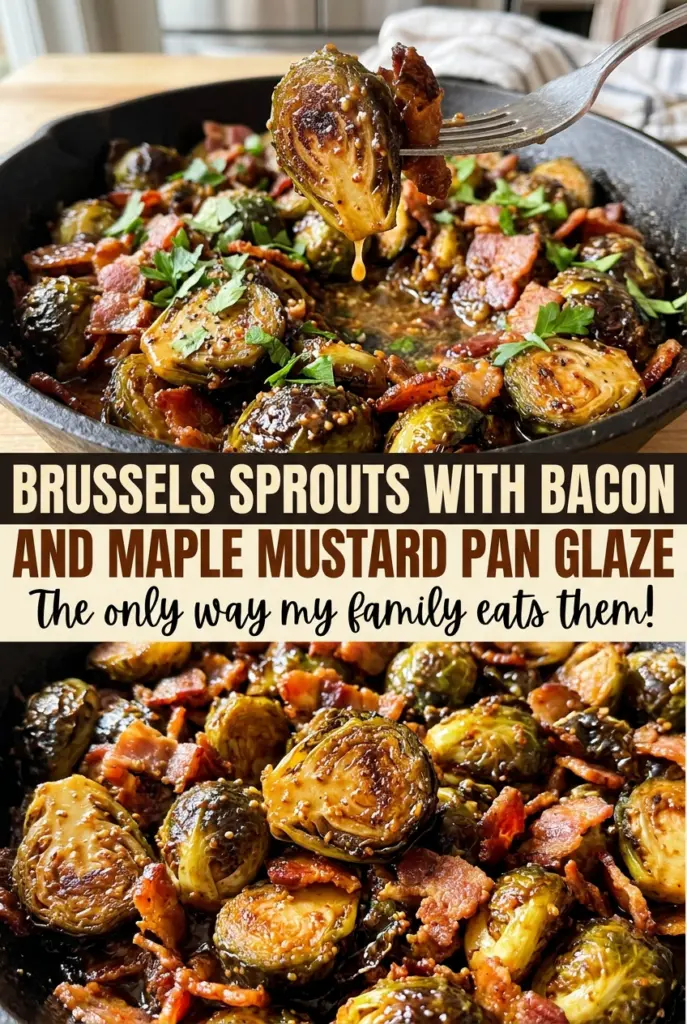
The bacon starts to crackle before the Brussels sprouts even hit the pan, and those savory drippings are what make this skillet dish taste like more than a side of vegetables. Brussels Sprouts with Bacon and Maple Mustard Pan Glaze brings together crisp bacon, browned sprouts, and a shiny sweet-tangy coating. It’s the kind of dish where every bite has a little of everything, without needing a separate sauce or a long list of ingredients.
Maple syrup gives the glaze its sweetness, while Dijon mustard brings a sharp, savory edge. Apple cider vinegar keeps the maple from tasting heavy, so the finished sprouts are balanced rather than sugary. I like how the glaze catches on the browned edges and settles into the folds of the leaves. Served hot, they’re glossy, savory, and just sweet enough.
Kitchen Note
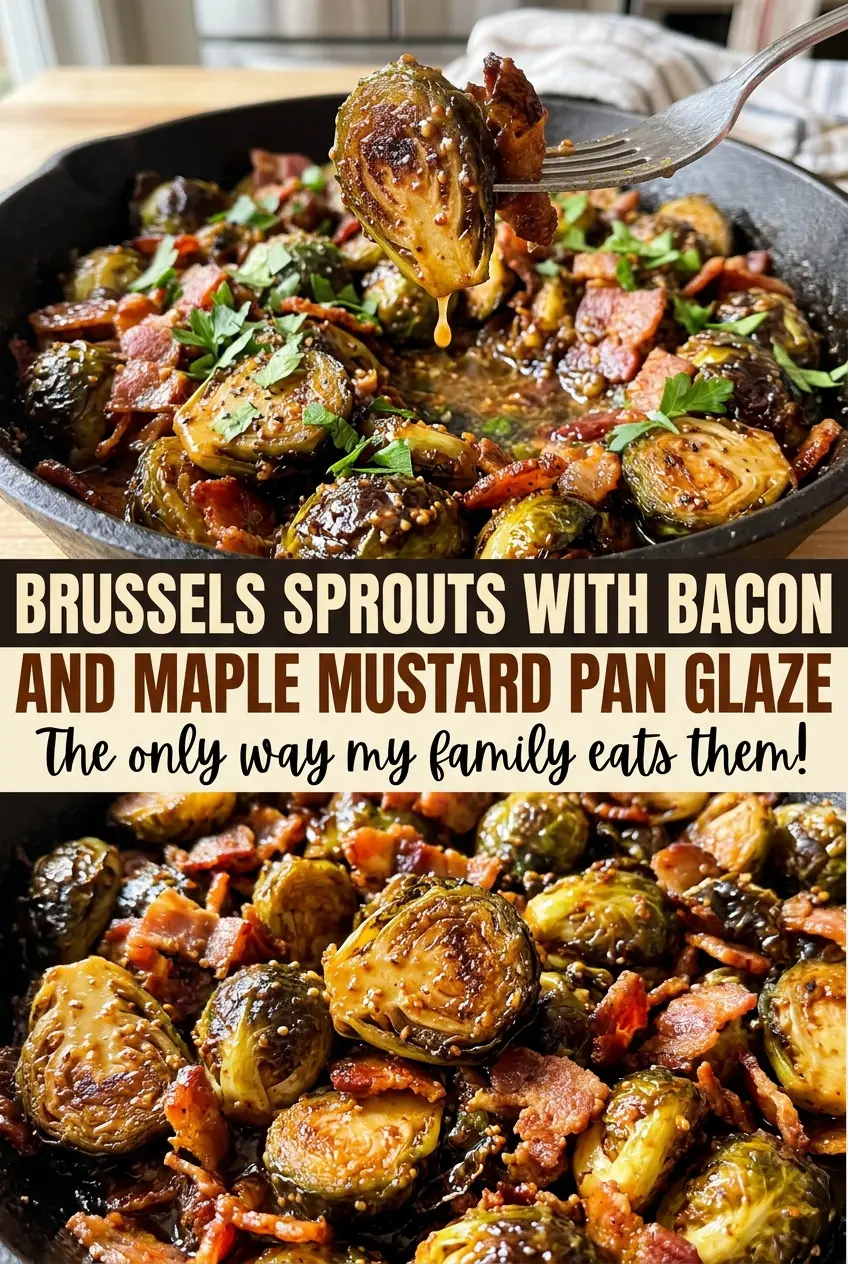
Once the maple, Dijon, and vinegar go in, keep the sprouts moving until they look glossy all over. The glaze only needs 1 to 2 minutes to coat them; leaving it in the pan longer can make it overly thick.
Save these Brussels sprouts with bacon and maple mustard glaze for a side dish with crisp edges and a sweet-tangy finish.
Why the Sprouts Need Two Kinds of Heat
Brussels sprouts can turn soft and bland when they’re cooked in moisture from the start. Here, the first stage is dry heat: the cut faces sit against the skillet long enough to brown. That color brings a deeper, toastier flavor, and it gives the glaze something savory to cling to.
Only after the cut sides have browned does water go into the pan. Covering the skillet briefly lets the sprouts cook through without losing the browned surfaces they’ve just developed. It’s a useful contrast: the open skillet creates color, then the covered skillet softens the centers. If you add the water before that browning happens, the sprouts steam instead of building those rich, golden patches.
The finish matters, too. The water needs to evaporate before the maple mixture goes in, or the glaze gets diluted. Keeping those stages in order gives you sprouts that are tender inside, browned at the edges, and coated rather than swimming in liquid.
Why Maple, Dijon, and Cider Vinegar Belong in the Same Glaze
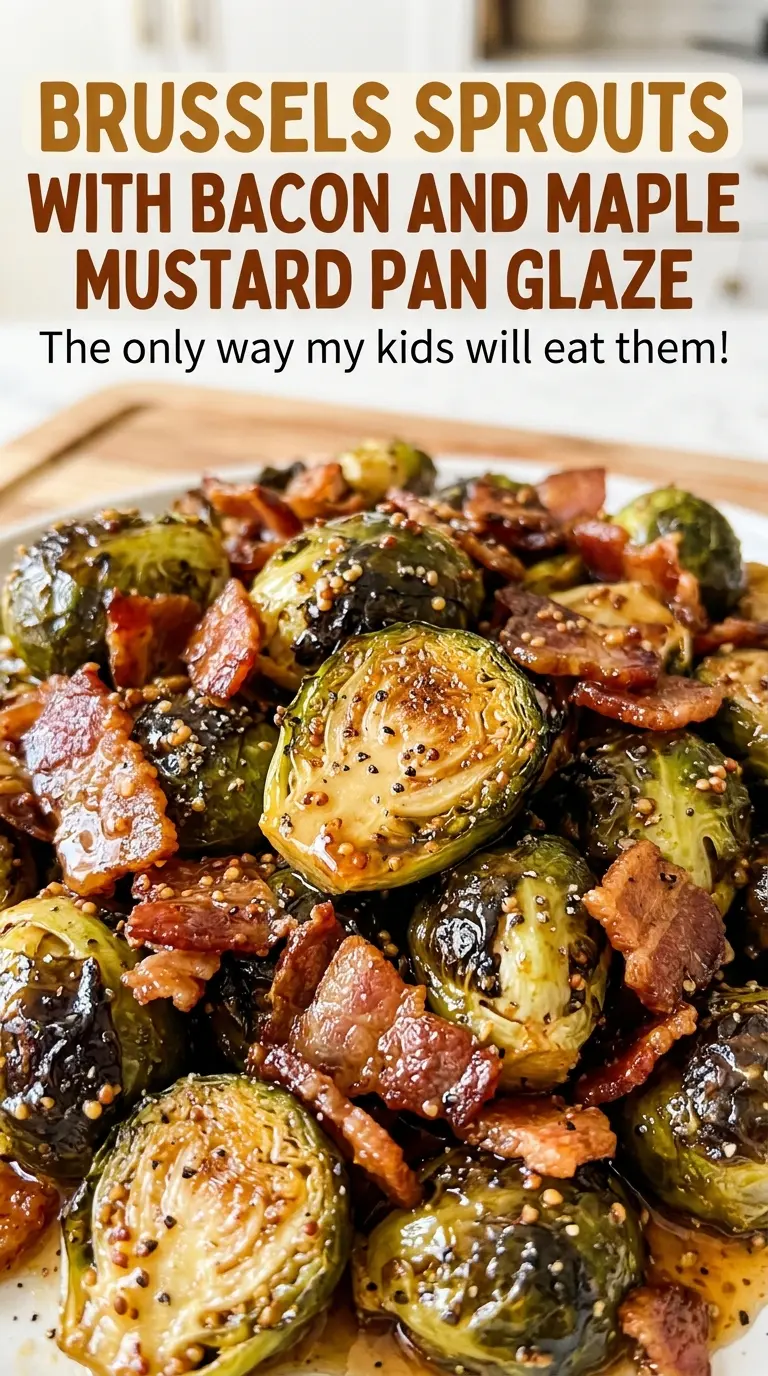
- Bacon — Its rendered drippings season the skillet and carry a smoky, salty note into the sprouts. Choose bacon you enjoy eating on its own; there’s no separate sauce to hide its flavor. The cooked bacon goes back into the pan at the end.
- Brussels sprouts — Look for firm sprouts with compact leaves, since loose or wilted outer leaves can cook unevenly. Trim the ends and halve them lengthwise so each piece has a flat face for browning. Fresh sprouts give the most reliable texture here.
- Olive oil — It joins the reserved bacon drippings to help coat the pan and cook the sprouts. A standard olive oil works well; there’s no need to use a specialty bottle for this skillet recipe.
- Maple syrup and Dijon mustard — Maple syrup brings sweetness and helps the glaze cling, while Dijon keeps that sweetness in check with a pleasantly sharp mustard bite. Use maple syrup you like the taste of, because its character comes through clearly. Whole-grain mustard can stand in for Dijon if you want a more textured finish.
- Apple cider vinegar — Its bright acidity cuts through the bacon and maple. White wine vinegar is a practical substitute, though the glaze will lose some of the cider-like fruitiness.
From Crisp Bacon to a Glossy Skillet Glaze
Render the Bacon and Set Aside the Drippings
Set a 12-inch skillet over medium heat and add the chopped bacon. Cook, stirring occasionally, for 6 to 8 minutes, until the pieces are crisp. Transfer them to a paper towel-lined plate. Pour off all but 1 tablespoon of the drippings, then add the olive oil to the skillet.
Brown the Cut Faces Without Moving Them
Arrange the halved sprouts cut side down in the skillet, then season them with kosher salt and black pepper. Leave them undisturbed as they cook for 5 to 6 minutes. The flat sides should develop browned patches; constant stirring interrupts that contact with the hot pan. If a few pieces shift, turn them back onto their cut faces.
Cover Briefly, Then Let the Water Evaporate
Add the water and cover the skillet. Cook for 3 to 4 minutes, until the sprouts are crisp-tender. When you uncover the pan, check the bottom for any remaining water and keep cooking until it evaporates. The pan should be ready for the glaze, not holding a puddle of cooking liquid.
Coat the Sprouts and Bring Back the Bacon
Stir in the maple syrup, Dijon mustard, and apple cider vinegar. Toss the sprouts for 1 to 2 minutes, until the coating looks glossy and clings to them. Stir the crisp bacon back into the skillet. Serve the sprouts hot while the glaze is still shiny.
Ways to Change the Bacon-and-Maple Balance
Make It Meat-Free with Olive Oil
Leave out the bacon and its drippings, and use 2 tablespoons of olive oil to cook the sprouts. The maple-Dijon glaze still coats them nicely, but you’ll trade the smoky bacon flavor for a cleaner, more vegetable-forward result.
Use Whole-Grain Mustard for More Texture
Swap the Dijon for the same amount of whole-grain mustard. The glaze will have visible mustard seeds and a slightly more rustic texture, while keeping its sweet-and-tangy balance.
Storage and Reheating
- Refrigerator: Refrigerate leftovers within 2 hours in a shallow, airtight container and use them within 3 to 4 days. The sprouts soften and the glaze loses some of its shine.
- Freezer: Freeze in an airtight container for up to 2 months. The sprouts will be softer after thawing, so expect a less crisp texture.
- Reheating: Warm in a skillet over medium heat, stirring until heated through to 165°F. Avoid high heat, which can scorch the maple glaze before the sprouts are hot.
Questions That Come Up While Cooking These Brussels Sprouts
Brussels Sprouts with Bacon and Maple Mustard Pan Glaze
Ingredients
Equipment
Method
- Cook the bacon in a 12-inch skillet over medium heat, stirring occasionally, until crisp, 6 to 8 minutes.
- Transfer the bacon to a paper towel-lined plate.
- Pour off all but 1 tablespoon of the bacon drippings.
- Add the olive oil to the skillet.
- Arrange the Brussels sprouts cut side down in the skillet.
- Season with the salt and pepper, then cook without stirring until browned, 5 to 6 minutes.
- Add the water and cover the skillet.
- Cook until the sprouts are crisp-tender, 3 to 4 minutes.
- Uncover and cook until any remaining water evaporates.
- Stir in the maple syrup, Dijon mustard, and apple cider vinegar.
- Toss until the sprouts are glossy and coated, 1 to 2 minutes.
- Stir the bacon back into the skillet.
- Serve hot.